Hydrangea
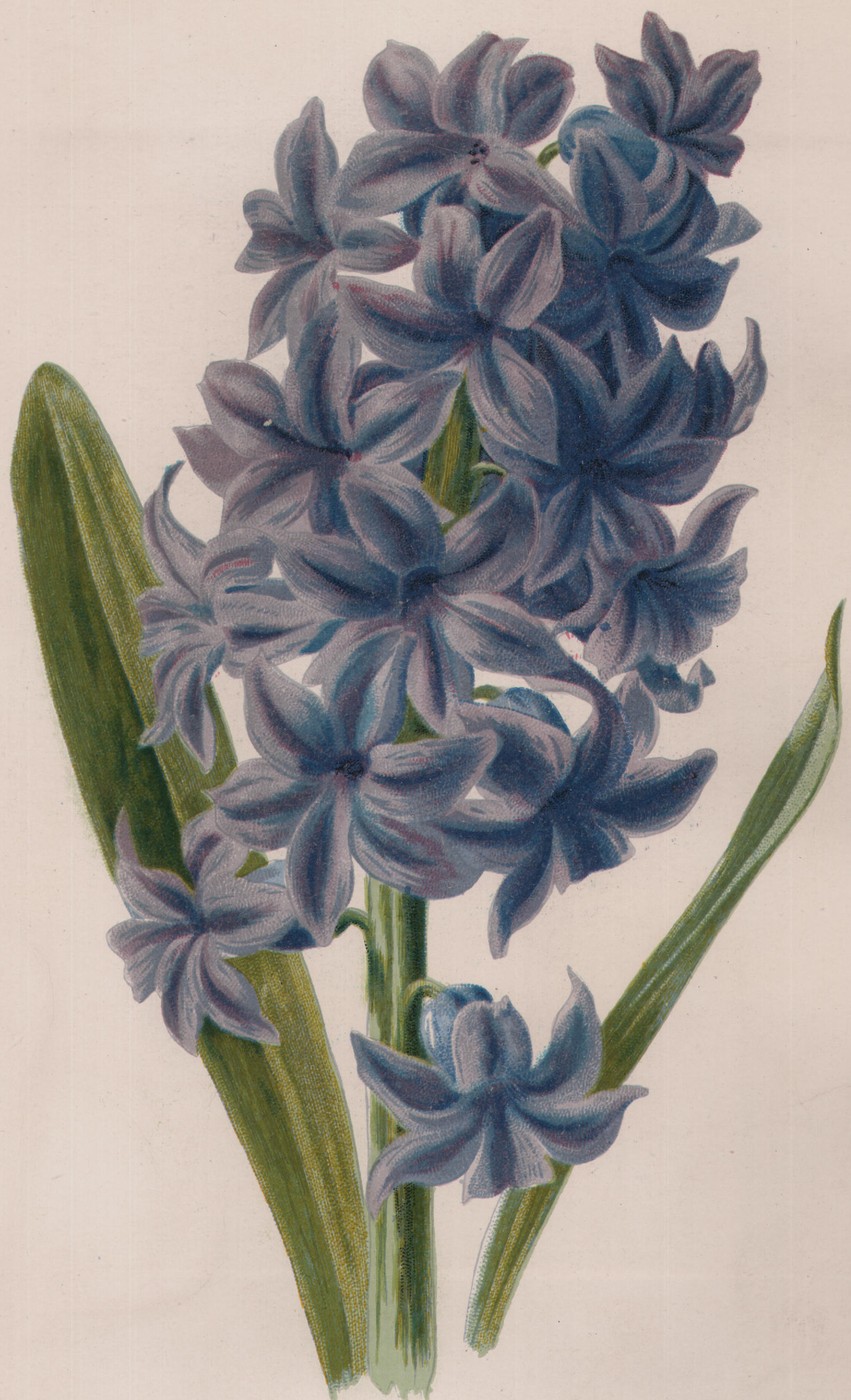
Hydrangea hortensis.
FAMILIARITY is said to breed contempt, but that is scarcely true. It is, however, certainly true that familiarity breeds indifference, and the subject before us affords an illustration. There is no truly familiar garden flower more thoroughly appreciated than the hydrangea, and there is not one that is so commonly mismanaged by amateur cultivators. To grow it well is like conjuring--most easy and simple when you know how to do it, but a great difficulty when ignorance, that is not bliss, lies in the way of the worker. The hydrangeas are hardy shrubs, although commonly regarded as proper to the greenhouse. They are, indeed, "proper" to the greenhouse, and the common H. hortensis now before us is a great favourite for the window, thousands of plants being raised by the market growers every year for sale for that purpose. But the statement should be repeated that all the hydrangeas are hardy in what may be called the most favourable districts in the British Isles, say in England everywhere south of the Trent, and along the whole western sea-board from the Land's End to the shores of Loch Fyne. Ireland, from Kerry across diagonally to Down, will generally be found to suit the hydrangea; and of the Channel Islands there need be nothing said, because hydrangeas, escallonias, myrtles, and shrubby veronicas love a humid atmosphere and an equable temperature, the extreme of which, downward, does not often touch the freezing-point.
Now some one will say that generalities are insufficient. Very well. If you will inquire in the village of Stoke Newington, where the climate is very stiff for a northern suburb of London, and the soil is a stiff damp clay, you may hear of a plant of Hydrangea hortensis that has stood in an open front garden for some fifteen years, and every summer produces hundreds of immense heads of flowers, spreading over a space that may be roughly described as about as large as an average breakfast-parlour. It is but a short time since we saw in Broadwater, near Worthing, a gigantic plant of Hydrangea japonica, which is a peculiar plant in showing a mixture of perfect and imperfect flowers, but always a beauty, and commonly regarded as more tender than H. hortensis. The plant was taller than a man, and broader than any man could measure by the outstretch of his arms, but the people there thought it nothing remarkable, and suggested that many more such might be found. To close this paragraph it will be well to say that the hydrangea accommodates its ways to places that are too cold for it, in just the same way as the fuchsia. There is a grand hardy plant known as Hydrangea paniculata, which is of somewhat wiry growth, and produces huge conical heads of flowers, that are sometimes pure white, but more often tinged with pink or purple. This is somewhat of a novelty, but for all that a cheap thing, everywhere obtainable, and so accommodating that almost any soil will suit it. But this brings us to the subject of soil for hydrangeas generally, and the first thing to be said is that, in common with a large proportion of thirsty plants, they prefer a fat soil: that is to say, a fertile loam, and a considerable proportion of fat manure may be dug in when a plot is prepared expressly for them. Planting should be done in spring; hydrangeas are not hardy enough to be planted in autumn, but if planted in May, and sheltered for a time, they will make a good root-hold, and establish themselves firmly for the winter, and become hardy occupants of the garden for any number of years. From the middle of June to the middle of August they may have any amount of water, with alternations of weak liquid manure. Indeed, in a porous soil the use of weak liquid manure may be continuous, but the operator should keep in mind that manure in excess of what a plant can absorb becomes to it as poison. The word "assimilation" is the key to the problem.
The greenhouse culture of the hydrangea is very simple. The best time to strike cuttings is in the summer, when the shoots of the season will be found to strike readily with or without the aid of bottom heat. The amateur who loves to produce flowers in plenty, and is not concerned about rarities, may be advised to make a special pet of the hydrangea, and one way of so doing will be to raise a stock of young plants every year, and, as they flower, keep the tables and windows and conservatory gay with them. Yearling plants with one or two great heads of rosy pink flowers on them delight all who see them, for even the crusty botanists have to admit that they are "buxom," if not delicately beautiful. As for larger plants, to make them well consists in simply giving them larger and larger pots as required, the soil always to be rich and light, and made of any handy materials that answer to the description. When the plants grow freely--and not before--the pots should be placed in pans of water an inch or so deep, to enable them to help themselves, for every moment that these thirsty plants lack moisture they go backward instead of going forward.