Home › Contents › Large-Leaved Saxifrage
Large-Leaved Saxifrage
Saxifraga ligulata.
HARDY plants adapted for beds, borders, and rockeries may be roughly thrown into two classes: those that are capable of taking care of themselves, and those that require to be constantly taken care of. This large-leaved saxifrage belongs to the first class; it is one of the most thrifty and useful flowering plants in cultivation, and it is scarcely possible to have too much of it in any garden, for it will thrive where many good things would fade, and its pleasing flowers are produced in plenty in the spring season, when they are especially welcome.
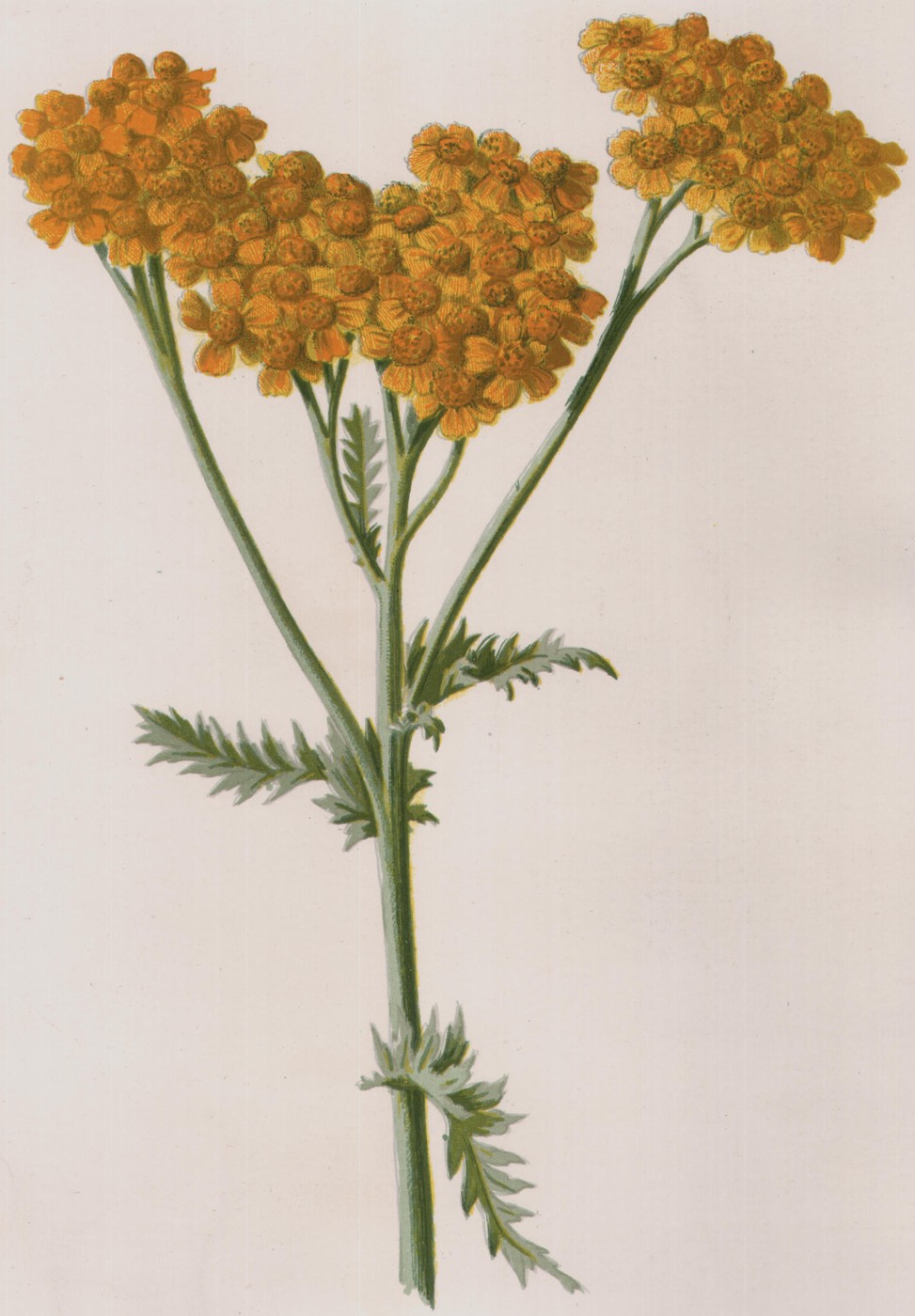
We have a group of large-leaved saxifrages that are very closely related. They are sometimes classed as Megaseas, and it would be well were this generic distinction generally accepted, for they differ greatly from saxifrages in general, both in leaf and flower and love of shade, the small-leaved saxifrages being for the most part lovers of sunshine. The noble Saxifraga cordifolia, S. crassifolia, and the plant before us, S. ligulata, constitute a group having large leaves rising from a stout root-stock, and bearing panicles of rosy flowers on stiff fleshy stems in the months of April and May. The first has flowers of a clear light rose colour, which appear somewhat early; the second has flowers of a rosy red, which appear later than those of the first kind; the third produces lighter-coloured flowers than the others, and flowers early. To these may be added a scarce hybrid, raised by Mr. Parker, of Tooting, called S. atropurpurea, the flowers of which are of a deep rich purplish-rose colour, and exquisitely beautiful. All are handsome and useful; but if one only is wanted, S. crassifolia, the thick-leaved variety, should have the preference.
These plants are hardy, and capable of taking care of themselves, but they do not prosper in any dry or exposed position. Damp, cold, and deep shade are alike hurtful to them; but a moist ledge or bank, where trees will give partial shade in the heat of summer, is just the place where they may be expected to grow freely and flower bravely. In Paris they are much employed for mixing with other spring flowering plants in beds; but in this country they are not often so used, perhaps because when summer arrives they are found occupying ground which can be more advantageously filled with plants that flower later and continuously. We have had many plantations of these saxifrages under various conditions, but one situation seemed especially favourable to the plants. This was a small sheltered fruit garden, consisting of rich, deep, and decidedly moist, loamy soil. The saxifrages were planted on each side of the main walk, and were fully exposed to light and air (though sheltered from cold winds) during the winter and spring months; but as summer advanced they were in a considerable degree shaded by the leafage of plum and pear trees that spread overhead, and though not robbing them of light in any serious degree, did certainly screen them from the sunshine. The amateur gardener may profitably bear in mind that success in gardening is like success in life, inasmuch as the secret of success depends in a great measure on attention to little things. We obtain our plants from all sorts of places--from rocky heights, from humid valleys, from snowy plains, and from warm water-courses--and yet we expect them all to thrive under nearly the same conditions within the boundaries of one garden. And the wonder is that many of them do thrive under conditions that appear so very different to those they were adapted for by nature. But their adaptiveness is a limited quantity, and it is an important part of the business of the cultivator to discover the limits, so that he may not kill his pets by subjecting them to conditions at variance with their requirements. Two amateurs of hardy ferns agreed to make an attempt to grow the true maidenhair fern in a London garden, and they both bought plants of the same tradesman for the experiment. One planted his delicate pet in a nice snug corner of the rockery, and having followed the teaching of a book as to the mode of planting, he waited, and hoped for the best. The other followed the teaching of the book as regards the suitable soil, and so forth, but having reflected on the frail constitution of the plant, he proceeded to evolve out of his consciousness conditions of which the other had not thought. He made a miniature cave with slabs of stone on edge, thus enclosing the delicate fern in a kind of open stone box. As winter approached he laid another slab over the box, thus making a close cave of it, the plant still obtaining sufficient light and air through the rough apertures where the fittings were imperfect. The plant so easily disposed of by number one disappeared during the first winter, and was seen no more. The plant of number two lived and grew, and became a grand specimen, and was displayed to visitors, living all alone, like a jolly hermit, in its substantial cave, through the large chinks of which it laughed at the frost and defied the winds; and when it spoke--as of course it often did--the subject of its discourse was the importance to the gardener of things that thoughtless people call "trifles."