Home › Contents › Salvia, or Bolivian Sage
Salvia, or Bolivian Sage
Salvia Boliviana.
WITHIN the last half-dozen years several new species and varieties of salvia have been introduced to our gardens, very much to the advantage of the winter colouring of the greenhouse and conservatory. Our old friend Salvia splendens is not eclipsed or superseded by any of the new-comers, for that and S. patens are still the two best plants of the sage family for the flower garden. When grown from summer-struck cuttings and potted on to insure strong plants, the scarlet-flowering sage is a loud summer beauty. The best place for a clump is in the sunniest part of the garden, the soil to be somewhat poor and stony, and if containing some proportion of old plaster or other calcareous rubbish, all the better. For a few isolated plants a sunny border near a hot wall answers admirably, as the heat reflected from the wall, together with the dryness of the soil, will favour the abundant flowering for which the plant is famous when growing to its own liking.
When raised from spring-struck cuttings, the scarlet sage will often make a free growth in the open ground, and show not a single flower to justify the little care it requires. In this case the possessor of the plant may still be as happy and hopeful as he that fights and runs away, for the triumph is but delayed, and may with proper courage be still commanded. Some time in September the flowerless plants should be carefully lifted so as to keep as much earth about their roots as possible, and be put into smallish pots--smallish as compared with the size of the plants, but not so small as to necessitate any severe injury to the roots. The soil used in filling in to make them firm in the pots should be poor sandy stuff, the fresher the better, but there is no manure needed. The roots must be kept only moderately moist, and the tops should be moistened with a shower from the syringe twice a day; the home of the plants must be a shady place in a warm greenhouse. In the course of a few days after being potted, they will hold up their heads and look well, and may then be put in the full light, and have water regularly, but should never be very wet at the root. There must be no pruning of any kind; not even a leaf should be injured except by unavoidable accident. All this is very simple, but it is none the less important. In the course of November the flowers will appear, and if the house is kept warm and the plants are near the glass, there will be a beautiful display for fully two months: say until the turn of the year, and then some other species of salvia may be at command.
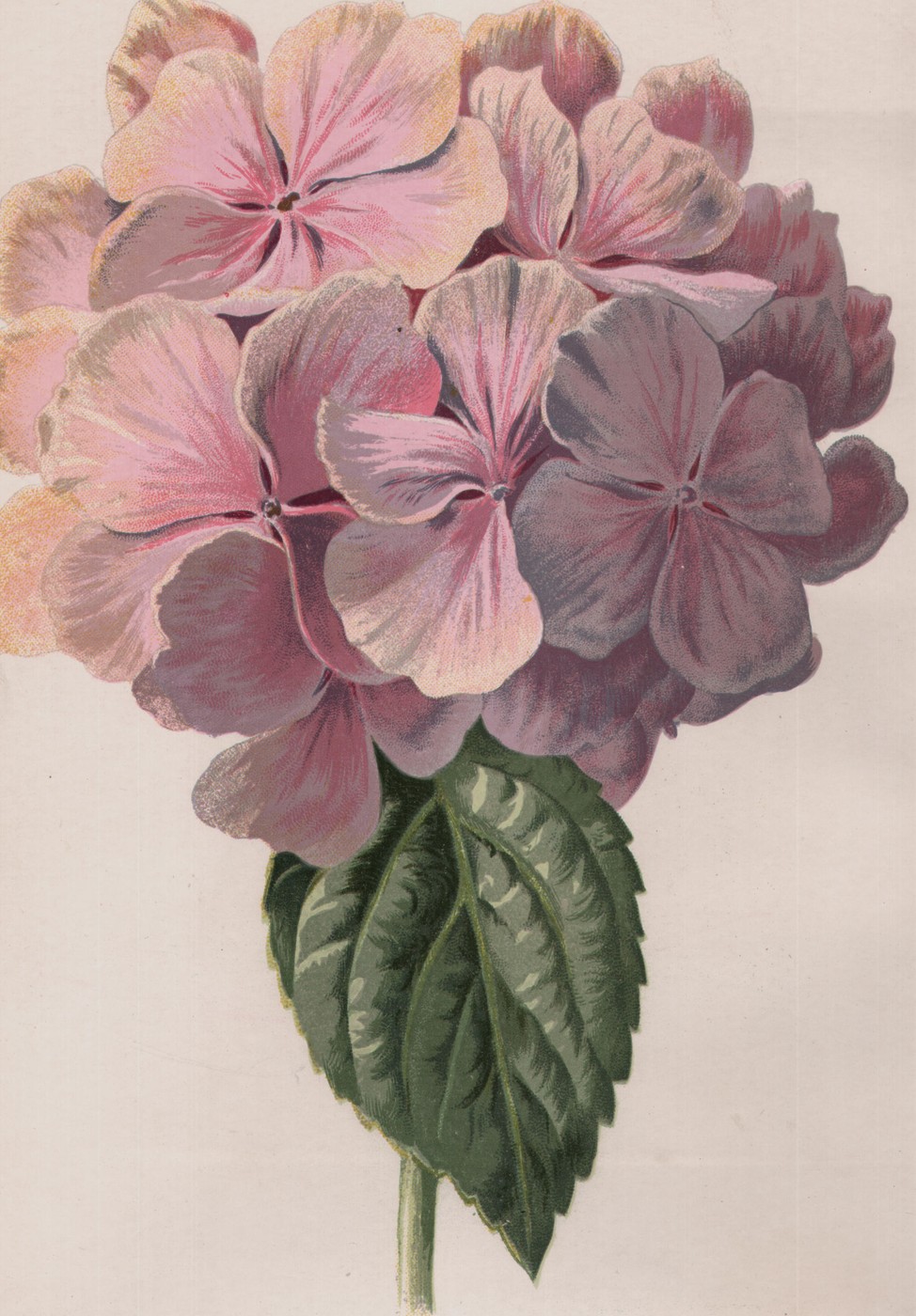
For the early spring-time, or more especially for the month of February, there is no grander conservatory plant at command than the Bolivian sage here figured, the book name of which is Salvia Boliviana. It is a native of Bolivia, introduced to Europe by Van Houtte, of Ghent. Although coming from a hot climate, it does not require stove cultivation, as it is a mountain plant, found on the Bolivian Andes at elevations of 10,000 to 12,000 feet, a robust-growing shrub, producing gorgeous panicles of flowers of the most brilliant crimson colour. It is probably the same as Salvia rubescens, or if not, the two are but slightly different forms of one and the same species. That is a matter of no great consequence in the present connection. In the cultivation of this fine salvia a certain golden rule, often enforced by writers, and as often ignored by amateur cultivators, must be strictly observed. A thousand examples might be cited in illustration of the importance of this golden rule, which consists in the raising of a new stock of young plants every year. This rule is of special importance in the case of pansies, chrysanthemums, calceolarias, cinerarias, petunias, and salvias, for it rarely pays to keep old plants of any of them. In the month of March cuttings of salvias may be easily rooted on a mild hotbed or in a warm house, and it is good practice to strike a few in the course of the summer or autumn, more especially of such as it is intended to plant out the next year. Pot culture from first to last suits this plant perfectly, and the compost may be somewhat rich for it, as it is of a free leafy habit, and produces large spikes of flowers when liberally nourished. The young plants must be shifted on as they fill their pots with roots, but care must be taken not to give them at any time an excess of pot room, and the last shift should be in September, as any disturbance of the roots in the later months of the year will interfere injuriously with the flowering. For a general rule, nine-inch pots may be regarded as the largest allowable for plants well grown, and in these they may be allowed to flower. As the flower-spikes rise, weak liquid manure may be given to assist them, and the house must be warm enough to promote a fine development, say a temperature of 60 degree, rising to 70 degree with sunshine. In a cold damp house they will do no good at all. The finest examples we have seen of this plant were in the greenhouses in the Royal Gardens, Kew. They were truly wonderful, and had for companions plants, not less wonderful, of Senecio Ghesbrechti, with gigantic heads of orange-yellow flowers. In the same houses were epacris, cinerarias, heaths, cyclamens, acacias, and other of the usual occupants of a greenhouse, which are here named to show that our Bolivian sage does not need the heat of the stove even when flowering in February.