Home › Contents › Showy Feverfew
Showy Feverfew
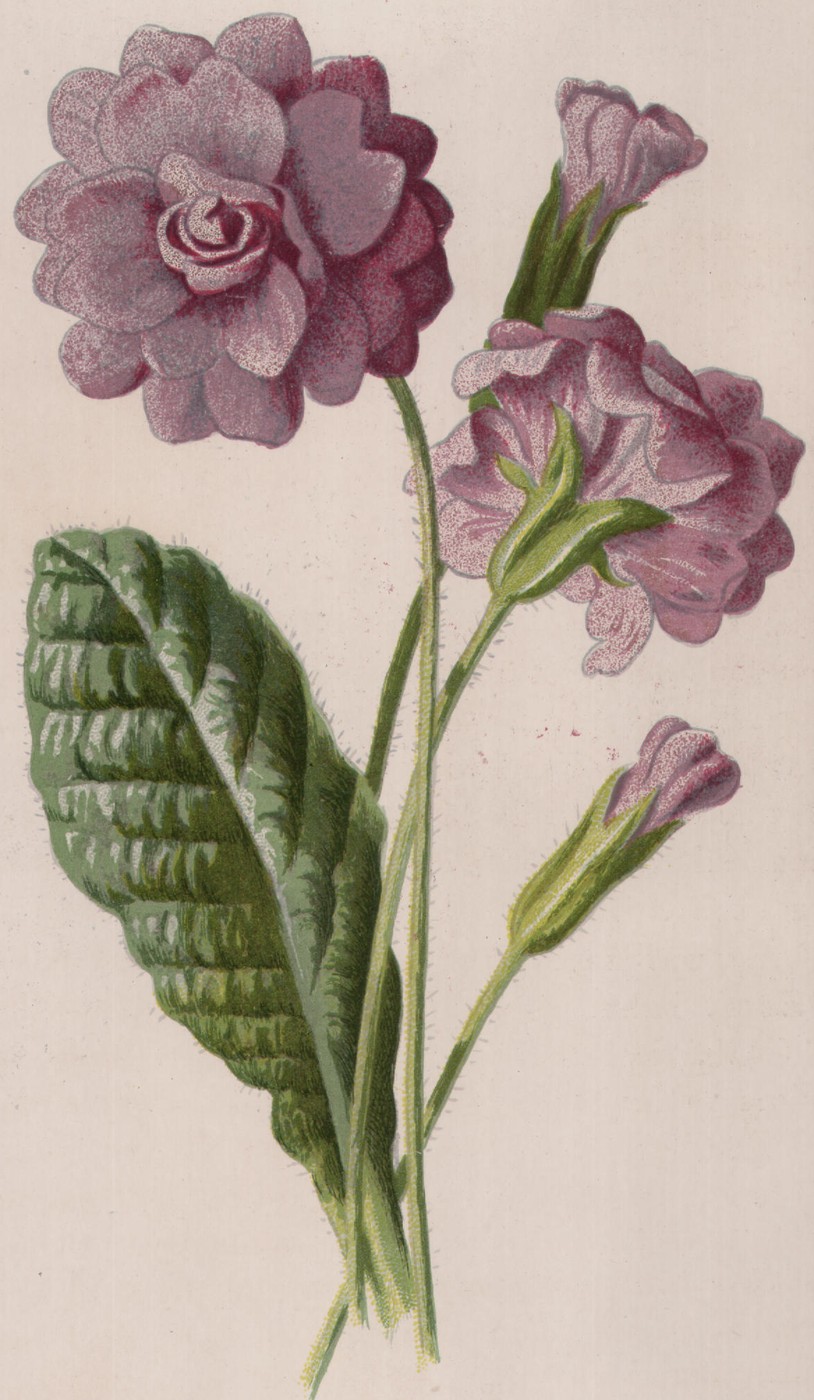
Pyrethrum roseum NONE of the familiar garden flowers has a better claim on our regard than the rosy pyrethrum. It may be pronounced at once the best flowering plant known for gardens in towns, and nearly one of the best for gardens in the country. The rosy pyrethrum, or showy feverfew, as the plant is perhaps more frequently called, is perfectly hardy; it is so neat in growth that it is ornamental when not in flower, and it will thrive in any soil or situation, provided it obtains a reasonable amount of light. But good conditions tend to good results, and to have a nice bloom of pyrethrums a little care must be taken with the several preliminaries.
First, then, for the bed or border. This should be good loam deeply dug and liberally manured. The plants may be put in at any time that may be convenient, but the spring and the autumn are the best times to plant, a supply of the finest named varieties in pots having previously been secured. When first put in the ground a sharp look-out must be kept to protect the plants from slugs and wood-lice, but when the plants have begun to grow freely in the open ground these marauders will not care much about them. As the spring advances the flower stems will rise, and you will have to determine whether to support them or not. A neat way of supporting them is to drive in three stakes and pass strips of bast loosely round to form a kind of open cylinder. This must be neatly done, so as to be scarcely visible, leaving the growth somewhat free. We have a large collection, comprising all the named varieties, and we never give support to any, but let them fall about as they please. This plan answers well when the weather is fine, and the display is delightful. But bad weather makes a difference, and then, we must own, the plants that are properly supported fare the best. In some gardens pyrethrums die out in three or four years; in others they appear to defy time and death, and last any length of time. It is a good practice, however, to take them up every third year, and deeply dig and manure the soil; then divide, and replant. A still better practice would be to plant in fresh soil altogether; for continuous occupation of the same spot, even if periodically dug and manured, tends to deterioration.
The best time of year for lifting and dividing is August or September, and it will be prudent to pot a few small pieces of all the best varieties, and keep these potted plants in a frame during the winter, to plant out in spring. It is just possible that a severe winter may kill a few of the plants that were disturbed in the autumn, in which case the potted plants will be ready to take their place.
In the cultivation of pyrethrums there are one or two points of considerable importance. In the first place, when very young plants are put out in the mixed border they are liable to be injured, if not quite destroyed, by digging or other operations during the winter, as they retain but few leaves from November to February. In the next place, they like a strong rich soil, such as will retain a fair proportion of moisture. They are furnished with innumerable small roots; therefore the soil should be broken up fine to a good depth. Newly-purchased plants are generally small, and it is much better to plant them in a well-prepared bed in the kitchen garden for a year or two, to give them a good start, than to put them in the flower border. Keep the soil about them free from weeds, and supply frequently with liquid manure. If they are in a well-drained soil they will enjoy a rather large supply of water, and, so far as growth and the number of flowers produced are concerned, a dripping time through the months of May and June is eminently favourable to them. Overcrowding must be avoided, as pyrethrums produce so many roots that they exhaust the soil for some distance. Large examples ought to be at least thirty inches apart each way, and when allowed this space they will, if the soil is in good condition, produce from thirty to fifty flowers of fair average quality.
Pyrethrums produce seed freely, and very often crowds of seedling plants appear around the old stools. It is advisable to cut off the flowers as fast as they fade, and so prevent the growth of seed; but if seed be wanted it is easily obtained, and the best way to treat it is to sow as soon as ripe, and give the seedlings frame culture through their first winter, and plant them out in March or April.
The following are the best twenty-four varieties, single and double:-Achille, Aurora, Ceres, Captain Nares, Dr. Livingstone, Emile Lemoine, Floribundum plenum, Gustave Heitz, Hermann Stenger, Haage and Schmidt, Iturbide, La Vestal, Lady Derby, Michael Buchner, Monsieur Barrall, Mont Blanc, Nancy, Ne plus Ultra, Peau Rouge, Placida, Solfaterre, Striatum plenum, Uzziel, White Aster.