Home › Contents › Snowy Crowfoot
Snowy Crowfoot
Ranunculus amplexicaulis.
IN the description of the double buttercup this plant is mentioned as one of the gems of the crowfoot family. It has the peculiar merit of "taking by storm" - but very quiet storm - the admiration of the critic who may have dared to entertain doubts of the merits of Alpine plants. This beauty is a true mountaineer, and has all the characteristics of the genuine Alpines- neat growth, dwarf habit, elegant leafage, large and lovely flowers. The typical ranunculus has lobed or divided leaves, but this plant has entire leaves that clasp the stem, and have none of the full green colour of a typical ranunculus, but are of a pale sea-green colour. Those that spring from the root form a suitable setting for the lovely white flowers that rise above them, of which there are sometimes as many as five on a stem; but they occur in twos and threes more commonly. In form and colour the plants are as satisfying as any known Alpine; they are perfect in smoothness, and as pure as the snow itself that ofttimes forms the cradle of the plant on the higher levels of the Pyrenees and Carpathians.
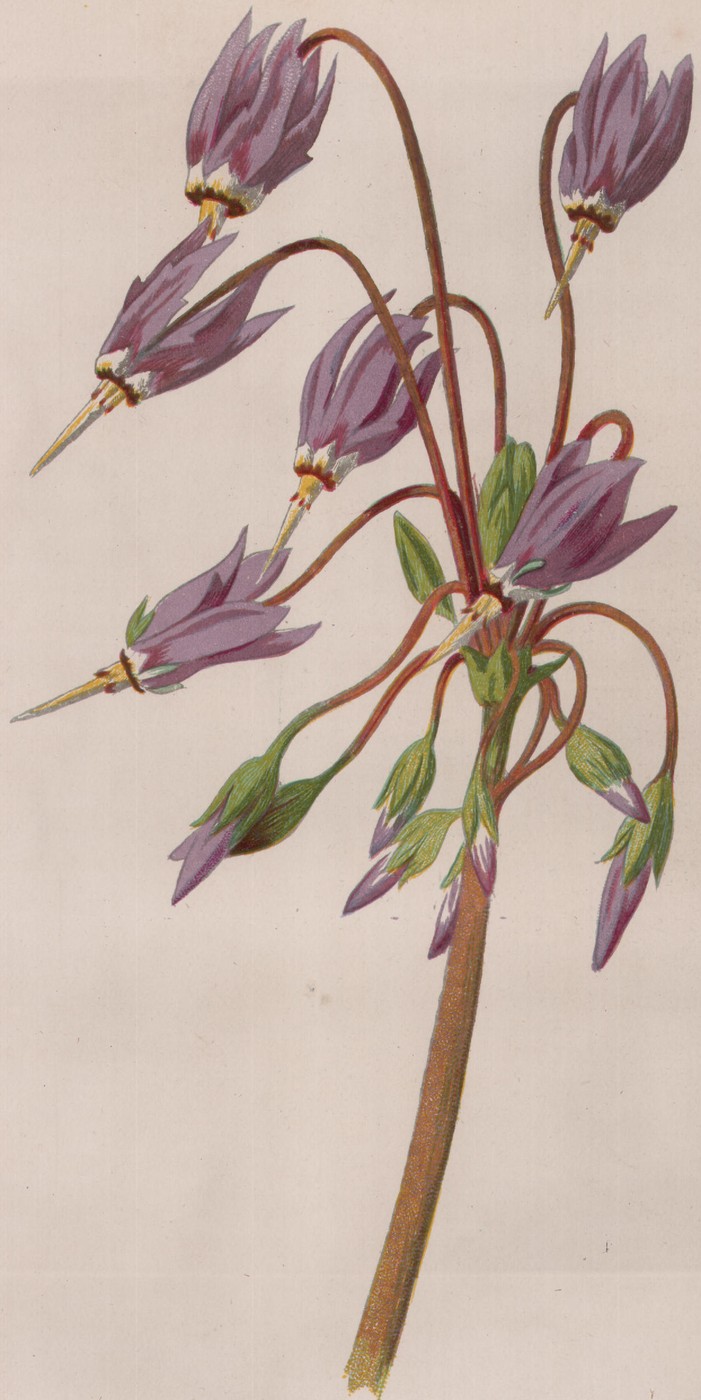
The delicate beauty of this plant will suggest that it needs much care and skill in its cultivation; but the truth is it needs none, being of a most accommodating habit, and apparently quite "at home" on a fairly good rockery in any London garden.
There are many first-class Alpine plants of similar adaptability to the varying conditions of life in gardens. It is, indeed, no difficult matter for the experienced cultivator to select, say, two to three hundred species, comprising plants of the highest order of beauty in their several classes, all of them calculated to thrive under the most ordinary conditions of cultivation. It may be of some service to the reader if we sketch out the lines on which such a selection should be formed, and we will arrange the subjects in alphabetical order.
Alyssum montanum and saxatile, with, perhaps, alpestre. The first is well known as a brilliant heap of gold in spring. These require a sandy soil and an open position to be quite safe against winter damp.
Anemone apennina, blanda, fulgens, hepatica, angulosa, nemorosa, ranunculoides, sylvestris, a lovely group; to which may be added for the borders A. japonica, and the section of the florists under A. coronaria. The strong growers require rich, deep, moist loam; the more delicate kinds a light loam with a large proportion of grit.
Anthyllis montana and vulneraria, suitable for dry soils. Aquilegia alpina, carulea, Canadensis, and Skinneri. These require to be regularly renewed from seed, as they are biennials, though classed as perennials. For the most part they sow their seeds in plenty, and provide for a succession. Any good soil will suit them.
Aubrietia purpurea, grandiflora, and Mooreana are in valuable for beds, borders, and rocks.
Aster alpinus, versicolor, and altaicus are suitable for any dry spot in a sunny situation.
Calandrinia nmbellata, a tiny beauty, to be raised from seeds every year. Campanula fragilis, garganica, coespitosa, rotundifolia, turbinata, carpatica, and pulla, a fine lot, needing only sunshine and sandy soil. Corydalis lutea and nobilis, very gay for rocks and walls. Didnthus deltoides, neglectus, caesius, and petroeus. These require careful cultivation; and having that, the air of the city of London would be good enough for them.
Dielytra eximia and formosa will thrive in any son, and are brilliant town garden plants.
Dryas octopetala is the sweet little mountain avens. This and D. Drummondi require a moist peat soil.
Erinus alpinus, a mossy miniature that requires the comfort of old stone or brick rather than of earth for its roots. Try it on the top of an old wall, as well as in a very sandy dry border.
Erysimum ochroleucum and pumilum will thrive on borders, but are more at home on rocky shelves and dry nooks in ruins.
Gentiana acaulis, Andrewsi, and asclepiadea. These are the best gentians for a town rockery. A sandy loam with plenty of stones in it will suit them perfectly.
Iberis sempervirens, corifolia, and Gibraltarica are the most useful of this genus, and all they require is a good loamy soil and the fullest daylight. Iberidella rotundifolia is a beautiful tap-rooted plant that must be raised from seeds on a good, deep, sandy soil.
Helianthemum annuum, rosmarinifolium, and tuberaria are good town plants that love the sun, but do not object to a little shade, and any soil will suit them.
Lithospermum prostratum and petraum are two gems for the sunny part of the rockery where they can spread over stones and make carpets of blue flowers. Myosotis azorica and dissitiflora are the best of the forget-me-nots for very choice purposes.
The remainder will follow under "Siebold's Primrose."