Home › Contents › The Indian Cress
The Indian Cress
Tropoeolum majus and T. minus.
OUR garden nasturtium is not the nasturtium of the botanist, for the true nasturtium is the water-cress. It is, perhaps, hardly necessary for me to explain here how the tropoeolum came to be called a nasturtium, not being one, for anybody who will eat a leaf or flower of the tropoeolum will in a moment understand the reason of it. It has the fresh pungent flavour of a cress, and is at the same time perfectly wholesome. Thus, in days gone by it acquired the name of "Indian Cress," and by a misuse of the Latin word for cress, it was called a nasturtium. The term "Indian Cress" is quite as improper as nasturtium, for it suggests that the plant came from India, whereas it is a native of Peru, whence it was introduced in 1596--a date full of suggestions to the reader who can surround it with a circle of great names and important events.
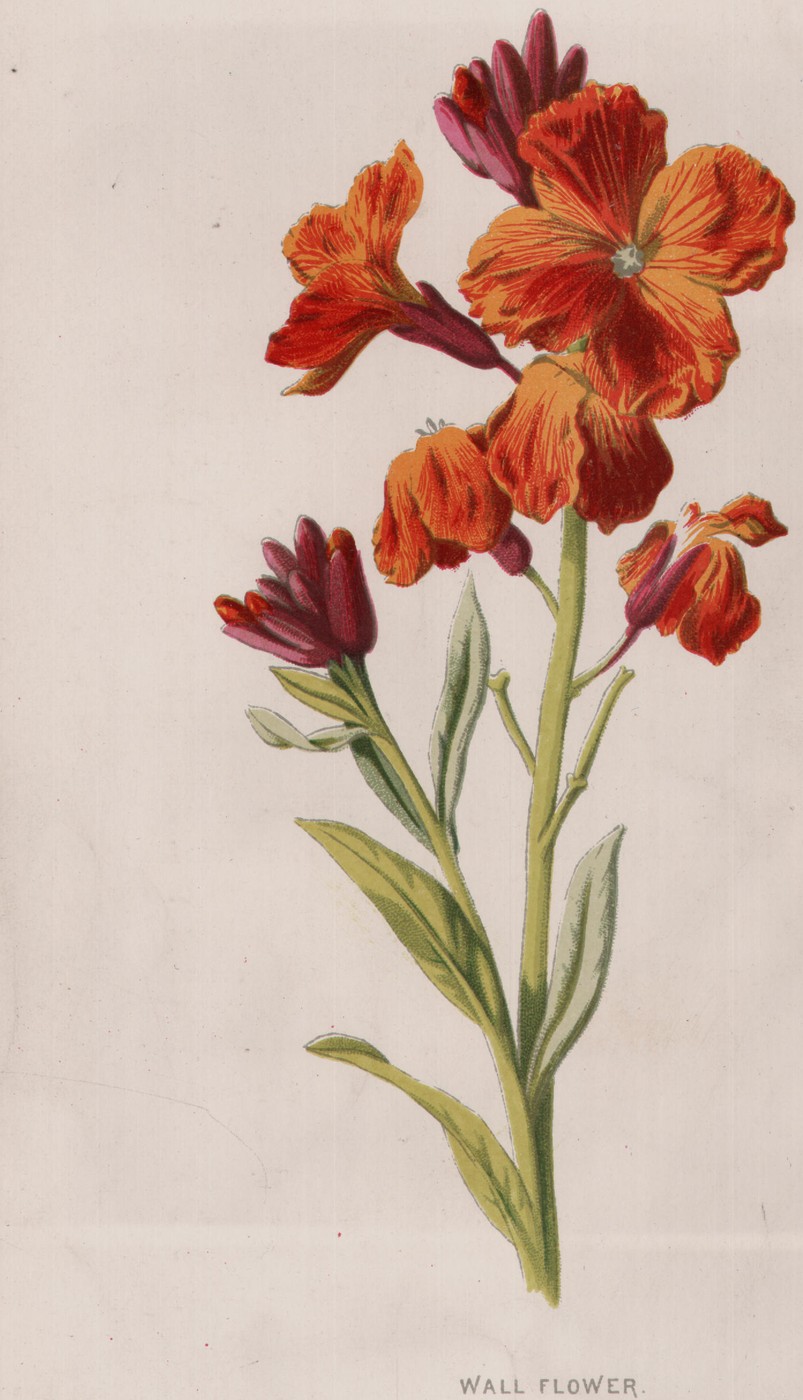
The common major tropoeolum is as well known as any flower of the garden. We see it festooning the cottage fence with its distinct glaucous leafage and flaunting orange or deep crimson flowers, and we know that if we get a nicely-boiled leg of mutton with caper sauce in which the green seeds are substituted for real capers, we shall do remarkably well, especially if the same garden supplies a dish of delicate turnips. For pickling, the major tropoeolum is the best, but the dwarf kind answers very well, and it is invaluable for bedding and for covering rough, dry, sunny ground--for dryness, warmth, and a poor soil are conditions favourable to their full development. The seed-growers have established several very distinct races of dwarf annual tropoeolums for bedding purposes, and they are extremely showy, but so far coarse and weedy that they are not to be regarded as first-class bedding plants. But this depreciation of them would hardly stand in the face of a group that appeared on one of the lawns between the bridge and the corridor of the Paris Exhibition of 1878. This group contained about thirty sorts, every plant being a model of growth and beauty. The flowers comprised white, primrose, yellow, orange, scarlet, crimson, and purple, and a few that inclined to chocolate and slate-colour. They are the cheapest of all bedding plants, and the easiest to grow; and the best way to manage them is to sow the seed in pots towards the end of March, and plant them out about the middle of May, selecting for them a sunny situation and a poor soil. But they may be sown as the cottagers sow their major tropoeolums, where the plants are to remain; and the matter of chief importance then is to thin them to nine inches apart, so as to afford each plant an opportunity of spreading into a round, compact tuft, which will very soon become smothered with flowers, and will so continue until frost makes an end of its bright career. The tender perennial kinds of which Tropoeolum Lobbianum is the type are first-class bedders of the most refined character, and they are invaluable for the conservatory if so managed as to flower freely all the winter. To manage them as bedders they must be multiplied by cuttings in the usual way of "soft-wooded" plants, and be put out late in May. In common with all the plants of this family, they thrive best in a dry, poor soil, and a sunny situation; and in the event of their becoming too leafy, it is a good practice to remove a few of the topmost leaves, as this slightly cheeks the growth and promotes production of flowers. It should be borne in mind, however, that every plant should be allowed to carry all its leaves unless there is a sufficient reason for the removal of a portion, for the leaves are the lungs, and every leaf lost is a loss of breathing power. There are people who think that leaves are quite superfluous, and they remove them in a reckless manner in order to ensure plenty of flowers. The result is that they get no flowers at all, and if they persevere in the practice the plants soon die. There is a beautiful class of double tropoeolums in cultivation that are justly prized for the decoration of the conservatory during the winter. These and other kinds required for winter flowers should be propagated by cuttings in July and August, and the flower-buds that first appear should be nipped out to prevent flowering until the plants are strong. To flower them well in the winter they must be in the full light in a warm house, for cold and damp will kill them.
The robust kinds of the Lobbianum section, such as Ball of Fire, make fine balcony plants for the sunny side of the house, but for the shady side there are no creepers to equal the Virginian vine and the ivy. The tuberous-rooted species make fine trellis plants, and are occasionally grown on wire balloons in pots to adorn the conservatory. All these require a sandy soil, and during winter should be protected from damp. The hardiest of this series are T. edule, a strong growing plant with orange-coloured flowers, and T. tuberosum, with flowers yellow and red. If planted on a dry sandy soil near the shelter of a warm wall, these endure the winter without harm; but where the soil is loamy, or the situation cold and damp, the roots should be taken up and stored away in sand for the winter. The destruction of the tops by frost should be the signal for lifting them.