Home › Contents › The Jessamine
The Jessamine
Jasminum officinale.
JASMIN THE TROUBADOUR, who happily hails from Agen, "content and poor," makes boast of his name as allied to the "stem of Jesse." For this plant is variously called Jasmine, Jessamine, and Jesse: its Arabic name being Ysmyn, and its Persian name Jasemin. And it is a question of some interest whether, in the prophetic utterances, "the stem," "the root," "the rod," and "the branch" of Jesse were associated with any plant that had the value of a symbol. It is not an idle question, as may be seen on reference to the tree of Jesse in the east window at Dorchester, Oxon; for however the artist may draw on his imagination in such a work, he is likely to be governed by an idea derived from a consideration of facts, and the jessamine, if admissible in such a case, is peculiarly adapted for truthful delineation in conventional tracery. The tree of Jesse is indeed often met with in the reredos and east windows of English churches, and usually we have no hint of any special symbol or any properly objective thought in the work, although, doubtless, there is fair excuse for it.
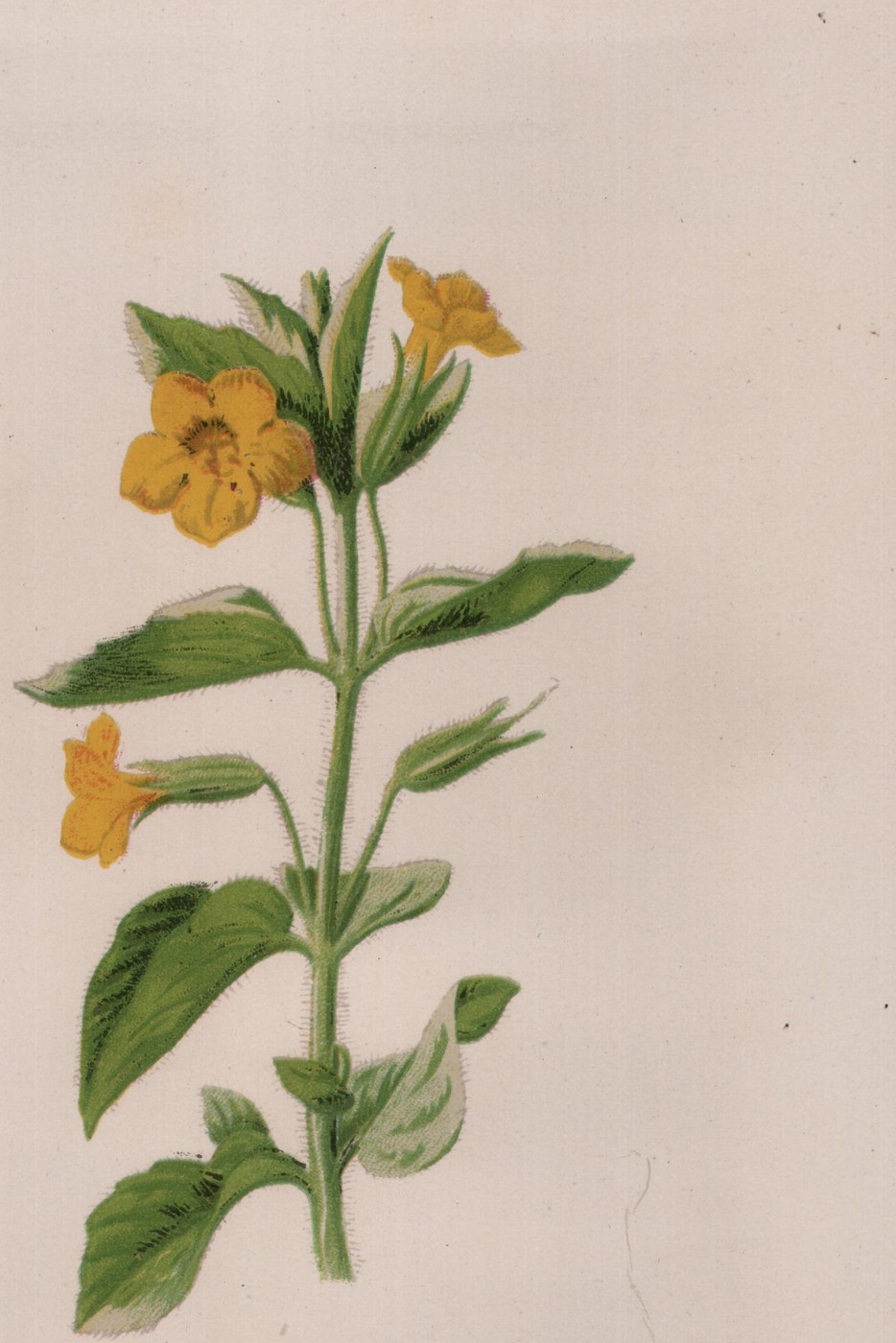
The white jessamine has been in cultivation in this country so long that we have no record of its introduction, and know not whence it was obtained. In the books it is reported to have been introduced from the East Indies in the year 1548, but Gerarde, in 1597, speaks of it as commonly used for covering arbours; and as to its native country, we can scarcely localise it, except in a general way, as an Eastern plant. It is perfectly hardy in this country, rarely suffering even in the severest winters, and it is particularly well adapted for planting in town gardens, as defect of light and the deposition of dust on its leaves do not prevent its healthy growth and free flowering. As a wall tree, however, it lacks character, and often looks dingy and dejected; but if fairly well taken care of, the natural elegance of the plant is pleasingly displayed, and the delicious fragrance of its delicate white flowers abundantly justifies its place in the garden. To obtain the evanescent odour of the flowers of this plant, a complicated process is required. To merely press them or to distil them with water would be useless, the essential essence being too subtle for retention by any such simple methods of procedure. The flowers are first embedded in fat, to which they communicate their odorous treasure, which is then separated from the fat, and obtained in a more elegant form by means of alcohol. The last part of the process is comparatively modern, but the first process is as old as the use of perfumes, and explains the frequent employment of ointments by the ancients; for many of the odorous essences they coveted were obtainable only by the aid of greasy substances, which served as vehicles for separating and preserving them.
The most important species of Jasminum in respect of the production of commercial perfumes are J. officinale, which is here figured; J. sambac, a native of the East Indies, producing white flowers, which are followed by black berries.--the perfume known as oil of jasmine is obtained from this species; and J. grandiflorum, also a native of the East Indies, and closely resembling J. officinale, but the flowers are larger, and reddish underneath; from this is obtained a very considerable proportion of the essential oil of jasmine of the shops. A favourite garden jasmine in the East is J. angustifolium, a bright twining plant, with star-shaped flowers tinged with red, and very agreeably fragrant. It is somewhat singular that when these plants are grown in our conservatories they do not appear to attract many insects, nor does the fragrant jessamine of the garden often enjoy the honour of a visit from a busy bee or an idle butterfly; but Moore, with his exquisite taste in matters of detail, makes the jasmine of Asia Minor the resort of many gay insects, attracted by the rare fragrance of its flowers. In his delightful story of "Paradise and the Peri," he makes the "child of air," when searching for "the gift that is most dear to heaven," betake her amongst the bowers of the "chambers of the sun"-- "When, o'er the Vale of Balbec winging Slowly, she sees a child at play, Among the rosy wild flow'rs singing, As rosy and as wild as they; Chasing, with eager hands and eyes, The beautiful blue damsel-flies, That flutter'd round the jasmine stems Like winged flow'rs or flying gems." Cowper, who better understood the garden than any English poet, Shakespeare alone excepted, gives us a photograph of the plant in four short lines-- "The jasmine, throwing wide her elegant sweets, The deep dark green of whose unvarnish'd leaf Makes more conspicuous and illumines more The bright profusion of her scatter'd stars."