Home › Contents › The Marigold
The Marigold
Calendula officinalis.
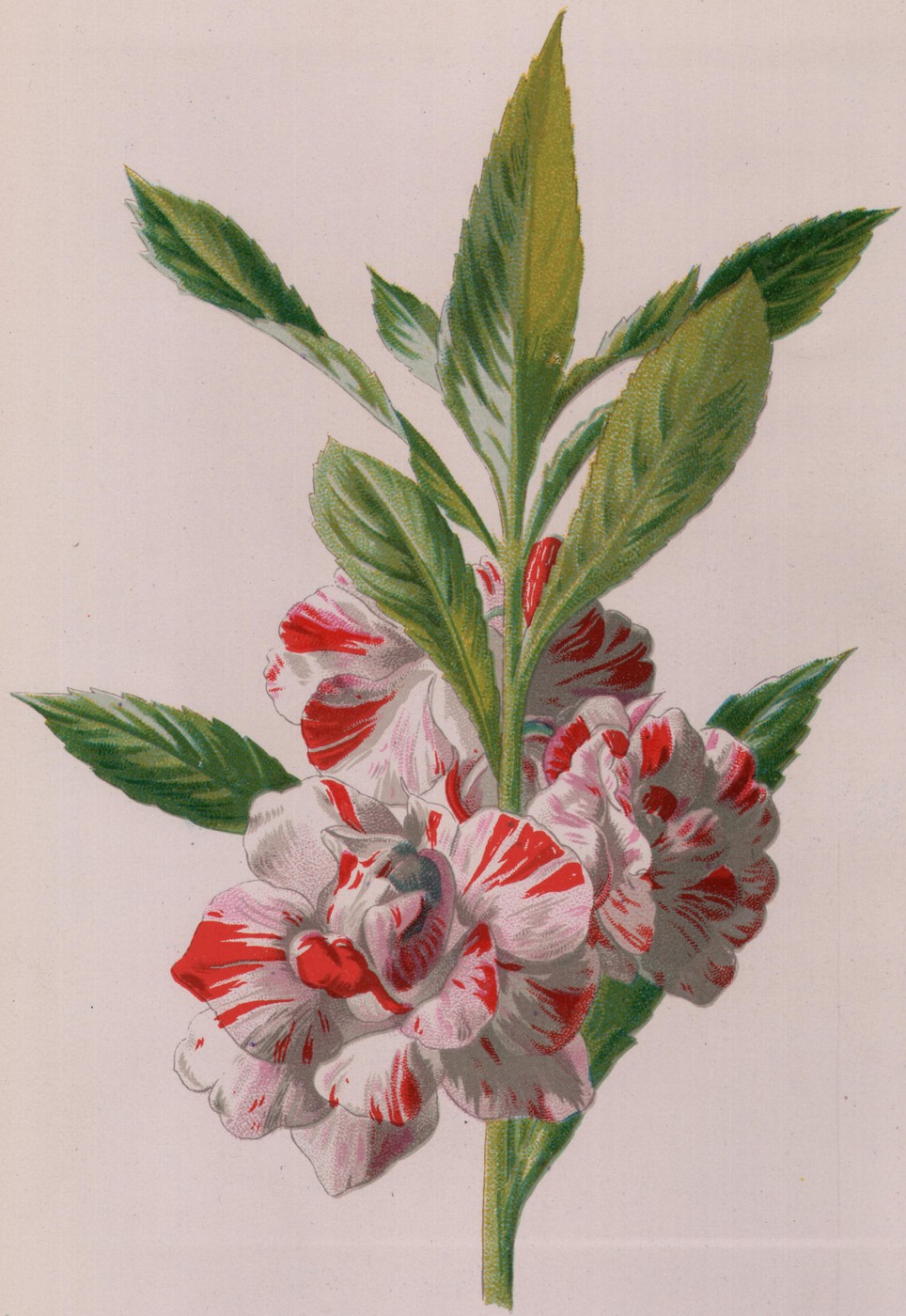
FROM the common marigold here faithfully figured, and suggestive of soup, to the delicate French marigold, Tagetes patula, that the florists grow for exhibition, and bring to a perfection of geometric marking that makes a place in floriculture for mathematics, what a stride! Fifty years ago a flower show of a very individual nature engrossed my attention and made a very deep impression on my mind. It consisted entirely of common marigolds, and the scene was the churchyard of St. Botolph, Aldgate, where these flowers had run wild, and, as wild things are wont to do, had taken care to keep the race going, so that there should be no lack of wild marigolds from year to year, for in truth the ground was literally covered with them as with a pavement of stars stamped out of the rinds of oranges. At that early date I had heard, but had never tasted, of soup flavoured or adorned--I knew not which--with marigolds, and I stole and munched a flower, and was lost in the admiration of contempt for the people who could put such trash into soup, whether for flavouring, beautifying, or any other purpose. My father, being a florist to the backbone, would not tolerate a common marigold, and so I had to play the thief to gain the knowledge of the comparative worthlessness of marigolds in clear ox-tail. Within a few weeks of writing this I have had to judge at a flower show where the study of French marigolds occupied me nearly an hour to award the prizes to my satisfaction. What a stride! But Providence gave me years to accomplish it, with enjoyment at the beginning and the end and at all the intermediate stages. To stride over marigolds, beginning with soup and ending with the fine arts, is not a particularly noble business, but one might do worse; one might be M.P. for Battle Bridge, for example, or confessor to the pirates of the Flowery Land. When the churchyard marigolds enraptured me I had not read Shakespeare, but I call to mind now his association of them with the grave in the fourth act of "Pericles"-- Enter MARINA, with a basket of flowers. "No, I will rob Tellus of her weed, To strew thy green with flowers: the yellows, blues, The purple violets, and marigolds, Shall as a carpet hang upon thy grave, While summer-days do last. Ay me! poor maid, Born in a tempest, when my mother died, This world to me is like a lasting storm, Whirring me from my friends."
The marigold is a very important flower to the sentimental. "As the marigold to the sun's eye," so is anything you like to speak of for its constancy. The marigold is a "sunflower," and, in common with the helianthus, is said never to turn its face from that part of the heavens where the sun is, whether seen or invisible. In the "Winter's Tale," Shakespeare speaks of "the marigold that goes to bed with the sun and with him rises weeping," a state of things that necessitates the facing of the flower to the northern regions of the heavens all through the night. One of the most beautiful of the poetical fancies, founded on the idea of a flower following the sun, is the little poem by George Wither:-- "When, with a serious musing, I behold The gratefull and obsequious marigold, How duely, ev'ry morning, she displayes Her open brest, when Titan spreads his rayes; How she observes him in his daily walke, Still bending towards him her tender stalke; How when he downe declines, she droopes and mournes, Bedew'd (as't were) with teares, till he returnes: And how she vailes her flow'rs, when he is gone, As if she scorned to be looked on By an inferiour eye; or, did contemne To wayt upon a meaner light, then him. When this I meditate, me-thinkes, the flowers Have spirits, farre more generous then ours; And give us fair examples, to despise The servile fawnings, and idolatries, Wherewith we court these earthly things below, Which merit not the service we bestow." Florists' marigolds are very delicate things. The Africans we will not speak of, because anybody can grow them, and they are horribly coarse; but the French are delicate things, and worthy of all reasonable care to ensure fine quality. And yet with these the chief matter is to get good seed, for the qualities the severe judges of flowers require are more the result of hybridism and selection than what we understand by the term "cultivation." But having secured the seed, sow it in a gentle hot-bed in April, or in pots some time in May, in which case a hot-bed will not be wanted, as the seed will soon germinate in a common frame. Prick out the young plants into boxes, filled with light rich earth, as soon as they are large enough to handle; and very soon after, the plants being stout and healthy, put them out in a bed open to the full sun, and carefully water and shade until they begin to grow freely, and then give no more shade and no more water unless the summer happens to be very hot and dry, in which case you must water regularly and copiously--say, to soak the bed well twice or thrice a week.