Home › Contents › The Pentstemon
The Pentstemon
Pentstemon gentianoides.
THE pentstemon has no history, and it would be a trying task to find a sonnet in praise of its beauty, for it there be one in existence it must be buried deep in the recesses of unknown literature. The generic name affords a rare example of common sense in botanical nomenclature. It tells us that the flower has five stamens, such being the exact meaning of pent-stemon. It is unfortunate, perhaps, for such a charming and peculiarly useful flower to be of American origin, and introduced to Europe only within the present century. It is thus separated from the superstitions and fancies and usages that render certain flowers famous in literature and art, and bring them into the very midst of our domestic sympathies and affections. What a history, for example, has the violet ! That has been from the beginning of the world flowering by the wayside, in the midst of observant and imaginative men, and they have woven it into the web of their social relations so completely that it is not only a familiar flower, but a symbol of deep significance, and an emblem, too, of many thoughts and virtues. The pentstemon is a new flower from the new world; that is to say, it was created at the same time as the violet, but has quite lately discovered, and perhaps there is needed the observation of centuries to create a history for it and make it a representative of feelings and fancies of the tender kinds that usually underline a genuine love of flowers.
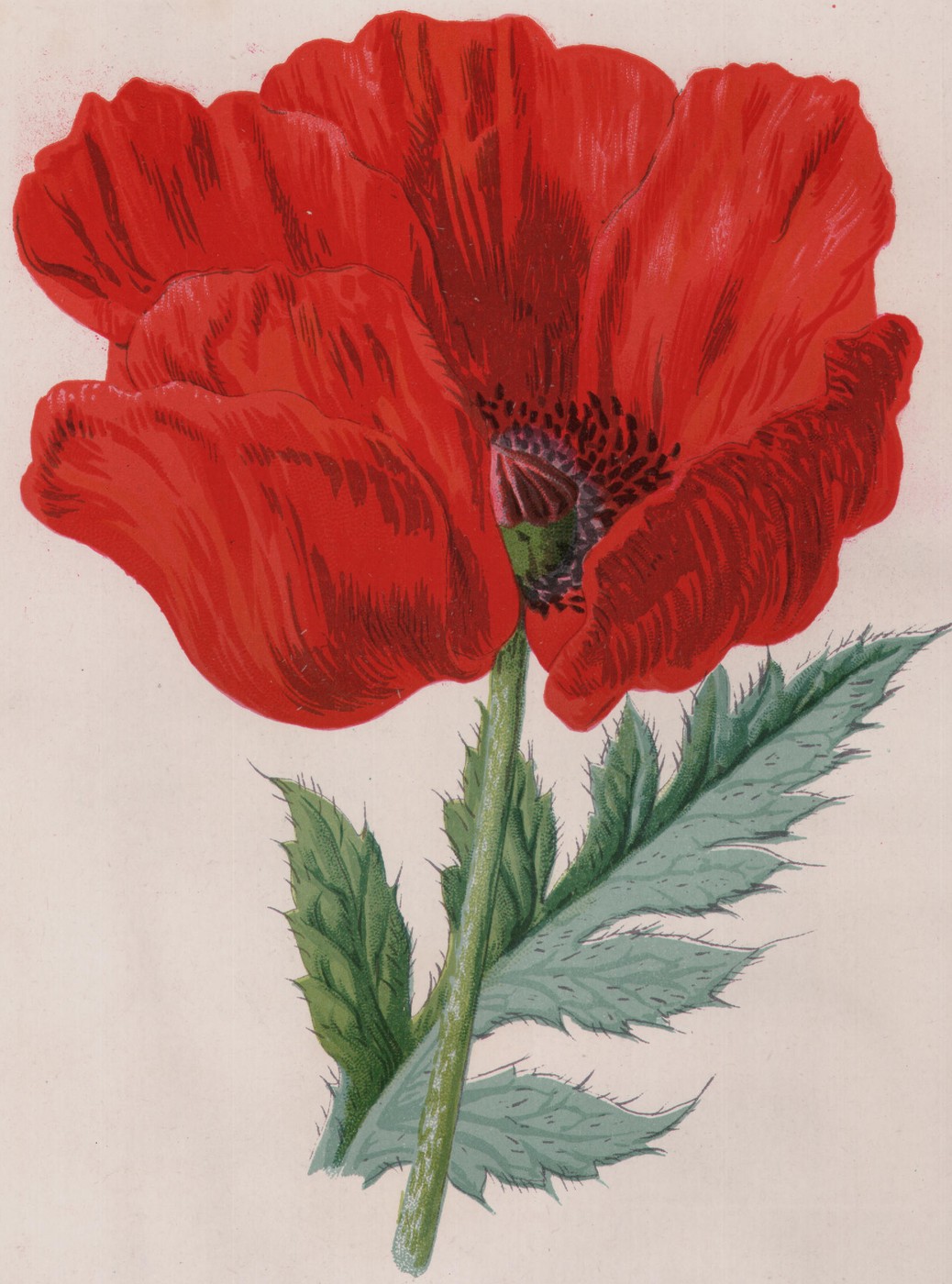
Two or three species of pentstemon were known to English gardens at the close of the last century, but the majority of the kinds that have obtained favour have been in the country only some fifty years or so. The most important is P. gentianoides, introduced from Mexico in 1846, as from this a considerable proportion of the cultivated varieties have been obtained by crossing with P. coboea, introduced in 1835, and P. diffusum, introduced in 1826. There are about fifty species known, and all of them are located in the central and southern parts of the United States and the more temperate parts of Mexico. In addition to the three just named it may be proper to mention, as worthy of attention, P. acuminatus, with reddish - purple flowers; P. Wrighti, with flowers rosy carmine; and P. speciosus, with the flowers, which are usually of a rich blue colour, but are liable to variation. The colours that prevail in the pentstemons are shades of red, blue, rose, carmine, and white; there is somewhat of a tendency to the production of ineffective shades of colour when the species are crossed and seedlings are raised in quantity. Nit the ineffective kinds are easily got rid of by the sample process of destroying them; and when the seedlings are judiciously selected, we have as the result a race of flowers resplendent in beauty, and of immense interest because of their never-ending variations. To the florist one great source of charm is this tendency to variation. It matters not how beautiful a flower may be in its original state if it refuses to undergo modifications when cultivated. The great hope of the florist is to work changes on the types that nature officers to his notice, and when he finds this cannot be done his interest is diminished; and, in fact, there is no such thing as a "florist's flower" that is everywhere and always alike. The very essence of floriculture is to found in floral mutation, although there must be something more than that to ensure for any flower a lasting popularity. The pentstemon varies delightfully, hence there is great pleasure to be found in raising seedlings, and the few who have hitherto practised this system have had a great run of good luck in securing varieties of fine character and good constitution.
The pentstemon belongs to the section of Figworts (Scrophularineae), and has for near relations the calceolaria, schizanthus, verbascum, antirrhinum, paulownia, chelone, digitalis, and mimulus--a most interesting lot, but as regards their qualities rather suspicious, and but rarely of any important use either in medicine or the arts. The best known in respect of utility is the foxglove (digitalis), which affords a powerful drug, and may properly rank as the finest of all our British wild flowers. It is sometimes spoken of as the British gloxinia and the British pentstemon, and in the range of the colouring of its flowers it comes near to the beautiful plant before us. The pentstemon requires a rich deep soil and an open sunny situation to ensure a full display of its beauties. It is a thirsty plant, and therefore in dry weather should be liberally supplied with water.
The best way to ensure a fine show of flowers is to purchase named varieties, and to raise a fresh stock of plants every year by striking cuttings in August and September. These should be kept in a frame or pit through the winter, and be planted out in April and May where they are to flower. Speaking generally, the treatment given to bedding calceolarias will suit them perfectly. When grown from seed should be sown in February, and have the help of a gentle hot-bed to start them. The plants may be brought on in a cold frame, and put out in beds in the month of May.