Home › Contents › The Sweet William
The Sweet William
Dianthus barbatus.
NARROW-LEAVED varieties of this useful flower are called in the old books "Sweet Johns," and the broad-leaved "Sweet Williams." We speak of the carnations and pinks as the true gilly-flowers, and have ample authority for so doing. But at the present time the gilly-flower of the midland counties is the wallflower, and in old times the wallflower was called the sweet william. These confusions of popular names serve as a perpetual justification for the use of the Latin names of plants whenever it is intended to specify particular things, and leave no margin for the exercise of fancy or the changeable vagaries of custom. The plant before us is Dianthus barbatus, the bearded pink, and the name applies to this and no other. The French know it as the nosegay of pinks, we know it as the sweet william, and it has been known as Jove's flower, London pride, tolmeiners, and London tufts. For the association with Jove there is good excuse, the name Dianthus giving the key thereto. Cowley, in the fourth book of his poem on plants, makes a special passage on the subject-- "Sweet william small has form and aspect bright, Like that sweet flower that yields great Jove delight; Had he majestic bulk, he'd now be styled Jove's flower: and if my skill is not beguil'd, He was Jove's flower when Jove was but a child. Take him with many flowers in one conferr'd, He's worthy Jove, e'en now he has a beard."
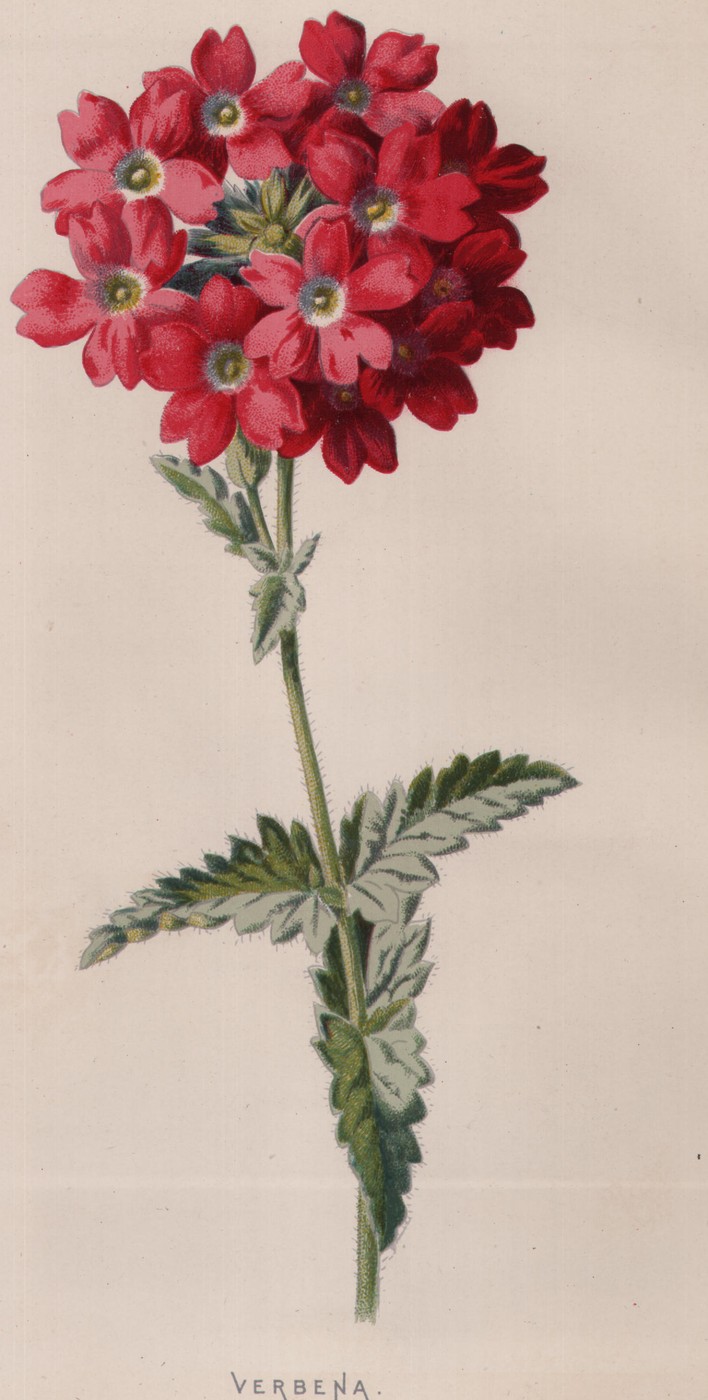
There is no flower of the garden better adapted than the sweet william to the means and requirements of the town amateur, for it is most easily grown and always gives delight, even when far removed from the perfection it attains in the hands of skilful florists. And it will be well for the lovers of cheap hardy flowers to know the florist's model of a sweet william, for what are called "auriculaeyed" flowers are sumptuously beautiful and as easy to grow and keep as the commonest, for it is the good breeding in them, accomplished by regular crossing and severe selecting, that has brought the flowers to the splendid standard with which we are now familiar.
These cheerful favourites are grown from seeds and cuttings, the last-named method being resorted to only in the case of the double-flowered kinds or those of the single that are required for some special purpose for which they must be all alike. To raise a stock from seed requires no appliances whatever, as the seed may be sown in the border, and the plants may be transplanted to where they are wanted when large enough. But the best way is to sow the seed on a bed of fine soil in a frame in a sunny position in the month of April or May. As soon as the young plants begin to crowd one another transplant them to a sunny border four inches apart, and in September remove them to the places they are to occupy for flowering the next season. It is a good plan in decorating a mixed border to put them in clumps, but single plants make fine heads of flowers, and should need no support whatever and no special care in the management. Sweet williams certainly like a rich soil, and in hot, dry weather water is good for them, as for many other beauties; but we have here no delicate subject that needs much nursing, and the principal point is to give every plant a good place, with food below and light above, for in shady and sour places they are of no use whatever.
To raise a stock from cuttings is an easy matter, but requires care, because the cuttings must be taken in the height of summer, when any neglect may prove fatal to them. Any plant it is intended to propagate in this way will supply a number of slender shoots at the base, those that rise in a robust manner for flowering being quite unsuitable. The best cuttings are about two inches in length, or three at the utmost, and it is well to plant them in a frame or under hand-glasses. However, a shady spot near a hedge will answer very well with the help of a sprinkling of water twice a day. It was part of our business when forming a fine strain of sweet williams some years ago to raise a very considerable number from cuttings to insure the finest possible quality of plants for seeding. And it proved an exceedingly easy task to root the cuttings in the border of a cucumber house amongst the cucumbers, the cuttings having the advantage of the warmth and moisture necessary for the cucumbers together with the shade afforded by their large leaves. When thriving in a good border sweet williams last many years, although classed as biennials. But often the ripening of seed proves fatal to them; therefore, any that are worth keeping should be assisted by the removal of the faded flowers before the seed-pods swell. There is no special advantage, however, in keeping them, because young plants produce the finest flowers, and it is advisable to raise a fresh stock every year.
These flowers are not often grown in pots, and for general purposes it would be waste of time to pot them. But an exception occurs in the case of the splendid double crimson variety, the flowers of which are large, rich, and appear in profusion, while the plants are truly perennial, and make fine pot-plants for windows and boxes.