Home › Contents › Winter Heath
Winter Heath
Erica hyemalis superba.
ERICAS are less in fashion than they were forty or fifty years ago, for then they were to be seen in every garden that could boast of a glasshouse and a careful gardener. Plants that make more show and give less trouble have superseded them to a very great extent. This may be matter for regret, but it is easier to make mistakes in such matters than to hit upon a true view of philosophical vexation. The one before us, however, does not count as an erica in the highest sense of the florist; it is a "market flower," a "table flower," a flower for everybody, and therefore it is never seen in an exhibition, and nobody raves about it.
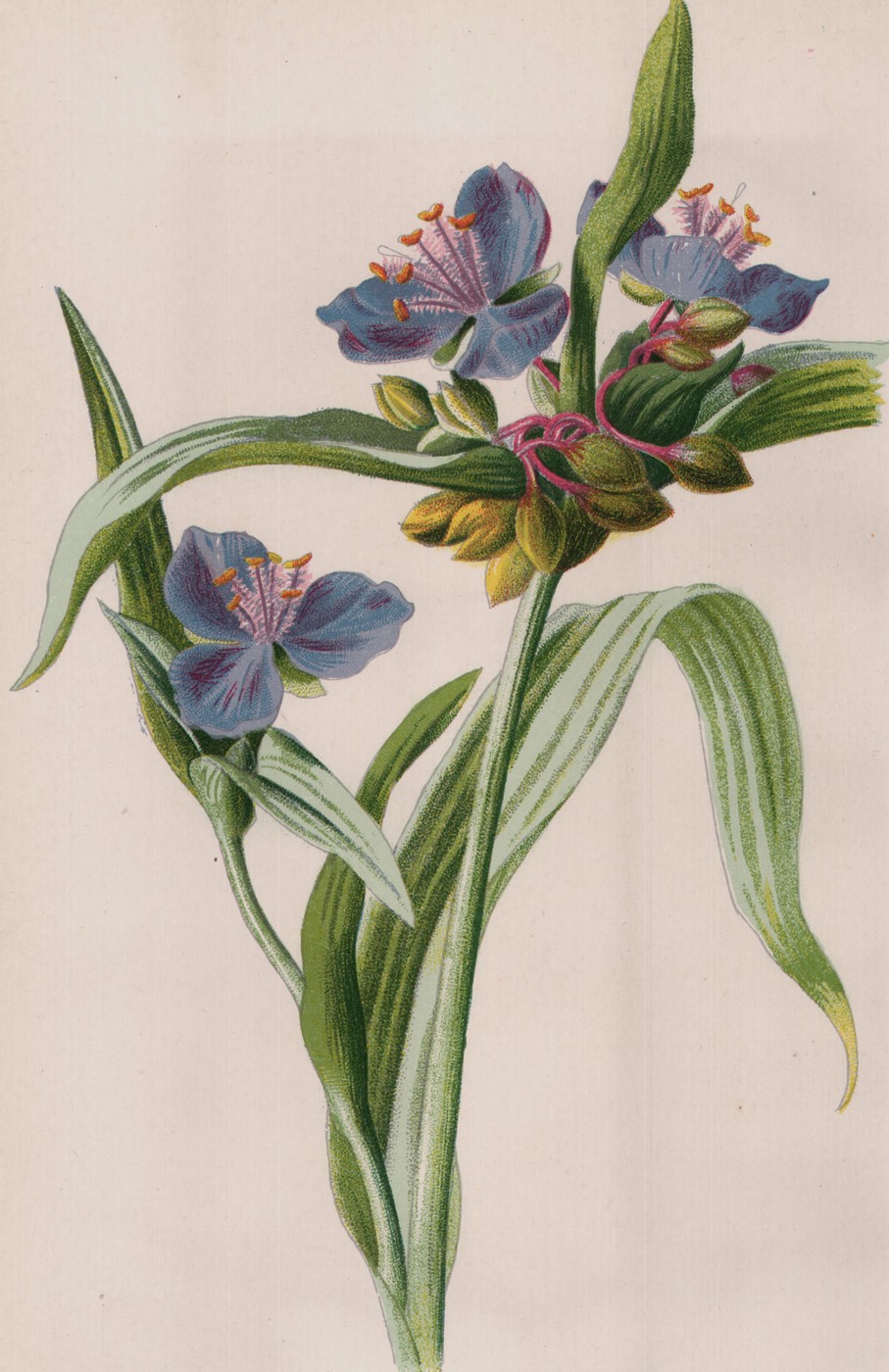
There are three lovely heaths that find favour with the clever cultivators who supply the markets with winter flowers. They are Erica hyemalis, the best variety of which, named superba, has been selected for the illustration; E. Wilmoreana, which is much like it, but of a more herbaceous character, and produces larger flowers; and E. gracilis, the tiny flowers of which are produced in light clusters, the colour clear carmine-tinted rose, or rose-tinted purple. These three are the most familiar, because the most useful, of the winter-flowering heaths; they are to be seen everywhere, but nobody has a word to say for them, because they are "common." Amateurs with a fancy for first-class plant growing may be advised to take these in hand for preliminary lessons in the management of heaths in general. That it requires some skill to manage even these cheap things is made evident by the fate which befalls about ninety-nine of every hundred plants sold in the market. It is not needful to pronounce the word. Let us deal with the hundredth plant that escapes the common doom, and having kept it alive, let us learn to flower it again and again, and to promote its growth to fine proportions.
Inexperienced persons who purchase these plants are apt to imagine that periodical watering should suffice to keep them alive for ever. But it does not suffice, as the facts eventually prove. One of the most important points in the management of all such plants is to re-pot them annually, so that every year they have the advantage of fresh soil to grow in. The treatment of one will be the same as for a hundred, and we will take one and briefly describe the routine of cultivation. It has flowered and is in perfect health, and will not flower again for a whole year. We must have ready a little turfy peat, of a brownish colour, and this must be chopped or torn up and mixed with about one-fourth of its bulk of silver sand or any sharp pit sand that is handy. Turn the plant out of the pot and hold it head downwards, and remove the crocks and some of the old soil, but do not strip the roots or attempt to shake the ball to pieces. When you have had some experience you may shake all the soil off; but in a first effort it will be best not to attempt such radical practice. Now take a clean pot of the same size as that from which the plant was removed, or the selfsame pot may be used if it is washed first. In the bottom of this lay a few pieces of broken pot, hollow side downwards. On these crocks sprinkle a few bits of turfy peat; then put the plant in the pot and fill in round it with the fresh soil, pressing it in with the thumb of each hand somewhat firmly, and put a light sprinkle of the fine stuff over all to make a finish.
Keep the plant in the greenhouse and give it very little water until it begins to grow freely. This will bring us, say, to the end of May. Then take a clean pot one size larger, turn out the plant again, remove the crocks, but do not remove any soil, and pack it nicely into the larger pot with a further supply of the fresh peaty mixture. In about three weeks after this put it out in the open air in a frame, and let it be fully exposed to sun and weather until the end of September, and then put it in the greenhouse, and the work of the season will be completed. The date of flowering will depend very much upon the temperature of the house and the nature of the season. But it will be well to remember that although the greenhouse heaths will not endure frost, they may very soon be killed by excess of artificial heat.
Having thus acquired a lesson in the cultivation of heaths, we may proceed to enlarge our practice by taking in hand a nice little collection. It is of importance to secure a nice nut-coloured fibrous heath soil. For the free growers about one-sixth of silver sand should be mixed with the peat, and for the slow growers about one-fourth. The plants must be re-potted annually until they acquire considerable size, when it may be advised to keep some of them in their pots two years, but refreshed by renewal of the top soil. Any excess of moisture is injurious to heaths; on the other hand, if kept too dry they will become rusty and cast their leaves. The proper place for a collection is an airy span roof house, where they should always be freely ventilated, and have only as much artificial heat as will keep them safe against frost. During July and August it is advisable to keep them out of doors, so placed that worms cannot enter the pots and the mid-day sun cannot scorch them. Indeed, all extremes of heat and cold and drought and humidity must be carefully avoided. The best free-growing kinds for a beginner are Bowieana, Cruenta, Ersurgens, Flammea, Refulgeus, Wilmoreana, Intermedia, Bergiana, Gracilis, Grandissima, Hyemalis, Linneana, Pyramidalis, and Sulphurea.