Home › Lawns for the North › Lawns for the North: Types
Lawns for the North: Types
TYPES OF GRASSES FOR LAWNS. There are three groups of grasses which are used for the development of lawns in the far south (throughout Georgia, Alabama, and Florida). The first group consists of the more or less native grasses, Bermuda grass, St. Augustine grass, and blanket or carpet grass. These grasses will not make a perfect turf as a "perfect turf" is known in the northern states. They grow vigorously and spread rapidly when the temperature does not fall below 50 or 55 degrees. The second group, of which Ross's Southern Mixture is typical, is composed of types of northern grasses, such as orchard grass, Rhode Island bent, redtop, and a small portion of Italian rye, which as a result of experiments have produced good turf on southern lawns. The third group is made up of Italian rye, which germinates quickly and produces a green turf and lives for but a short period during the cooler winter months. It burns out quickly during the hot summer months.
TYPES OF SOILS. In the preparation and development of lawn areas, especially on virgin soil, the land must be cleared and the stumps removed. It is preferable that stumps should either be pulled out by tractor or team, chopped out, or in the instance of pine lands, they should be burned out. The operation of blasting stumps, in order to remove them, leaves a considerable hole, which, when filled with loose soil, however thoroughly tamped, may cause a depression in the lawn on account of later settling. After the land is cleared and the stumps are removed, the lawn is brought to an even grade, and unless the soil is a rich yellow "topsoil" sand, it is advisable to spread a layer of muck, averaging from two to four inches in depth, over the entire lawn area. A deeper covering of muck would be better. The cost of excessive "mucking" is often the determining factor. This muck, which usually comes from the swamps, should be selected with great care. Not all so-called "muck" soil in swamps is adapted for use on lawns. It is often the case that swamp muck put on a high, dry, and sandy LAWNS soil will, under the sun's rays, quickly dry out and become powdery. It is best to obtain, if possible, a sandy muck or black soil of a vegetable nature and not of a woody nature. This can be obtained from the edges of the hammock lands. This type of muck does not dry out. Good muck, taken from the upper layers of swamp areas, ought to be mixed thoroughly with a generous amount of lime and the entire mixture ought to remain for two or three months before it is applied to the lawn area. The mucks to be avoided are the woody and very sour types.
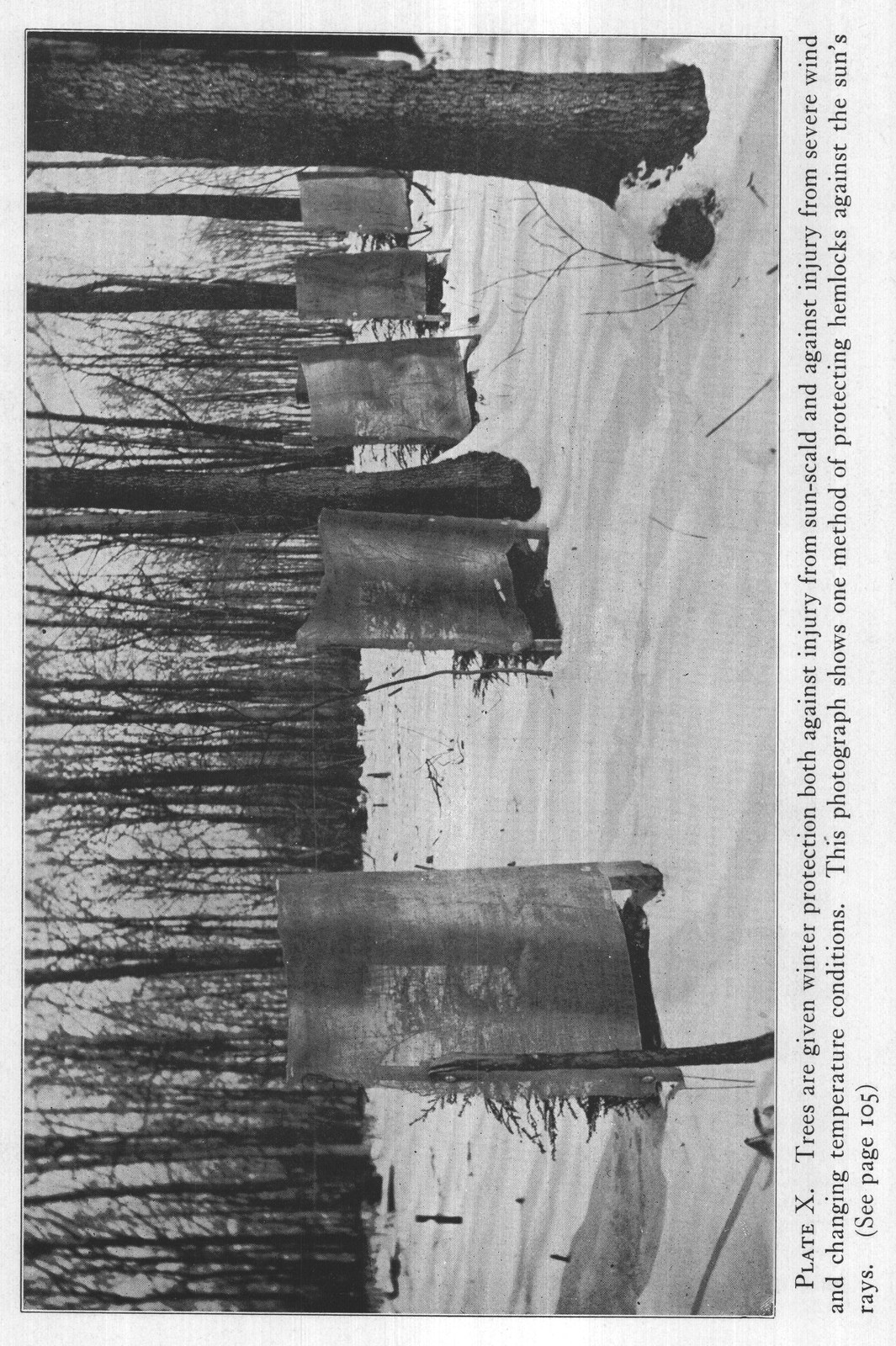
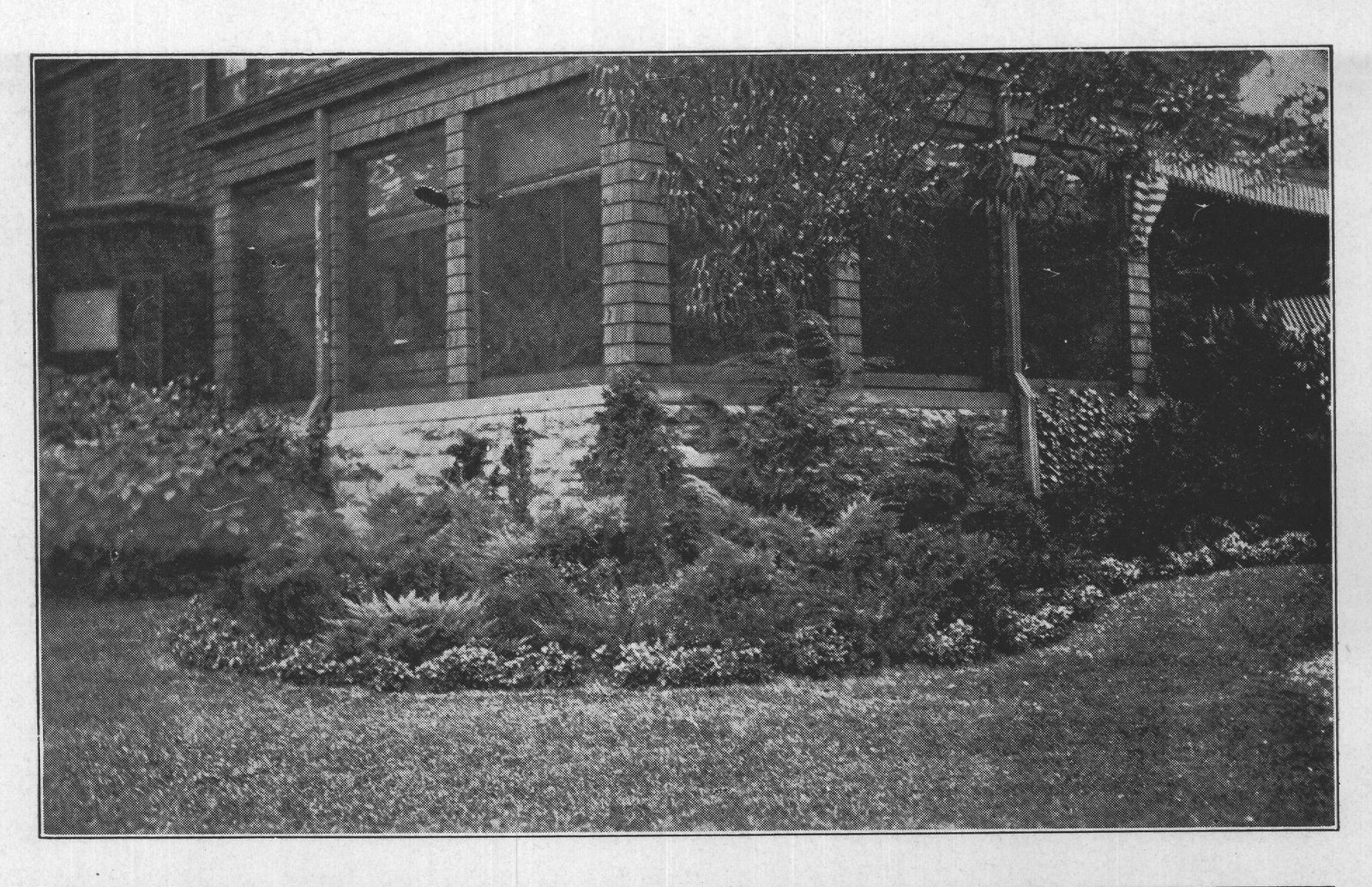
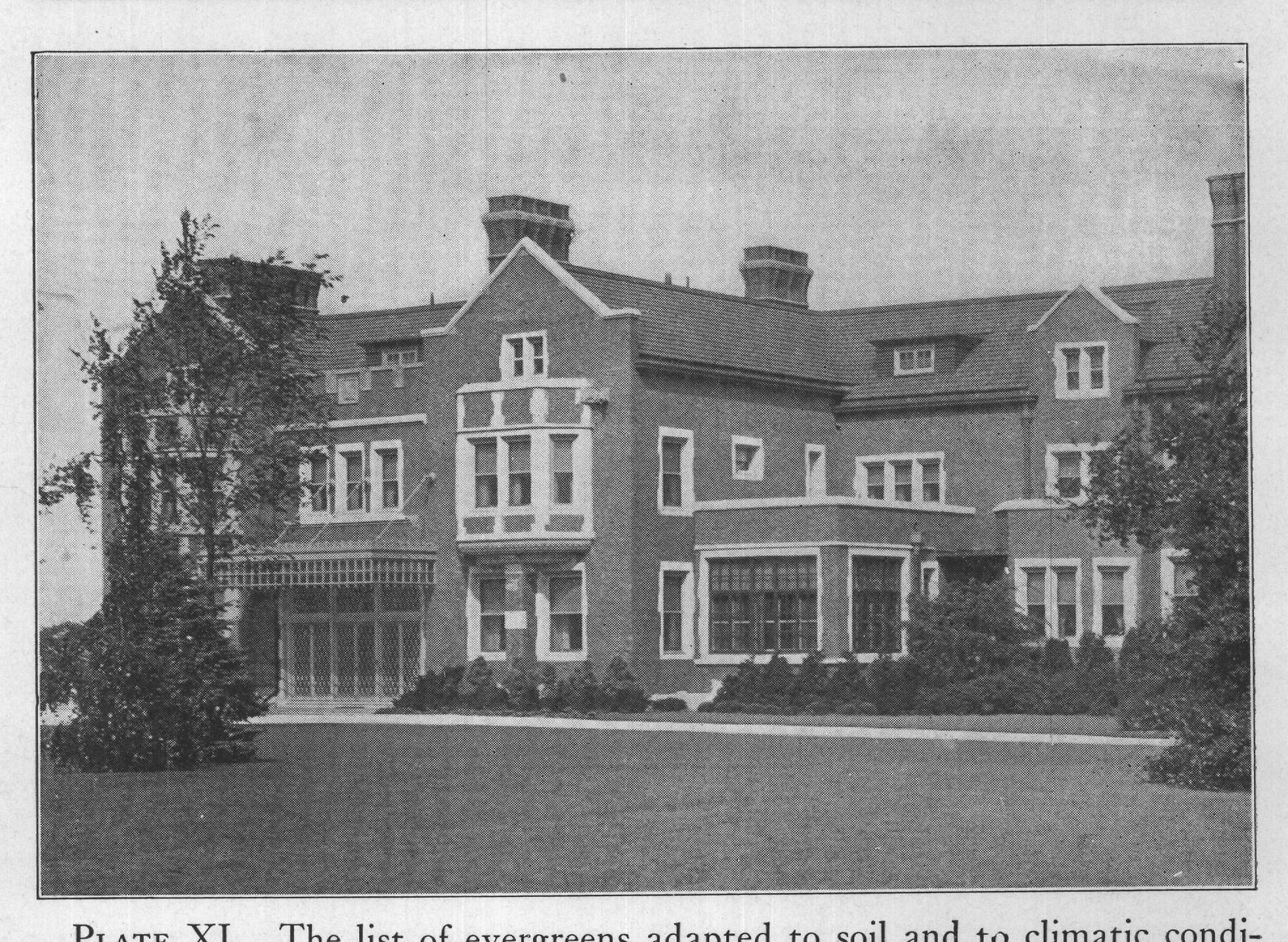
PLANTING AND SEEDING LAWNS. The season for making a lawn varies with the kind of a lawn which is desired, and also with the season of the year when the lawn is to be used. Especially in the far southern states, some lawns may be intended for use and enjoyment throughout the entire year, while another group of lawns may be intended to be at their best during the winter months. With the lawn developed from Bermuda grass or St. Augustine grass the period required for the development of a good turf averages from three months to four months. Therefore, if a lawn of this type is to be developed as a lawn to be maintained throughout the entire year the Bermuda grass or St. Augustine grass can be planted at any time. The ideal time just prior to the rainy season in June or July should be selected so that the roots of this grass can have the benefit of the heavy rains. If a lawn of this character is to be developed as an asset to a distinctly winter home, and artificial watering conditions are immediately available, the Bermuda grass or St. Augustine grass can be planted at any time during the growing season. It is not advisable to plant either of these grasses during the winter months from December to February when temperature conditions are apt to be so low that growth is not encouraged. On the other hand, Italian rye, which is distinctly a grass for winter lawns, cannot be seeded to advantage in the summer months from April to October. Lawns composed of Italian rye may be seeded at any time of the year from the first of November to the first of March. The time required for Italian rye to establish itself, and to produce a green lawn area, averages from three to five weeks. An excellent way in which to obtain a green lawn during the winter months is to seed a Bermuda grass lawn, which is at least three months old, with Italian rye at the rate of one pound for every one hundred square feet. In the middle and southern portions of Florida this is perhaps the most satisfactory method of making a good turf which will be more or less firm and which will be green through the winter months. Italian rye will burn out as soon as the weather begins to get warmer during the middle or latter part of March, and can be reseeded on the foundation of Bermuda grass, in the same manner, during the succeeding fall. Lawns composed of the northern mixtures of grass seed, of which the Ross's Southern Mixture is typical, can be seeded at any time during the cooler months between November and March. These lawns may be maintained in the same manner that any northern lawn is maintained if an excessive amount of care in watering is devoted to them during the hot summer months. It is preferable to reseed each season. This type of lawn is prepared and seeded in a manner similar to the lawns of the north and will establish itself under normal conditions in a period ranging from four to six weeks. This seed is sown at the rate of one pound for each two hundred square feet of lawn area. The operation of seeding lawns with mixtures of northern seed adapted for southern use, and also with Italian rye, is the same as sowing seed for the development of lawns in the north. It is not advisable to try to develop Bermuda grass and St. Augustine grass lawns through seeding. A better lawn can be obtained with less difficulty by planting small clumps of Bermuda grass and St. Augustine grass (Plate VIII) in little drills ten inches or twelve inches apart or by staggering at intervals of twelve inches to eighteen inches. The greater the desire to have a close mat of Bermuda grass or St. Augustine grass the closer should the individual roots be planted. For small lawn areas, tees and greens on golf courses where the time is short in which to develop a good turf, these roots or clumps may be planted as close as six inches from each other. The usual method is to find a patch already growing. The best method of gathering Bermuda grass is to dig underneath the roots with a grub axe or mattock and to gather up the roots with some type of a fork, such as a potato fork. As much soil as possible should be taken up with the roots, where the grass is naturally in rich, fertile soil; otherwise the soil can be shaken from the roots. The best method of handling these roots is to place the entire mass in potato sacks, especially if the source of gathering the grass is at a considerable distance from the place where the lawn is being made. Just previous to planting, the grass should be either torn apart leaving roots and tops on the same stem, or it should be PLATE X. Trees are given winter protection both against injury from sun-scald and against injury from severe wind and changing temperature conditions. This photograph shows one method of protecting hemlocks against the sun's rays. (See page 105) and changing temperature conditions. This photograph shows one method of protecting hemlocks against the sun's rays. (See page 105) PLATE XI. The list of evergreens adapted to soil and to climatic conditions of the middle-west, and valuable for low, refined, mass plantings is limited. The upper photograph shows an effect produced by the use of dwarf yew, Pfitzers and tamarisk-leaved junipers, Mugho pines and Japanese spurge edging. The lower photograph shows the effectiveness of masses of low, refined evergreens against massive architecture. (See page 114) LAWNS chopped into small sections. The first method is preferable. These sections of roots or small clumps are planted from three to six inches deep; more shallow if the soil is moist. Shallow planting should be adopted only where ideal conditions exist for keeping the soil moist. It requires approximately three cubic yards of these roots to plant one acre of lawn. If the roots are contained in two and one half bushel sacks it will require from one hundred and forty to one hundred and fifty of these sacks filled with Bermuda grass roots to plant one acre of lawn, or approximately one sack for each two hundred and twenty-five square feet. These roots of Bermuda grass or St. Augustine grass should not be permitted to dry out, either while piled waiting for shipment or while in transit to the place where the lawn is being made. Injury from the drying out of the roots of these plants between the time they are dug and the time they are planted is not nearly so serious as the injury caused by heating or sweating while the plants are still in the sacks. If these plants are allowed to heat or sweat they immediately turn yellow, begin to rot and die. Any plants that have been subjected to this heating or sweating process should not be planted. If the lawn which is to be developed is large, then a simple method of planting these grasses is to spread them broadcast over the ground and to disc the roots in with a harrow, or to plow a shallow furrow and plant the roots in the furrows. The discing process has sometimes proved a failure. It requires approximately twice as much grass and roots as the planting in furrows, in order to get the same stand of grass. It is a process, however, which can well be adopted where an immediate even stand of grass is not essential. This is true because in the process of planting in furrows the grass can be more evenly distributed at a shallow depth while in the discing process most of the grass finds itself at a considerable depth, thus requiring more time for the grass to reach the surface.