Home › B › Bot (Mag upright or jn s W Britain)
Bot (Mag upright or jn s W Britain)
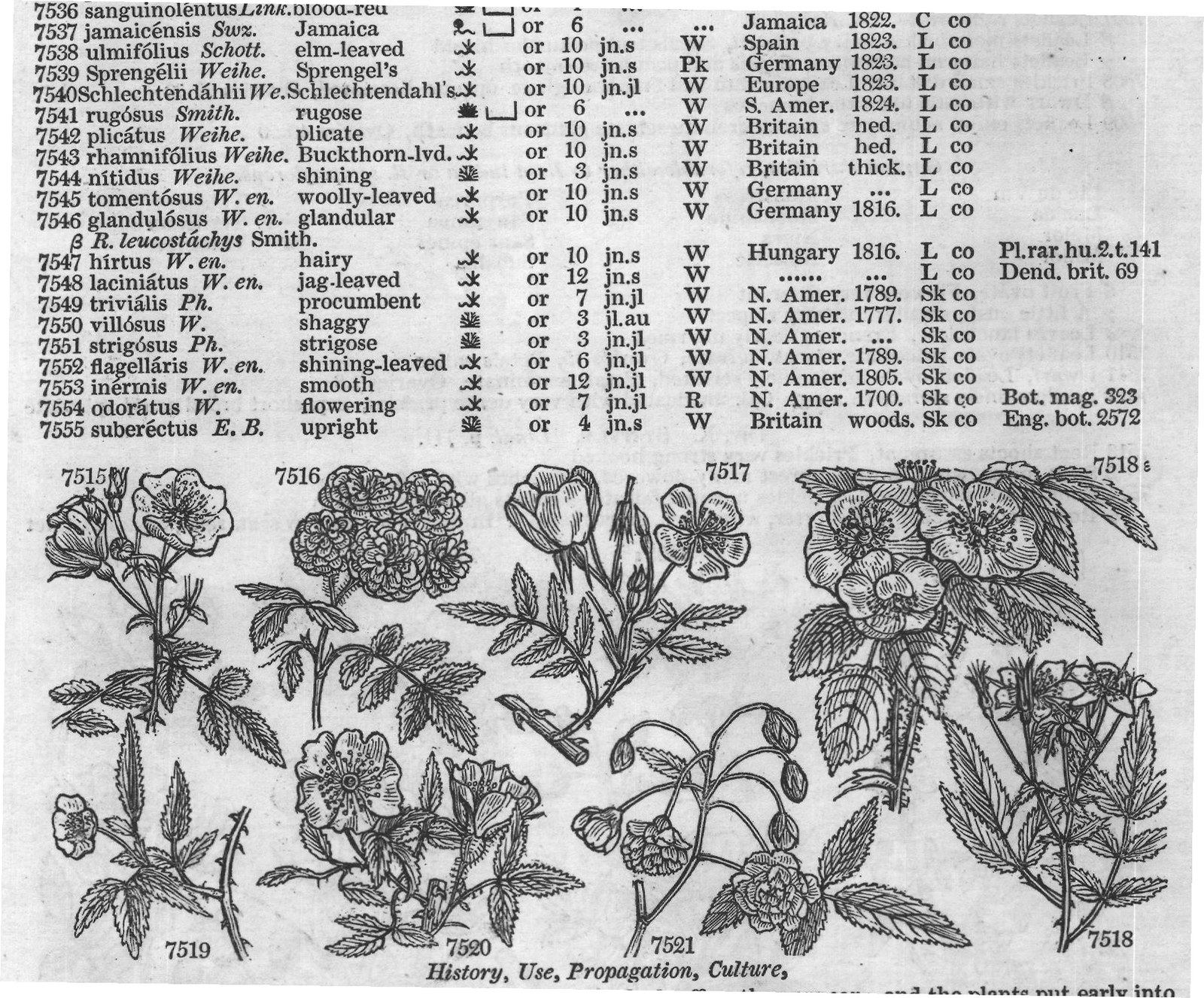
mag. 323 upright or 4 jn.s W Britain woods. Sk co Eng. bot. 2572 7515 7516 7517 7518 ε 7519 7520 7521 7518 History, Use, Propagation, Culture, plunged in an open airy situation; their flower buds pinched off as they appear; and the plants put early into a state of rest, by excluding the sun and rain, but not a free circulation of air. All the species of roses are very liable to the attacks of insects, especially of the aphides; some, and especially the briar and Scotch rose, are attacked by the Cynips rosæ, which, by puncturing the bark, attacked by the Cynips rose, which, by puncturing the bark, occasions the production of rose-galls, and of those mossy tufts often seen on wild roses, which were known formerly under the name of Bedeguar, and used in medicine. Under cover tobacco smoke will prove an effectual remedy for the aphides ; but the larvæ of many others, and especially of tipula and the tenthredinidæ, which occasion the wrapping up and shrivelling of the leaves, can only be removed by washing with limewater or hand picking. 1149. Rubus. From the Celtic rub, which signifies red. Many of the species are only biennial woody plants, producing suckers or stolones from the roots, which ripen and drop their leaves one year, and resume their ORDER III.
ICOSANDRIA POLYGYNIA. 7515 Root-shoots climbing, Prickles nearly equal falcate, Leaves evergreen ẞ Leaves nearly deciduous 7516 Branchlets peduncles and calyx downy, Leaflets soft lanceolate rugose, Stipules pectinate 7517 Branchlets lanceolate, Leaflets and calyxes downy glandular, Stipules entire [acuminate 7518 Branchlets nearly naked, Leaflets ellip. acumin. glauc. beneath with connivent serratures, Sepals comp. β Flowers double Leaflets ovate lanceolate, Petals acute, Pedicels and calyxes glandular Stem arborescent Stem branched, Leaflets ovate-obl. acuminate rugose, Petals large obcordate Stem erect, Flowers double pink [pisiform 7519 Branchlets not downy, Leaflets ovate lanc. with diverging serratures, Stipules entire, Sepals ovate, Fruit ẞ Leaflets smooth on each side Div. XI.
BANKSIANE. 7520 Stipules setaceous deciduous, Petioles and rib prickly, Fruit muricate Div. XI. BANKSIANE. 7521 Branches and fruit unarmed * Shrubby. 7522 Leaves quinate pinnate and ternate green on each side, Stem and petioles prickly, Fl. solitary 7523 Leaves quinate pinnate and ternate rugose smooth on each side, Stem petioles and pedunc. prickly, Raceme 7524 Leaves quinate pinnate and ternate white beneath, Leafl. rhomboid lined 7525 Leaves three white beneath, Stem prickly, Petioles round [terminal 7526 Lvs. pinnate, Stem round, Leafl. 5-7 obl. plicate serr. white beneath, Pan. cymose, Pet. shorter than calyx 7527 Branches pet. and ped. downy, Leafl. 3-5 cuneate obovate unequally toothed upwards, Racemes term. pan. 7528 Smoothish, Leafl. 10-5-3 lanceolate naked on each side finely serrated, Stem unarmed, Bractes lanceolate 7529 Leaves 3 naked, Stems and petioles very hispid, Bristles stiff 7530 Leaves ternate nearly naked: the lateral 2-lobed, Stem prickly round 7531 Stem erect roundish, Prickles many close, Leafl. 5 pubesc. beneath, the lateral sessile, Cal. of fl. reflexed 7532 Stem angular furrowed, Leafl. 5 obtuse shining and even above, hoary beneath, Pan. decomp. hoary 7533 Stem with small straight prickles, Leafl. 3 and 5 obl. acum. doubly and finely serr. pubes. beneath, Fl. pan. 7534 Stems square hoary, Leafl. 3 obov. round, unequally and finely cut-tooth. hoary beneath, Pan. small hoary 7535 Stem aculeate, Leafl. 3-5 unequal ovate acumin. serr. with fine white down beneath, Fl. panicled 7536 Stem densely prickly and strigose, Leafl. 5 lanc 7537 densely prickly and strigose, Leafl. 5 lanc. acum. serrul. smooth, Pedunc. axill. few-flowered pubesc. with recurved prickles, Pan. diffuse 7538 Stem decum. very prick. Leafi. 3 subcord. ov. doub. acute. cren. smooth prick. beneath, Branches very red 7539 Differs from R. corylifolius in having the upper shoots and peduncles covered with short hairs 7540 Differs from the last in having the leaves covered all over beneath with soft hairs 7541 Unarmed, Branches lvs. beneath and calyxes downy with brown hairs, Lvs. 3-lobed, Fl. sol. on short stalks 7542 Stem suberect angular prickly smooth, Leafl. 5 cordate ovate cusp. pubes. beneath, Pan. simple 7543 Stem angul. furrowed, Leafl. 5 orbicular cusp. hoary beneath, Pan. comp. divaricating, Cal. prickly at base 7544 Stem suberect angular smooth, Leafl. 5 ovate shining pubes. beneath, Panicle prickly 7545 Leaves 3 obovate downy and soft on each side, Fl. panicled 7546 Leaves tern. Leafl. roundish ovate acum. mucronate serr. Stem pet. ped. and cal. prickly and glandular 7547 7548 Lvs. Lvs. 5-3 hairy, Leafl. ov. acum. unequally serr. Stem decum. and pet. prickly and gland. Ped. unarm. gland. prickles 7549 Procumbent, Stipules subulate, Lvs. 3-5 digitate, Leafl. ovate obl. smoothish serrate, Pedicels solitary 7550 Leaves 5 ellipt. acumin. finely serrate villous on each side, Stem and petioles prickly 7552 7551 Unarmed hispid, Leafl. 3 or pinnate quinate ovate blunt at base white beneath the odd one cordate cuneate at base; lat. rhomb. Stem round proc. and pet. prick. 7553 Lvs. ternate, Leafl. ovate acute unequally serrate downy beneath, Stem pet. and ped. unarmed 7554 Leaves simple palmate, Stem unarmed many -leaved many-flowered 7555 Leaves pinnate about 7 hairy beneath: the upper ternate, Stem ascending with small straight prickles 7522 7548 7554 7522 β 7525 7526 7555 and Miscellaneous Particulars. 7531 7530 foliage, produce blossom shoots, flower, and fruit, and die the next. The common raspberry and bramble are examples.
R. idæus is a native fruit, greatly improved by cultivation; it has a grateful subacid taste, and like the strawberry, is one of the few fruits that does not undergo the acetous fermentation in the stomach. There are red and yellow varieties, and one very excellent sort that bears twice a-year, in July and September. The raspberry requires a soft rich moist soil, and if a plant stands singly or a single row is planted by itself, the situation should be gently shaded. Where a plantation is made of several rows together it may be placed in the open garden, as the plants will shade one another to a sufficient degree. Frequent renewal is necessary to prevent the stools getting large and matted when they send up only weak suckers. No more suckers should be left at the stools than are intended to bear the following year, unless young plants are wanted; and if very Gg 2 ICOSANDRIA POLYGYNIA. 7556 moluccánus W. 7557 refléxus Ker.
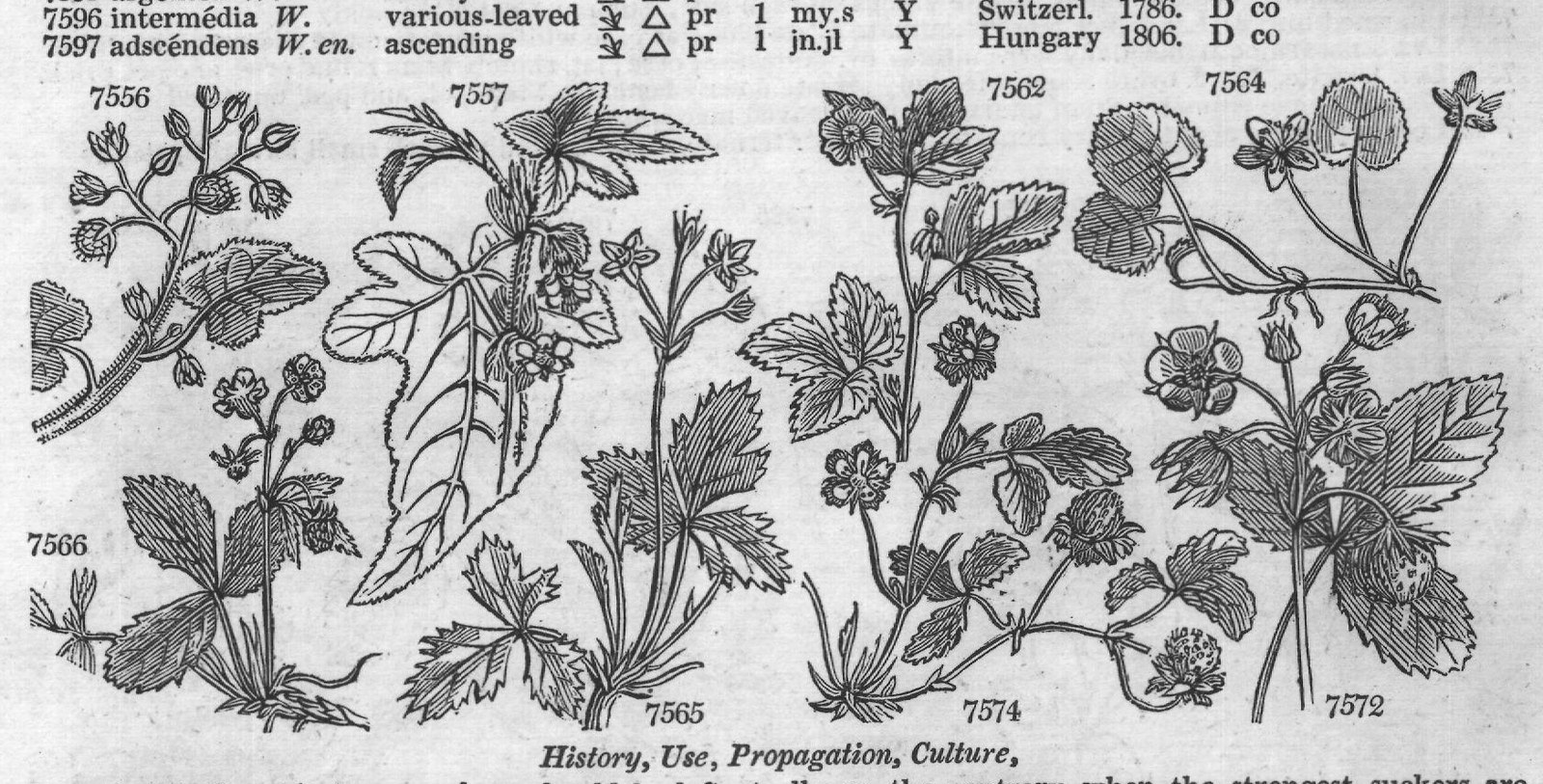
Molucca reflexed or 3 jl.au R or 3 jl.au R E. Indies 1810. Sk l.p China CLASS XII.
Ru.am.5. t.47.f.2