Home › D › Dend (Brit son ra W)
Dend (Brit son ra W)
brit. 166 13049 sonóra W.
Laurineæ. Sp. 2-3. peltate-leaved or 20 ... 13050 ovígera W.
E. Indies 1693. C p.1 Rum.amb.2. t.85 egg-fruited 오 or 20 ...
E. Indies ...
Cp.l Rum.am.3. t.123 1943. AXY'RIS. W.
AXYRIS. 13051 amaranthoídes W. simple-spiked Chenopodeæ.
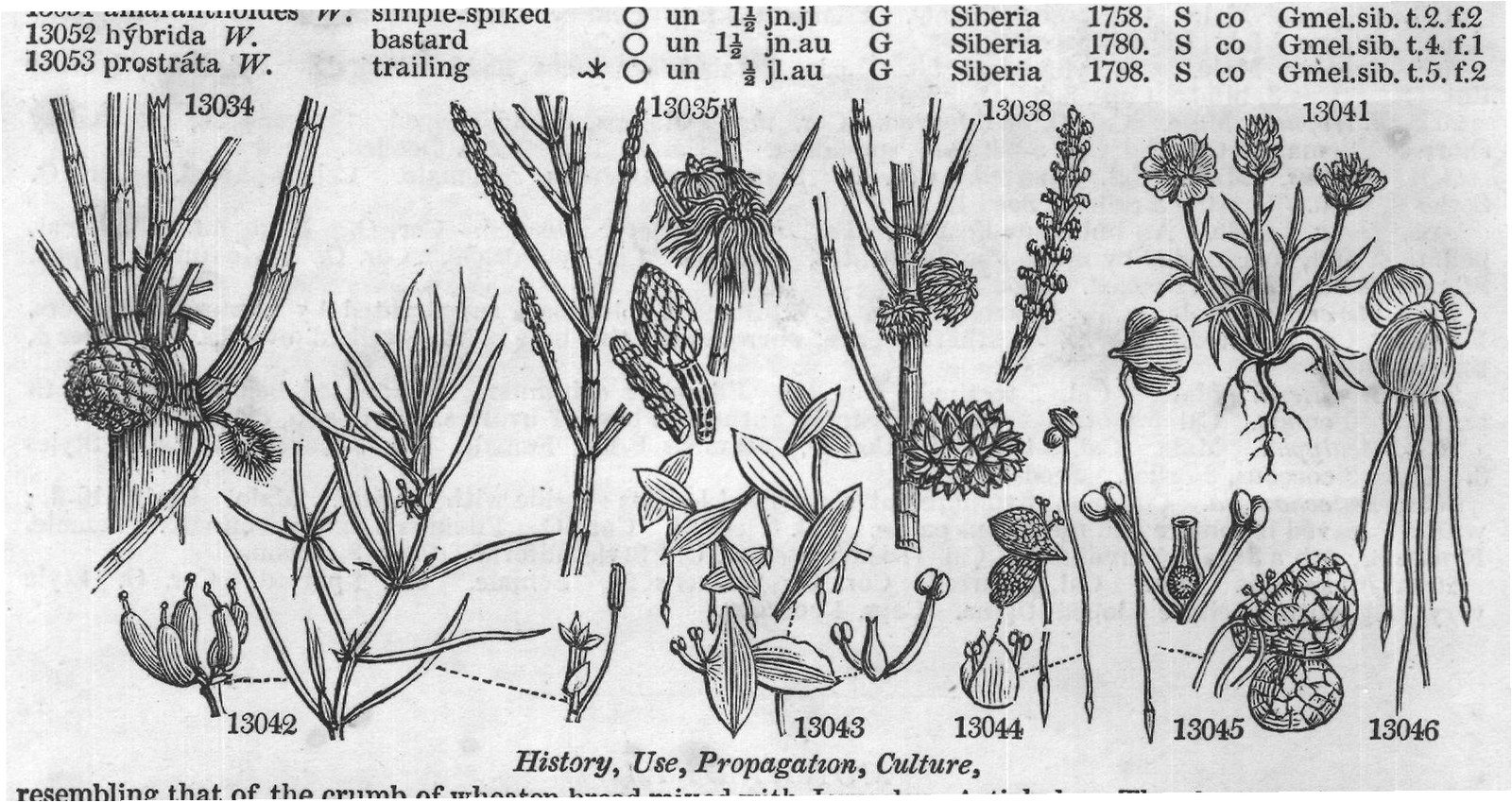
Sp. 3-5. 13052 hýbrida W. bastard 13053 prostráta W. trailing 000 un jn.jl G Siberia 1758. S co Gmel.sib. t. 2. f.2 un 1 jn.au G Siberia 1780. S co Gmel.sib. t.4. f.1 un jl.au G Siberia 1798. S co Gmel.sib. t.5. f.2 13034 13035 13038 13041 13042 13043 13044 13045 13046 History, Use, Propagation, Culture, resembling that of the crumb of wheaten bread mixed with Jerusalem Artichoke. The plant was first brought to England by the unfortunate Captain Bligh. A fresh supply has been more than once received, and there are now a number of plants in the nurseries about London. The bread-fruit, according to Sweet, is generally supposed to be difficult of cultivation in this country. He considers that the plants have been, in general, treated too tenderly, and not allowed sufficient air. "They appear," he says, "to be of the same nature as the Fig, to which they are nearly allied. Large cuttings root freely in a pot of sand, plunged under a handglass, in a moist heat, with all their leaves entire: if the leaves are shortened, it is a great chance if they succeed." (Bot. Cult. 19.) There are several varieties of the bread-fruit, as of all plants that have been long in cultivation. The principal of these varieties are without seeds; the natives of Otaheite reckon at least eight, differing in the of these varieties are without seeds; the natives of Otaheite reckon at least eight, differing in the form of the leaf and fruit.
A. integrifolia is also by many considered a variety of the other; for the leaves are sometimes lobed, and the situation of the fruit varies with the age of the tree, being first borne on the branches, then on the trunk, and finally on the roots.
The bread-fruit is ripe in Decembe December, and is used boiled, or fried in Palm oil. Besides the use of the fruit, the economical purposes to which the other parts of the tree are applied are various. The wood is used in economical purposes to which the other parts of the tree are applied are various. The wood is used in building boats and houses ; a cloth is made of the inner bark; the male catkins serve for tinder; the leaves for wrapping up food, and for wiping the hands instead of towels; and the juice for making bird-lime, and a cement for filling up the cracks of vessels for holding water. According to Forster, three trees are supposed to yield sufficient nourishment for one person.
The bread-fruit tree is distributed very extensively over the East Indian continent and islands, as well as the innumerable islands of the South Seas. In 1793 it was introduced to the West Indies, and subsequently to islands of the South Seas. In 1793 it was introduced to the West Indies, and subsequently to different parts of South America. Much has been said in praise of it by Europeans, and certainly, to the inhabitants of the South Sea Islands , it may be a valuable food, as the acorn was to the inhabitants of Britain, when they were in a certain state of civilization. But whether a civilized and refined people would esteem this fruit for their own use as highly as they do for the use of the semi-barbarians of the South Seas, is a point which may reasonably be doubted. 1936. Casuarina. The name under which the tree is described by Rumphius, who probably called it so from the resemblance its foliage bears to the plumage of the casoar or cassowary of the same country. By the Malays resemblance its foliage bears to the plumage of the casoar or cassowary of the same country. By the Malays it is called filao, and by the South Sea Islanders club-wood, on account of the use of it for warlike weapons. Casuarina equisetifolia is a large spreading and lofty tree, with leaves, or rather branchlets, hanging down in bunches from twelve to eighteen inches in length, like a long head of hair, or a horse's tail, all jointed from top to bottom. The appearance of the whole tree is very remarkable. It was introduced by the first Lord Byron.
ORDER I.
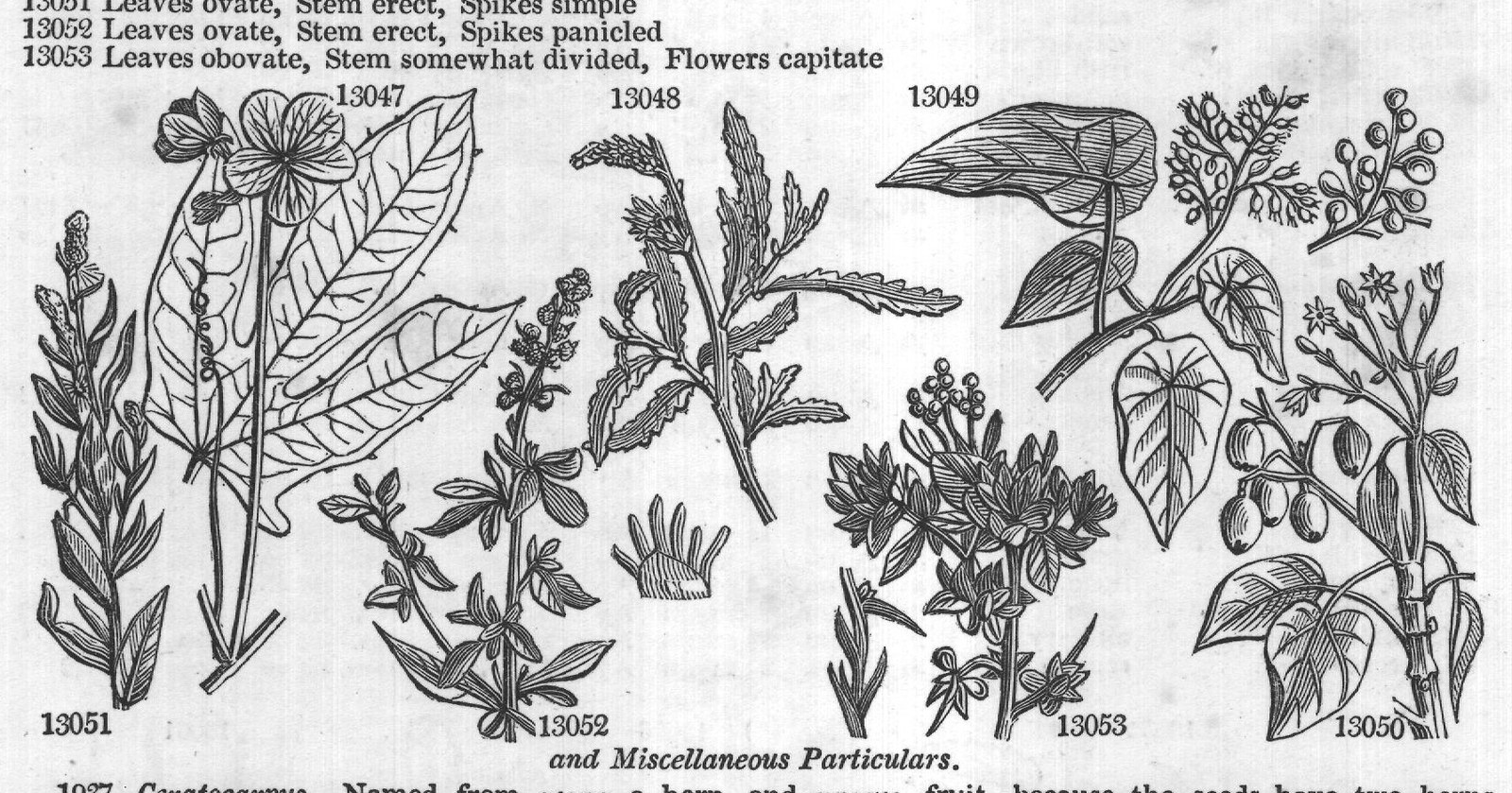
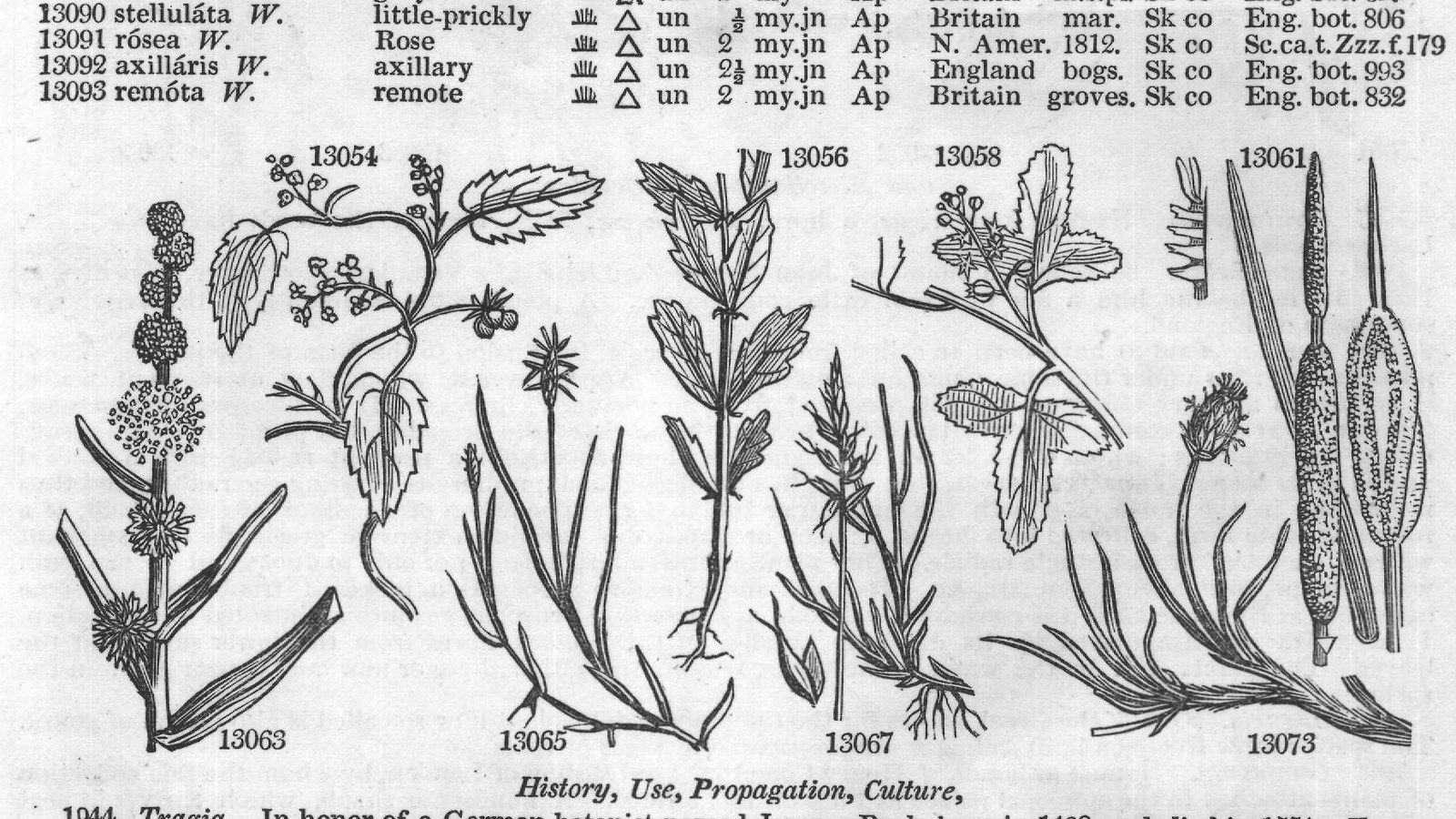
MONECIA MONANDRIA. 13034 Branchlets flaccid round, Scales of cones unarmed villous 13035 Diœcious, Branchlets erect furrowed, Scales of cones unarmed smoothish 13036 Diœcious, Branchlets ovate round, Scales of cones unarmed ciliated 13037 Diœcious, Branchlets flaccid, Scales of cones villous and rough with tubercles 13038 Diœcious, Young branches somewhat flaccid, Scales of cones villous, Male sheaths submultifid ciliated 13039 Branches erect, Scales of cones mucronate pubescent, in which it chiefly differs from C. stricta 13040 Monœcious, Branchlets erect square, Scales of cones unarmed smooth • 13041 Stem much branched diffuse making globose tufts 13042 Anthers 4-celled, Stigmas entire, Pericarps toothed on the back DIANDRIA. 13043 Fronds thin elliptical-lanceolate caudate at one extremity, at the other serrate, Roots solitary 13044 Fronds nearly ovate compressed, Roots solitary 13045 Fronds obovate nearly plane above hemispherical beneath, Roots solitary 13046 Fronds obovate rotundate compressed, Roots numerous clustered 13047 Fruit small, Leaves 3-lobed TRIANDRIA. 13048 Leaves oblong alternately sinuated 13049 Leaves peltate 13050 Leaves cordate ovate acuminate flat stalked at base 13051 Leaves ovate, Stem erect, Spikes simple 13052 Leaves ovate, Stem erect, Spikes panicled 13053 Leaves obovate, Stem somewhat divided, Flowers capitate 13051 13047 13048 13049 13052 and Miscellaneous Particulars. 13053 13050 1937. Ceratocarpus. Named from κερaς, a horn, and κaρπoς, fruit, because the seeds have two horns. Useless weeds. 1938. Zannichellia. So called in honor of John Jerome Zannichella, a Venetian apothecary, who died in 1729. He left behind him a few works of little consequence. A plant found abundantly in the marshes of some parts of England. 1939. Lemna. Said to have been so called from λεπiς, a scale, in allusion to the form of the plants. Theophrastus describes under the same name an aquatic plant. Annual weeds, which float on stagnant water, their flowers are very obscure, and not produced freely in northern climates. L. trisulca has dichotomous, filiform, divaricated stems, having a lanceolate leaf at the angle of the branches, but proliferous ones terminating the branches; where these leaves are conjoined, there shoots out a pendant radicle, with a conical papilla at its base. Linnæus observes, that the stems are flatted and proliferous, crossing each other, and thus resembling in the mode of growth the opuntia or Indian fig. The leaves of L. minor are very small, of a roundish ovate form, collected into heaps by twos or threes, and forming extensive green plats on stagnant waters; each leaf drops a single radicle. This plant affords nourishment not only to ducks, but to the fresh water polype, to Phalæna Lemnata, &c. Its quick and extensive propagation makes it troublesome in some cases, but at the same time it is considered valuable as converting hydrogen gas into air adapted to respiration. L. polyrhiza is distinguished by its dropping bundles of thick black fibres from the lower surface of the leaves. The plants sink in the water in the winter season, and either these or new ones appear again in the spring. 1940. Anguria. One of the Greek names for the Cucumber. The plant now so called is also a kind of gourd. The species grow freely on light soil, and are propagated by seeds or roots. 1941. Comptonia. Named in honor of Henry Compton, Lord Bishop of London, by whom the fine collection of plants attached to the episcopal palace at Fulham was formed. A handsome shrub, which thrives in peat soil, or sandy loam, and is increased by suckers or layers. 1942. Hernandia. So called in honor of Francisco Hernandez, a Spanish botanist, and first physician to Philip the second of Spain, by whom he was sent to Mexico for the sake of investigating the natural history of that country. Linnæus is said to have named it in allusion to the large leaves and little flowers of the plant, which may be supposed to represent the great means and small advantages which attended the expedition of Hernandez. This is an upright lofty tree, with an elegant head. The fruit is a nut, sustained and partly enveloped by a yellow persisting calyx. The nuts are very large, and as they move in the wind, produce sound enough to alarm unwary travellers. In our stoves the plants grow freely in loamy soil, and ripened cuttings, with their leaves on, root in sand under a hand-glass. 1943. Axyris. A word of unknown meaning. Plants of little beauty and the easiest culture. 3 D-3 13056 úrens W. 13057 Chamæléa W. 13058 cannabína W. 1945. TY PHA. W.
CAT'S-TAIL. 1944. TRA GIA. W. 13054 volúbilis W. 13055 involucráta W.
MONECIA TRIANDRIA.
TRAGIA. twining involucred stinging lance-leaved Hemp-leaved LALA