Home › Introduction › Preparing the Beds: Rose-growing
Preparing the Beds: Rose-growing
Too deep Too shallow, and Just right Right, and banked set wrong for winter For splendor, beauty and impressiveness the red Rose stands preeminent, and among the Hybrid Perpetuals the J. B. CLARK, shown above, is a variety with real merit.
Among the more recent introductions in this class should also be mentioned Hugh Dickson, George Dickson and Gloire de Chedane Guinoisseau.
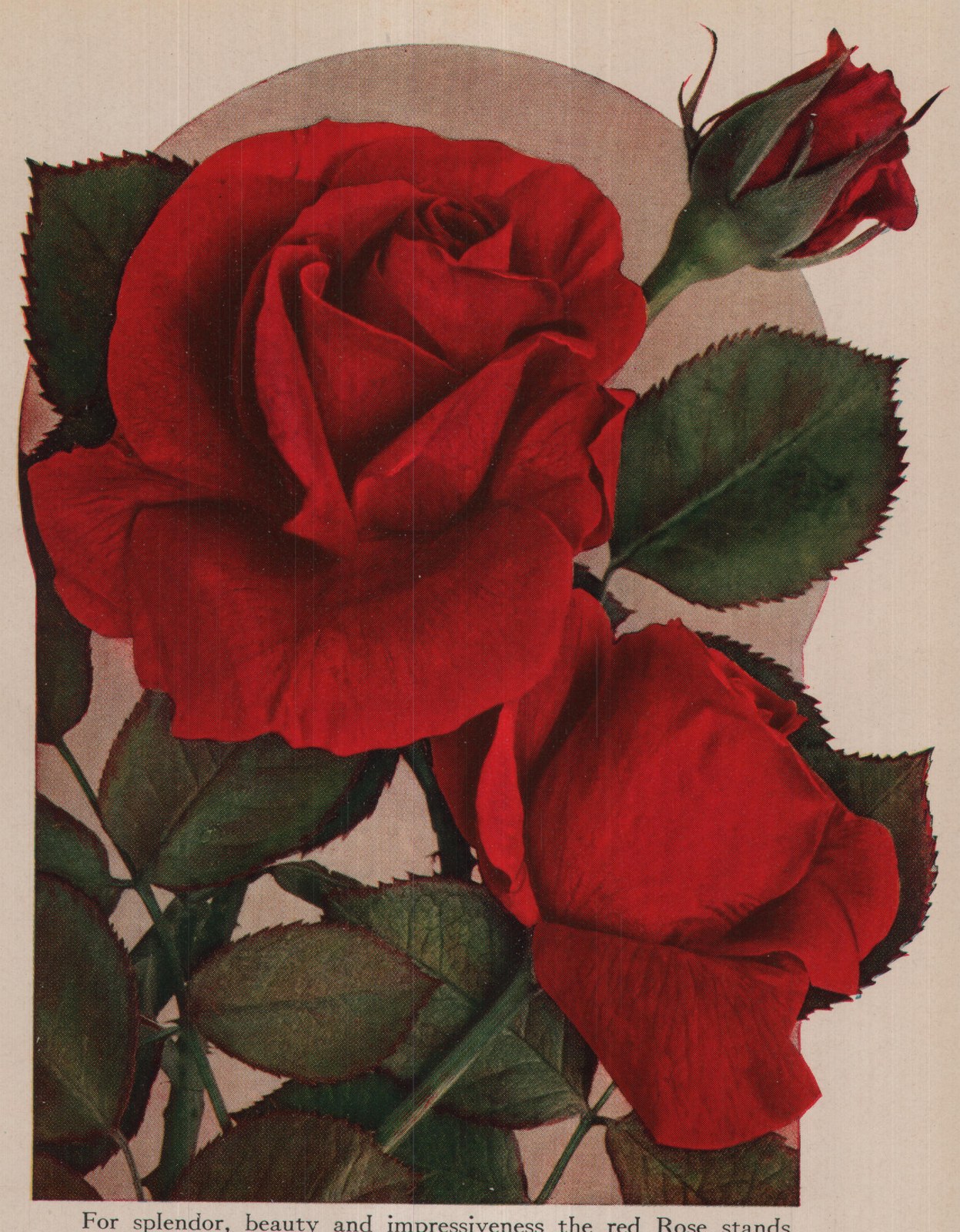
Can you imagine any flower more exquisitely appropriate, either worn singly or in display for the most important occasions, than a freshly opened bloom like the above?
Important celebrations and state occasions are coming more and more to depend upon the Rose for its decorative value, satisfying the mind and heart, as well as the eyes, of all observers. Staking the Roses Standard or Tree roses, unless extraordinarily sturdy and planted where they are protected from the winds, will be the better for staking. The stake should come well up to the head of the rose. Place it while planting, for if it is driven later it may injure an important root. Bush roses seldom need staking when planted, although this is a matter for attention according to the needs of individual varieties. Plants should never be permitted to sway about or become loose at the collar. If the sun be warm within the next day or two after you plant, the bush will be the better for being shaded, as well as for mulch about the roots.
Labeling Rose-growing with labels is by far the most delightful kind. You lose half the pleasure if you lose the names, to say nothing about the satisfaction of accumulating information. The importance of labeling is really great. Do it when you plant as a part of the operation; otherwise, it is likely to be overlooked. The growers' labels are not likely to last more than one season, and then it becomes dreadfully embarrassing not to know what to call your plant-children, whether you want to scold or caress them. Choose the label with fewest faults.