Home › Roses for Various Purposes › Roses for Special Purposes
Roses for Special Purposes
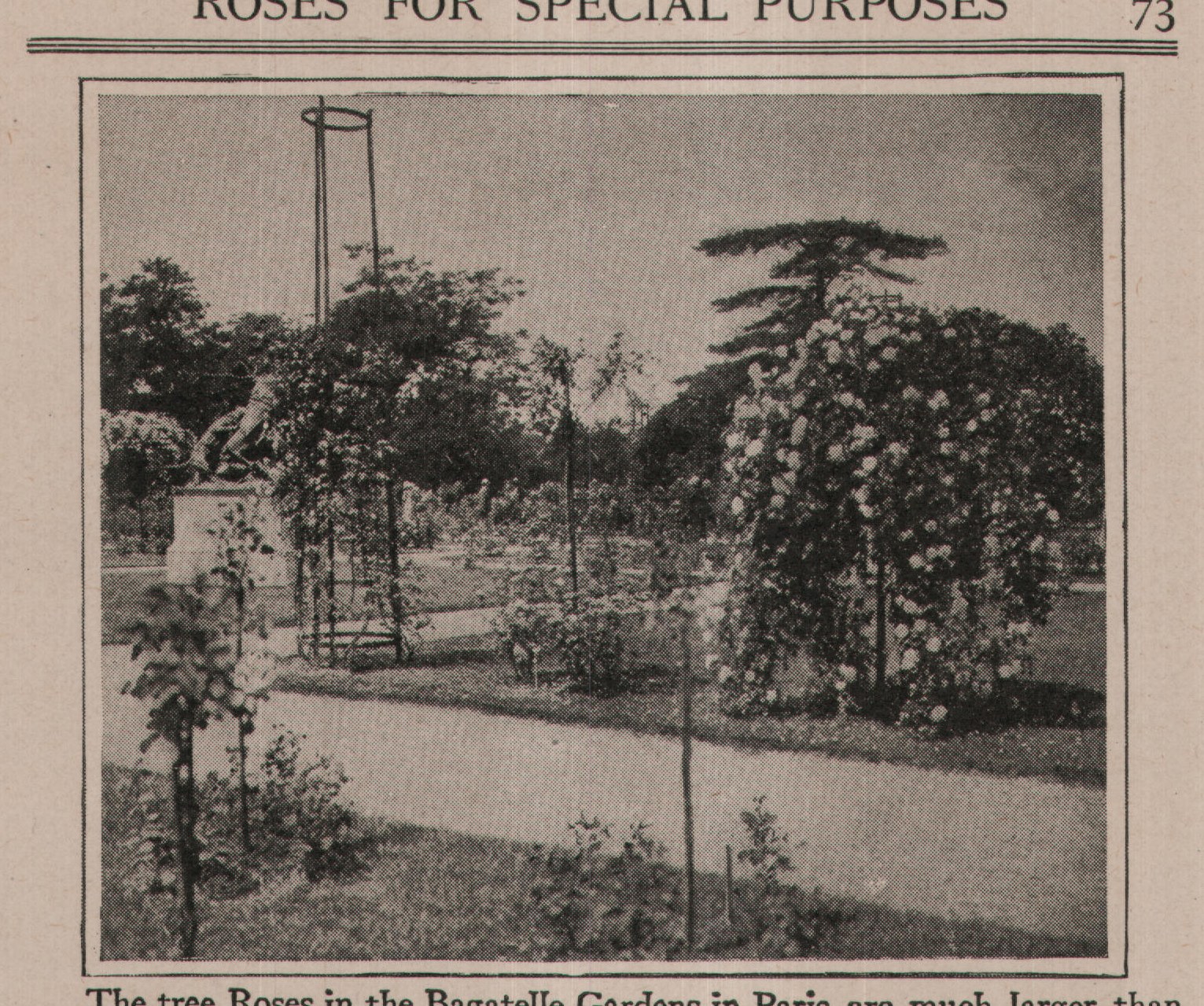
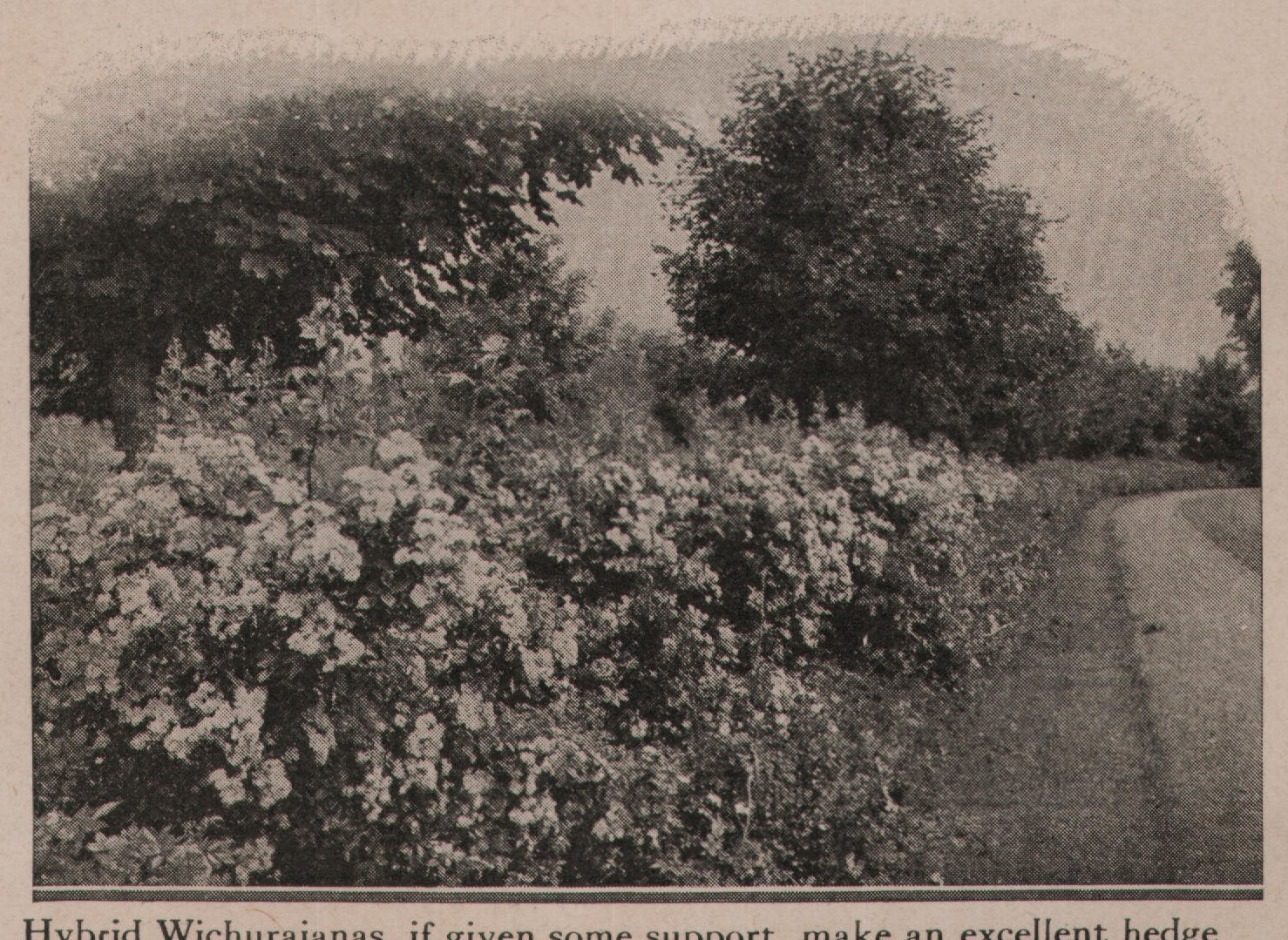
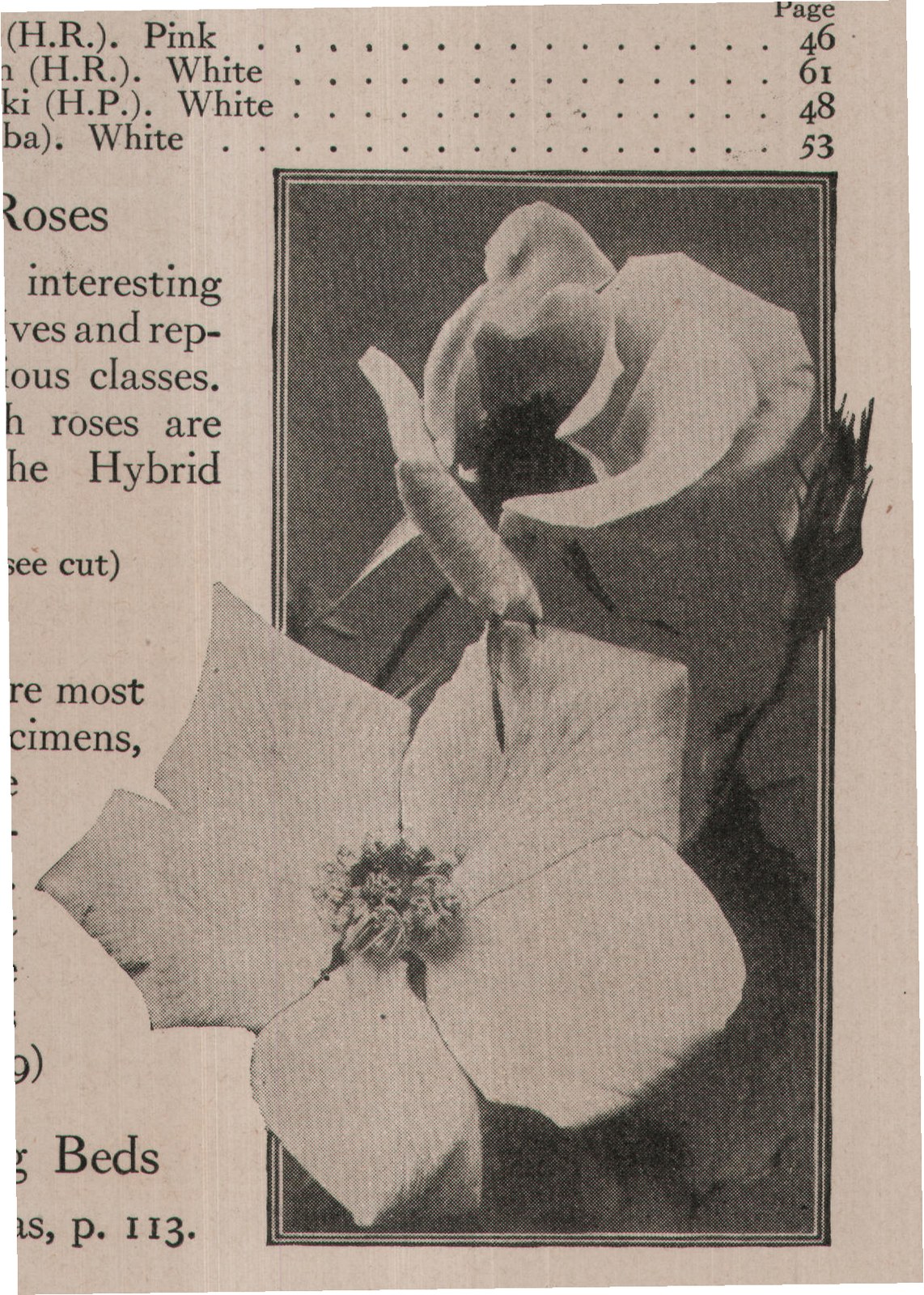
The tree Roses in the Bagatelle Gardens in Paris are much larger than are customarily seen in American gardens. Some of these are 12 feet high, having been budded with Wichuraianas that weep to the ground. Standard or Tree Roses Tree roses add a distinct touch of elegance to any rosegarden. They occupy but little space and are quite imposing. Along the sides of walks they produce an avenue effect. They look well in the center of a small bed or even appropriately placed in the perennial border. Tree roses are produced by budding such climbing and bush roses as Dorothy Perkins or Gruss an Teplitz on the tops of heavy, erect, cane-like stocks. The bush roses may be kept shapely. The climbers will weep to the ground. Tree roses in the past have been less used in this country than in Europe because they are harder to grow in our climate, where summers are sometimes hot and dry. To overcome this handicap you can wrap the tall, slender stalks with moss and keep that moist. Such care, with special winter protection, is likely to be well repaid. They are quite scarce. Rose Hedges These boundary markers are certainly coming to be more and more popular as people learn about the splendid qualities of the Rugosa roses, Sweetbriars, or Altaica for this purpose. They are not neat, compact, and uniform in growth as is a hedge of California Privet, but the thick, bushy mass of glossy, crinkled foliage, especially of the Rugosa, gives a particularly fine appearance. They are perfectly hardy in the coldest winters and are more valuable because the foliage is not troubled with either insects or disease. In warmer countries, or even in our own latitude, a single row of a free-flowering, erect, bushy rose is sure to be pretty and very satisfactory where one wishes simply to mark a boundary, as, for example, between the vegetable- and flowergarden. For this purpose, Gruss an Aachen, (see page 49) is excellent. The small-flowered Polyanthas are also popular, especially Baby Rambler, Marie Pavie, and Baby Dorothy. The list could readily be extended, and each one would be well worth planting. (See list of Polyanthas, page 113.) Hybrid Wichuraianas, if given some support, make an excellent hedge Roses for the Cemetery For some cemeteries we recommend roses that almost care for themselves the Wichuraiana type. They creep like ivy and make a mat of shiny foliage which is green for eleven months.