Home › Pruning › Pruning: Shows
Pruning: Shows
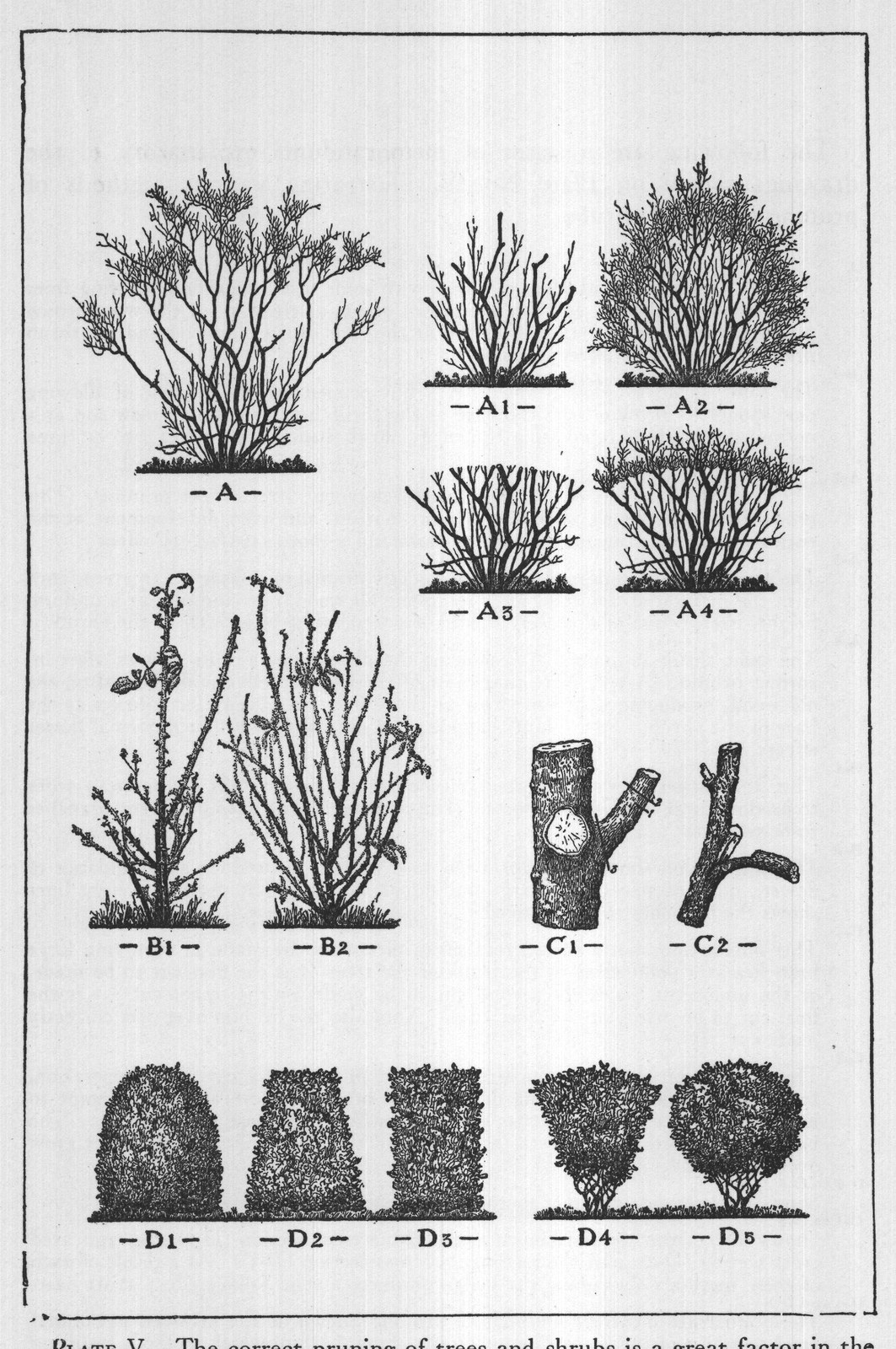
D-1 to D 5 Shows correct and incorrect methods of shearing or pruning hedges. D-1 to D-3 Shows the correct method known as the ovoid cross section (D-1); the truncated cross section (D-2); and the rectangular cross section (D-3). As a result of each of these methods of pruning the hedge produces a solid foliage effect at its base. D-4 and D-5 These illustrate incorrect methods of pruning known as the inverted pyramidal cross section and the inverted cone cross section, both of which methods resulting in a wide top and a narrow base in the cross section of the hedge produce a bare effect at the base and give little foliage. -A- -A1- -A2- - A3- -A4- - Bi- - B2 - -C1- -C2- -D1- -D2- -D3- - D4- -D5- PLATE V. The correct pruning of trees and shrubs is a great factor in the successful maintenance of landscape plantings. These diagrammatic drawings, together with the explanations on the opposite page, illustrate correct and incorrect methods of pruning. PRUNING There are two types of shrubs (Chapter XLII-A, Page 296), one of which is the spring or early-flowering shrubs, such as Van Houtte's spirea, weigela, snowball, and most golden-bells, producing flowers on wood formed during the previous year. The other type consists of plants which produce flowers during the late summer and fall on the growth of the current year. This type includes the rose of Sharon, the hydrangea, and the common elder. The general rule for the pruning of flowering trees and shrubs, in order to encourage the development of more flowers, is to prune soon after flowering. Unless one has a definite knowledge of shrubs, this rule should be applied literally. The other rule is that spring-flowering shrubs should be pruned in the early summer immediately after they are through flowering, and the summerflowering shrubs can be pruned to the best advantage in the late winter and early spring before growth has commenced, to avoid the possibilities of winter-killing. Lilacs also should be pruned during the early part of the summer and shortly after the blooming period is complete and in every instance before the seed pods have formed. Spring-blooming plants should be pruned within a week after the blossoms fall to encourage a summer growth of budded wood which will be well ripened by winter.
Summer-blooming plants may be pruned either in the late summer or just before spring growth begins, to force a new spring growth upon which summer flowers appear. Late summer pruning is never advisable. Some shrubs, such as lilacs, flowering dogwoods, and rhododendrons should not be pruned except to remove dead and diseased branches, or branches that interfere with the development of the plants. Deciduous shrubs of which the wood has become incurably affected with scale may, however, be revivified by being cut down to the ground. In the case of plants that form ornamental fruit the branches should not be cut back far, nor the pruning done after the fruit buds have formed.
Any dead or dying wood should be removed as soon as noticed. In the case of summer-blooming shrubs pruning is best done in the early spring after the leaves appear, in order to remove winter-killed tips.
Old wood should be cut out to prevent shrubs from getting "leggy, i. e., having all top with no foliage around the base. In removing old wood, cut to the base of the plant; otherwise sprouts will shoot up from stumps and fail as the latter decay. New growth should always be encouraged from the roots. Cutting back all branches, or giving shrubs an even shearing should be avoided, as strong shoots will develop and cause a too succulent and unbalanced top growth (See Plate V). With transplanted stock a general rule is to remove about one-fourth of the wood, to offset the loss of roots. Root pruning for shrubs is similar to that of trees (See Chapter on "Planting and Transplanting").
Old shrubs and overgrown material should be thinned out by removing some branches to the base of the plant. This will allow sun and air to reach the base of the plant and encourage growth at the bottom. The dogwoods, globe flowers, and similar shrubs lose the bright colour of their wood as they age. The old wood should be removed to encourage new growth.