Home › Typical Plants › Typical Plants (II)
Typical Plants (II)
CLOSE PLANTING NORMAL DISTANCE Bulbs and Tubers Hyacinths Tulips 4 in. 6 in. 4 in. 6 in.
Narcissi 4 in. 6 in.
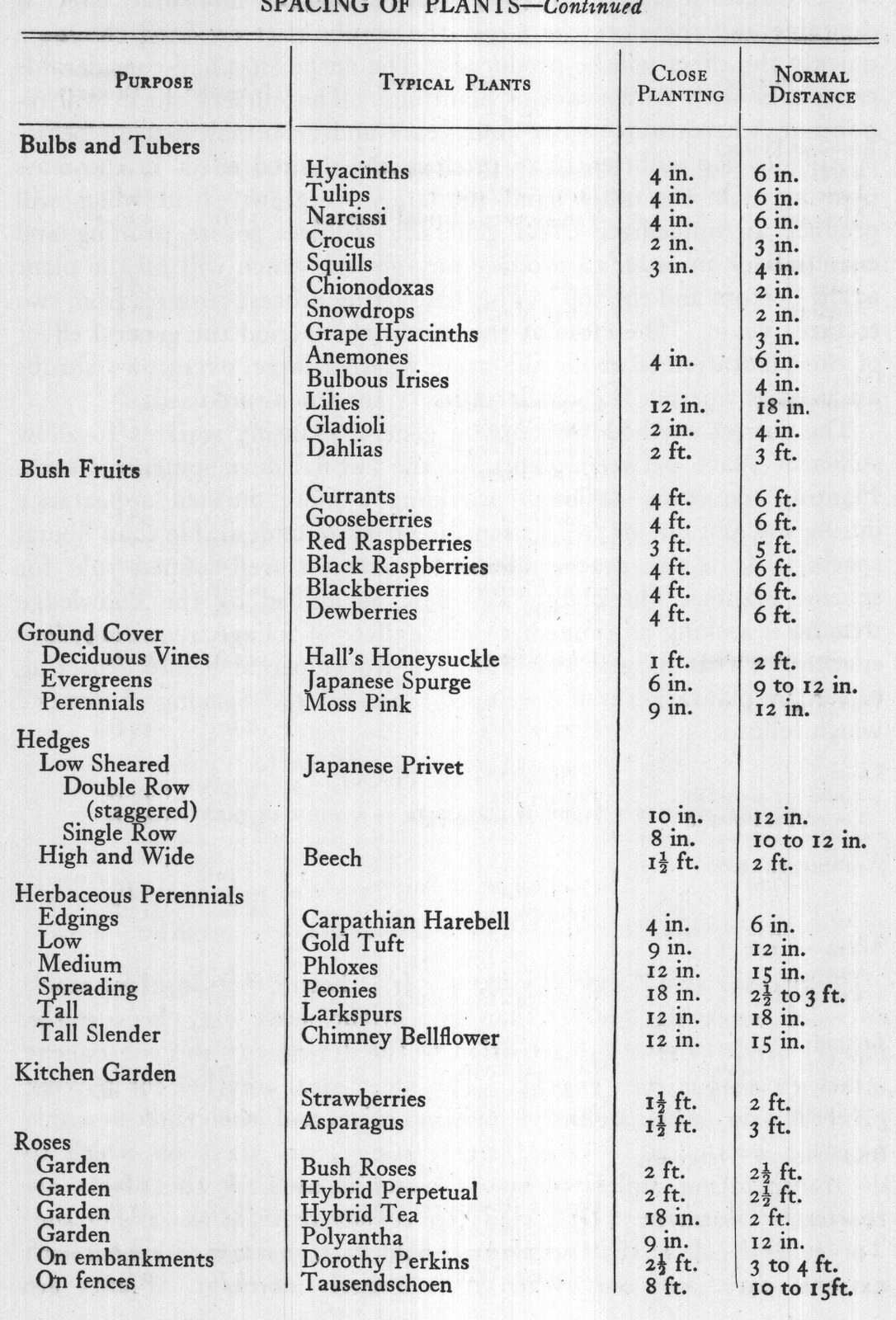
Crocus 2 in. 3 in.
Squills 3 in. 4 in.
Chionodoxas 2 in.
Snowdrops 2 in.
Grape Hyacinths 3 in.
Anemones 4 in. 6 in.
Bulbous Irises 4 in.
Lilies 12 in. 18 in.
Gladioli 2 in. 4 in.
Dahlias 2 ft. 3 ft.
Bush Fruits Currants 4 ft. 6 ft.
Gooseberries 4 ft. 6 ft.
Red Raspberries 3 ft. 5 ft.
Black Raspberries 4 ft. 6 ft.
Blackberries 4 ft. 6 ft.
Dewberries 4 ft. 6 ft.
Ground Cover Deciduous Vines Hall's Honeysuckle I ft. 2 ft.
Evergreens Japanese Spurge 6 in. 9 to 12 in.
Perennials Moss Pink 9 in. 12 in.
Hedges Low Sheared Japanese Privet Double Row (staggered) IO in. 12 in.
Single Row 8 in.
IO to I2 in.
High and Wide Beech I ft. 2 ft.
Herbaceous Perennials Edgings Low Gold Tuft Medium Phloxes Spreading Peonies Tall Larkspurs Tall Slender Gold Tuft Peonies Phloxes Carpathian Harebell 4 in. 6 in. 9 in. 12 in. 12 in. 15 in. 18 in. 2 to 3 ft. 12 in. 18 in.
Chimney Bellflower I2 in. 15 in.
Kitchen Garden Strawberries I ft. 2 ft.
Asparagus I ft. 3 ft.
Roses Garden Bush Roses 2 ft. 2 ft.
Garden Hybrid Perpetual 2 ft. 2½ ft.
Garden Hybrid Tea 18 in. 2 ft.
Garden Polyantha 9 in. 12 in.
On embankments Dorothy Perkins 2 ft. 3 to 4 ft.
On fences Tausendschoen 8 ft.
IO to 15ft.
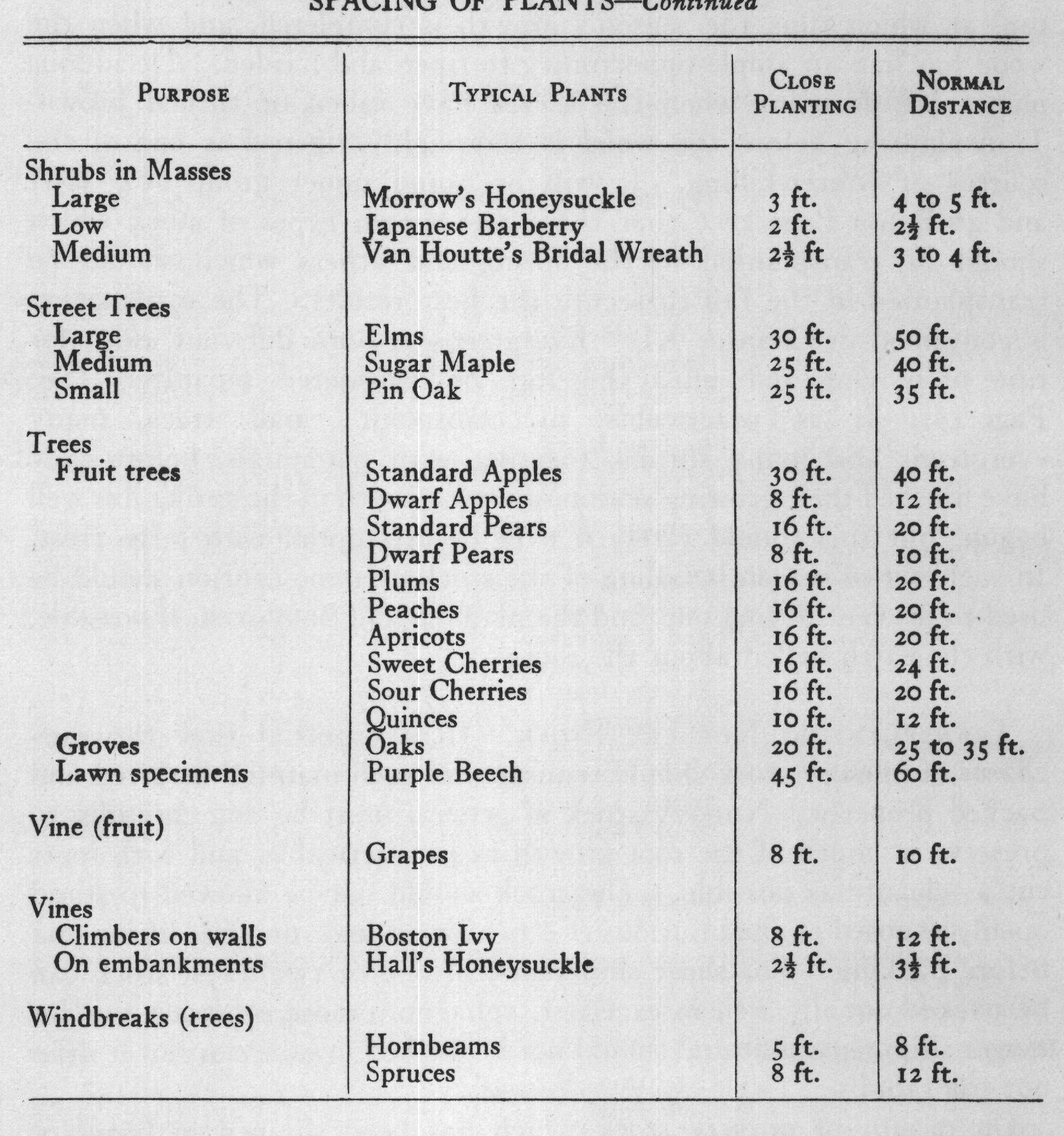
SPACING OF PLANTS-Continued PURPOSE Shrubs in Masses Large Low Medium CLOSE PLANTING NORMAL DISTANCE Morrow's Honeysuckle 3 ft. 4 to 5 ft.
Japanese Barberry Van Houtte's Bridal Wreath 2 ft. 2 ft. 2 ft 3 to 4 ft.
Street Trees Large Medium Elms 30 ft. 50 ft.
Sugar Maple 25 ft. 40 ft.
Small Pin Oak 25 ft. 35 ft.
Trees Fruit trees Standard Apples 30 ft. 40 ft.
Dwarf Apples 8 ft. 12 ft.
Standard Pears 16 ft. 20 ft.
Dwarf Pears 8 ft.
IO ft.
Plums 16 ft. 20 ft.
Peaches 16 ft. 20 ft.
Apricots 16 ft. 20 ft.
Sweet Cherries 16 ft. 24 ft.
Sour Cherries 16 ft. 20 ft.
Quinces 10 ft. 12 ft.
Groves Oaks 20 ft. 25 to 35 ft.
Lawn specimens Purple Beech 45 ft. 60 ft.
Vine (fruit) Grapes 8 ft. 10 ft.
Vines Climbers on walls On embankments Windbreaks (trees) Boston Ivy 8 ft. 12 ft.
Hall's Honeysuckle 2 ft. 3½ ft.
Hornbeams 5 ft. 8 ft.
Spruces 8 ft. 12 ft.
CONDITIONS FOR TRANSPLANTING. It is better to transplant stock on a dull, moist day, rather than on a bright, sunny day, because the planter needs to give less attention to the drying out and consequent injury to fibrous root growth. The most ideal weather for moving plants is a day when a cloudy condition exists and when there is ample moisture in the air. Avoid bright, sunny, dry days on which to do transplanting, unless plenty of water is used, or the plants are thoroughly dormant. Dry winds are equally as injurious as hot sun. The general rule is that no plant should be transplanted except with extreme care, and only when it is entirely dormant. Plants are