Berberis
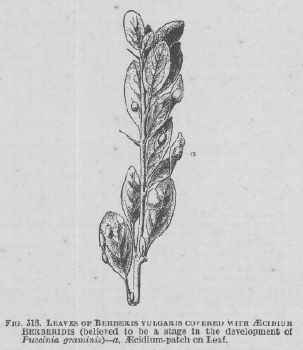
(Berberys is the Arabic name of the fruit, signifying a shell; many authors believe this to be the original derivation of the word, because the leaves are hollow, like a shell). Barberry. ORD. Berberideae. Including Mahonia. A genus of hardy erect or trailing shrubs. Flowers yellow or orange, racemose or fascicled; sepals and petals similar, in two series. Leaves simple or compound, alternate or fascicled from the non-development of the branches, often spinose, or reduced to spines. The common sorts thrive well in any ordinary garden soil, but the rarer kinds require a compost of loam, peat, and a little sand. Propagation may be effected by suckers or layers, put down in the autumn; by ripened cuttings, taken at the same time, and planted in sandy soil, in a cold frame; or by seeds, sown in the spring, or, preferably, in the autumn, when, if fresh from the pulp or berry, they will germinate in the open in the following spring. The last-named is the method generally adopted.
B. Aquifolium (Holly-leaved).* fl. yellow; racemes nearly erect, much crowded. Spring. l., leaflets two or three pairs, with an odd one, the lower part distant from the petiole; ovate, approximate, cordate at the base, one-nerved, spiny-toothed. h. 3ft. to 6ft. North America, 1823. This is extensively planted in woodlands as an excellent covert plant. SYN. Mahonia aquifolia. (S. E. B. 49.)
B. aristata (bearded). fl. yellow; racemes nodding, many-flowered, longer than the leaves; pedicels trifid, three-flowered. Spring. l. obovate-oblong or lanceolate, mucronate, membranous, smooth, serrated with four or five spinulose teeth; lower spines three-parted, upper ones simple, and hardly bidentate at the base. h. 6ft. Nepaul, 1820. (B. R. 729, under name of B. Chitria.)
B. asiatica (Asiatic). fl., racemes short, many-flowered, corymbose, shorter than the leaves; pedicels elongated, one-flowered. l. oval, cuneated, or elliptical, mucronate, smooth; under surface glaucous, entire, or spinulosely-toothed; spines trifid, or simple. h. 4ft. to 8ft. 1820. Half-hardy.
B. buxifolia (Box-leaved).* fl. solitary, on slender peduncles. Spring. l. nearly sessile, oval or oblong, about 1/2in. long, entire. h. 8ft. Straits of Magellan, 1830. nana is a charming little variety, not exceeding 18in. in height. SYN. B. dulcis. (B. M. 6505.)
B. canadensis (Canadian).* fl., racemes many-flowered, nodding. Spring. l. obovate-oblong, remotely serrated; upper ones nearly entire; spines three-parted. h. 4ft. Canada, 1759.
B. crataegina (Hawthorn-like). fl., racemes many-flowered, crowded, spreading, scarcely longer than the leaves. Spring. l. oblong, reticulated, hardly serrated; spines simple. h. 4ft. to 8ft. Asia Minor, 1829.
B. cretica (Cretan). fl., racemes three to eight-flowered, rather shorter than the leaves. Spring. l. oblong-oval, entire, or somewhat serrated; spines three to five-parted. h. 4ft. to 5ft. Crete and Cyprus, 1759. The variety serratifolia has leaves ciliately-serrated. (S. F. G. 342.)
B. Darwinii (Darwin's).* fl. orange, racemose, very numerous. May, and sometimes again in autumn. l. oval or oblong, about 1in. long, with usually five spiny teeth. h. 2ft. South Chili, 1849. This very fine species is, perhaps, the best; it forms a densely-branched, spreading, evergreen bush, thus making an excellent covert plant. (B. M. 4590.)
B. dulcis (sweet). Synonymous with B. buxifolia.
B. emarginata (emarginate). fl., racemes scarcely pendulous, shorter than the leaves. Spring. l. lanceolate-obovate, ciliately serrated; spines three-parted. h. 6ft. Siberia, 1790.
B. empetrifolia (Empetrum-leaved).* fl. few, terminal, sub-umbellate, on slender pedicels. May. l. in fascicles of about seven, linear, closely revolute, sharply mucronate. h. 1 1/2ft. to 2ft. Straits of Magellan, 1827. (B. R. 26, 27.) B. fascicularis (fascicled). fl., racemes erect, much crowded. Spring. l., leaflets three to six pairs, with an odd one, the lower pair distant from the base of the petiole; ovate-lanceolate, rather distant, one-nerved, spiny toothed, with four to five teeth on each side. h. 6ft. to 8ft. New Spain, 1820. Hardy. SYN. Mahonia fascicularis. (B. M. 2396.)
B. floribunda (many-flowered).* fl., racemes many-flowered, loose, solitary, pendulous. June. l. obovate-lanceolate, or obovate-oblong, tapering much towards the base, ending in a mucrone at the apex, paler beneath, spiny-ciliated; spines three-parted, unequal. h. 10ft. Nepaul. A variety of aristata.
B. Fortunei (Fortune's).* fl. small, in terminal clustered racemes. l., leaflets about seven, linear-lanceolate, distant, with numerous small spiny teeth, lower pair remote from the base of the petiole. China.
B. glumacea (glumaceous). A synonym of B. nervosa.
B. iberica (Iberian). fl., racemes many-flowered, pendulous. Spring. l. obovate-oblong, quite entire; spines simple and three-parted. h. 8ft. to 10ft. Iberia, 1818.
B. ilicifolia (Holly-leaved). fl., peduncles short, four-flowered; pedicels elongated, somewhat corymbose. July. l. ovate, tapering at the base, coarsely and spinulosely toothed; spines three-parted. h. 2ft. to 3ft. Tierra del Fuego, 1791. (B. M. 4308.)
B. japonica (Japanese).* fl., racemes in terminal clusters. Spring. l., leaflets usually nine, about 3in. long, quite sessile, broadly cordate, or rotundate at the base, oblique, with about five long spiny teeth, and a terminal one, the lowest pairs close to the base of the petiole. China and Japan. Very distinct, with unbranched stems and leaves about 1ft. long. B. Beali and B. intermedia are mere forms of this species, the latter differing from it in having narrower leaves and longer, slender racemes. (B.M. 4852). B. loxensis (Loxanese). fl. unusually small, erect, in panicled racemes on a long peduncle quite clear of the leaves. l. very shining, blunt, obovate; sides often with several teeth; spines small, palmated. h. 3ft. to 4ft. Peru. Evergreen, not hardy. (P. F. G. 1, p. 13)
B. nepalensis (Nepaulese).* fl. yellow; racemes few, elongated, slender. l. 1ft. to 2ft. long; leaflets five to nine pairs, obovate-oblong, cuspidate, rounded at the base, repand-toothed, with five to ten spiny teeth on each side, tricuspidate at the apex. h. 4ft. to 6ft. Nepaul. A very handsome species, thriving best in the southern parts of England. SYN. Mahonia nepalensis.
B. nervosa (large-nerved). fl., racemes elongated. October. l., leaflets five to six pairs, with an odd one, the lower pair distant from the petiole; ovate, acuminated, remotely spiny toothed, somewhat three to five-nerved, with twelve to fourteen teeth on each side. h. 1ft. to 3ft. North America, 1826. SYNS. B. glumacea, Mahonia nervosa. (B.M. 3949.)
B. repens (creeping).* fl., racemes terminal, numerous, fascicled, diffuse, rising from the scaly buds. Spring. l., leaflets, two to three pairs, with an odd one, roundish-ovate, opaque, spiny toothed. h. 1ft. to 2ft. North America, 1822. SYN. Mahonia repens. (B. R. 1176.)
B. ruscifolia (Ruscus-leaved). fl. a little larger than those of B. vulgaris; peduncles short, bearing four to five flowers at the apex. l. oblong, tapering at the base, mucronate, entire, or grossly and spiny toothed. h. 4ft. to 8ft. South America, 1823 Half-hardy.
B. sinensis (Chinese).* fl., racemes many-flowered, nodding. May, l. oblong, obtuse, entire, or the lower ones are a little toothed; spines three-parted. h. 3ft. to 6ft. China, 1815. (B. M. 6573.)
B. stenophylla (naked-leaved),* with narrow mucronate leaves, is said to be a hybrid between B. empetrifolia and B. Darwinii.
B. trifoliata (three-leafleted). fl., racemes small, axillary, sessile, three to five-flowered. Spring. l., leaflets three, sessile at the ends of the petioles, deeply scalloped, bluish-green, variegated, glaucous beneath. h. 5ft. Mexico, 1839. Evergreen, not quite hardy. (P. F. G. 2, 168.)
B. trifurcata (three-forked). fl., racemes compound, erect. Spring. l. pinnate; leaflets broad, three-forked. h. 6ft. China, 1850. Evergreen. (P. F. G. 3, 258.)
B. umbellata (umbellate). fl., peduncles solitary, erect, bearing at the top several umbellate pedicels. l. obovate-oblong, mucronate, entire, glaucous beneath; spines three-parted, long, equal. h. 6ft. Nepaul, 1842. (P. F. G. 2, 181.)
B. vulgaris (common).* Common Barberry. fl., racemes many-flowered, pendulous. Spring. l. somewhat obovate, ciliately-serrated; spines three-parted. h. 8ft. to 20ft. Britain, &c. There are yellow, violet, purple, black, and white fruited, and purple leaved forms. (Sy. En. B. 51.)
B. Wallichiana (Wallich's).* fl. on drooping, aggregated peduncles, six to eight or more in a cluster. Spring. l. in alternate fascicles, 2in. to 3in. long, spreading or recurved, lanceolate, sinuato-serrate; spines deeply three-parted, slender but rigid. h. 6ft. to 10ft. Nepaul, 1820. (B. M. 4656.)