Solar Influence
Inasmuch as all life on the earth depends upon the warmth and light of the sun, it follows that Solar Influence upon plants is of the most far-reaching kind. The conversion of mineral compounds and gases into food suitable for the nourishment of plants, goes on only during light in their green parts, where chlorophyll exists; on this food, formed in their tissues, all green plants subsist, and all parasitic plants and animals are nourished indirectly by it, as they feed on living or dead plants. But, apart from this, the most important of all influences upon plant-life, the sun exerts certain other powers; and it is necessary for gardeners to take advantage of these, or to ward off the evils resulting from their action, according to the requirements of the plants affected.
Leaving untouched the subject of the Sun's Influence in regulating the seasons, the present article will deal only with the effects of exposure to the sun's rays during the season of active vegetation. All are familiar with the fact that the sun gives both heat and light. To a certain extent, the heat-rays may be converted into light, or the light-rays into heat; but this need not be taken account of here. The heat-rays are the chief source of heat with which we are acquainted, and, except in hotbeds and hothouses, they are the only source available in horticulture. They originate the vital processes of germination in seeds, and of the bursting of new buds and leaves on the bare branches in spring. But, in dry summers, and especially in confined situations, fully exposed to the sun's rays, the air and the soil become parched with drought, and plants perish for lack of water. This danger must be warded off by watering the plants, or by irrigation, if that is practicable; and subjects that are peculiarly liable to injury from drought should be protected under some kind of shelter, such as an awning. A temperature higher than that to which a plant is accustomed, if continued for some time, is apt to induce in it a weak habit of growth, owing to over-stimulation; new branches and leaves being produced more rapidly than food can be supplied for their full development. Certain injurious effects of exposure to too great heat of the sun will be treated of under Sun-burning.
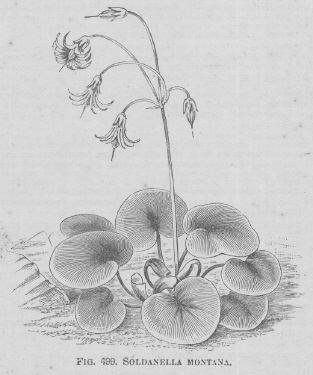
Plants differ a good deal in the amount of light that they require. Most green plants need to be exposed to full sunshine for some part of each day; and if this, or, at least, full daylight, is withheld, they turn pale and sickly, and, sooner or later, perish. On the other hand, many Ferns, and a few flowering plants, suffer in health when exposed to bright sunshine: these plants require shady places, e.g., shade of dense forests or caves. In gardens, they require special protection from light, and are usually shaded by green glass, or by green paint on the glass, or, better, by thin green cloth, as this can be removed in dull, cloudy weather.
Like heat, light sometimes proves too great a stimulus, and plants suffer from excess of it. In greenhouses, plants not unfrequently have their leaves marked with dry spots, that look as if scorched through the tissues. For their supposed causes, and for the most successful preventive treatment, see Sun-burning.