Home › E › Eng (Bot Mor s t f G rt sem t)
Eng (Bot Mor s t f G rt sem t)
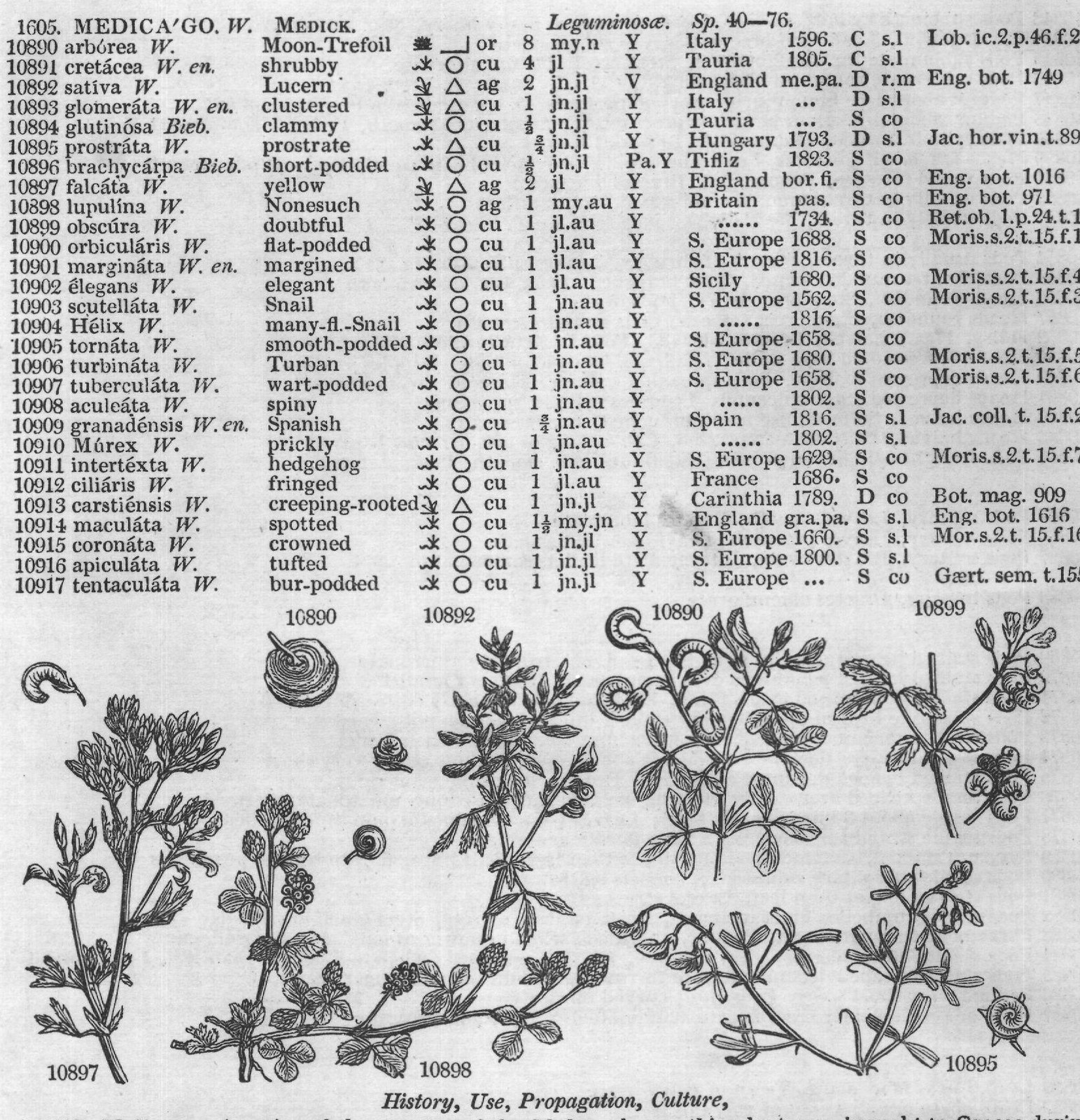
bot. 1616 Mor.s.2.t. 15.f.16 Gært. sem, t.155 10899 10897 10898 History, Use, Propagation, Culture, 10895 1605. Medicago. A native of the country of the Medes, whence this plant was brought to Greece during the expedition of Darius. M. arborea, the Cytisus of the ancients, flowers great part of the year, and when sheltered is seldom destitute of flowers. In the open air it begins to flower in April, and continues till December. Those flowers which appear early in summer, will have the seeds ripe in August, or the beginning of September, and the others will ripen in succession. It grows in great plenty in Abruzzo, and many parts of the kingdom of Naples, where the goats feed upon it; and with their milk abundance of cheese is made there. It also abounds in several of the islands in the Archipelago, where the Turks use the wood to make handles for their sabres; and the caloyers, or Greek monks, form their beads of it. In old shrubs, the heart is of a dark color, and hard like ebony.
According to Miller, this shrub bids the fairest of any to be the Cytisus of Virgil, Columella, and the other ancient writers on husbandry; and being celebrated by them as an excellent fodder, has been recommended for cultivation here. But however useful it may be in Candia, Rhodes, Sicily, Abruzzo, and other dry warm countries, yet it will never thrive in England, (where we have also many plants of this leguminous tribe far more succulent than this,) so as to be of any real advantage; for in severe frost it is very subject to be destroyed, or at least so much damaged, as not to recover its former verdure before the middle or end of May; (and even after a mild winter, it will generally appear injured by our cold spring winds, even at that season; so that it cannot be of any use here for early spring fodder.) Besides, the shoots will not bear cutting above once in a summer, and then will not be of any considerable length: and the stems growing very woody, the cutting of it will be very troublesome. Upon the whole, therefore, it is not worth the trial; though in hot, dry, rocky countries, where few other plants will thrive, it may be cultivated to great advantage. But, however unfit Tree Medick may be for use as fodder in England, yet for the beauty of its hoary leaves, abiding all the year, together with its long continuance in flower, it deserves a place in every good garden and plantation, with shrubs of the same growth. (Dict. in loco, and Martyn's Virgil.) M. sativa, Foin de Bourgogne, Fr., Alfalfa, Span., and Lucerne, Eng., (from the Languedoc pâtois Lauserda), is a deep rooting perennial plant, sending up numerous small and tall clover-like shoots, with blue or violet spikes of flowers. It is highly extolled by the Roman writers; it is also of unknown antiquity in old Spain, Italy, and the south of France; is much grown in Persia and Peru, and mown in both countries all the year round. It is mentioned by Hartlib, Blythe, and other early writers, and was tried by Lisle; but it excited little attention till after the publication of Harte's Essays, in 1757. But though it has been so much extolled, it has yet found no great reception in this country. If any good reason can be given for this, it is, that lucern is a less hardy plant than red clover, requires three or four years before it comes to its full growth, and is for these and other reasons ill adapted to enter into general rotations. When the climate and soil suit, perhaps, a field of it may be advantageously sown, adjoining the homestall, to afford early cutting or food for young or sick animals, for which it is said to be well adapted; but though it will produce good crops for eight or ten years, yet from the time the farmer must wait till this crop attains its perfection, and from the care requisite to keep it from grass and weeds, we do not think it is ever likely to come into general culture. There are no varieties of the lucern deserving the notice of a cultivator. What is called the yellow lucern, or Swiss lucern, is the Medicago falcata, a much more hardy and coarser plant, common in several parts of England, but not cultivated any where excepting in some poor soils in Switzerland. ORDER IV.
DIADELPHIA DECANDRIA. 10890 Pods lunate entire at edge, Stem arborescent 10891 Pedunc. many-fl. racemose, Pods reniform 1-seeded, Leafl. rhomboid roundish mucronate 10892 Pedunc. racemed, Legume smooth spirally twisted, Stipules entire, Leafil. long toothed 10893 Pedunc. racemed, Pods twisted falcate downy, Leafl. lin. truncate toothletted at end 10894 Pedunc. racemose, Pods twisted falcate and cal. viscid villous. Leafl. obovate toothed at end 10895 Pedunc. racemose, Pods smooth cochleate twisted, Stipules toothed at base, Leafl. lin. toothed at end Leafl. lin. toothed at end 10896 Heads axill. sessile, Pods half orbicular acute lined 1-seeded 10897 Pedunc. racemose, Pods twisted falcate downy, Leafl. obl. toothed at end 10898 Spikes oval, Legumes reniform 1-seeded, Stipüles entire, Leafl. obovate 10899 Pods racemose reniform 2-seeded, Stip. toothed; Leafl. rhomboid ovate 10900 Pedunc. 2-fl. Pods unarmed cochleate orbicular flattish, Stip. setaceous multifid, Leafl. obov, toothed 10901 Pedunc. 2-fl. Pods unarmed cochleate orbicular very flat at each end; Folds loose 10902 Pedunc. 2-fl. Pods unarmed cochleate orbicular flat transversely rugose at edge, Stip. toothed 10903 Pedunc. 2-fl. Pods unarmed cochleate orbicular convex at base: flat above with concentrically spiral folds 10904 Pedunc. many-fl. Pods unarmed cochleate orbicular flat with distant folds 10905 Pedunc, many-fl. Pods unarmed cochleate cylindr. flat at each end with distant folds 10906 Pedunc. 2-fl. Pods unarmed cochleate cylindr. convex at each end with imbricated folds 10907 Pedunc. 2-fl. Pods unarmed cochleate cylindr. flattish at each end with tubercled folds 10908 Pedunc. about 2-fl. Pods cochleate cylindr. flattish at each end, Folds muricated at edge 10909 Pedunc. about 2-fl. Pods cochleate cylindr. flat at each end, Prickles subulate appressed 10910 Pedunc. about 2-fl. Pods cochleate cylindr. convex at each end aculeate, Aculei straight 10911 Pedunc. about 2-fl. Pods cochleate oval with downy pubescent setaceous appressed reflexed prickles 10912 Pedunc. about 2-fl. Pods cochleate oval with straight subulate downy prickles 10913 Pedunc. many-fl. Pods cochleate compressed at each end with subulate straight prickles 10914 Pedunc. about 2-fl. Pods cochleate compressed at each end with subulate arcuate prickles 10915 Pedunc, many-fl. Pods cochleate cylindr. flat at each end pubesc. with close-pressed subul. prickles 10916 Pedunc. many-fl. Pods cochleate flat at each end with 3 netted folds muricate at edge 10917 Pedunc. about 2-fl. Pods cochleate cylindr. flat at each end with smooth lanc. distich. close-pressed prickles distich. close-pressed prickles 10902 10903 10906 10908 10911 10909 10907 and Miscellaneous Particulars.
The soil for lucern must be dry, friable, inclining to sand, and with a subsoil not inferior to the surface; unless the soil be good and deep, it is in vain to attempt to cultivate lucern.
The preparation of the soil consists in deep ploughing and minute pulverisation; and, in our opinion, the shortest way to effect this, is to trench it over by the spade to two or three feet in depth, burying a good coat of manure in the middle, or at least one foot from the surface. This is the practice in Guernsey, where lucern is highly prized.
The climate for lucern, as we have already hinted, must be warm and dry; it has been grown in Scotland and Ireland, and might probably do well in the southern counties of the latter country, but in the former it has not been found to answer the commendations of its admirers. The season most proper for sowing lucern, is as early as can be done in the spring months, as in this way the plants may be fully established before the season becomes too hot. If the plants be intended to be transplanted out in the garden method, it will also be the best practice to SOW the seed-bed as early in the spring as the to sow the seed-bed as early in the spring as the frosts will admit, in order that they may be strong, and fit to set out about the beginning of August. The manner of sowing lucern is either broad-cast or in drills, and either with or without an accompanying crop of corn for the first year. Broad-cast, and a very thin crop of barley or other spring corn, is generally, and, in our opinion, very properly preferred.
The quantity of seed, when the broad-cast method is adopted, is said to be from fifteen to twenty pounds per acre, and from eight to twelve if drilled. The seed is paler, larger , and dearer than that of clover; it is generally imported from Holland, and great care should be had to procure it plump and perfectly new, as two years old seed does not come up freely. The same depth of covering as for clover will answer. The after-culture of lucern, sown broad-cast, consists in harrowing, to destroy grass and other weeds; rolling, after the harrowing, to smooth the soil for the scythe, and such occasional top-dressings of manure as the state of the plants may seem to require.
The top-dressings given to lucern may be either of the saline or mixed manures. Ashes are greatly esteemed, and also gypsum and liquid manure of any kind.
The taking of lucern by mowing for soiling, or hay, or by tethering, hurdling, or pasturing, may be considered as the same as for clover. Lucern frequently frequently attains a sufficient growth for the scythe towards the end of April, or beginning of the following month and in soils that are favorable for its culture, will be in a state of readiness for a second cutting in the course of a month or six weeks longer, being capable of undergoing the same operation at nearly similar distances of time during the whole of the summer season. The application of lucern is also the same as of clover. The principal and most advantageous practice, in the application of lucern, is that of soiling horses, neat cattle and hogs; but as a dry fodder, it is also capable of affording much assistance, and as an early food for ewes and lambs, may be of great value in particular cases. All agree in extolling it as food for cows, whether in a green or dried state. The produce of lucern, cut three times in a season, has been stated at from three to five and even eight tons per acre. In soiling, one acre is sufficient for three or four cows during the soiling season, and a quarter of an acre, if the soil be good, for all sorts of large stock, for the same period , or half an acre on a moderate soil.
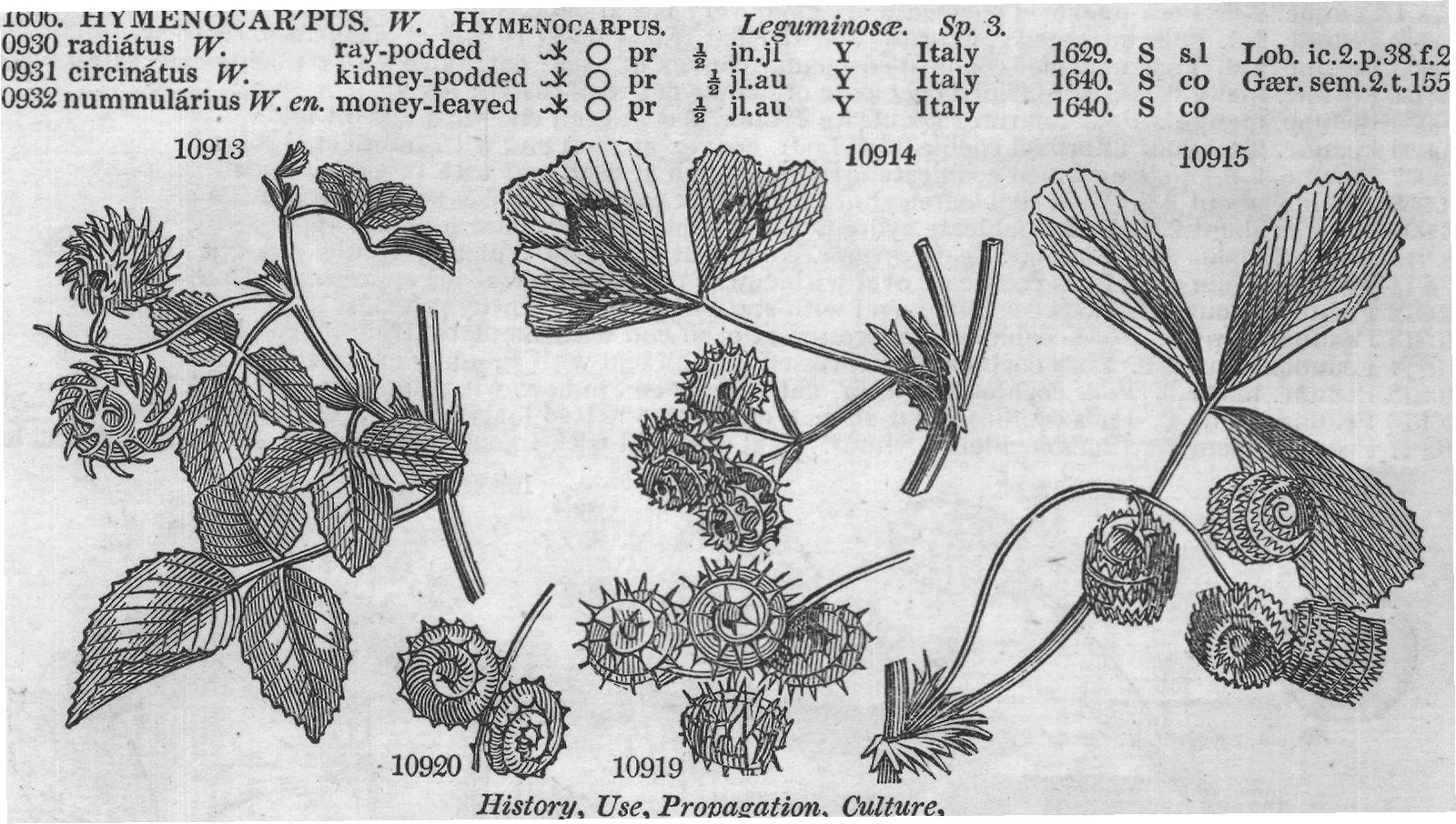
The nutritive product of lucern, according to Sir H. Davy, is 2-3-tenths per cent., and is to that of the Tt 4 10918 denticuláta W. 10919 muricáta W. 10920 Gerárdi W. 10921 marína W. 10922 Terebéllum W. 10923 tribuloídes W. 10924 rigídula W. toothed cu 1 jn.jl Y prickly cu 1 my.jn Y Gerarde's cu 1 jn.au Y sea cu 1 jn.au Y short-spined cu 1 jn.au Y DIADELPHIA DECANDRIA.
S. Europe 1800. S s.1 England sea co. S co Hungary 1816. S co S. Europe 1596. D s.l S. Europe 1798. S s.l CLASS XVII.
Mor. s. 2.t.15.f.11 Mor.s.2:t. 15.f.18 Cav. ic. 2. t. 130 Caltrops-like cu 1 jn.au Y S. Europe 1730. S s.l thorny-podded cu 1 jn.au Y 10925 mínima W. least cu 1 my.jn Y 10926 nígra W. black cu 1 jl.au Y 10927 græ'ca W. en. villous cu jl.au Y S. Europe 1730. S s.l England ch.so. S co S. Europe 1789. S s.l Greece 1804. S s.l Fl. dan. 211 Mor.s.2.t. 15.f. 19 10928 laciniáta W. cut-leaved cu 10929 uncináta W. jl.au jl.au Y S. Europe 1683. S s.l Breyn. cent. t.34 hooked cu 1 jl.au Y S. Europe Sco ... 10930 radiátus W. 10931 circinátus W. 1606. HYMENOCAR PUS. W. HYMENOCARPUS. 10932 nummulárius W. en. money-leaved Leguminosæ. Sp. 3. ray-podded kidney-podded prjn.jl Y Italy 1629. S s.l Lob. ic.2.p.38.f.2 pr jl.au Y Italy 1640. S co Gær. sem.2.t.155 pr jl.au Y Italy 1640. S co 10913 10914 10915 - 10920 10919 History, Use, Propagation, Culture, clovers and saintfoin as 23 to 39. This result does not very well agree with the superior nutritive powers attributed to lucern; and is one proof, among many, how little the analysis of the chemist agrees with the experience of the farmer. To save seed, the lucern may be treated precisely as the red clover, and it is much easier threshed, the grains being contained in small pods, which easily separate under the flail, or a threshing machine, or clover mill. contained in small pods, which easily separate under the flail, or a threshing machine, or clover mill. M. lupulina, Hop-trefoil , sometimes called Shamrock, and in Norfolk Black Nonesuch, is cultivated occa- ORDER IV.
DIADELPHIA DECANDRIA. 10918 Pedunc, many-fl. Pods cochleate flat at each end, Folds 2 reticulated with prickles of their edges diverging 10919 Pedunc. many-fl. Pods cochleate flat at each end smooth, Folds 5 with short subulate prickles 10920 Pedunc. about 2-fil. Pods cochleate flat at each end villous, Folds 5 with subulate hooked prickles 10921 Pedunc. many-fl. Pods cochleate roundish muricate, Leafl. downy obovate entire 10922 Pedunc. many-fl. Pods cochleate cylindr. flat at each end, Folds 5 with short subulate reflexed prickles 10923 Pedunc. 2-fil. Pods cochleate cylindr. flat at each end with conical distichous reflexed prickles 10924 Pedunc. many-fli. Pods cochleate cylindr. Prickles conical straight spreading 10925 Pedunc, many-fl. Pods cochleate hairy, Prickles subulate straight hooked 10926 Pedunc. 2-fl. Pods cochleate cylindr. with close folds, Prickles subulate straight hooked 10927 Pedunc. many-fl. Pods cochleate somewhat hairy, Prickles subulate straight hooked 10928 Pedunc. 2.fl. Pods cochleate cylindr. with subulate straight hooked prickles, Leafl. lin. truncate 10929 Pedunc. many-fl. Pods cochleate villous flat at each end with 5 folds, Prickles subulate straight hooked 10930 Pods toothed at edge, Leaves ternate 10931 Pods toothed at edge, Leaves pinnate 10932 Pods entire at edge, Leaves pinnate 10925 10921 10928 10926 10930 10931 and Miscellaneous Particulars. sionally along with the perennial clovers, and sometimes confounded with the common yellow clover, which is an annual and much smaller plant. Its treatment is the same as that of white clover; but its herbage is little relished by cattle, and both it and the yellow clover are going fast out of repute. M. scutellata and intertexta are sown as border flowers for the curiosity of their pods. 1606. Hymenocarpus. From ὑμηv, a membrane, and κaρπoς, fruit, in allusion to the membranous texture of the pods. Little inconspicuous plants resembling Trifolium. POLYADELPHIA.
CLASS XVIII.
CLASS XVIII. - POLYADELPHIA. STAMENS united into several parcels. ONE of the smallest of the Linnean classes, characterized by the cohesion of the filaments in several parcels. It almost wholly consists of plants remarkable either for their beauty or importance otherwise. From the Theobroma the nutritious substance which forms the basis of Chocolate is procured. Melaleuca and its allies are among the most elegant of New Holland plants. The genus Symplocos contains a plant useful as a dye. To Citrus belong the Orange, Lemon, Lime, and all their delicious varieties; and the Loasa, with which the class is here concluded, consists of some of the most ornamental and curious of our garden annuals. By some botanists this class is distributed among others, especially Icosandria and Polyandria. Order 1. DECANDRIA.
Stamens 10 or 12. 1607. Theobroma. Cal. 5-leaved. Petals 5, fornicate. Nectary urceolate, with 5 horns. Filaments 5, each with 2 anthers. Style filiform. Stigma 5-parted. Caps. 5-celled, without valves. Seeds in a buttery pulp. 1608. Bubroma. Cal. 3-leaved. Petals 5, 2-horned. Nect. campanulate, 5-fid. Filam. 5, attached to the outside of nectary; each with 3 anthers. Style simple. Capsule woody, warted, valveless, bored with 12 rows of holes. 10933 Cacáo W. 10934 guianénsis W.
DECANDRIA. 1607. THEOBROMA, W. CHOCOLATE NUT. smooth-leaved woolly-leaved 1608. BUBRO'MA. W. BASTARD CEDAR.
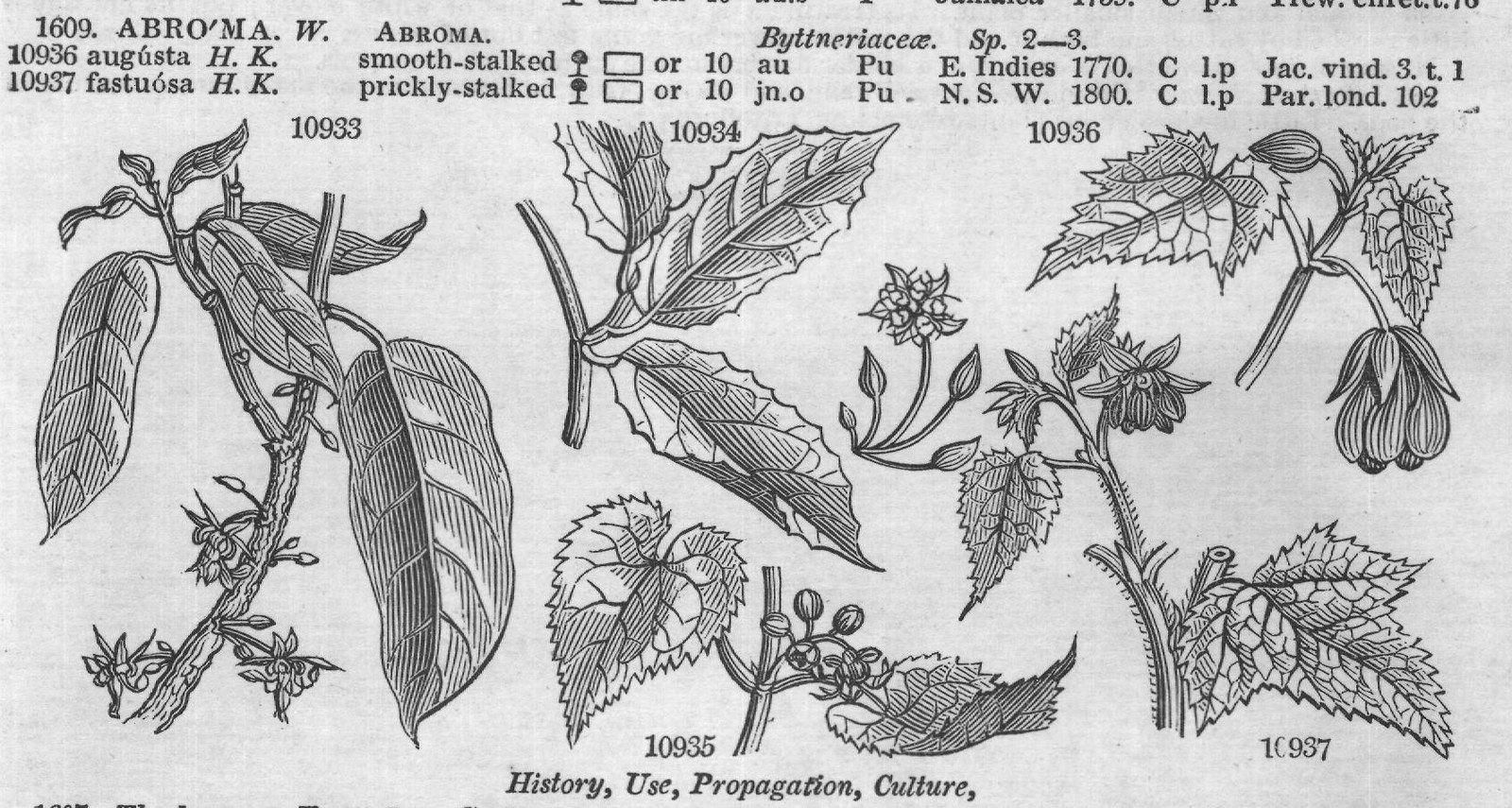
Byttneriaceæ. Sp. 2-5. clt 16 ... or 16 Br Br ...
S. Amer. 1739. Cr.m Bot. cab. 545 Guiana 1803. Cr.m Aub. gui.2.t.275 Byttneriaceæ. Sp. 1-3. 10935 Guazúma W Elm-leaved 오 tm 40 au.s Y Jamaica 1739. C p.l Trew. ehret.t.76 1609. ABRO'MA. W.
ABROMA.
Byttneriaceæ. Sp. 2-3. 10936 augústa H. K. 10937 fastuósa H. K. smooth-stalked prickly-stalked or 10 au Pu E. Indies 1770. C 1.p 10933 or 10 jn.o Pu N. S. W. 1800. C l.p 10934 Jac. vind. 3. t. 1 Par. lond. 102 10936 10935 10937 History, Use, Propagation, Culture, 1607. Theobroma. From Θεoς, God, and βρωμa, food, in allusion to the excellent nature of its produce. The Mexicans call the beverage obtained from it Chocolatl. (Nieremb.) T. Cacao is a tree which grows in a very handsome form to the height of twelve or sixteen feet; the trunk is upright, and about as high as a man before the head spreads out; the wood is light and of a white color; the bark brownish. Leaves lanceolateoblong, bright green, quite entire; flowers small, reddish, inodorous. Fruits smooth, yellow, red, or of both colors, about three inches in diameter: rind fleshy, near half an inch in thickness, flesh-colored within: pulp whitish, the consistence of butter, separating from the rind in a state of ripeness, and adhering to it only by filaments, which penetrate it and reach to the seeds. Hence it is known when the seeds are ripe, by the rattling of the capsule when it is shaken. The pulp has a sweet and not unpleasant taste, with a slight acidity; it is sucked and eaten raw by the natives. The seeds are about twenty-five in number: when fresh they are of a flesh-color: gathered before they are ripe, they preserve them in sugar, and thus they are very grateful to the palate: they quickly lose their power of vegetation, if taken out of the capsule; but kept in it, they preserve that power for a long time. The tree bears leaves, flowers, and fruit all the year through; but the usual seasons for gathering the fruit are June and December. In two years from the seed it is above three feet high, and spreads its branches, not more than five of which are suffered to remain: before its third year is complete it shows for fruit. A tree yields from two to three pounds of seeds annually. These seeds are remarkably nourishing, and agreeable to most people; which occasions them to be commonly kept in most houses in America, as a necessary part of the provisions of the family: they are generally ground or pounded very fine, a little arnatto added, and made into paste they are much charged with oil, but mix well with milk or water, and are formed into rolls of one pound each. This simple preparation of chocolate is the most natural and the best. It is in daily use amongst most CLASS XVIII.
POLYADELPHIA. 1609. Abroma. Cal. 5-part. Petals 5, with saccate dilated claws Cup of stamens 10-fid; with 5 segments, each bearing 3 anthers; the other 5 petaloid. Styles 5. Caps. 5-celled, 5-winged, many-seeded Order 2. POLYANDRIA.
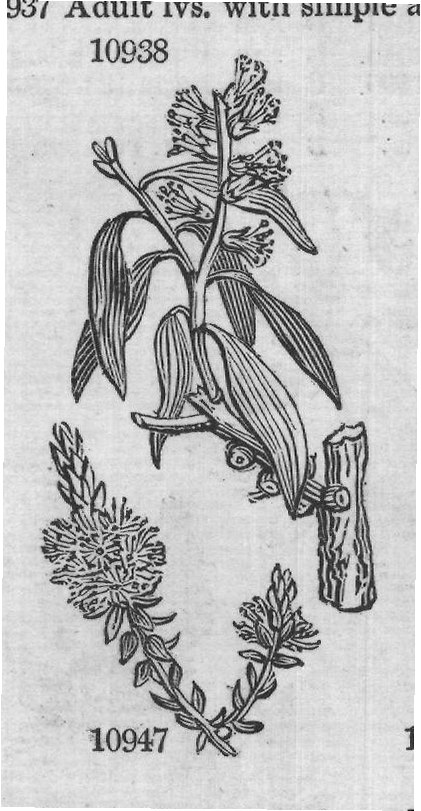
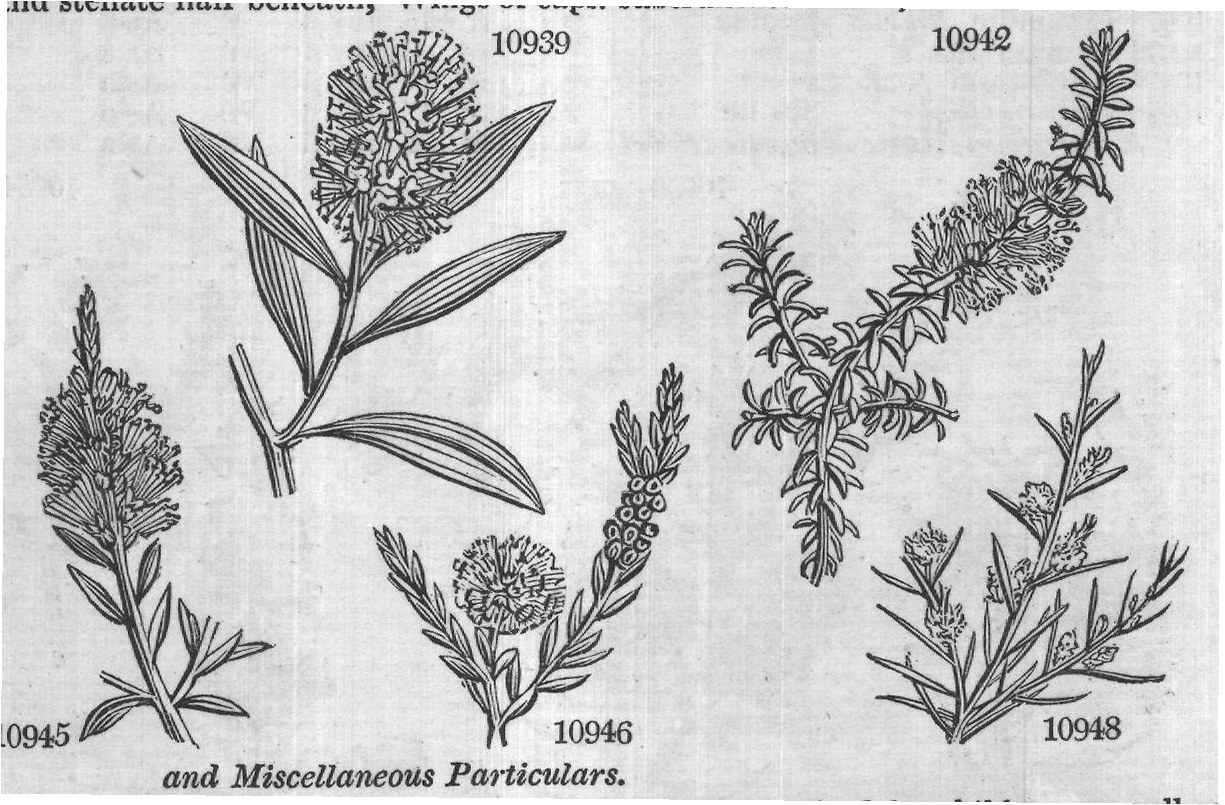
Stamens indefinite. 1610. Melaleuca. Parcels of stamens 5, opposite the petals, long; anthers incumbent. Caps. 3-celled, many-seeded, connate, and included in the thickened tube of the calyx which is grown to the branch. 1611. Tristania. Parcels of stamens 5, opposite the petals, and scarcely longer than they are; anthers incumbent. Caps. 3-celled, many-seeded, united with the turbinate stalked tube of the calyx. 1612. Calothamnus. Parcels of stamens 4-5, opposite the petals (some either connate or sterile). Anthers inserted by the base, entire. Caps. 3-celled, many-seeded, connate, and included in the thickened tube of the calyx, which is grown by the base to the branch. 1613. Beaufortia. Parcels of stamens 5, opposite the petals. Anthers inserted by the base, bifid at the end, with deciduous lobes. Caps. 3-celled, 1-seeded, connate, and included in the thickened tube of the calyx, which is grown by the base to the branch. 1614. Symplocos. Cal. 5-fid, superior. Petals 5-8; cohering at the base in a tube. Stamens united to the corolla in 4 rows. Drupe dry, 5-celled. 1615. Citrus. Cal. 5-fid. Petals 5, oblong. Anthers 20; the filaments variously divided. Berry 9-celled. 1616. Xanthochymus. Cal. 5-leaved. Petals 5. Nectaries 5. Stamens united in 5 parcels. Apple 1-5parcels. Apple 1-5seeded. 1617. Hypericum. Cal. 5-parted. Petals 5. Filaments many in 3 or 5 parcels. Capsule superior. 1618. Ascyrum. Cal. 4-leaved. Petals 4. Caps. 1-celled, 2-3-valved. 1619. Loasa. Cal. 5-leaved. Petals 5. Nectary 5-leaved. Caps. -inferior, 1-celled, -3-valved, manyseeded. DECANDRIA. 10933 Leaves entire smooth 10934 Leaves acuminate repand-toothed downy beneath 10935 Leaves cordate ovate acute with unequal serratures 10936 Leaves 7-angled: floral ov.-lanc. acuminate somewhat toothed, Pedunc. axill. Branches unarmed 10937 Adult lvs. with simple and stellate hair beneath, Wings of caps. subtruncate at end, Branches muricated end , Branches muricated 10942 10938 10939 10947 10945 10946 10948 and Miscellaneous Particulars. families in Jamaica, where the tree is largely cultivated, and affords a nutritious food for children, as well as adults. But as chocolate made abroad cannot by law be imported into this country, consequently all chocolate consumed in Britain ought to be made here. It is composed principally of the kernel of the cocoa, as above mentioned; but the art is in very few hands and we believe that a small portion of soap is added to most British chocolate, in order to cause it to froth when it is dissolved in hot water.
Cocoa is a simple preparation made in Britain, from the cocoa-nut, or from the shells of it, or from a mixture of both. It is considered much easier of digestion than chocolate, and very nourishing. In our stoves Theobromas thrive in light rich soil, and cuttings root in sand under a hand-glass. 1608. Bubroma. In contradistinction to Theobroma; from 685, an ox, and Bewpea, food, as if producing a an ox, and βρωμa, food, as if producing a substance fit only to be eaten by cattle. Orme d'Amerique, Fr. A wide spreading tree, not unlike the Elm, with oblong heart-shaped leaves, which sleep hanging quite down, whilst the petioles remain entirely stiff and straight. It grows in the lowlands of Jamaica, forming a very agreeable shade for the cattle, and supplying them with food in dry weather, when all the herbage is burned up or exhausted. The seeds are very mucilaginous, but otherwise agreeable to the palate. The wood is light, and so easily wrought, that it is generally used by coachmakers in all the side pieces. (Browne.) It is also frequently cut into staves for casks. A decoction of the inner bark is very glutinous, and very like that of the elm. In our stoves it thrives well in a loamy soil, and cuttings root freely in sand under a hand-glass. 1609. Abroma. Still named with reference to the two preceding genera, from a, privative, and βρωμa, food; as if unfit for either gods or oxen. This, Sweet observes, " is a hardy stove genus, and easily managed ; the species flower freely at various seasons, and will grow in the common garden soil: but a mixture of good loam with a little peat is an excellent compost for them. They propagate freely by seeds and cuttings." (Bot. Cult. 10.) 1610. MELALEU'CA. H. K. MELALEUCA. 10938 Leucadendron W.
H. K. MELALEUCA.
Cajeputi Tree or 15 10939 viridiflóra W. green-flowered or 10 ...
POLYADELPHIA POLYANDRIA.
Myrtaceæ. Sp. 25-30.
W CLASS XVIII.
E. Indies 1796. C s.l.p Rum.amb.2. t. 16 GN. S. W. 1798. C s.l.p Cav. ic. 4. t. 333 10940 paludósa Br. long-leaved red or 6 jl.s RN. Holl. 1803. C s.l.p 10941 globífera Br. globe-fruited or 4 ... ...
N. Holl. 1803. C s.l.p 10942 diosmifólia Br.
Diosma-leaved or 4 jn.jl GN. Holl. 1794. C s.l.p Bot. rep. 476 10943 stypheloídes Br.
Styphelia-leav.or 4 my.jn ...
N. S. W. 1793. C s.l.p 10944 genistifólia Br.
Broom-leaved or 4 ... ...
N. S. W. 1793. C s.l.p 10945 striáta Br. striated or 4 Pu N. Holl. 1803. C s.l.p La.no.ho.2.t.165 10946 thymoídes Br. yellow spear-lv. or 3 Pu ...
N. Holl. 1803. C s.l.p Lab. nov.2. t.167 10947 squámea Br. scaly-branched or 4 jn.jl Pu V. Di. L. 1805.
C s.l.p Bot. reg. 477 10948 nodósa Br.
Whin-leaved or 2 jn.jl Pu N. S. W. 1790.
L s.l.p Ex. bot. 1. t. 35 10949 ericifólia Br. 10950 armilláris Br. 10951 uncináta Br. 10952 scábra Br. 10953 pulchélla Br. 10954 thymifólia Br. 10955 decussata Br.
Heath-leaved or 3 jl.s G N. S. W. 1788.
L s.l.p Ex. bot. 1. t. 34 pale-flowered or 2 jn.jl G N. S. W. 1788.
L s.i.p Bot. rep. 175 hook-leaved or 3 jn.s Pu N. Holl. 1803.
C s.l.p rough-leaved or 3 f.s Pu N. Holl. 1803. C s.l.p neat or 2 jn.s Pu N. Holl. 1803. C s.l.p Bot. cab. 200 Thyme-leaved or 2 jn.s Pu N. S. W. 1792. C s.l.p Bot. mag. 1868 decussate or 4 jl.s Pu N. Holl. 1803. C s.l.p Bot. mag. 2268 10956 fúlgens Br. splendid or 6 jl.s SN. Holl. 1803. C s.l.p Bot. reg. 103 10957 linariifólia Br.
Toad-Flax-lvd. or 3 jn.au Pu N. S. W. 1793. C s.l.p Exot. bot. 1. t. 56 10958 hypericifólia Br.
Hypericum-lv. or 3 jn.au SN. S. W. 1792. C s.l.p Bot. rep. 200 10959 squarrósa Br.
Myrtle-leaved or 2 ...
WN. S. W. 1794. C s.l.p Bot. mag. 1935 10960 calycína Br. permanent-cup.or 3 jn.au Pu N. Holl. 1803. C s.l.p 10961 dénsa Br. whorl-leaved or 2 ...
Pu N. Holl. 1803. C s.l.p 10962 incána Br. hoary or 3 jn.au Y N. Holl. 1817. C s.l.p Bot. reg. 410 10963 nereifólia Br. 10964 laurína Br. 10965 conférta Br. 1611. TRISTA'NIA. Br. TRISTANIA.
Oleander-leav.or 1612. CALOTHAMINUS. Lab. CALOTIIAMNUS.
Myrtaceæ.
Sp. 3. 6 jn.s Y N. S. W. 1804.
Cs.p Bot. mag. 1058 Laurel-leaved or 6 ...
YN. S. W. 1798. C s.p Pittosporum-lv. or 6 jl.s YN. S. W. 1805. C s.p Myrtacea. Sp. 3. 10966 quadrífida Br. four-cleft or 3 jl.s S N. Holl. 1803. Cs.p Bot. mag. 1506 10967 villósa Br. hairy or 3 jl.s S N. Holl. 1803. C s.p 10968 grácilis Br. slender-leaved or 3 jl.s S N. Holl. 1803. C s.p 1613. BEAUFORTIA. Br. BEAUFORTIA.
Myrtaceæ.
Sp. 2. 10969 decussata Br. splendid 10970 spársa Br. alternate-leav. spl 3 my.jl S spl 3 R ...
N. Holl. 1803. C s.p Bot. reg. 18 N. Holl. 1803. C s.p 1614. SYM PLOCOS. L. SYMPLOCOs.
Symplocaceæ.
Sp. 2-6. 10971 tinctória W.
Laurel-leaved or ...
Y Carolina 1780. L p.1 10972 sínica Ker.
Chinese or 3 my W China 1822. C p.1 Cat. car. 1. t. 54 Bot. reg. 710 1615. CITRUS. W.
ORANGE-TREE.
Aurantiaceæ. Sp. 8-15. 10973 Limónum Risso Lemon 10974 Limétta Risso 10975 Aurántium Risso Lime sweet 10976 vulgáris Risso 3 myrtifolia Hort. 10949 Seville 오오오오 ☐ fr 15 my.jl W Asia 1648. Br.m Gæ.fr.2.t.121.f.2 fr 8 my.jl W Asia 1648. Br.m Blackw. t. 362 fr 15 my.jl W Asia fr 15 my.jl W Asia ... 1595. B r.m Lam.ill. t. 639.f.2 Br.m myrtle-leaved ☐ fr 3 my.jl W Asia ...
Br.m Bot. reg. 346 10950 10954 10956 10957 10959 10962 History, Use, Propagation, Culture, 1610. Melaleuca. From μελaς, black, and λεuκoς, white: because the original tree has black wood and white branches. A beautiful Australasian genus, which grows and flowers freely in equal parts of sandy loam and peat, with common greenhouse treatment. "Some cultivators," Sweet observes, "grow them entirely in peat, in which they will grow very well for a time; but they will not be strong and healthy, mixture. Ripened cuttings, not too old, will root freely in sand under a bell-glass." (Bot. Cult. 223.) healthy, nor flower so well as in a The bark of Melaleuca Leucadendron is used by the Chinese as oakum, for making good the spaces between the timbers of their vessels. They also use it in the roofing their houses. From the same tree is obtained the timbers of their vessels.
They also use it in the roofing their houses. From the same tree is obtained the Cajeputi oil, remarkable for its green color, its peppermint flavor, and turpentine smell. It is rarely to be procured in Europe in an unadulterated state. When pure it is one of the best preservatives of preparations of natural history, and is used externally with much success as a cure for rheumatic affections and pains in the joints 1611. Tristania. From τρεiς, three, and εσaμai, to stand; in allusion to the ternate disposition of the flowers and leaves. The species may be treated like Melaleuca, and are pretty little evergreen shrubs. leaves. The species may be treated like Melaleuca, and are pretty little evergreen shrubs. 1612. Calothamnus. From κaλoς, beautiful, and θaμvoς, a rod, in allusion to the splendid appearance of the branches covered with scarlet blossoms. The species are beautiful plants, and not difficult of culture or procovered with scarlet blossoms. The species are beautiful plants, and not difficult of culture or propagation in sand, and the air kept still and moderately moist by covering with a hand-glass. ORDER II.
POLYADELPHIA POLYANDRIA. 10938 Leaves alternate lanc. acuminate oblique 5-nerved, Branches and petioles smooth 10939 Leaves alternate ellipt. lanc. coriaceous 5-nerved, Branches and petioles downy 10939 Leaves linear-lanc. long equal-sided straight 3-nerved: lateral nerves close to the scabrous edge 10941 Leaves obl. 5-nerved equal-sided narrower at base, Heads spherical, Capsules connate 10942 Leaves oval or oblong obsoletely 1-nerved stalked flat close and branches quite smooth, Spikes obl. smooth 10943 Leaves ov. acuminate with a pungent point striated with many nerves sess. smooth, Spikes downy 10944 Leaves lin. lanc. obsoletely 1-3-nerved, Spikes lax leafy smooth, Parcels of anthers polyandrous 10945 Leaves lanc. lin. acute dotted obsoletely striated rigid subsess. Tube of calyx woolly [3-nerved 10946 Lvs. lanc, occasionally obl. 3-nerved stalked and branches smooth, Heads glob. or oval, Segm. of cal. acute 10947 Leaves ov. lanc. acuminate 3-nerved: young lvs. and branches villous, Heads globose downy 10948 Leaves subulate lin. mucro. rigid 1nerved flat, Heads globose, Segm. of cal. membranous smooth 10949 Leaves lin.-subul. nerveless pointless spreading and subrecurved, Spikes oval smooth 10950 Leaves lin.-subul. mucro recurved at end, Spikes cylindr. very smooth 10951 Leaves angular filiform mucro. erect; hooked back at end, Branches virgate, Heads oval 10952 Leaves roundish mucro. rough clustered, Heads round, Parcels of stamens 4-6-androus 10953 Leaves scattered and somewhat opp. oval blunt obsoletely 3-nerved, Flowers subsolitary smooth 10954 Leaves opp. lanc. nerveless, Spikes fewfl. Parcels of stamens polyandrous 10955 Leaves opp. decussate oval-lanc. 3-nerved, Spikes oval quite smooth, Parcels of stamens polyandrous 10956 Leaves opp. lanc. lin. acute 1-nerved, Spikes oval quite smooth, Parcels of stamens multifid 10957 Leaves opp. lanc. lin. acute 3-nerved, Spikes obl. smooth, Parcels of stamens longitudinally pinnated Spikes obl. smooth, Parcels of stamens longitudinally pinnated 10958 Leaves opp. ellipt. obl. 3-nerved: lateral nerves obsol. and close to the recurved edge, Spikes quite smooth nerves obsol. and close to the recurved edge, Spikes quite smooth 10959 Leaves opp. ovate acute 5-7-nerved stalked, Spikes obl. and oval, Bractes leafy 10960 Leaves opp. ovate-lanc. 3-5-nerved subsess. Clusters few-fl. Segm. of cal. acute nerveless 10961 Leaves ternate obovate 3-nerved smooth, Spikes oblong or eval 10962 Leaves tern. lin. lanc. hoary on both sides, as are the branches, Spikes oval or oblong 10963 Leaves opp. lanc. Parcels of stamens 3-5-androus 10964 Leaves altern. cun. lanc. Branches and calyxes downy, Caps. half superior 10965 Leaves lanc. ellipt. acute alternate: terminal clustered, Segm. of calyx acute leafy 10966 Flowers 4-fid, Parcels of stamens distinct equal 12-15-androus, Old leaves and fruit smooth 10967 Flowers 5-fid, Parcels of stamens distinct equal polyandrous, Old leaves and fruit villous 10968 Flowers 5-fid, Parcels of stamens distinct equal 3-androus, Leaves very long and fruit smooth Parcels of stamens distinct equal 3-androus, Leaves very long and fruit smooth 10969 Leaves opp. decussate ovate or oval many-nerved 10970 Leaves scattered oval many-nerved 10971 Flowers clustered sessile, Leaves glaucous 10972 Leaves ellipt. lanc. downy on each side corrugate veiny, Sepals acuminate 10973 Peti. somew. winged, Lvs. obl. acute toothed, Fl. 35-androus, Fruit obl. with a thin rind and very acid pulp 10974 Petioles naked, Lvs. ov. rounded serrated, Fl. 30-androus, Fruit globose with a nipple and sweet pulp 10975 Petioles nearly naked, Lvs. ov. obl. and acute, Fl. 20-androus, Fruit globose with a thin skin and sweet pulp , Fl. 20-androus, Fruit globose with a thin skin and sweet pulp 10976 Peti. winged, Lvs. ellipt. acute crenulat. Fl. 20-androus, Fruit glob. with a thin rough skin and bitter pulp 10963 10972 10974 a 109766 10966 10969 10973 and Miscellaneous Particulars. 10975 d 10976 a 1613. Beaufortia. So called in honor of Mary, Duchess of Beaufort, who died January 7, 1714, in the 85th year of her age. She had a fine collection of plants at Badmington, in Gloucestershire, during the life-time of year her husband, Henry, first duke of Beaufort. Splendid plants, free-growers, and abundant flowerers, best Splendid plants, free-growers, and abundant flowerers, with common greenhouse treatment, in two-thirds peat, and one-third loam. Cuttings, Sweet found to answer best when " taken from nearly ripened wood, planted in sand, and covered with a bell-glass." 1614. Symplocos. From σuμλoκη, connection; union. The petals are naturally five, but united at the base so as to seem but one. A tree with oblong fragrant shining leaves, and sweet-smelling flowers, succeeded by subsessile drupes. A decoction of the leaves is used in North America for dying linen and silk of a bright yellow color. 1615. Citrus. The meaning of this word has escaped the ingenuity of etymologists. An ancient genus, combining in its species many excellencies, handsome evergreen shining tree-like forms, most odoriferous and must flowers, have , handsome evergreen shining tree-like forms, most odoriferous flowers, and brilliant, fragrant, delicious fruits. It is one of the most striking of fruit-bearing trees, nutriment . It is one of the most striking of fruit-bearing trees, and must have attracted the notice of aboriginal man long before other fruits of less brilliancy, but of more allude to this or long before other fruits of less brilliancy, but of more nutriment or flavor. The golden apples of the heathens, and forbidden fruit of the Jews, are supposed to been known heathens, and forbidden fruit of the Jews, are supposed to allude to this family, though it is remarkable that we have no authentic records of any species of Citrus having been known; certainly none were cultivated by the Romans. The citron was introduced into Europe from Media, under the name of malus medica, and was first cultivated in Italy by Palladius, in the second century. The orange POLYADELPHIA POLYANDRIA.
CLASS XVIII. 10977 buxifólia P. S.
Box-leaved 10978 nóbilis H. K.
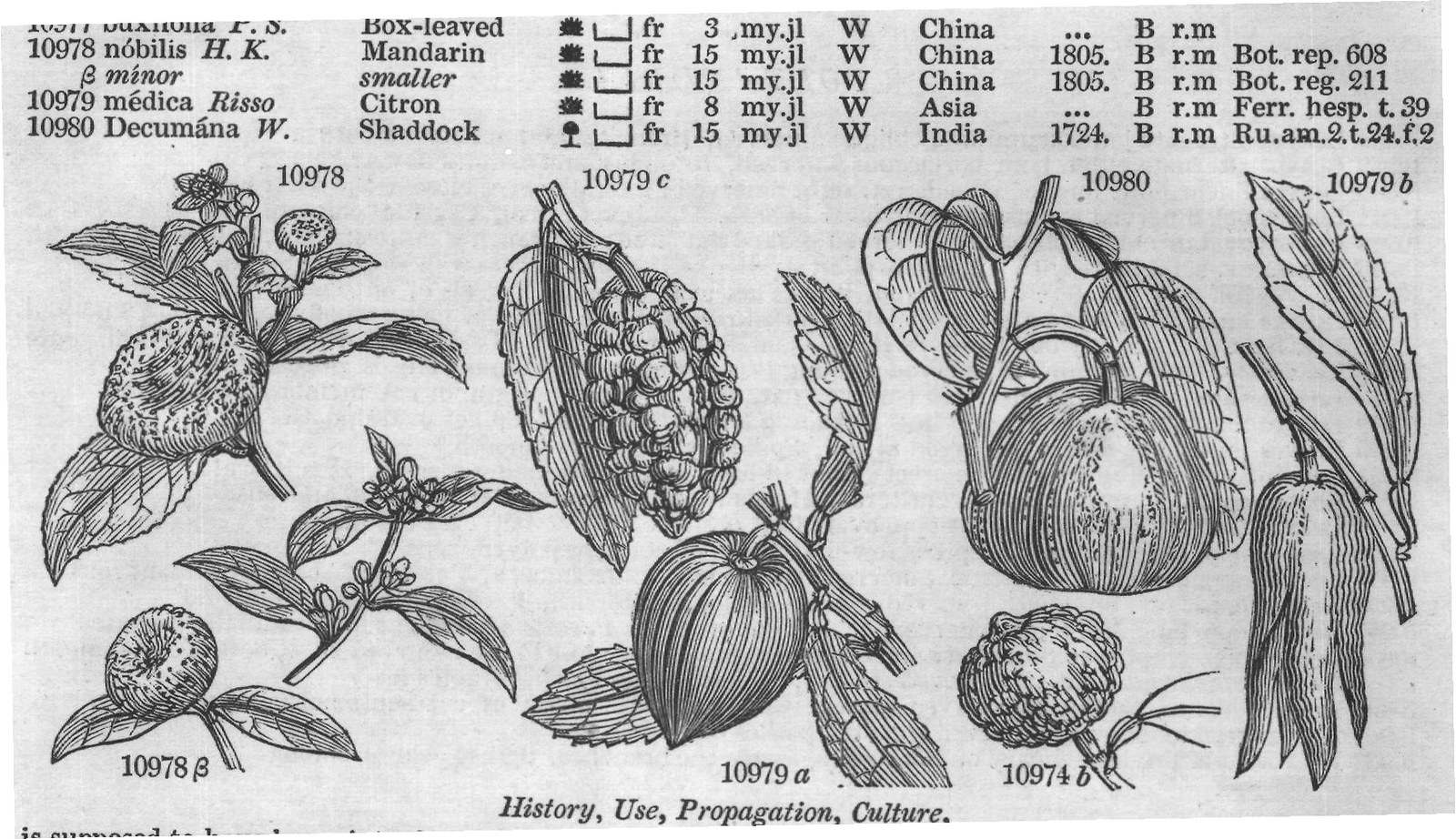
B mínor ☐ ☐ fr 3 my.jl W China Br.m Mandarin smaller fr 15 my.jl W China 1805. B r.m Bot. rep. 608 10979 médica Risso 10980 Decumána W. fr 15 my.jl W China 1805. B r.m Bot. reg. 211 Citron Shaddock fr 8 my.jl W Asia Br.m Ferr. hesp. t. 39 fr 15 my.jl W India 1724. B r.m Ru.am.2.t.24.f.2 10978 10979 c 10980 10979 b 10978 β 10979 a History, Use, Propagation, Culture, 10974 is supposed to have been introduced into Italy in the fourteenth century, above a thousand years after the citron. In England, these trees have been cultivated since 1629. citron. In England, these trees have been cultivated since 1629. Parkinson, writing at that time, says, " the , when neither citron nor lemon trees could be preserved any length of time." The orange trees he alludes to were those of Beddington, in Surrey, introduced from Italy by a knight of the noble family of the Carews ( Gibson's edit. of Camb. Brit.), and the first that were brought into England; they were planted in the open ground and placed under a moveable cover during the winter months. It has been said that these trees were raised by Sir Francis Carew, from seeds brought to England by Sir Walter Raleigh: but as such trees would not have readily borne fruit, Professor Martyn thinks it much more likely that they were plants brought from Italy. Bradley says, they always bore fruit in great plenty and perfection; that they grew on the outside of a wall , not nailed against it, but at full liberty to spread; they were fourteen feet high, the girt of the stem twenty-nine inches, and the spreading of the branches one way nine feet, and twelve feet another. These trees, Evelyn informs us, were neglected in by the great frost in 1739-40; they were planted before 1595.
During the latter end of the seventeenth and beginning of the eighteenth centuries, the orange tree was a very fashionable article of growth in conservatories, when there were but few exotics of other sorts kept there.
The plants were procured from Genoa, with stems generally from four to six feet in height; they were planted in large boxes, and were set out during summer to decorate the walks near the house, in the manner still practised at Ve Versailles and the Thuilleries. About the middle of the eighteenth century , when a taste for botany and forcing exotic fruits became general, that for superb orange trees began to decline; many of these large trees have decayed through neglect; and those which are now to be found in the greater number of greenhouses, are generally dwarf plants bearing few fruit, and those of small size. In some places, however, , are the largest in Britain; they are planted in the floor of an immense conservatory, and bear abundantly. It is said that the plants were procured from a wreck on the coast in that quarter, in the time of Henry VII.
At Nuneham, near Oxford, are some fine old trees, planted under a moveable case, sheltered by a north wall. In summer the case is removed, and the ground turfed over, so that the whole resembles a native . In summer the case is removed, and the ground turfed over, so that the whole resembles a native orange grove. At Wormleybury, Hertfordshire, and Shipley Hall, in Derbyshire, are very fine large orange Hertford and lemon trees grown in borders and in boxes. (Hort. Trans. vol. ii. 295 , and iv. 306.) At the Wilderness, Kent, are three trees in boxes, not surpassed by any trees so grown in Europe. At Woodhall, near Hamilton, trees of all the species of Citrus are trained against the back walls of forcing houses, in the manner of peaches, and produce large crops of fruit. In the south of Devonshire, and particularly at Saltcombe, one of the warmest spots in England, may be seen, in a few gardens, orange trees that have withstood the winter in the open air upwards of a hundred , in a few gardens, orange trees that have withstood the winter in the open air upwards of a hundred years. The fruit is as large and fine as any from Portugal. Trees raised from seed, and inoculated on the spot, are found to bear the cold better than trees imported. The common character of the Citrus family is that of low evergreen trees, with ovate or oval-lanceolate, entire or serrated leaves. On the ungrafted trees are often axillary spines. The flowers appear in peduncles, axillary serrated leaves. On the ungrafted trees are often axillary spines. The flowers appear in peduncles, axillary or terminating, and one or many-flowered. The fruits are large berries , round or oblong, and generally of a yellow color. The species seem best distinguished by the petiole, which in the orange and shaddock is winged; in the citron, lemon, and lime, naked. The form of the fruit, although not quite constant, may also serve for a distinction. In the orange and shaddock it is spherical, or rather an oblate spheroid, with a red or orange-colored rind; in the lime, spherical, with a pale rind; in the lemon, oblong, rough, with a nipplelike protuberance at the end; in the citron, oblong, with a very thick rind. The flowers of the citron and lemon have ten stamens, and those of the orange more. and what is a species in this genus; many of the sorts in cultivation are by buds. It is very difficult to determine what is a variety, Dr. Sickler, who spent several years in Italy, and paid great attention to the kinds and culture of the orange, published in 1815, Der Vollkommen Orangerie-Gartner (The complete Orange Gardener), in which he describes above seventy sorts of Citrus. Gallesio (Traité du Genre Citrus, &c. Savonna, 1818.) has given a synopsis of the forty principal sorts cultivated in Italy. The most splendid work on oranges which has yet appeared is the Histoire Naturelle des Orangers, by Risso, of Nice, and Poiteau, of Versailles. (Paris, fol. 1818.) Here 169 sorts are described, and 105 of them figured, Nice, and Poiteau, of Versailles. (Paris, fol. 1818.) Here 169 sorts are described, and 105 of them figured, and their French and Italian culture given at great length. They are arranged as sweet oranges, of which they describe 42 sorts; bitter and sour oranges, 32 sorts; bergamots, 5 sorts; limes, 8 sorts; shaddocks, 6 sorts; lumes , 12 sorts; lemons, 46 sorts; citrons, 17 sorts. ina, Gaeta, and Naples; but the most regular and All the species of Citrus endure the open air at Nice, Genoa, and Naples; but at Florence and Milan, and often at Rome, they require protection during the winter, and are generally placed in conservatories and sheds.
The largest conservatory in Italy is that of Prince Antonio Borghese, at Rome , which contains seventy select sorts of agrumi . The largest trees are at Sorenta, Terracina, gardenlike culture of the orange, is in the orange-orchards at Nervi, Monaco, and other places in the neighbourhood of Genoa. At Nervi are also the orange nurseries which may be said to supply all Europe with trees ; they are, in general, wretchedly cultivated, and the stocks inoculated in the most unscientific manner; but the fine climate, strong clavev soil, and abundant manurings, supply in a great degree the nicer practices ORDER II.
POLYADELPHIA POLYANDRIA. 10977 Petioles lin. very short, Lvs. ovate retuse, Flowers racemose 10978 Petioles sublinear straight, Branches ascending unarmed, Fruit depressed, Skin separated from flesh 10979 Petioles naked, Lvs. obl. acute, Fl. 40-androus, Fruit obl. rugose with acid pulp 10980 Petioles winged, Lvs. blunt emarg. Fruit very large with a thick skin 109736 10976 c 10973 c 10976 d 10975 b 10975 c 10975 a and Miscellaneous Particulars. of gardening. There the names of varieties vary as much as those of gooseberries do in England; but from upwards of 180 names, not above 40 distinct sorts can be procured. Good plants of the Maltese and other varieties of orange may be procured from Malta; and some sorts also from Lisbon. From the nurseries at Paris about thirty sorts may be obtained, much smaller plants than those from the other places named, but more scientifically grafted or inoculated. The catalogues of London nurserymen enumerate above thirty varieties of oranges, twelve of lemons, and several varieties of the other species; the plants are partly Genoese, partly French, and partly propagated here.
The C. aurantium, the common orange; orange, Fr., pomoranze, Ger., and arancio, Ital., is a middle-sized evergreen tree, with a greenish-brown bark; and, in its wild state, with prickly branches. The fruit is nearly round, from two to three inches in diameter, and of a gold color. It is now cultivated in most countries of Europe; in the open air in Italy and Spain; and in conservatories or greenhouses in Britain and the north of Europe.
The two principal varieties are the sweet or China orange, the orange douce of the French, and porto-gallo or poma de sino of the Italians; and the bitter or Seville, the bigarade of the French, and arancio volgaro of the Italians. The Maltese orange, distinguished by its red pulp, is also a noted and much-esteemed sort. The box-leaved, willow-leaved, and some others, are cultivated more as curious varieties than for their fruit. C. Medica, the citron, citron, Fr., citronier, Ger., and cedrate, Ital., in its wild state grows to the height of about eight feet, erect and prickly, with long reclining branches. The leaves are ovate, oblong, alternate, subserrate, smooth, pale green. The fruit or berry is half a foot in length, ovate, with a protuberance at the lip. There are two rinds, the outer thin, with innumerable miliary glands, full of a most fragrant oil; the inner thick, white, and fungous.
In China they have a variety of the C. Medica, of very considerable size, quite solid, with scarcely any pulp or cells, and divided at the end into five or more long round lobes, on which account it is called Phat thu, or finger-orange. The fruit is laid upon fine porcelain vessels in the sitting-rooms of the Chinese, for the sake of its agreeable perfume.
Dr. Sickler enumerates only about a dozen citrons and citronates as grown in Italy. The French nurseries have nearly twenty names in their lists. In England six are cultivated for sale. C. Limonum, the lemon; limon, Fr., limonier, Ger., and limone, Ital., has the fruit less knobbed at the extremities, is rather longer and more irregular, and the skin is thinner than in the citron; the wood is more knotty, and the bark rougher.
Dr. Sickler enumerates twenty-eight varieties as grown in Italy. The French, according to Ville Hervé have eleven sorts; in the London nurseries are cultivated twelve. C. Limetta, the lime, by some esteemed a variety of the C. Medica, lime, Fr., Ital., and Ger., grows to the height of about eight feet, with a crooked trunk, and many diffused branches, es, with prickles. The leaves are ovate lanceolate, almost quite entire. Berry an inch and a half in diameter, almost globular, with a protuberance at the top; the surface regular, shining, greenish-yellow, with a very odorous rind, enclosing a very acid juice.
The French have two sorts of lime; and, according to Dr. Sickler, the Italians have four varieties; five kinds are grown in the London nurseries.
C. decumana, the shaddock, orange pampelmouse, Fr., arancio massimo, Ital., is above the middle size, with spreading prickly branches. The leaves are ovate, subacute, seldom obtuse; the petioles are cordate, winged; the wings as broad as the leaves. The berry spheroidal, frequently retuse at each end, of an even surface, and greenish-yellow color; pulp red or white; juice sweet or acid; rind white, thick, fungous, and bitter. Thunberg says, the fruit in Japan grows to the size of a child's head, and Dr. Sickler states its weight as fourteen pounds, and its diameter as from seven to eight inches. It is a native of China and Japan, and was brought to the West Indies by Captain Shaddock, from whom it has derived its name. The Italians, according to Dr. Sickler, have one, and the French, according to the Nouveau Cours, &c., four sorts. Four are grown in the English nurseries. All the sorts may be propagated by seeds, cuttings, layers, and grafting, or inoculation. The object of raising plants from seed is either to obtain new varieties or stocks for grafting. To attempt raising new varieties in Britain will in general be found a tedious process, as the trees do not even in Italy show fruit for six or eight years or more; and there is now in the botanic garden at Toulon, a large handsome tree, of twenty-five years' growth, which in 1819 had not blossomed. Shaddock stocks are the strongest, and next to these the citron. Budding and grafting are performed at the usual season; but these operations may be performed at any time when the sap is in motion.
Henderson, of Woodhall, a most superior cultivator of the Citrus tribe, considers cuttings as the quickest mode of getting plants, and has practised it for thirty-seven years past: his directions are as follows: "Take the strongest young shoots, and also a quantity of the two years old shoots; these may be cut into lengths from nine inches to eighteen inches. Take the leaves off the lower part of each cutting to the extent of about five inches, allowing the leaves above that to remain untouched: then cut right across, under an eye; and make a small incision in an angular direction on the bottom of the cutting. When the cuttings are thus prepared, take a pot, and fill it with sand; size the cuttings, so that the short ones may be all together, and those that are taller in a different pot. Then, with a small dibble, plant them about five inches deep in the sand, and give them a good watering overhead, to settle the sand about them. Let them stand a day or two 10981 pictórius H. K. fr 20 10982 ovalifólius Roxb. fr 12 POLYADELPHIA POLYANDRIA. 1616. XANTHOCHY'MUS. Rox. XANTHOCHYMUS. painter's oval-leaved 1617. HYPE/RICUM. W. ST. JOHN'S WORT.
Guttiferæ. Sp. 2-4.
CLASS XVIII.
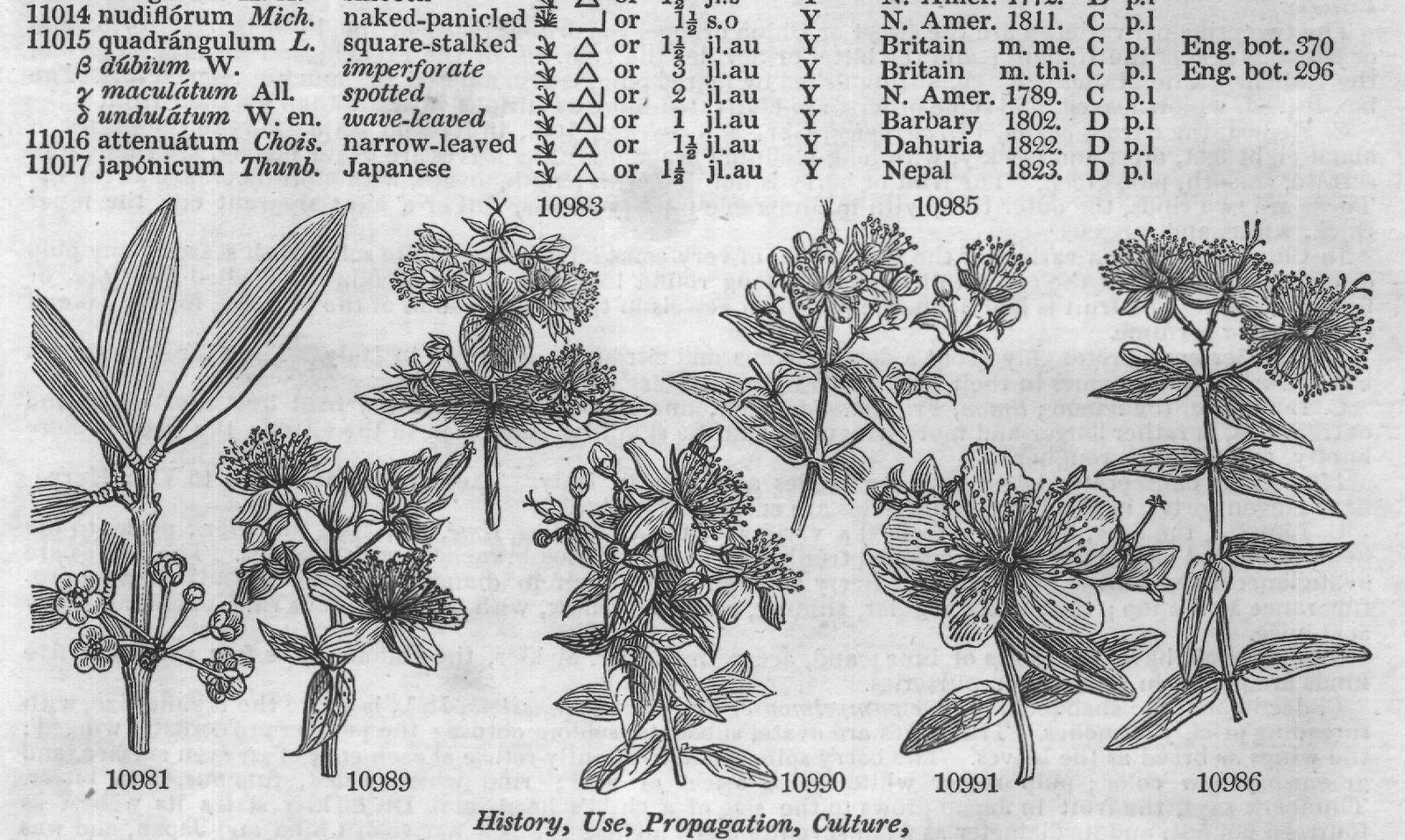
E. Indies 1796. Sr.m Roxb.cor.2.t.196 E. Indies 1824. Sr.m Y Y Hypericineæ. Sp. 63-133. 10983 elátum H. K. tall or 5 jl.au Y 10984 frondósum Mich. green or 5 jl.au Y 10985 amœ'num Psh. elegant or 4 jl.au Y 10986 hircínum L. stinking or 3 jl.s Y 10987 foliósum H. K. shining or 3 au Y 10988 floribúndum H. K. many-flowered or 3 au Y 10989 olýmpicum L.
Olympian or 4 jl.s Y N. Amer. 1762. L s.l N. Amer. 1806. C s.l Carolina 1812. L s.l S. Europe 1640. L s.l Azores 1778. C p.l Madeira 1779. C p.l Levant 1706. S s.l Dend. brit. 85 Dil.el.t.151.f.182 Dend. brit. 86 Com.hort. 2. t.68 Bot. mag. 1867 10990 canariénse L.
Canary or 2 jl.s Y 10991 monógynum L.
Chinese or 3 mr.s Y Canaries 1699. C p.l China Bot. cab. 953 1753. C p.l Bot. mag. 334 10992 cordifólium Chois. heart-leaved 10993 pyramidátum H. K. pyramidal or 2 Y ...
Nepal 1825. C co or1 jl.au Y Canada 1759. D p.l 10994 Ascýron L.
Siberian or 1 jn.s Y Siberia 1774.
Sk co Vent. malm. 118 Gmel. sib.4. t. 69 10995 ascyroídes W. large-capsuled or 1 jn.jl Y 10996 pátulum Thunb. spreading or 1 jn.jl Y N. Amer. 1812. Sk co Nepal 1823.
C co Bot. mag. 2375 H. úralum B. M. 10997 Kalmiánum Lam.
Kalmia-leaved or 2 jn.jl Y 10998 calycínum L. large-flowered or 1 jn.s Y N. Amer. 1759. C s.l Ireland Sk co ... 10999 baleáricum L. warted or 1½ mr.s Y 11000 Androsæ'mum L. Tutsan or 2 jl.s Y Majorca 1714. Cr.m Britain