SIX miles northwest of the city of Trieste, upon a sloping headland, thickly wooded with fir and pine and overlooking the blue Adriatic, stands the castle of Miramar. The building and its park are the creation of Prince Ferdinand Joseph Maximilian, brother of the emperor of Austria. The promontory comprising the site was formerly a barren and uneven waste, but its beautiful situation at the northern extremity of an inland bay, sheltered from the northeast wind by the mountains, won the fancy of the Prince; and at an expenditure of two million dollars, not to mention a deal of personal energy, he converted the wild region into an ideal abode, especially appropriate, by reason of its commanding position, for the habitation of a ruler. Commenced in the year 1856, Schloss Miramar was completed in 1860, when it became the permanent residence of Prince Maximilian and his wife, until the ill-advised offer of a throne in Mexico induced them to leave the Eden of their making. On the 10th of April, 1864, the Prince solemnly accepted at Miramar the title of Emperor of Mexico. The same day he treated with an agent of Napoleon, regarding the quartering of French troops in that country, and signed the historic "convention of Miramar." Soon afterward the Prince and Princess departed for the new world, where, alas! the husband met his untimely death at Querétaro and whence the wife returned raving mad to Austria only to die in solitary confinement.
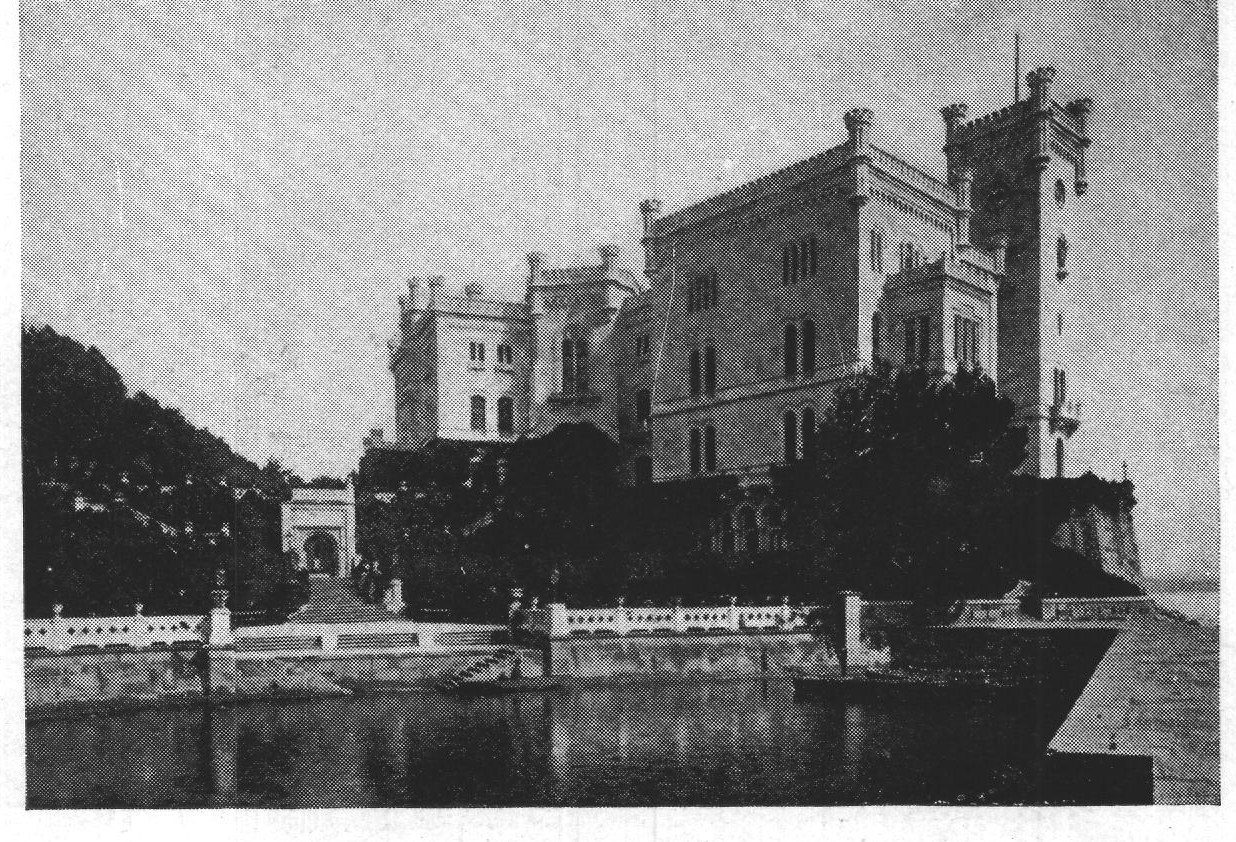
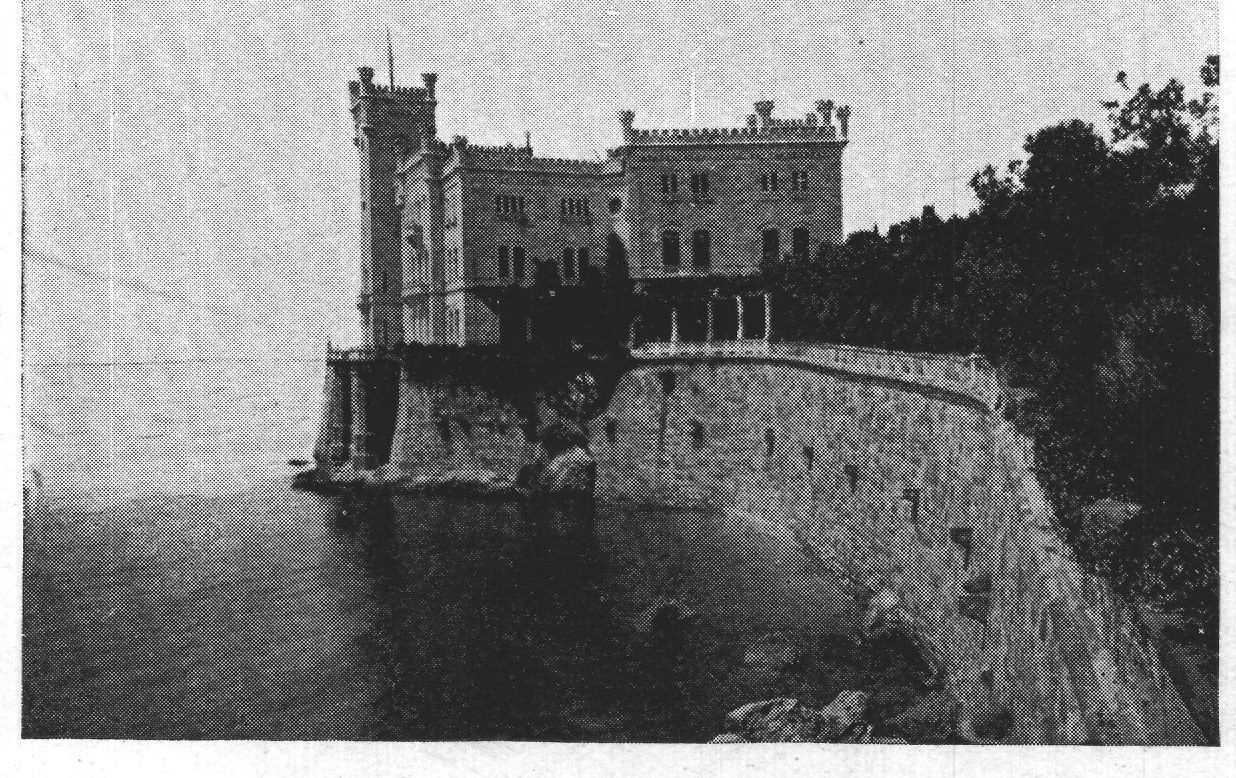
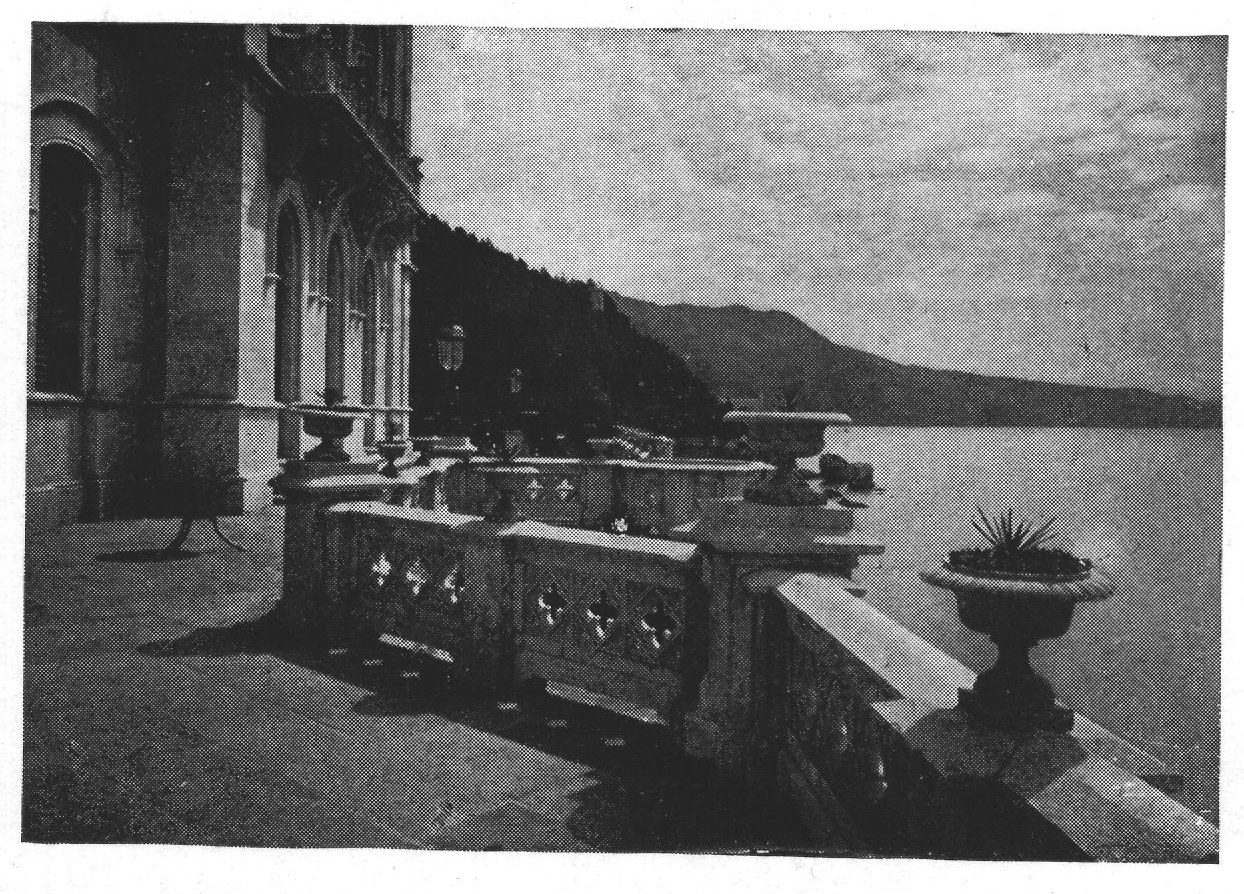
Miramar has since been the favorite residence of the Empress of Austria, who used to spend part of her winters here, the remainder at her castle on the island of Corfu. Now travelers from every part of the world make an excursion to the place,—taking either the train or the boat from Trieste,—and are fully repaid in finding, at the end of a short ride, one of the finest gardens in all Austria. Guide-books persist in describing Schloss Miramar as a "marble palace," whereas, truth is, it is built entirely of light sandstone from the neighboring quarries of Repen Taber. The most imposing view of the castle is from the sea. The steamer which makes the journey daily from Trieste, on doubling a last headland, affords a view of each successive projection of the building which abuts upon the azure waters above a high sea-wall, the base of which is laved by the Adriatic, upon whose bosom, on calm days, are reflected the architecture and the surrounding woods. With the exception of the "Throne Room," the castle has no very spacious halls, for the Prince never intended making Miramar anything else than his home. An extensive library, however, and many other relics of its former lord are to-day its chief attractions. Even the furniture, which remains just as it was when the Prince left it never to return, is of the simplest kind; and it is not without a feeling of pity that the visitor notices Queen Marie Antoinette's writing-table, the gift of the Emperor Louis Napoleon to Prince Maximilian.
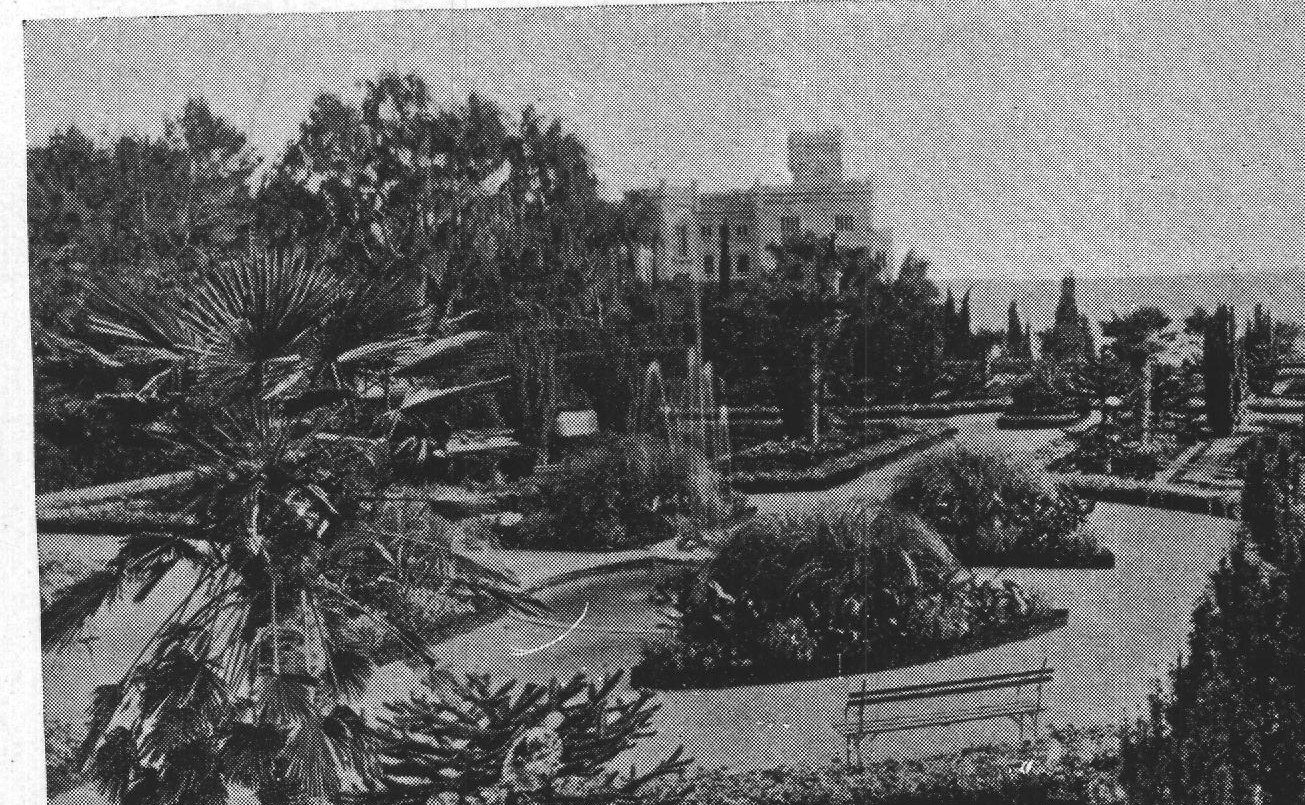
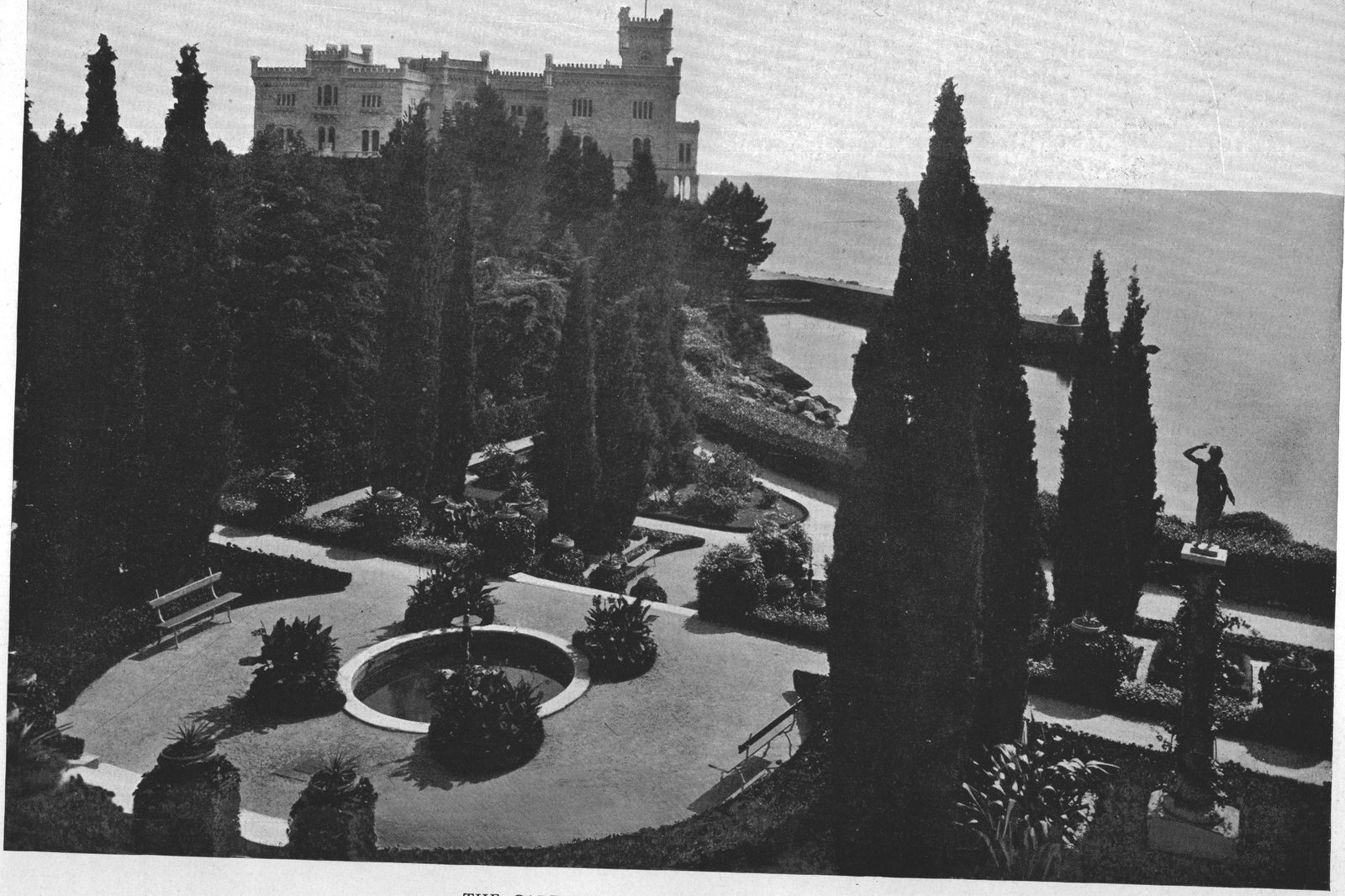
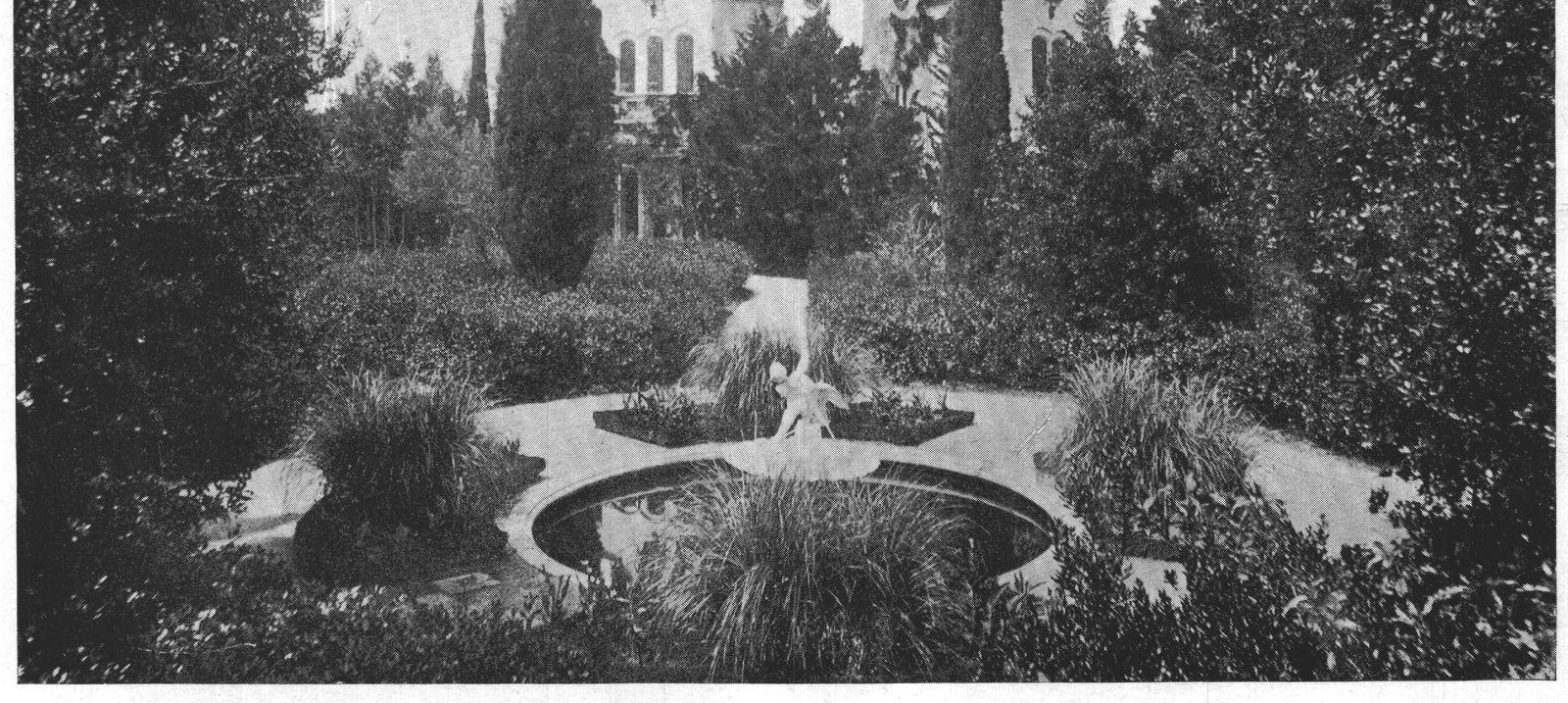
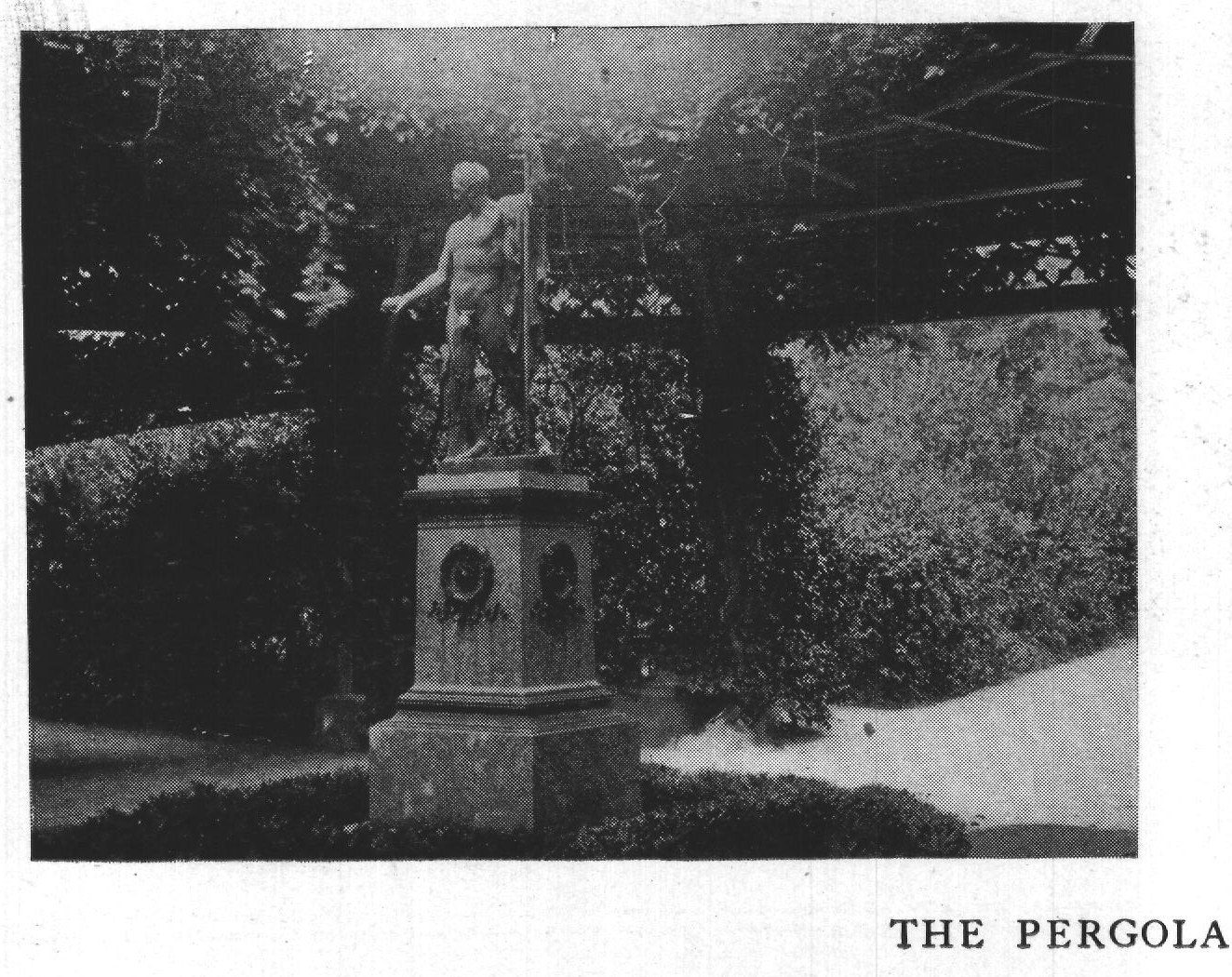
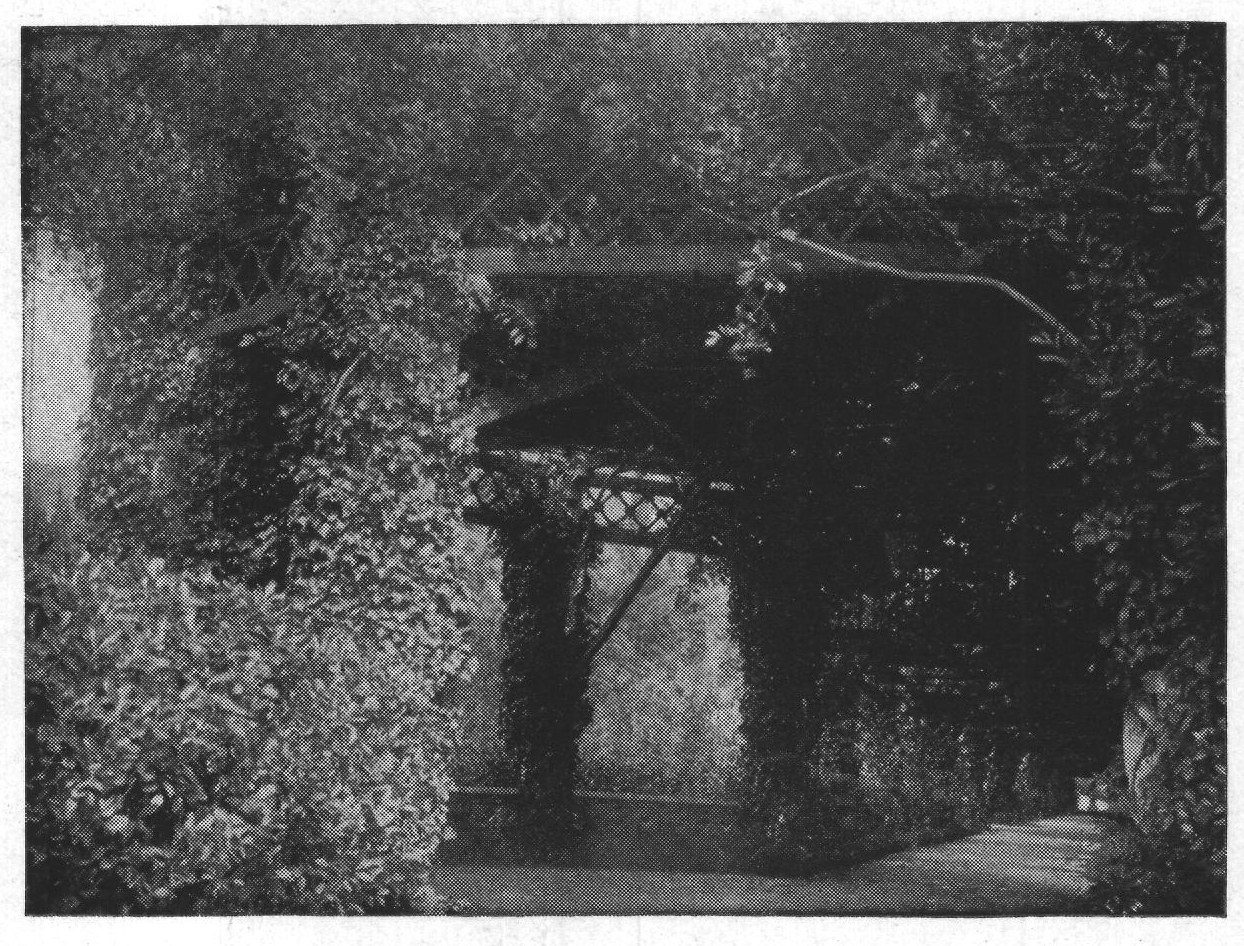
A pergola upheld by pillars of red and white bricks and covered with wistaria leads straight from the eastern side of the castle to the caffeehaus, dividing the woods on the south from a series of Italian and Dutch formal gardens on the north. These gardens have been placed at an angle with the pergola so that they may be graded down to the wall beside the sea. This has been done by means of three terraces, the upper one being very extensive and elaborate, as the illustrations show. The pergola and the more architectural portions of the gardens are richly and tastefully studded with mythological bronze and marble statues. Here they have been placed on ancient columns from Aquileia, there they stand on modern pedestals of granite. Running nearly parallel with the pergola is the camellia avenue, sheltered on both sides by laurel-trees. Farther to the north, beyond the formal gardens, are a ruin, a propagating house, and before the "little castle" is a symmetrical parterre. South of the pergola the woods spread over a wide area, extending as far as the stables, wine cellars and service houses. The thickly planted trees are penetrated by serpentine walks, in the convolutions of which are several lakes and also a small nursery garden. Skirting the wood upon the verge of the sea is the high road to Trieste, commanded by the porter's lodge at the entrance to the gardens. The only other way of driving to Miramar is by the road crossing the railway near the station. This building is but a hundred and fifty yards from the entrance to the grounds, and is two hundred and seventy above the castle itself. East of the woods are orchards and openly planted groves, extending to the boundary of the village of Grignano. At many places in the groves is heard the cheerful melody of water in marble fountains, and the beds of exotic flowers in the formal garden make, by their combination of shade and color, a veritable mosaic to the background formed by the sea. Signor Lamarmora, the prefect of Schloss Miramar, to whom I am indebted for the plan of the gardens, has made the melancholy remark, "Never did the Prince see this creation of his mind in its present superb reality."
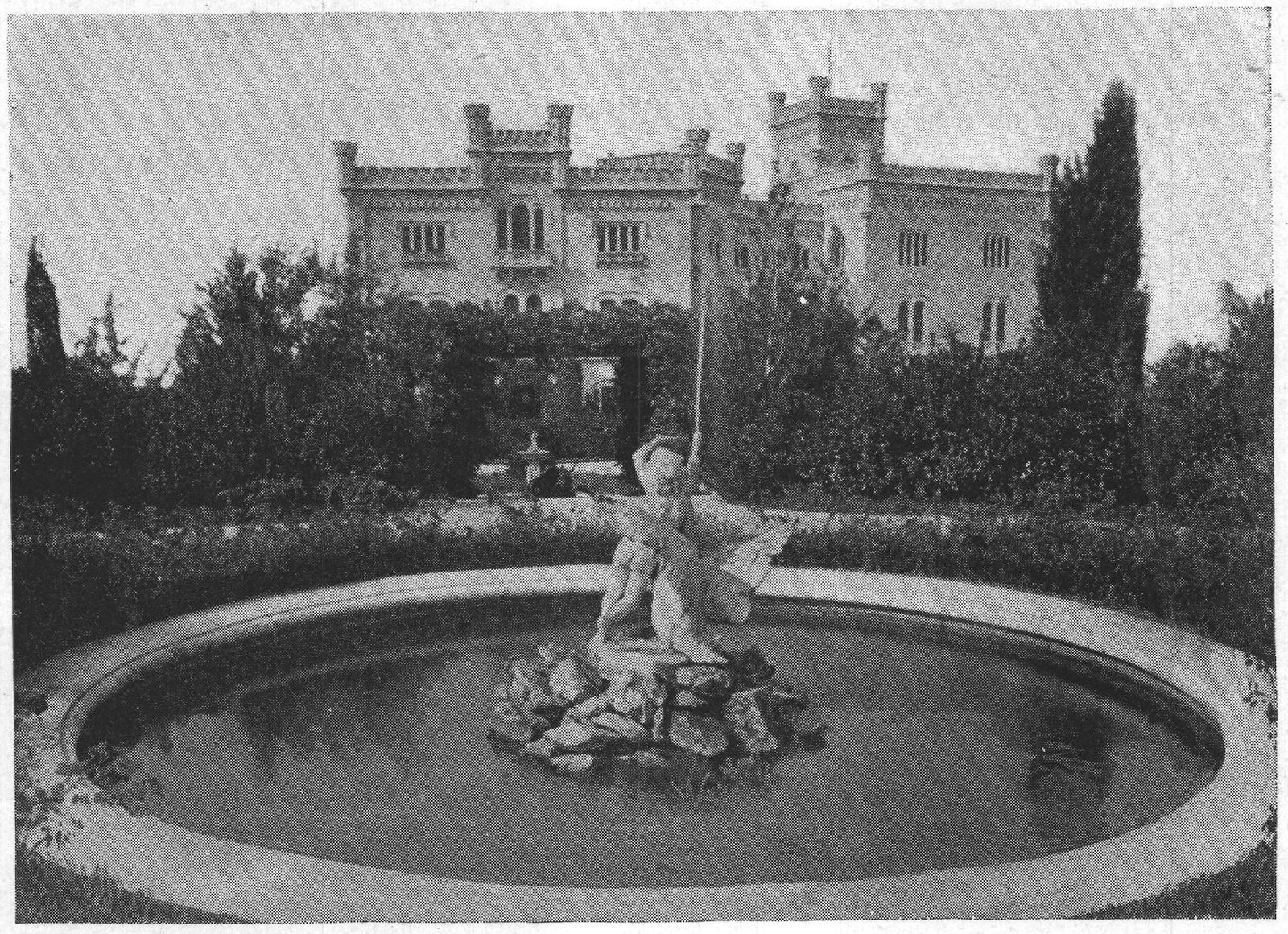
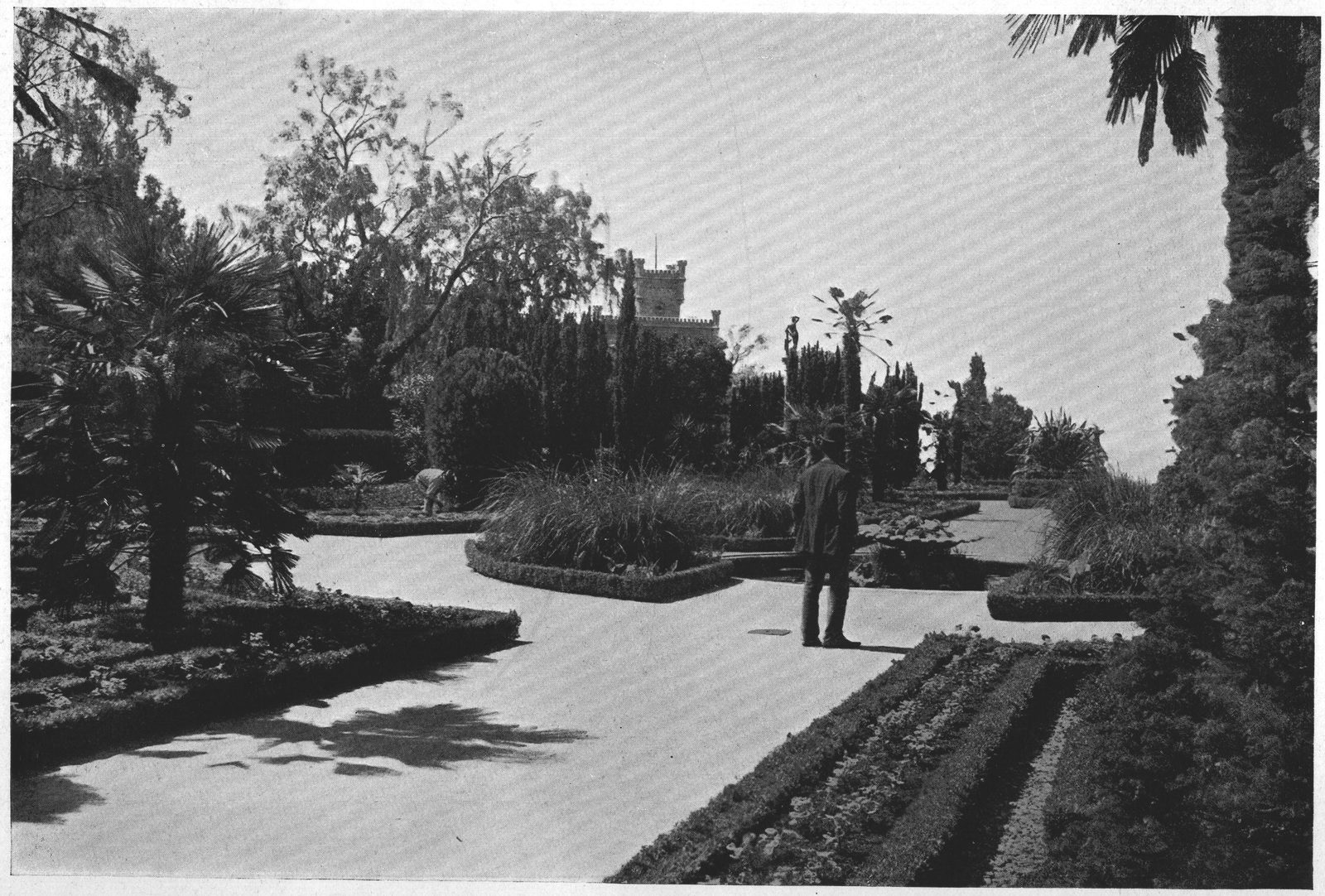
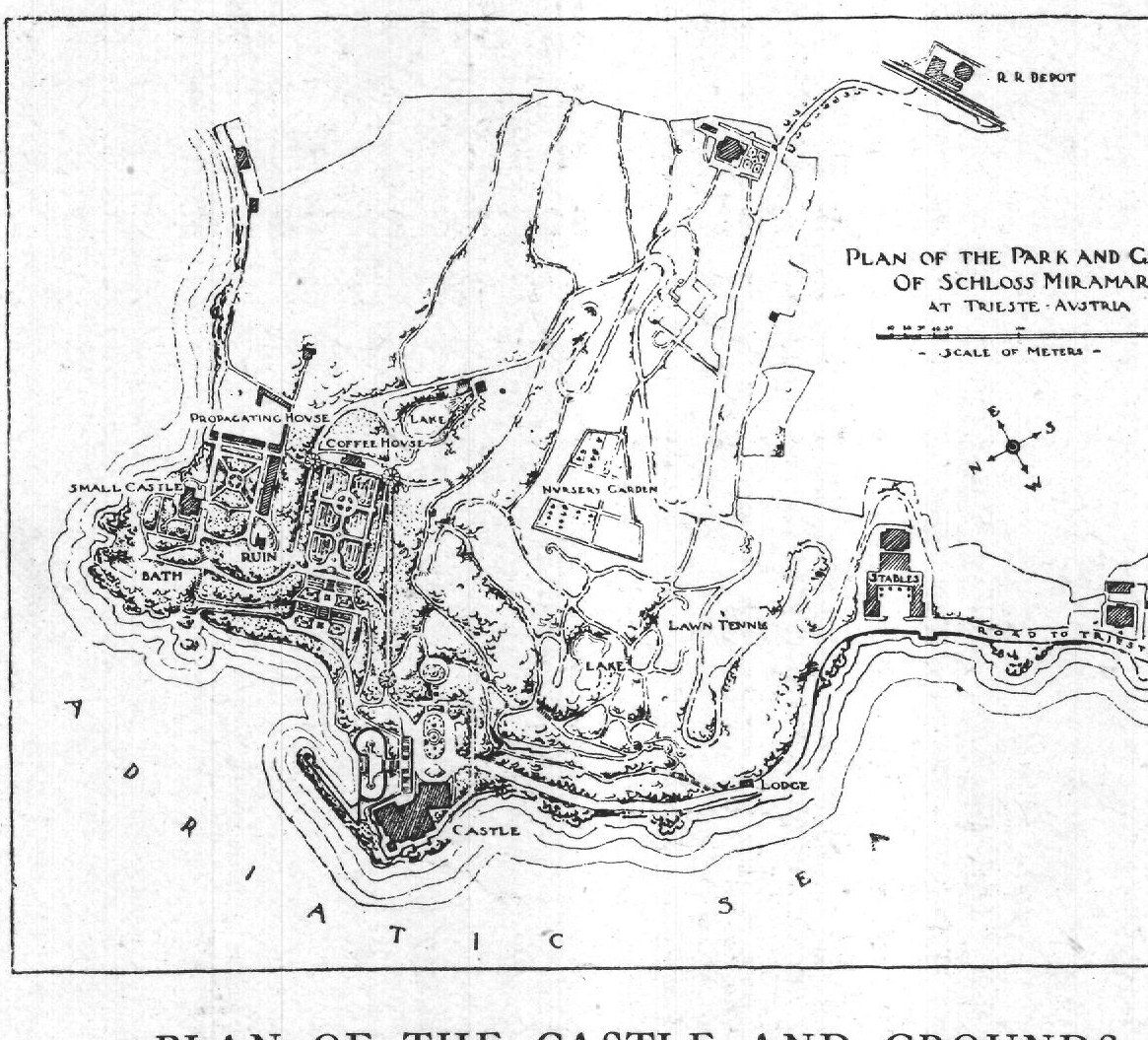
With the assistance of the prefect and the head gardener of Miramar, the following outline of the flora has been made. Along the avenue from the main portal of the grounds to the entrance of the castle are to be found Laurus nobilis, Arbutus Andrachne, strawberry trees (Arbutus Unedo), holm-trees, or holly (Quercus Ilex), pittosporum and viburnum. About the verandas and pergola are licorice (Glycyrrhiza glabra), Vitis quinquefolia and glycine. There are huge masses of rhododendron, and in important positions is the Camellia Japonica, planted in the ground and thriving all year in the open air. In the parterres are palms, Acanthus mollis, yucca, Agave Americana, Wellingtonia gigantea. The hedges, picturesquely translated into English as "walls," are made of arbor-vitæ (Thuya Biota orientalis). Near the swan's lake are plantains, having leaves five feet in length, also the Langerstremia of Japan, with square-shaped branches. Connected with the parterre is an alley of oleanders (Nerium Oleander). The wood is composed of fir and pine trees of the following species: Pinus sylvestris, Pinus Austriaca, Pinus maritima, holm-trees (Quercus Ilex), yew-trees (Taxus baccata), myrtle (Myrtus communis), the spindle tree (Euonymus Europæus), also cedars and cypresses. Horse-chestnuts (Æsculus Hippocastanum) form the avenue to the railway station; and beside the station building is a beautiful and unique example of Araucaria excelsa.
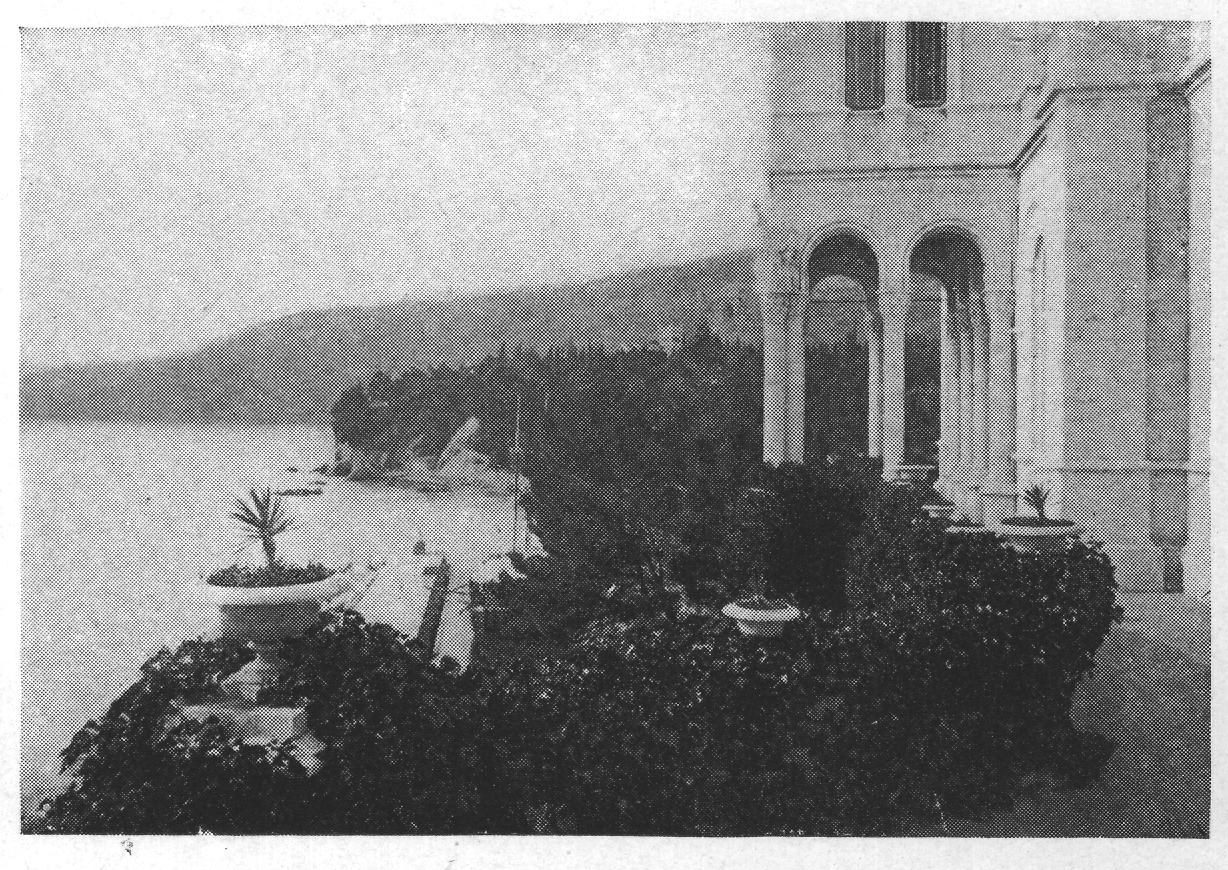
On the coast north of the castle is a grotto, into which the sea penetrates and affords a series of bathing basins, entered through an artificial passage cut into the rock. Outside the northern boundary of the park, a large hotel has been built on the coast, and is a favorite resort during the summer season on account of the proximity to the Miramar grounds, which are benevolently open to the public throughout the year from daybreak to sunset. The "visitors' house," of which a view is given, was built for the Prince's guests. Here the ex-Empress of Mexico was lodged on her return, in the hope that old associations might soothe her distracted mind, but former scenes served only to aggravate the insanity brought on by her husband's terrible fate, and she was removed to Bavaria.