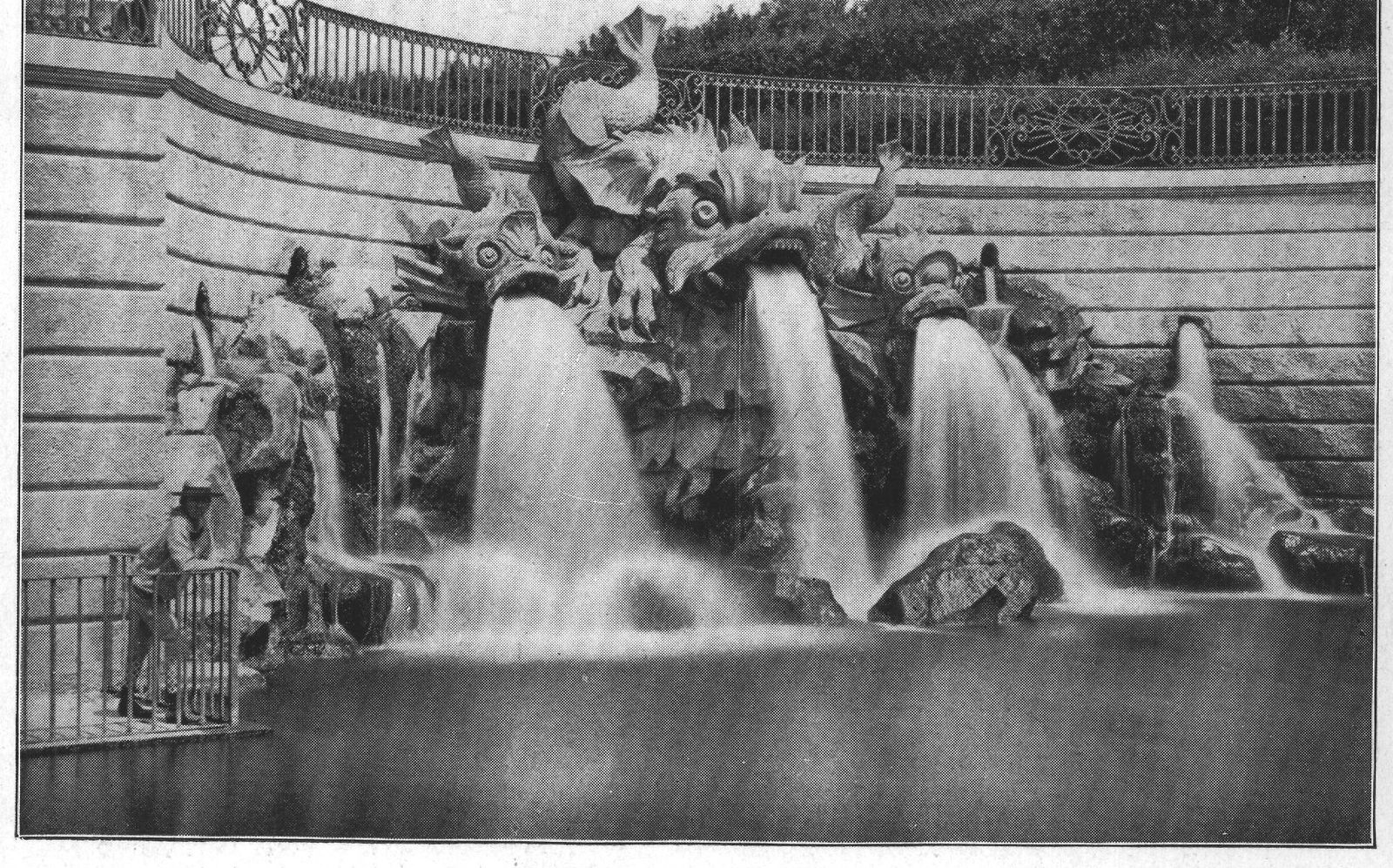
THE Château de Brissac has been the scene of some of the most stirring and eventful episodes in the history of France. Originally one of the strongholds of those Counts of Anjou from whom sprung our King Henry II., it subsequently became the residence of the illustrious family of Cossé Brissac who supplied no less than four Field Marshals to France. Situated as it is on the main road from Angers to Doué, and at the junction of other important routes, it has seen many an encounter between the supporters of the rival houses of Plantagenet and Valois, as their respective heads contended for the mastery of France. It was forfeited to the Crown by King Philip Augustus and Louis XI., both of whom razed its fortifications to the ground, and it was taken and retaken by Leaguers and Huguenots when Catholic and Protestant were tearing France asunder in the cause of religious ascendency. By giving hospitality to a king and to his mother, it cemented their reconciliation within its walls, and it remains now a living witness to the heroism of some and the folly of other proprietors who, great and small, helped in their several times to raise the dignity of the feudal lord and adorn the court of the Roi Soleil who declared that he alone was the State.
The Dukes of Brissac have won renown both on the field of battle and in the Council Chamber, though others of them have been handed down to us by the scandal-mongers of the day as men of striking peculiarities or of depraved lives. We are justified in saying, therefore, that at all times Brissac has well played its part in the making of that phase of the history of France which is to be read in the strongholds of its nobles, quite as much as in the halls of its royal palaces. Though, as we have said, the old feudal castle has been more than once razed to the ground and has for the most part now given way to a seven storied product of the Renaissance, the towers of Brissac have braved the storms of ages and have come down to us from those days when it was the capital of a country described in the dog Latin of the period as Pagus Bragascensis.
The modern name of Brissac occurs for the first time in an account book of 1480; but it is more than probable that Bracaceorum, Bracosachs and Bracasae as the fortified stronghold of the tenth century was written, was so pronounced by the local peasantry. The Counts of Anjou added to the old keep from time to time, bridges were thrown across the Aubarne and water-mills constructed in its immediate neighborhood. In 1068 Geoffroy le Barbu, who was count of part of Anjou, rebelled against his brother Fulk Rechin and laid siege to Brissac, but was taken prisoner with a thousand of his knights in front of the stronghold itself. It would seem, however, that even at this time it was not the habitual residence of the Counts of Anjou. In the year 1100 they were represented by Archalos, later on Seneschal of Anjou, who with the consent of Fulk the younger, surrendered to the Abbey of Fontévrault the right of levying toll at Brissac.
The Chemillés became hereditary governors in course of time. Thus in 1105, Pierre de Chemillé is described as Lord, or rather as Governor of Brissac; but in 1112 Fulk the younger led his army there, doubtless to show that he was liege lord of the country. In October, 1208, Guy de Thouars, who had married Eustache de Mauleon, Lady of Chemillé, became Lord of Brissac and was confirmed in its possession by Philip Augustus, who had taken the side of Prince Arthur of Brittany and Anjou against his uncle John, King of England. The new governor did not, however, remain for long in the good graces of his sovereign, for in 1204 he transferred Brissac to Guillaume des Roches, and on capturing it on Ascension day, 1206, razed its fortifications to the ground.
Though the over lordship of Brissac was long debated between the kings of England and France, the Chemillés, Pierre, Jean, Guy and Thomas were its governors from 1240 to 1380 when Jean de La Haye-Passavant married Thomasine de Chemillé. He was succeeded by Bertrand de La Haye in 1394. In 1416 Jean de La Haye rendered homage to his liege Lord for Brissac but ceded it in 1434 to Pierre de Brézé, Lord of Maulévrier, in Normandy, who owned the pond and the mills ten years before Louis XI. confiscated his son's, Jean de Brézé's, estates when he was convicted of the murder of his wife Charlotte the natural daughter of King Charles VII. by the beautiful Agnes Sorel. The property was, however, restored to his son, Louis de Brézé, by the king on his marriage with Yolande de La Haye-Passavant, a descendant of the former owners. Louis de Brézé, Grand Seneschal of Normandy, did homage for Brissac on September 9th, 1498; but sold the castle and its appurtenances to Réné de Cossé on January 29th, 1502. At that time the whole estate consisted of the castle, the ponds, four water and two wind-mills, some farms and the feudal dues raised on the surrounding country. Its importance was, however, far less then than a few years later on, as it was only then a châtellenie.
The Cossés who shortly exchanged their name and title of Cossé Lords of Brissac for that of Cossé-Brissac claim descent from Cocceius Nerva. This may or may not be true; but the fact remains that they can trace their pedigree back to the thirteenth century when they held Cossé-le-Vivien in Poitou. Fiatre de Cossé was Gentleman of the Wardrobe to King Philip Augustus, whilst Roland de Cossé accompanied Louis IX. to the Holy Land.
Réné de Cossé made very considerable additions to the property, which he had purchased, and commenced the restoration of the village church. He was Lord High Baker and Grand Falconer of France, and was appointed Governor of Anjou and Governor of the children of King Francis I., whom he accompanied when they were despatched as hostages to Spain in 1530. His wife, Charlotte Gouffier, was, first, Governess to the Princess Margaret and then her Maid of Honor when she married the Duc de Berri.
Charles de Cossé, first Count de Brissac, their son, was so celebrated for his personal beauty that he was known as "le beau Brissac." He was small and weak but excelled in all military exercises. His action at the Siege of Perpignan in 1541, in charging the enemy and recapturing the guns taken from the French so aroused the admiration of Henry II., then Dauphin of France, that he embraced him publicly before the whole army and exclaimed: "Were I not Henry of France I would wish to be Brissac." His valor on this occasion also secured for him the appointment of Grand Master of Artillery. Some time after this he had an interview with Ferdinand Gonzagua and the chronicler tells us, that whilst the Spaniards were decked out in their gaudiest array, Brissac's French soldiers turned up in those blood and travel-stained rags and tatters which they had worn on many an expedition. Bezion de Villars says that the Spanish general professed to be heartily ashamed of the contrast between the men of the two detachments and that he gave vent to his feelings to Brissac: "You have taught me a most valuable lesson. Whilst my men are clad like damsels, yours appear like soldiers whose finest clothing are the stains and grime which they have received on the field of honor."
Fighting in Flanders, Brissac displayed the greatest courage, when wounded and almost unarmed he held the enemy at bay with his broken sword until his own forces had time to come up and rescue him. This act of valor impressed King Francis I. so much that he publicly invited him to drink out of his cup.
His patriotism was even more conspicuous still, during the campaign of the French army in Savoy. His troops had been victorious in Piedmont but were disbanded without pay. In their indignation they asked their leader, with threats, where they could obtain bread. "From me as long as it lasts," was his reply. The local merchants gave the army what it required on his word of honor that they would be paid. On his return to France he found that the Guises, who then ruled the country, were little disposed to meet his engagements, so he turned round to his wife: "Here are men who have risked their all on my word. The Minister will not pay them and they are ruined. Let us put off the marriage we were contemplating for Mademoiselle de Brissac and let us give these wretches what we had destined for her dowry." With the funds thus secured and with borrowed money, he was able to pay the merchants half that was due to them and gave them full and ample security for the remainder. His beauty was said to have enamored the lovely Diane de Poitiers and to have excited the jealousy of King Henry II., who kept him out of harm's way by employing him as much as possible in Italy.
His brother, Artus de Cossé, was also renowned for his courage, and likewise raised to the rank of a Field Marshal. When he was appointed Minister of France, his wife, who belonged to the old family of Pui-Grissier, but who always put her foot in it, came to make her obeisance to the Queen: "Faith, ma'am," said she, "without this appointment we were ruined, for we owed a hundred thousand crowns. Thank God, we have paid this debt within the year and have earned another hundred thousand crowns with which we hope to buy some fine property." This stupid remark amused the Queen and the Court immensely, but was profoundly distasteful to her husband, who sent her home on the spot.
The great architect of the family fortunes was, however, Charles de Cossé's son, Charles II., first Count and then Duc de Brissac. He was one of the Leaders of the League and had earned such a reputation for valor and generalship, that when he was taken prisoner at Falaise, Henry, King of Navarre, afterwards Henry IV. of France, wrote to the Comtesse de Gramont: "I have won Ivry, Argenton and Falaise, but I have done far more for I have taken Brissac prisoner." He was appointed Field Marshal in 1593 and Governor of Paris for the League in 1594. The conversion of Henry to Roman Catholicism enabled the new governor to surrender the capital with a clear conscience to the King of France and of Navarre, who made his solemn entry on March 22d, 1594.
In the meanwhile Brissac itself had been a bone of contention between the various factions and had suffered considerable damage from both Huguenots and Catholics alike, as they in their turn captured the stronghold from one another until finally Judith d'Acigné, Countess de Brissac, was authorized to take up her residence there, on condition that the fortifications were razed to the ground.
One of the first objects of her husband was, therefore, once peace had been restored to France, to repair the ravages made by time and by civil war. In 1607 he laid the foundations of the northwest pavilion which consists of seven stories and rises to a height of 143 feet from the ground. In 1615, Jacques Dangluse was appointed architect in chief and was assisted in his work by Michael Hutin and Charles Corbineau, who together with him superintended the works until 1620. Edmé Pothier who had come to live at Pont de Cé in 1621, Pierre Gosselin and Louis Gillion, all artists of renown, looked after the interior decorations, the woodwork was left in charge of Antoine Harmot and Réné Legras and the glass of Pallustre and Colleart. The present building rose on the ruins of the old one and was shortly ready for the reception of royalty.
It was here, as we have already noted, that Marie de Medici was reconciled with her son Louis XIII. on August 13th, 1619. The King had been awaiting his mother with impatience. They met but a short distance from Brissac and embraced with the greatest affection. They were received right royally by Charles de Cossé, Field Marshal of France, and the reconciliation was cemented by a residence of five days under a common roof. The king had given letters patent to his host raising Brissac to the rank of a Duché-pairie, but the Parliament had hitherto refused to register them. It was not until July 8th, 1620, that this formality was carried into effect. The Duc de Brissac did not, however, live long to enjoy his new honors as he died in the following June.
It would be easy to dwell at considerable length on the subsequent history of this illustrious family. Many stories have been told by Tallemant des Reaux, by the Duc de Saint Simon and by those other scandal-mongers who have handed down to us the gossip of the French Court. One of the most extraordinary characters in the family was the Marquis d'Assigny who was a travesty of Don Quixote. He used to send messengers into the forests of Brittany to warn him of the numerous fair ladies who were held prisoners in their castles and strongholds. He pretended to go to the spot and returned a different way, boasting the whole time of his deeds of chivalry. When his servants were at dinner a man would rush in and tell them that the enemy were approaching the castle. They would immediately arm and sally forth in search of the foe only to learn that the imaginary force had fled on learning how well they were prepared for their reception.
Another peculiar member of the family was the Maréchale de La Meilleraye. They were discussing the death of the Chevalier de Soissons, a man of notoriously bad life and a brother of Prince Eugene of Savoy: "So far as I am concerned," said she, "I am sure God would think twice before consigning a man of such illustrious birth to eternal perdition." She married General St. Ruth as her second husband. Her tongue was sharp and she led him a life. He used to lose his temper and beat her. The king sent for him on several occasions and remonstrated with him; but he generally gave way on the slightest provocation. He was given appointments first in Guyenne and then in Ireland, where he lost his life at the battle of Aughrim just as he was on the point of winning the day for King James II.
The fourth Duke married a sister of the Duc de St. Simon; but was not much beloved by his satirical brother-in-law who attacks him without mercy in his Memoirs. On his death without issue, in 1698, his estates were much involved and an interesting point arose. There were doubts in St. Simon's mind as to whether he could afford to take up the castle and whether he could otherwise succeed to the dukedom. The fourth Duke's sister, the Maréchale de Villeroy, gave way to him for the honor of the family. The Dukes were, however, divided in their opinions, some of them such as the Duc de Rohan, hoped to enhance their prestige by reducing their number and argued that the title ought only to descend from father to son in direct succession. The others, such as the Ducs de St. Simon, de La Tremoille, de Chevreuse and de Beauvilliers, were fearful for their own privileges. It was not much more than a century since this title had first been given outside the charmed circle of the royal family and they were anxious to preserve its inheritance to all their descendants without exception. The dispute waxed warm but St. Simon eventually prevailed, and the fifth Duke took the oath on May 6th, 1700.
His son, Jean Paul Timoleon, the sixth Duke, distinguished himself by his retort to the Comte de Charolais, who, finding him with his mistress said to him:
"Leave the room, Sir."
"Sir, your highness's forefathers would have said: 'Let us leave the room.'"
The eighth Duke, though at one time the lover of Madame Dubarry, was a man of the highest character and a great friend to the poor. He was particularly kind to foundlings whom he educated and taught a trade; so much so that mothers under cover of the night were wont to deposit their children within the precincts of the park. He was also most liberal to those of his farmers whose crops had been destroyed or even injured by game, giving them frequently a discharge in full for their rent if they could make out anything like a good case. He was commandant of the Constitutional Guard of Louis XVI. which made him particularly obnoxious to the Revolutionary party. He was taken prisoner at Orleans and massacred with many others as innocent as himself on September 9th, 1792. Another member of the family had married the Maréchal de Noailles. Notwithstanding her great age she was arrested and led before the Revolutionary Tribunal. She could not hear a word that was said owing to her extreme deafness. "Write down," said Dumas, the President to the registrar, "that she has conspired deafly." She was condemned to death without knowing that she had been sentenced, and was beheaded, at 70 years of age, on July 23rd, 1794, a few days before Robespierre's execution.
The tenth Duke died in 1888 and was succeeded in the title by his grandson whose father had died of typhus fever during the war of 1870. Roland de Cossé, Marquis de Brissac, had married Mlle. Jeanne Say, daughter of the great sugar refiner, who on her first husband's death remarried the Vicomte de Trédern and is the present owner of the château.
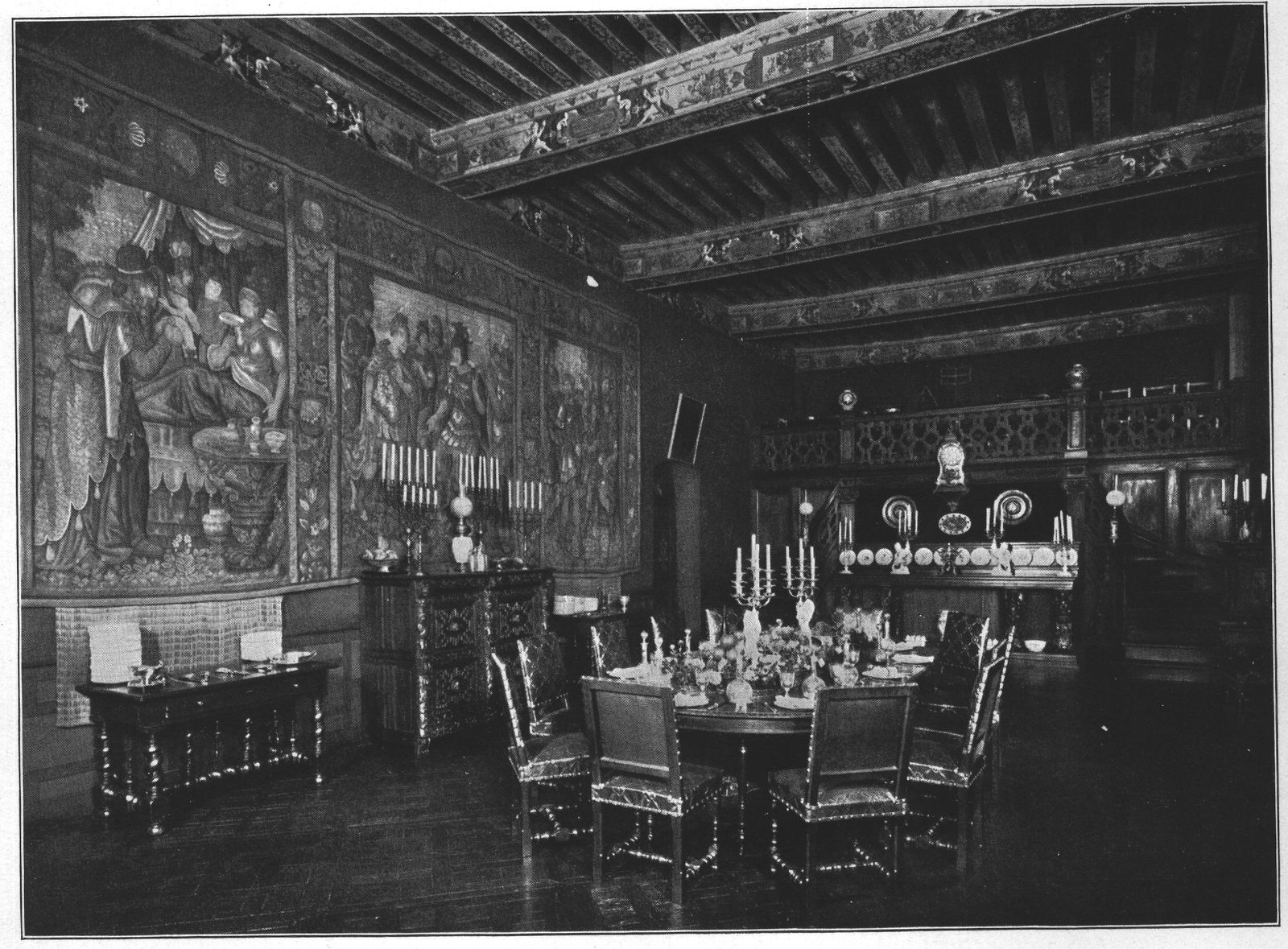
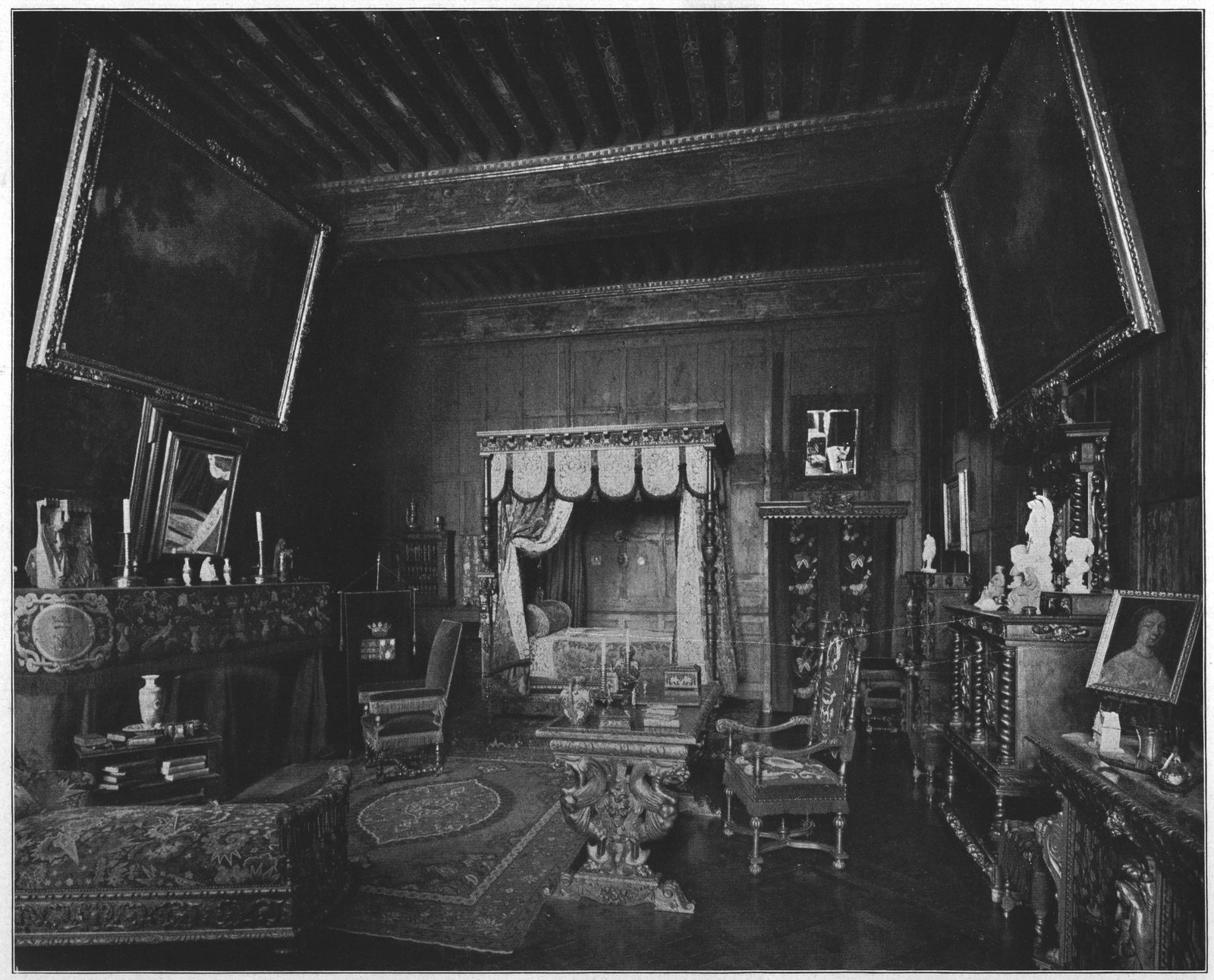
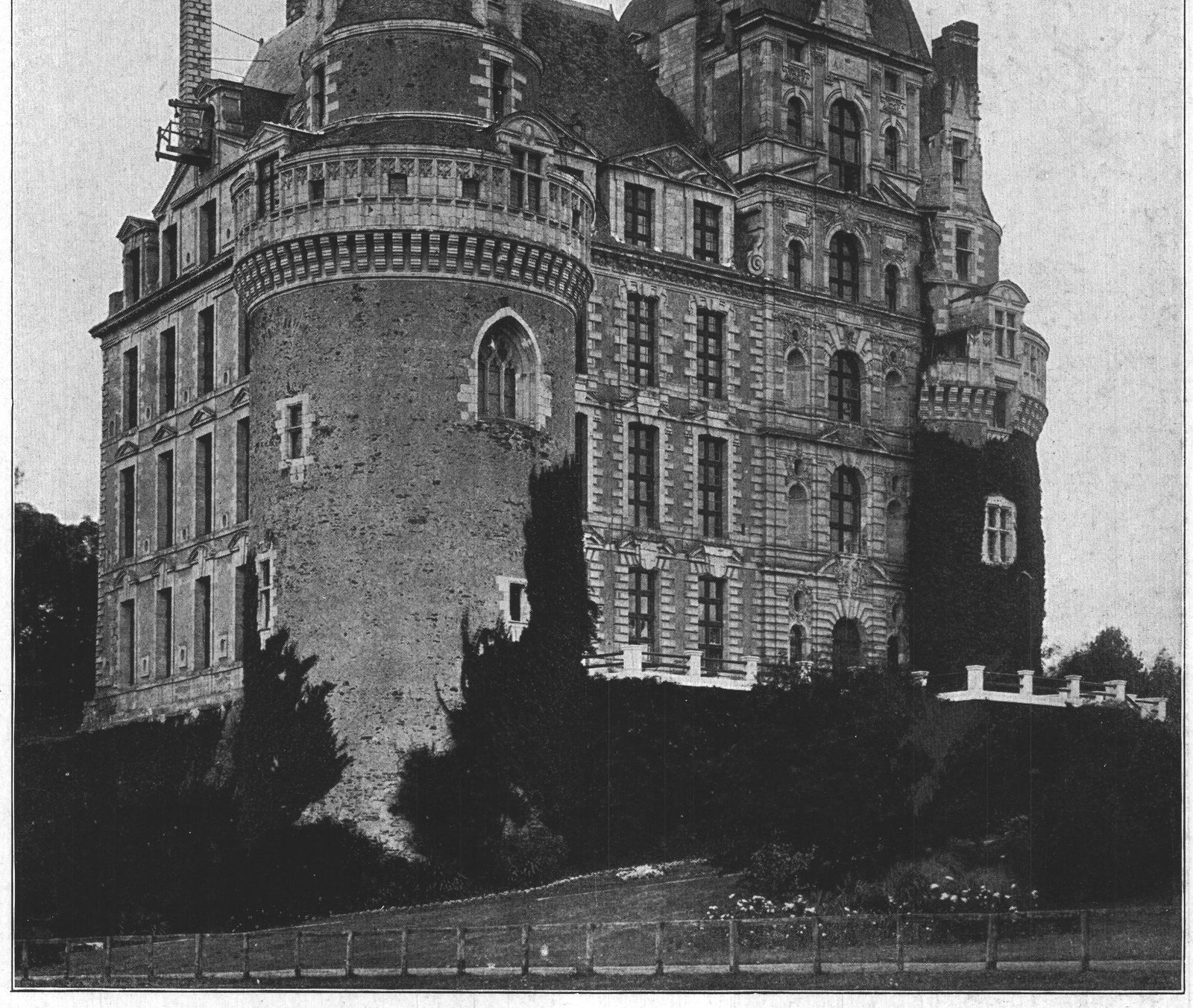
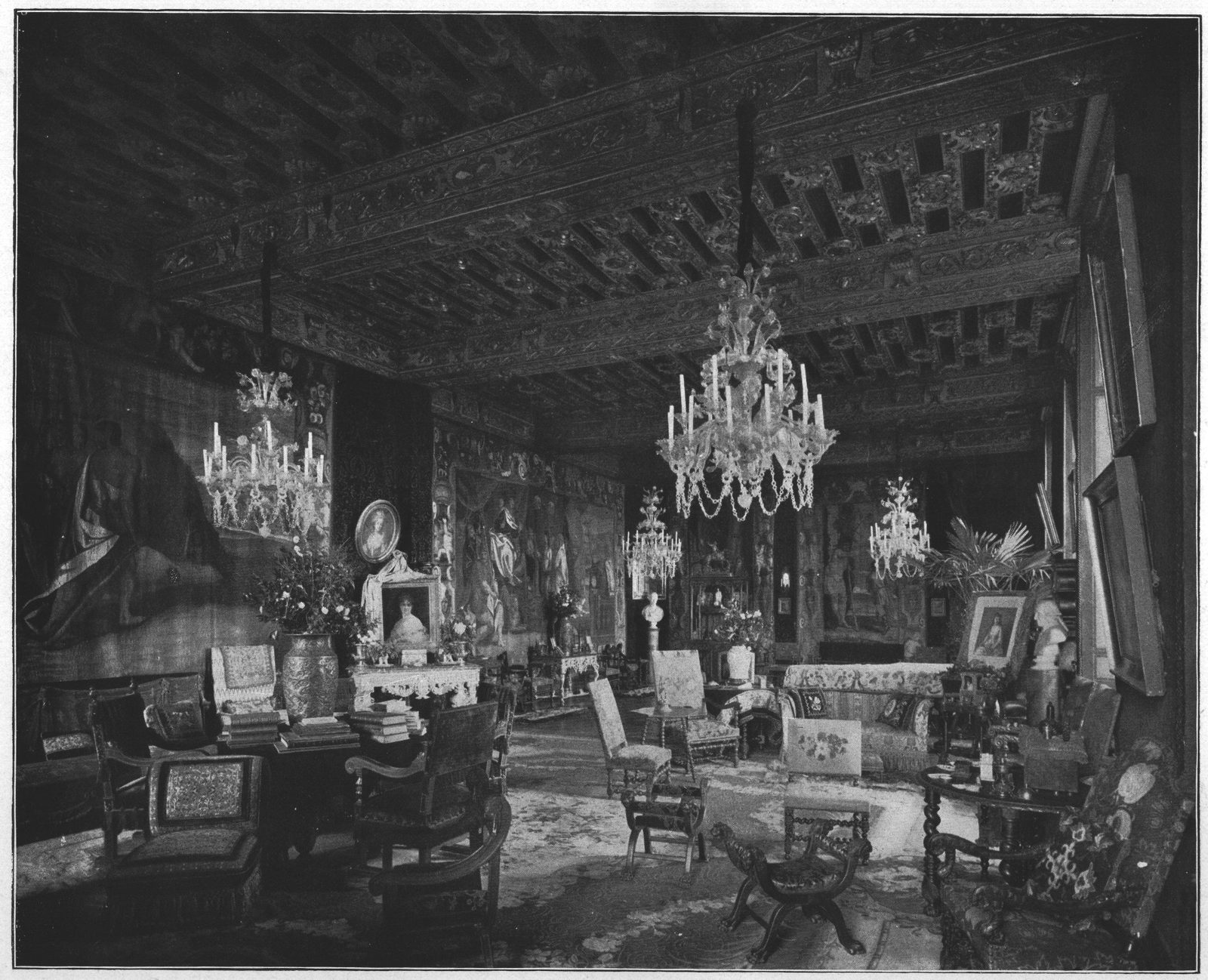
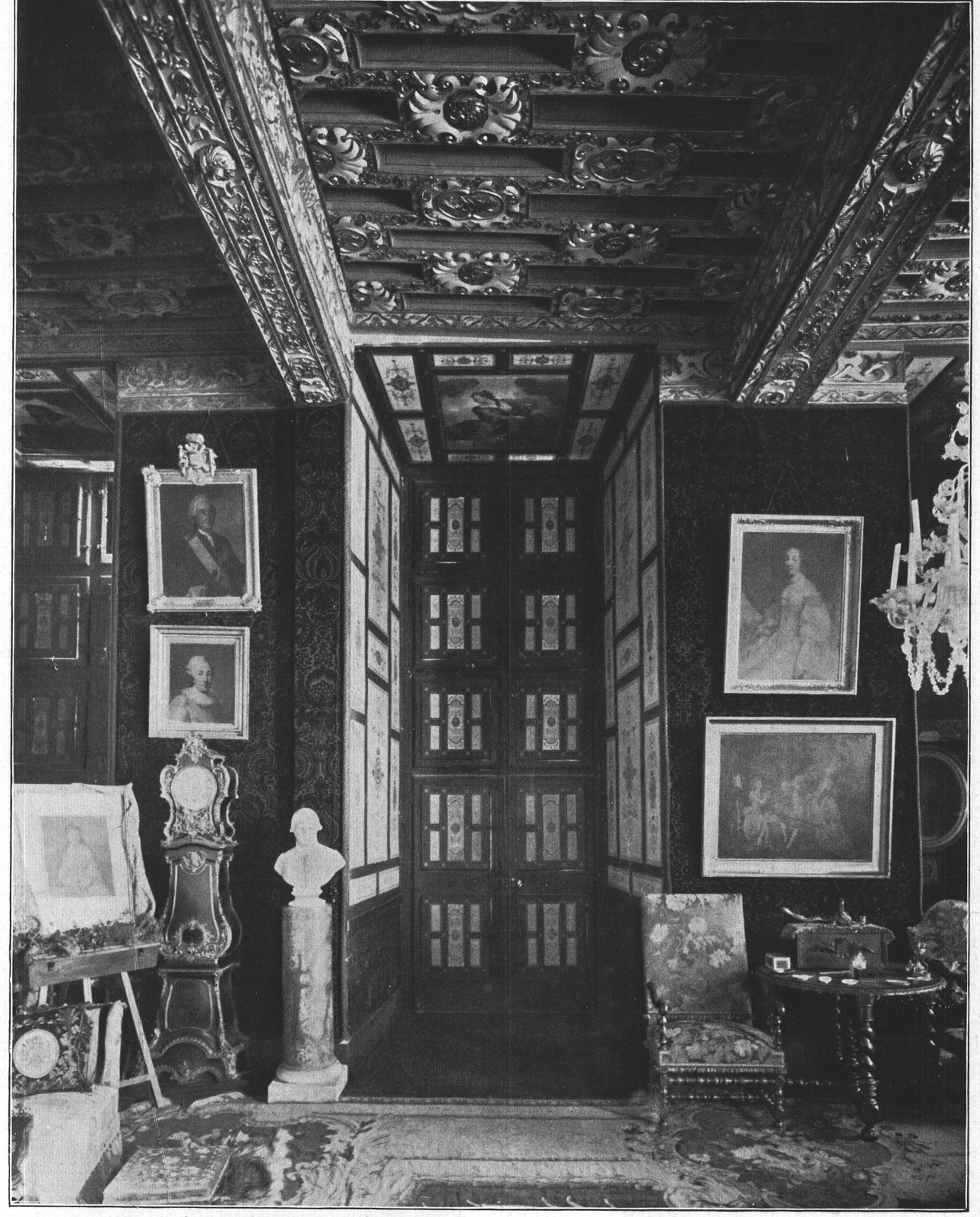
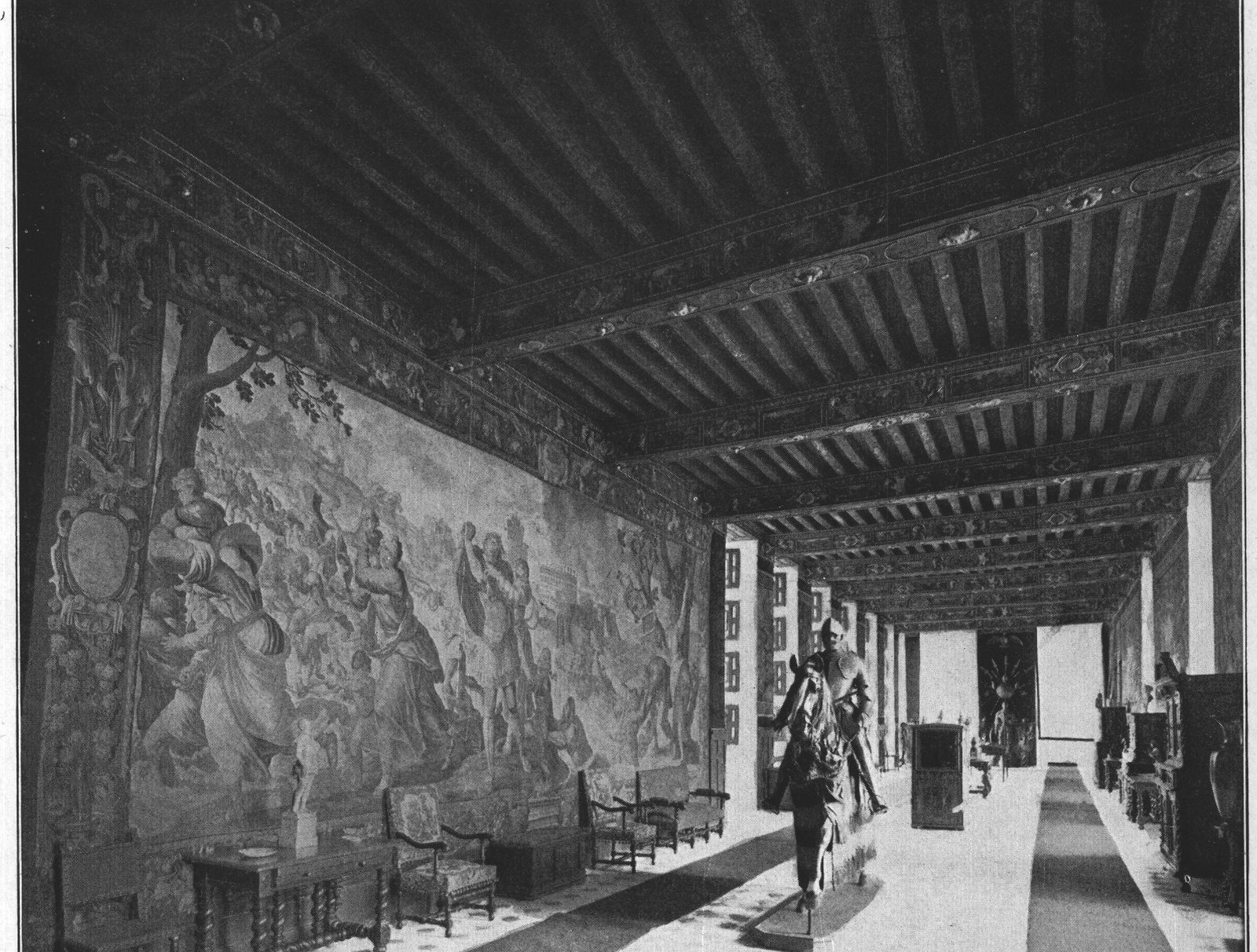
Brissac is one of the finest castles in the district notwithstanding its many irregularities and its want of uniformity. Still the massive square building produces an extremely imposing effect and bears witness to the power and wealth of those who, at different periods, have made it what it now is. The front looks east and lies between the two towers which still remain to testify to the importance of the earlier château of Brochessac. One of these is partly demolished, whilst the other contains the chapel. It was doubtless the intention of those who built the front to regularize their work by completely destroying the two towers, and raising in their place buildings more in character with their own design. Antiquarians will, however, congratulate themselves that this act of vandalism was never carried out and that we are now able to enjoy some remnants of the older feudal work. The central pavilion which stands upon a broad terrace protected by balustrades and reached by a flight of steps to the left, was originally intended to form the center of the front and is decorated with pilasters of five different orders of architecture. It was at one time topped by a campanile, covered with lead and surmounted by a statue, both of which were destroyed in 1793. The niches on either side contain statues sculptured by Count Raoul de Gontaut Biron and put in place in 1901, representing History and Music. Above this composite work is a huge stone tablet on which stands inscribed in large letters, "Virtute tempore," the motto of the ancient house of Cossé. The front hall is most imposing with its lofty vaulted ceiling and is full of old armor. Amongst other works of art which it contains is a bronze group by l'Epinay, representing Hannibal engaged in the throes of a death struggle with the Roman eagle. The drawing room to the left is remarkable for its fine gilt oak roof and for the embrasures of its windows and shutters painted with the monogram of the Cossés. The stone chimney-piece, resting on caryatides on either side, is a modern piece of work, above which is the bust of Charles II. de Cossé. Five large pieces of tapestry tell the story of Joseph and his brethren, whilst the intermediate panelling is lined with family portraits and busts, a picture of Our Lady and the Child, by Van Dyck and Zegers, and a portrait of Madame de Trédern, Marquise de Brissac, by Cabanel. The dining-room contains a musician's gallery and a fine collection of Gobelin tapestry. Of the bedrooms the most striking are the "Chambre Judith," so called in memory of Judith d'Acigné, wife of the first Duke, the room in which Louis XIII. was reconciled with his mother in 1620, with fine tapestry recounting the exploits of Alexander the Great, and the "Chambre Mortemart" with its Gobelin tapestry, representing the Rape of Proserpine, and a Renaissance bedstead. The "Chambre du Duc" and the "Chambre Duchesse" are also well worth a visit. The Baronial Hall with its tapestry by Wauters and its old armor, the Picture Gallery chiefly consisting of family portraits, and the Chapel with its marble bas-relief, by David, of Elizabeth Louise de Malide, first wife of the ninth Duke, are all most remarkable in their way. Above is the theatre in which operas and operettas composed by the Vicomtesse de Trédern, one of the greatest amateur vocalists in Europe, and other distinguished composers, are sung every year in September and October. These performances are generally given during a fortnight when the castle is full to overflowing. The whole building is surrounded by a moat and lies within a few yards of the village entrance at one side of a well-watered and well-wooded park. The surrounding country consists of a series of hills and valleys decorated here and there by small copses of young timber.