Long distances apart, in the arid tracts of the northern plateau of Persia, there are water courses where noisy streams tumble down from distant wooded hills, always carefully prisoned, in their lower reaches, to turn clumsy mills, (also heavily taxed) and then allowed to pass into the underground water system of kanauts, which is centuries old. It extends practically all over the country, and is, of course, badly in need of repair. It is from this network of primitive canals, devised by some wise monarch of old to prevent evaporation, that most of the cities and towns are watered, and from it, also, that the farmers, lease holders of great proprietary estates, flood their impoverished acres for an hour or two of an afternoon.
Where one of these hillside streams breaks at the foot of a slope, there is the densest and most succulent of herbage; and flowers without number and of a million hues make the air fragrant far about. It is in such places, naturally, that the little village populations have lingered, and the road thereabouts often lies for miles between high-walled gardens and orchards, lavish in their productiveness and furnishing many a heavy donkey-load for distant markets. Time and labor are worth little, and in the cities there is usually an adequate supply of fruits and vegetables for those who are in any wise able to buy. In the southern regions, where there is no rigorous winter, the raising, drying and packing of certain fruits is an important industry. Even in Tabriz, where in the cold months snow lies many feet deep, all through the warm season roses are heaped up in the bazaars, to be sold for the making of attar. This commerce is well under way even in May, while yet from the roofs of the city one may look up and see the snows heavy on the summits of Sahend.
Roses grow wild within reach of the roadway's dust, each bush bent with its burden of innumerable blossoms. Even upon apparently barren hillsides, without grass enough to hide the soil, flowers will be found growing in the springtime,—far as the eye can see, glorious in color, and hardy enough, it would seem, to thrive for a little while on the scant nourishment the dissolving snow has prepared for them.
Riding over the wastes of hill and plain, you discern the presence of cities and towns not by masses of buildings or the gleam of spires. These are of the selfsame yellow gray hue as the country itself, but it is by the green which towers above the rooftops, by the clustered foliage, welcome as an oasis, that the traveler knows a city is at hand. Once inside the city gates, traversing the wretched streets, surrounded by the smells and the tumult, one is forced to wonder what has suddenly become of all the verdure. It seems to have vanished like a mirage. The thoroughfares are narrow and bare. Rarely does one see open avenues of trees such as adorn American and European towns. On either hand are the endless mud walls, from ten to twenty feet high, just such as the traveler will have seen, half-fallen, all along the road, marking the sites of forsaken villages.
All the Persian city life, aside from that which surges and clamors and haggles in the bazaars, is hidden behind these forbidding barriers, and it is here that the gardens grow. Here rise the giant trees which are seen from afar, smiling above the city's heat and noise and filth. Here the Persian's flower-worship—an idolatry which no admixture of sterner blood can exclude from his nature—finds its shrine and its outlet.
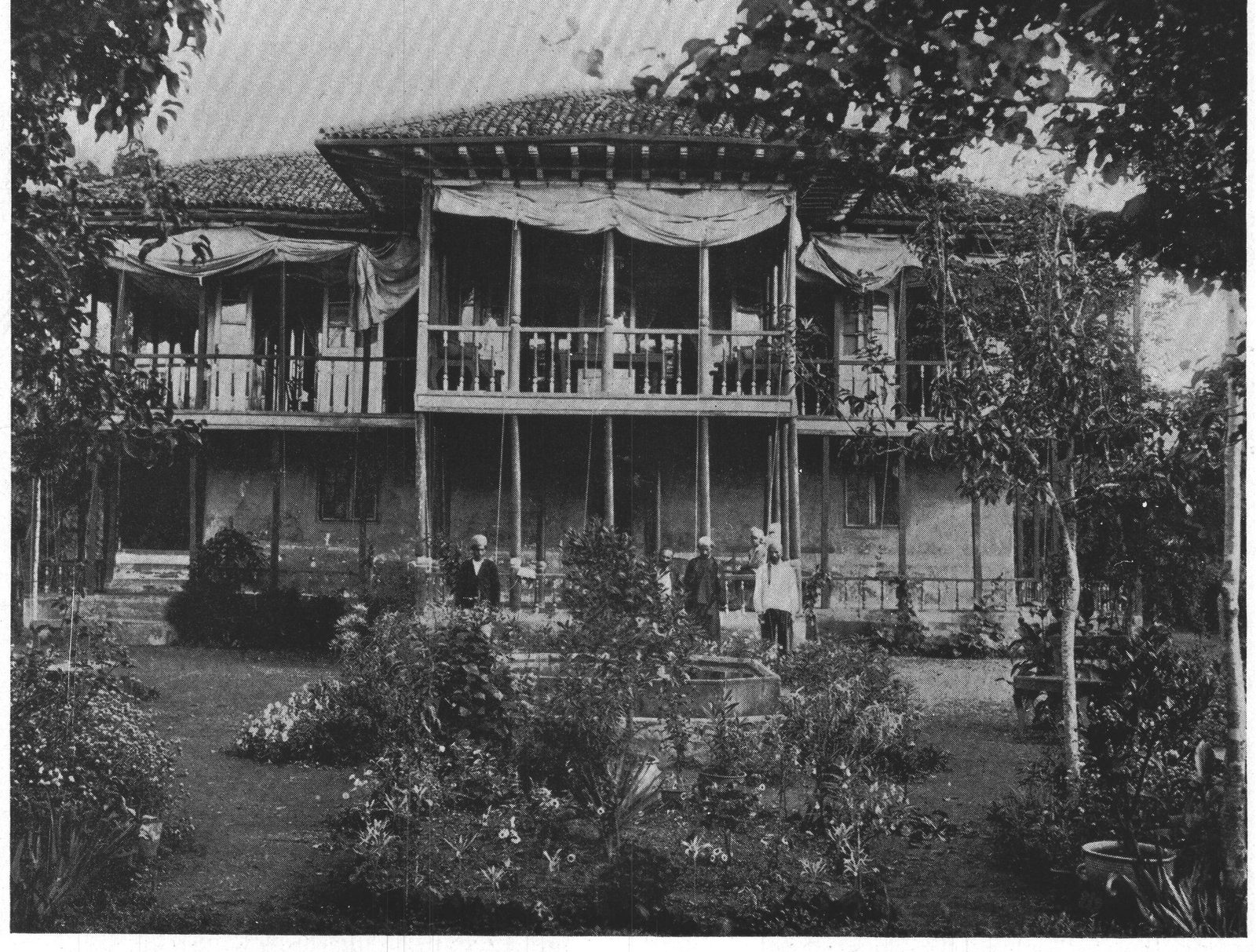
I have driven to pay a morning call at the house of a rich Persian of the old school, and been forced to abandon the conveyance and pick the way on foot for half a mile through narrow, broken streets, between walls of most disheartening blankness, to be admitted at last, through a heavy wooden door, into a garden where the air was languorous with perfume and the eyes were dazzled by such prodigality of color as one never sees at home save in a park greenhouse.
The financial and civic status of a Persian may, in a way, be known by his garden. In the decoration of interiors he is not exacting, and as a matter of fact, not overburdened with taste or invention; though to be sure the Eastern forms do not lend themselves to any great diversity in the ornamentation of rooms. The greatest charm that any apartment can possess is to have windows giving upon a garden in bloom.
The peculiar domestic and social arrangements which prevail in Persia necessitate the distribution of the home, so to say, a partition of it into departments, such as could scarcely be maintained in America, where all the house is common to all the members of a family. In Persia the divisions of an establishment must be wholly separate, and the gardens are therefore distributed in such manner as to provide a pleasant outlook for all. In the more pretentious houses,—of the nobility or plutocracy—the anderun or harem is entirely distinct from the rest of the house, oftentimes a separate building, constructed in the form of a hollow square, offering no view on the outer sides, but with its inner windows and doors opening on a beautiful patio or court, with walks, fountains,—or at least water-tanks—trees, shrubbery, vines and flowers of its own, upon which no masculine eye save those of the master are permitted to look. The extent of this space is dependent wholly on the depth of the owner's purse, but in cities an individual holding is necessarily confined to a square, save in the case of palaces which are usually situated on the outskirts and practically unlimited as to park area.
Members of the royal family,—and they are by no means few,—ministers of state and other potentialities who rejoice in a sense of security, are prone to expend upon these gardens a liberal share of the revenues drawn from the farming of taxes, always bearing in mind that to outshine a sovereign, even by the least of glories, is to court a gracious confiscation. Tenure in Persia, whether of place or property, is uncertain at best; possession is by no means nine points of the law, as the record of ruined favorites and cabinet ministers so abundantly shows.
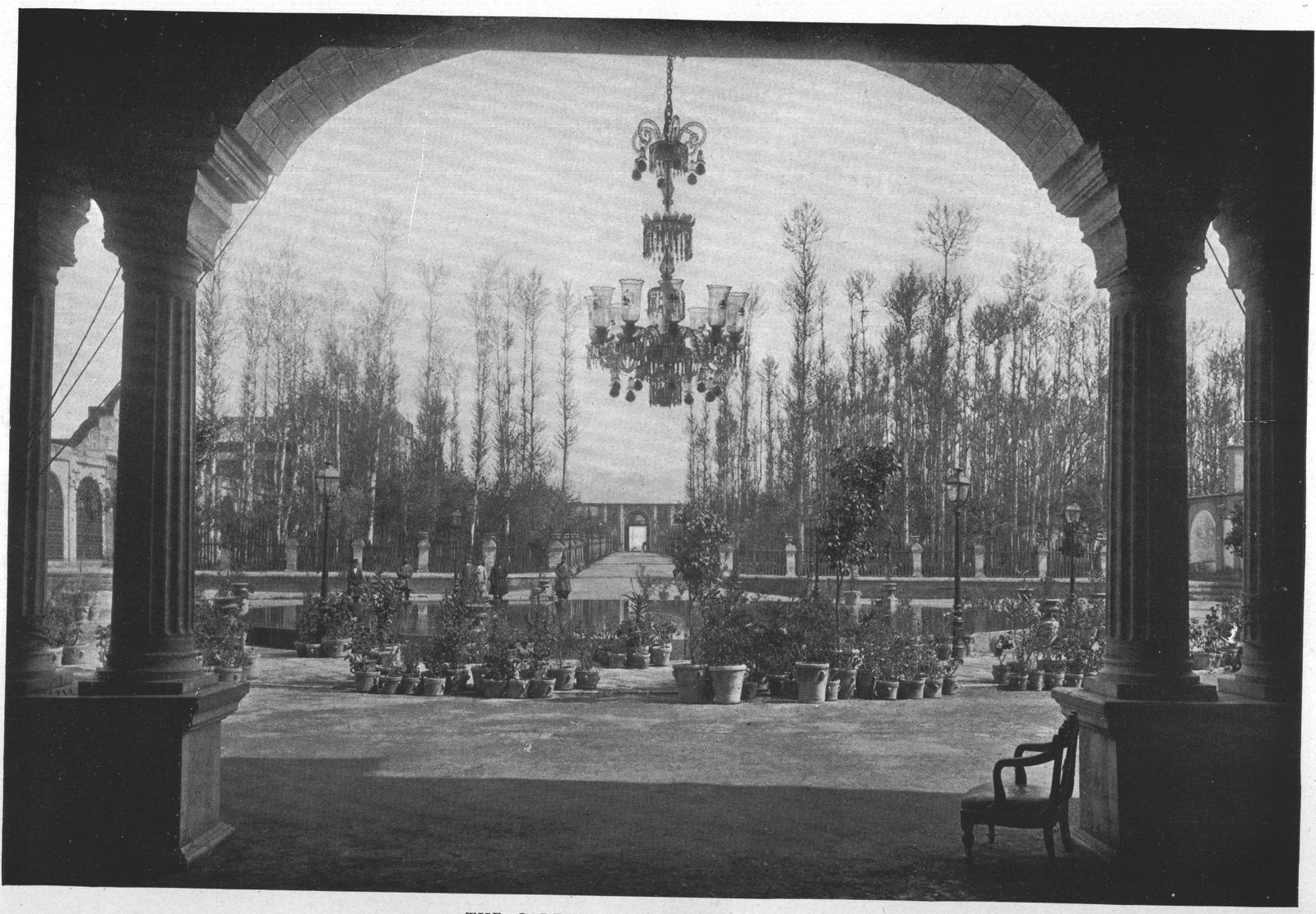
Considering the paucity of water, one scarcely need look for playing fountains in any Persian garden; but in many of them there is a circular or octagonal basin in the center, in which a part of the water is detained on its way to the cistern. This serves at once an ornamental and religious purpose, since water is intimately associated with the Mussulman rites. Several times a day, even in the caravansaries of the bazaar, where the torrent of trade is never still, the worshipper goes to the water font, fills his small ewer and performs the ablutions incident to prayer. In many of the humbler gardens the central space is occupied by a simple shallow cylinder of cement, adorned with potted plants. Thus the suggestion of a fountain is retained, and the attendant expense avoided.
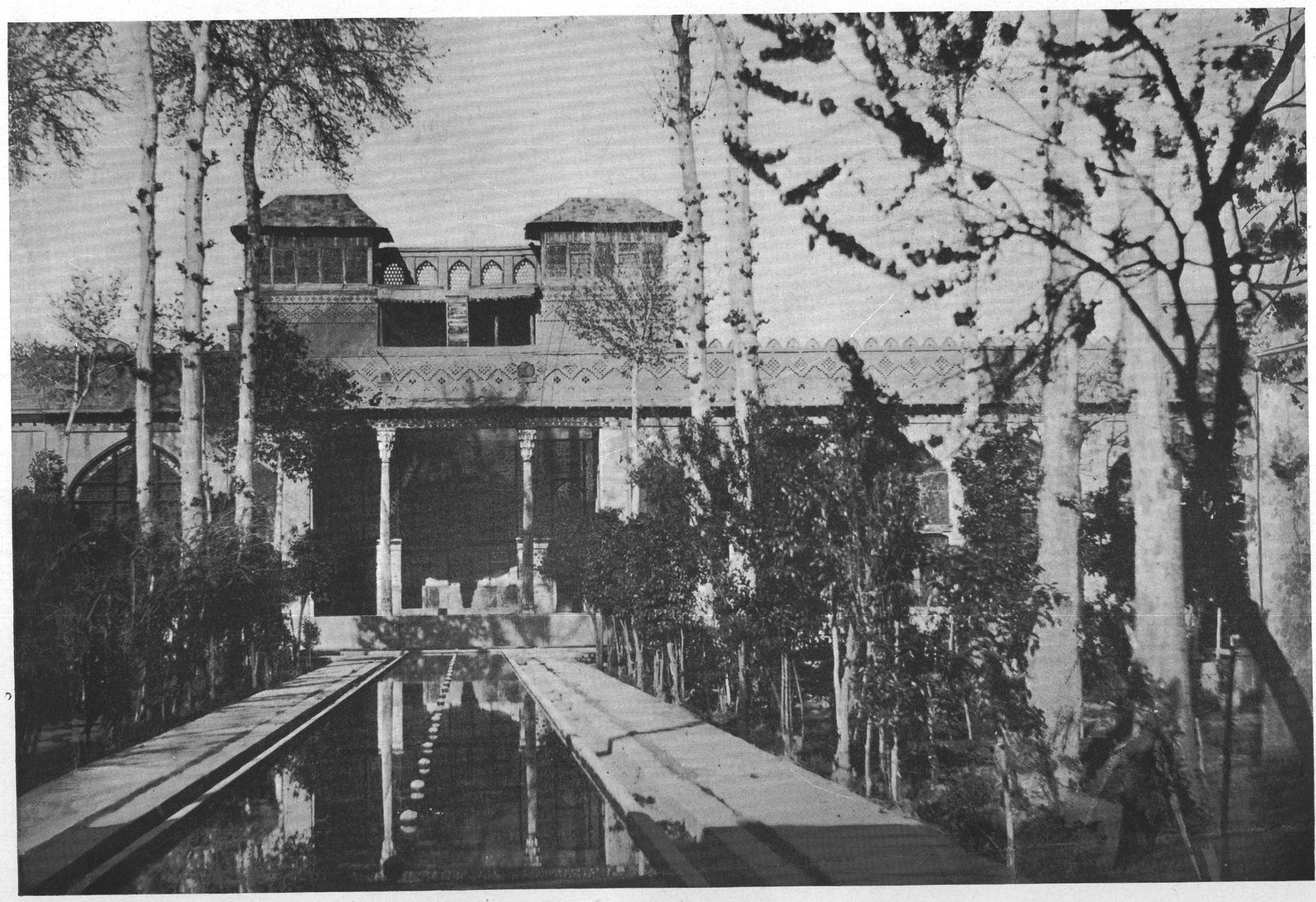
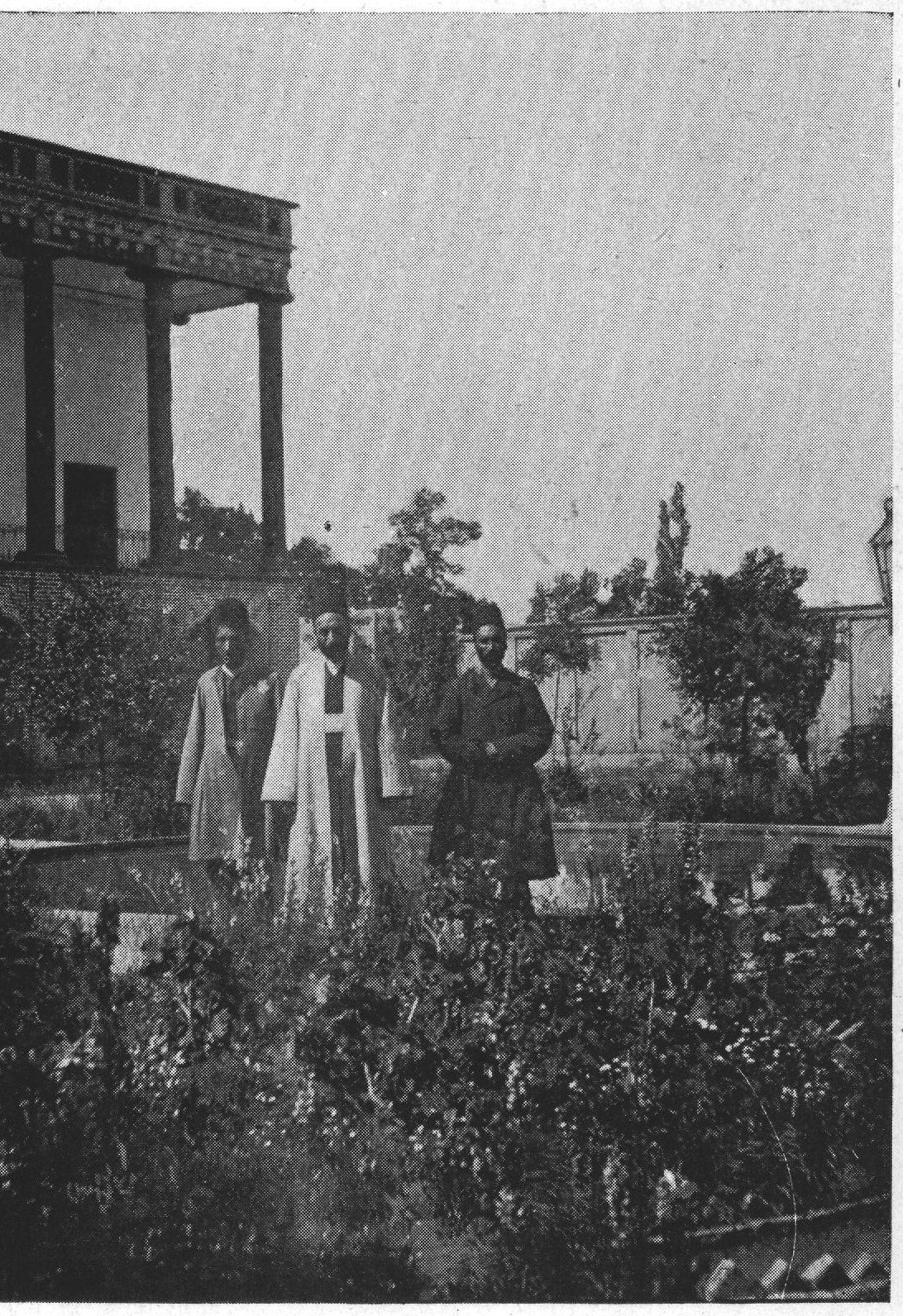
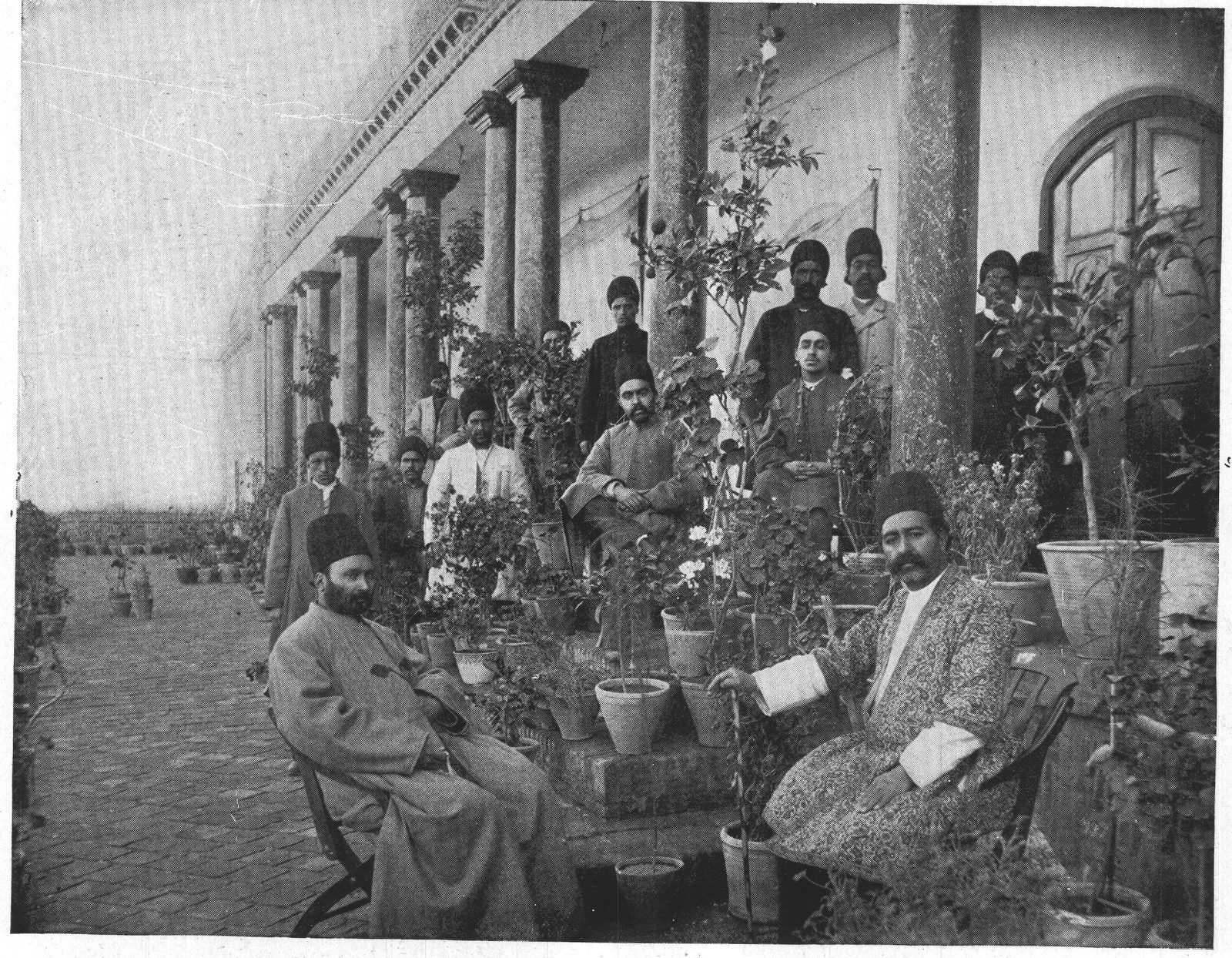
It is hard to conceive of a human, in any land, who extracts more of genuine enjoyment from such a garden as he may possess than does the intelligent Persian. The morning, up to the time when business necessitates his departure for the bazaars, and evening, after his day's wrangling and forereaching are over, find him seated in some shady spot or slowly promenading the broad walks among his flowers, sipping the tea which attendants bring him at incredibly brief intervals, inhaling the smoke of numberless cigarettes, dreaming, plotting business stratagems, but worshipping continually. He does not cull flowers. Few Persians do. They seem rather to look upon the habit as barbarous. A Persian of refinement is much more likely to have a small rug spread before a particularly fine blossom, pass his hour in silent admiration, and then go away leaving it intact.
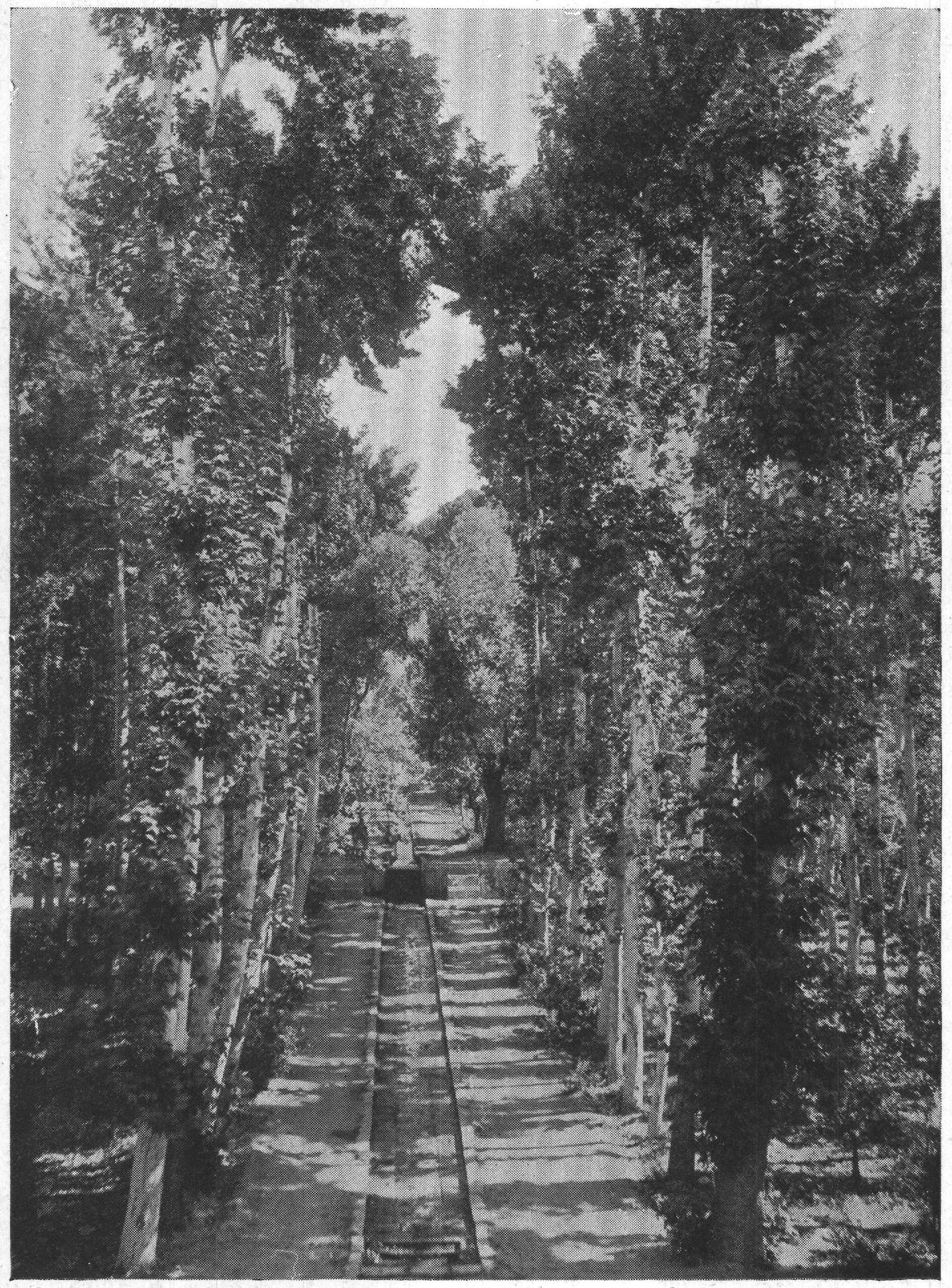
But for all this, there is little of horticulture in the way of grafting, or other processes looking to the development of new types. To this the Persian gardener, who is after all little more than a painstaking laborer, is not schooled. It is for this reason, probably, that the flowers to be found in a Persian garden are mainly of the simpler sort, such as chrysanthemums, asters, hollyhocks, the narcissus, hyacinth and tulip, pinks, larkspur, violets and the like. All these attain distinguished size and color. The white lily is most highly prized, but the rose is without doubt the Persian flower. Even in its decadence, Persia is a land of roses. They bloom in great prodigality and with a diversity of form and color which is little short of astounding. The Persian roses seem, though it is perhaps the effect of contrast with their surroundings, to have a quite unusual fragrance. They are amazingly vigorous and hardy, too. Aside from certain varieties of roses and the honeysuckle, flower-bearing climbers are—so far as my own observation goes—comparatively few. The grape-vine is much utilized for arbors where shady walks or resting-places are sought, and the grapes, which are of excellent size and flavor, keep until early spring. The Mohammedan prohibition of wine is strenuous, and in public every good Mussulman anathematizes drink, but the smallest of gardens will produce more grapes than any family can eat, and the Persian is too thrifty to let anything go to waste.
Fruits are abundant in every garden. Apples are not particularly good, but plums, peaches, apricots, and berries of all kinds grow well even in the North, and the Persian melon has not its equal in the world.
Of shade trees, the chenar or plane-tree, the poplar, the willow, box and elm are most frequent in the higher latitudes. Palms increase in number as one journeys southward. There, too, is found in greater frequency the cypress, emblem of mourning, lending, with its cone of dark and unequalled green, a somber note in the midst of the garden's brightness.
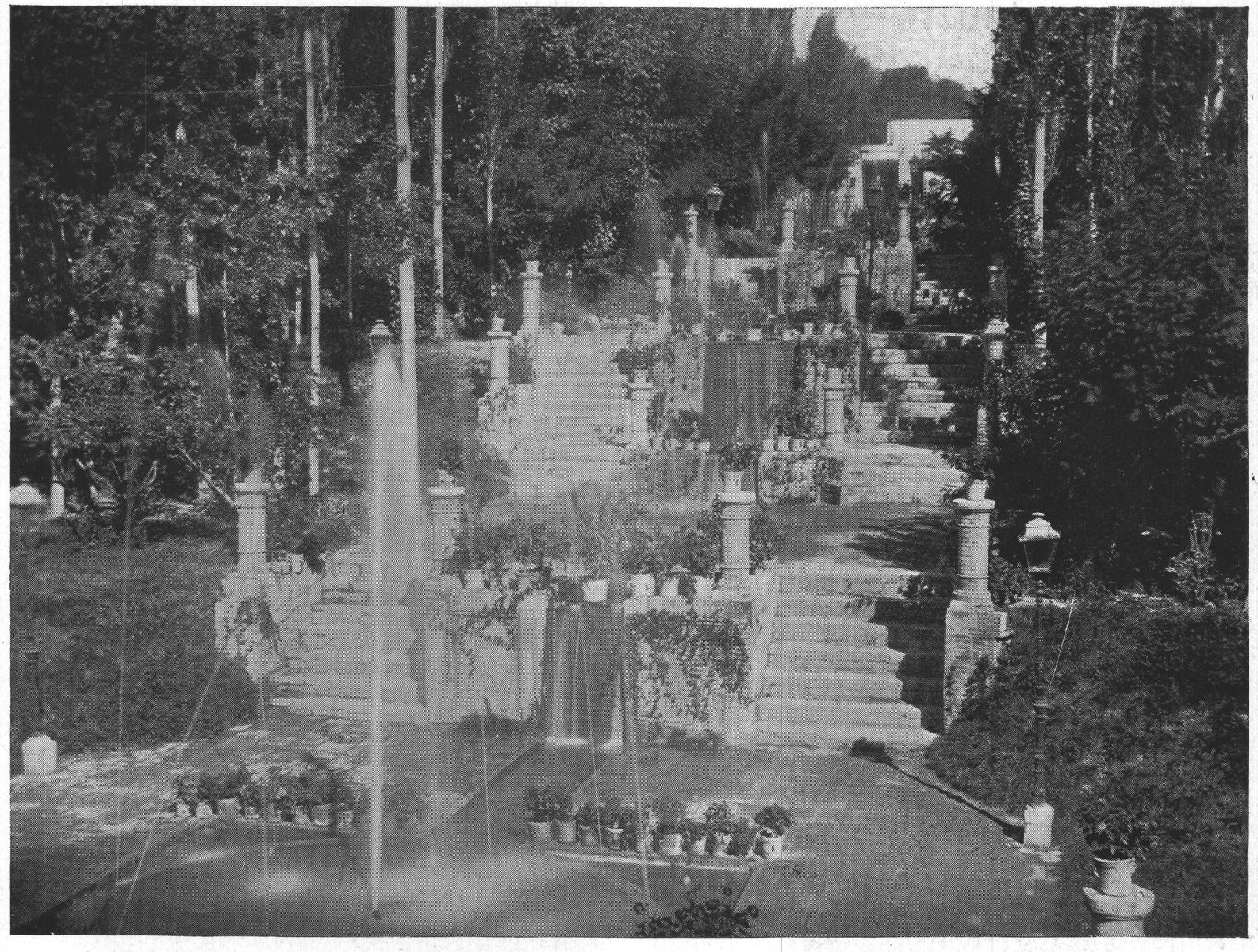
In cities laid out upon level sites there is decided limitation to the possibilities of a garden, even in the most extensive estates; but where hills surround the town the houses of the major dignitaries will usually be found upon the slopes, where terraces—the Persian's highest delight—may be developed, with the accompanying effect of stairs, and attendant devices of masonry. On these hillsides, too, such as are specially accessible in the suburbs of the capital, the water problem is easier of solution; and that is, after all, next to the possession of sufficient ground, the essential requisite for a Persian garden. The photograph of a bit in the Camranieh Gardens, now the property of the Naib-es-Sultane—prime minister and marriage relative of the Shah—illustrates the fashion in which side-hill facilities are utilized, though the conditions apparent are eloquent of the neglect and general decadence to which reference has been made, and into which even the most pretentious of Persian establishments are permitted to lapse.
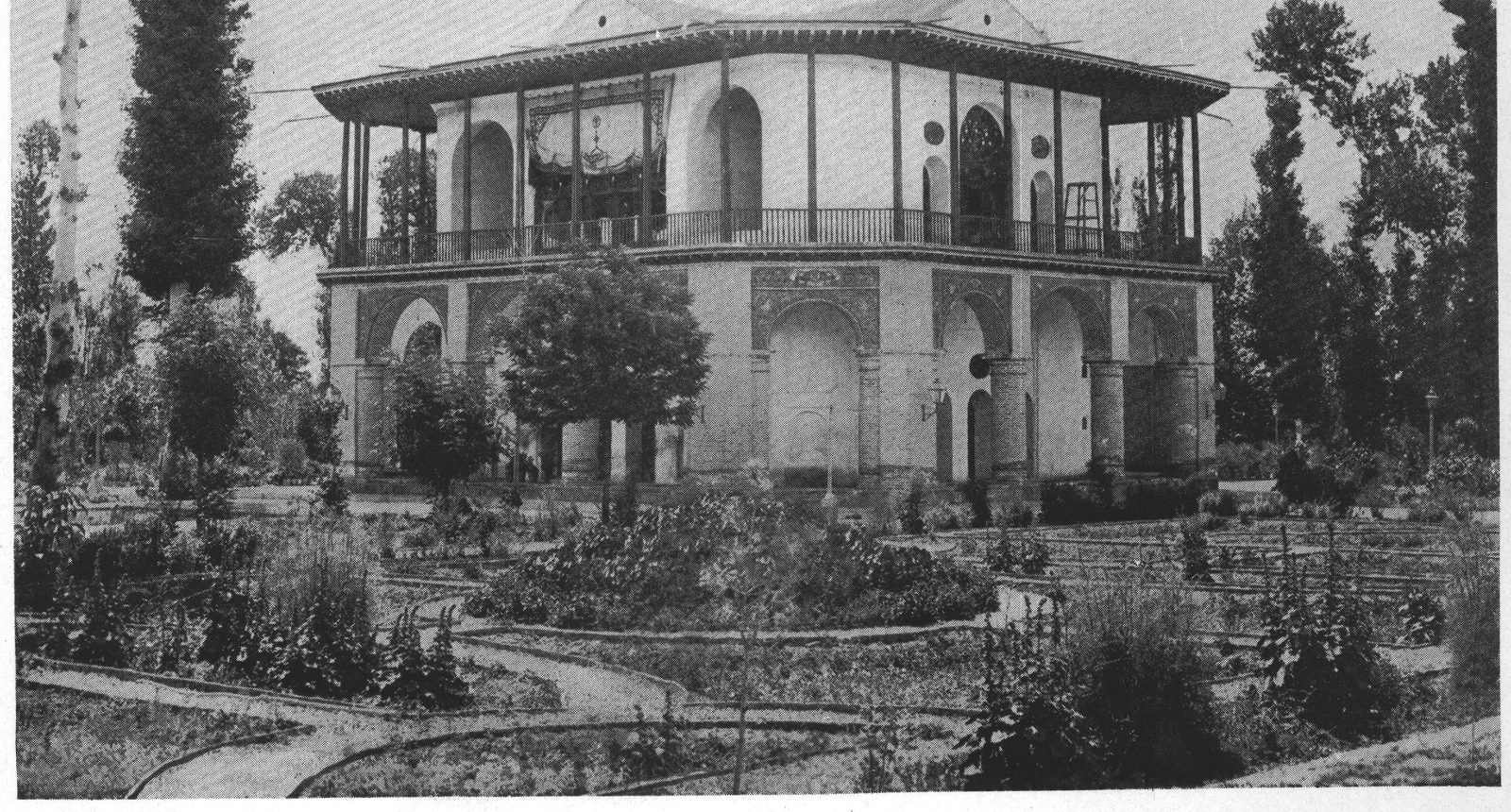
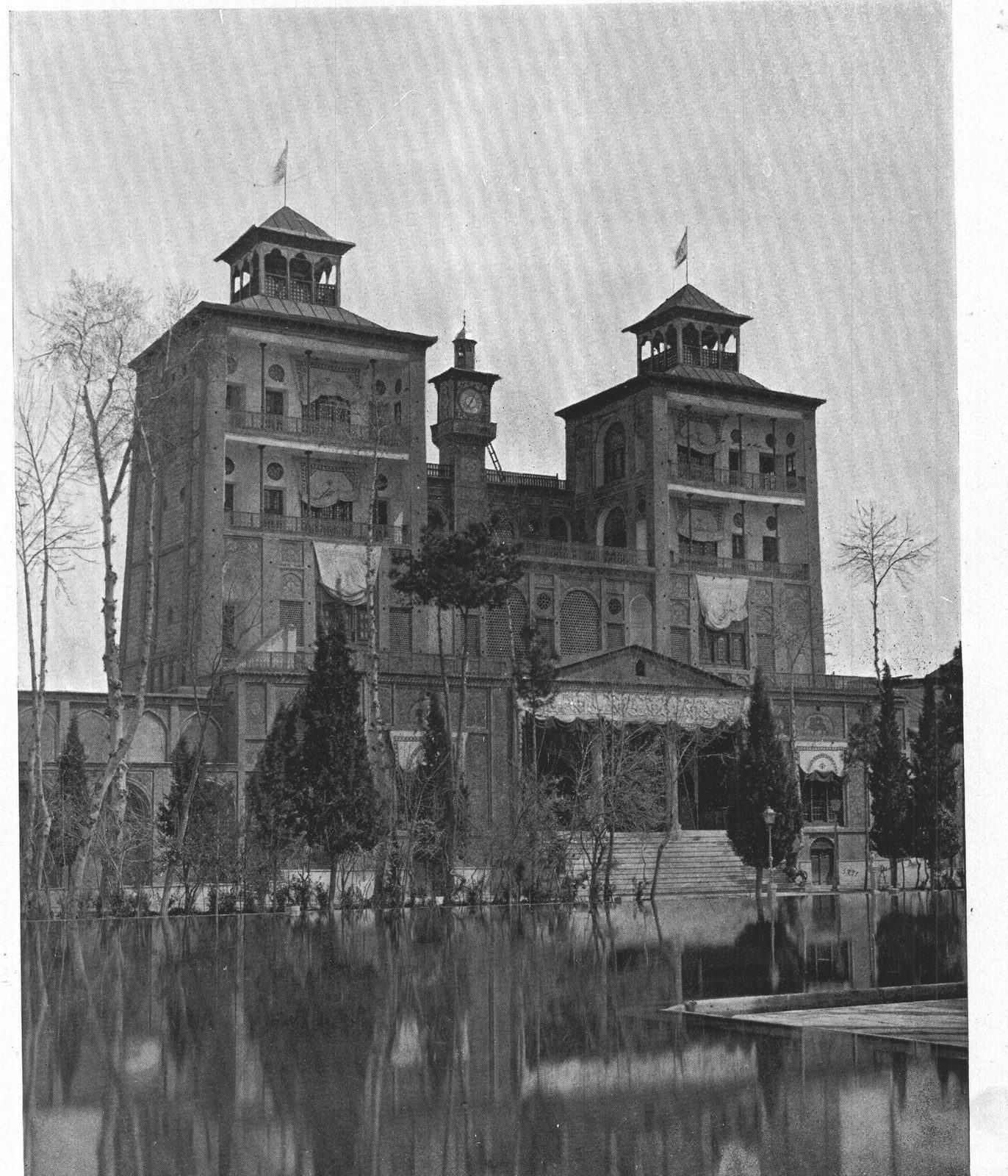
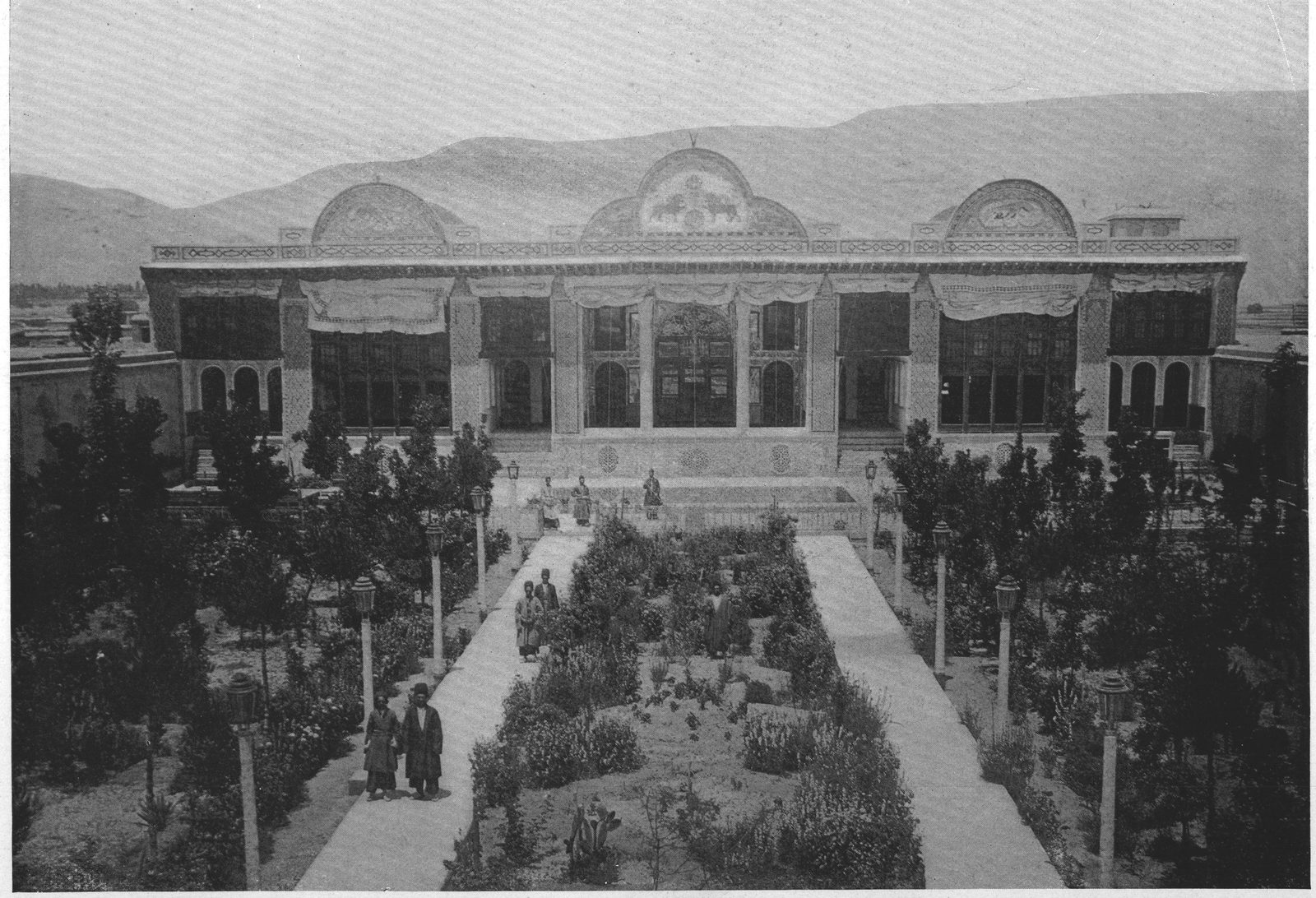
The gardens of the Zil-i-Sultan—the Shah's eldest son, but not heir to the throne, since it is the royal prerogative to nominate the successor to kingship, and the Zil, while enjoying, or not enjoying the governorship of Ispahan has not found particular favor in the sight of his sire—will serve to show what methods are employed to effect the necessary irrigation in flat cities. It should be said, however, that in Ispahan the natural supply of water from adjacent hills is good, though distribution is difficult. Here, too, is manifest the happy-go-lucky condition which mars and vitiates all attempt at beautification in the realm of Iran.
One will seek in vain in the modern gardens for any impressive display of the landscape gardener's skill. The elements sought are rather great profusion, a plenitude of color and soothing masses of shadow, all of which demands are natural developments of the Persian's inherent spirit or the simple outgrowth of his surroundings. A niggard in trade, he is absurdly lavish in certain phases of self-gratification; but the art of being magnificent he has lost.
In the most pretentious gardens there is pervasive suggestion of European influence in the design and a subserviency to the rectilinear, which if not borrowed from Europe, must be attributed to the Tartar strain; it certainly is not Persian, for the Persian's natural tendency is to mazes, such as might be suggested by the winding of a vine or a creeper. The straight line is the Turkoman's delight.
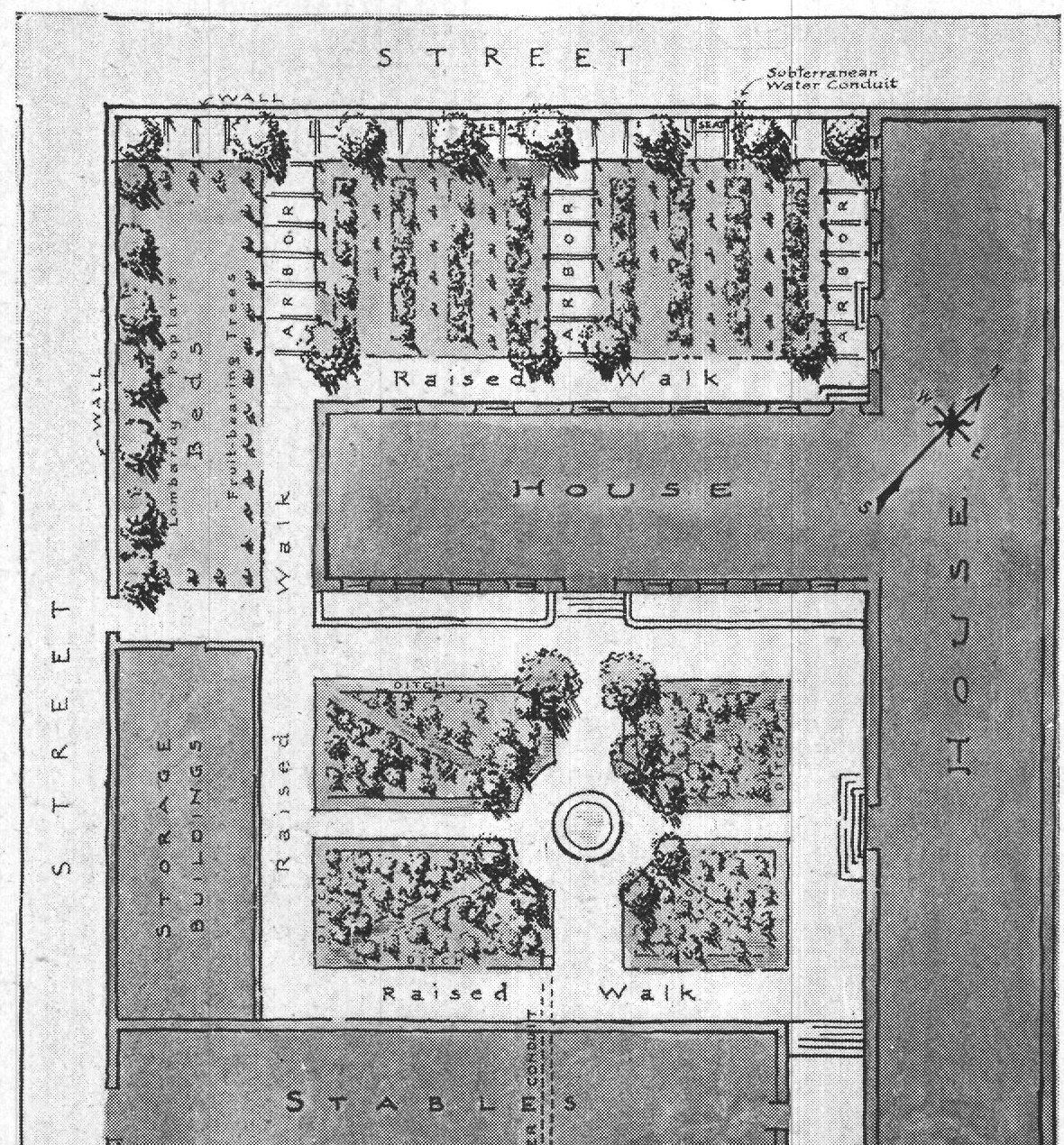
Winding walks, at any rate, are rare, but here again the condition of the country may be explanatory. The requirements of the water system, to which reference has been made, necessitate in every garden a deal of masonry. Construction of any sort is perhaps more expensive in Persia than in any other country on the globe; not because labor is expensive; that costs nothing. Materials, such as brick and the like, ought to be cheap; transportation, to be sure, costs, for the wagon has not yet superseded the beast of burden. But it is dishonesty that makes building come high. There is, absolutely no possibility of having any such work done without being outrageously cheated. Therefore, when all walks must be of solid masonry, brick and tile, raised to a height of two or three feet, few persons are extravagant enough to have them built in curvilinears. So you have the cruciform garden, with no curves save the circle which encloses the water tank in the middle of the expanse. (See diagram.)
Now regarding the reason for these raised walks. Upon entering from the street, at the main door in the wall, you descend at once from five to fifteen steps to the brick walk surrounding the garden, which is therefore from five to fifteen feet below the street level, since a foot is a modest depth for a step in a Persian stair. This walk, extending around and across the garden, as shown in the diagram, is two feet or more above the ground proper; and out of this ground the beds, in turn, are raised, so that the flowers grow, in a way, on the summits of miniature hills. This impressed me, at first sight, as extraordinary. Turning out one morning at sunrise, for a walk before the heat set in, I learned the secret. The garden was full of dirty water, to the depth of a foot or more, and the level was rapidly rising. The flower beds, rich with the first bourgeonings of spring, were carefully defined islets in the midst of an artificial lake extending all over the place. And this was the water supply of a Persian city. Once a fortnight, it seems, the kanauts or karises are tapped for each ward or district, and the water allowed to run in ditches along the dirty streets so dry at other times. The mirab,—literally, water-boss,—goes along from house to house, pulls out a plug in the foundation of the wall and lets the water flow through a conduit, running perhaps underneath the buildings down into the garden. Pipes under the walks permit its passage from one section to another. The soil takes up a part of it, vegetation gets its periodical supply, and the residue, after a rude process of filtration, runs into the house cisterns, where it remains for use. The natives drink the stuff with comparatively small effort at purification; and why pestilence is not perennially prevalent, to the righteous taking-off of entire populations, passes all human understanding.
The average rainfall in Persia is small, and cannot be depended upon; but given the necessary supply of city water, and it is easy to induce plenteous growth, for the city soil needs apparently none of the persistent manuring so common to our gardens. The sites of great cities do not change. Tabriz, for example, has occupied its present location in the angle of the Sahend Mountains for certainly three thousand years. Back of that the record is misty. There is no pretence at drainage; the filth and refuse of century after century simply filter into the soil, which therefore is to the highest degree enriched. It is no uncommon sight to see, among the ruins in the environs of a Persian city, men sifting the earth from around fallen walls, to be used as a fertilizer or to fill in about the roots of trees where it is desired to develop shade. The Russians are particularly industrious in pursuing this process in the old Persian towns which they have won by arms, such as Nahkitchevan and Erivan, in the neighborhood of Mount Ararat. I first saw it done near the tomb of Noah, on the outskirts of Nahkitchevan, and the charming park of young trees which has grown up in the center of the city is proof enough of what a comparatively little effort of this sort will, by and by, accomplish in places which Persia is now letting run to waste.