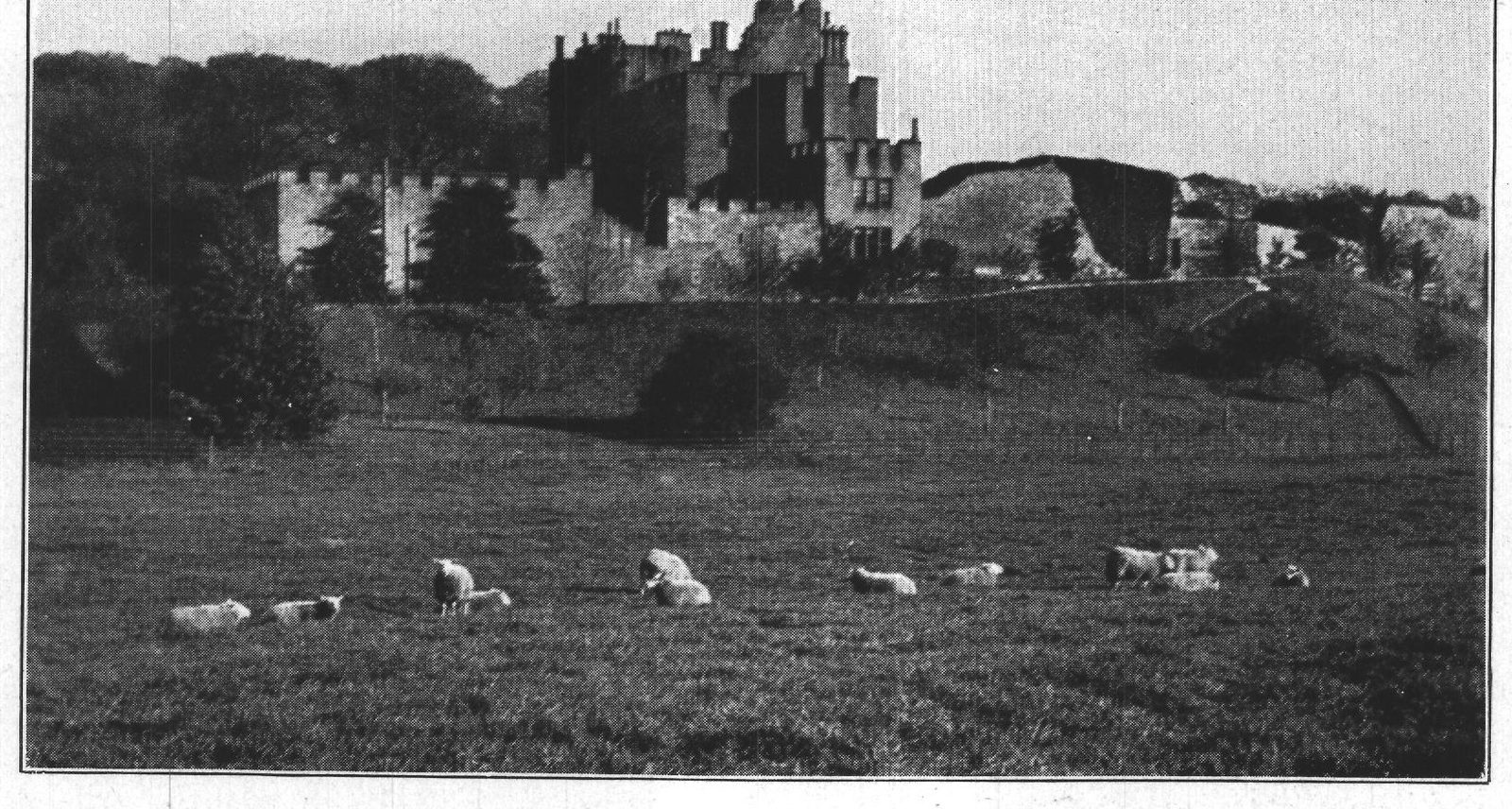
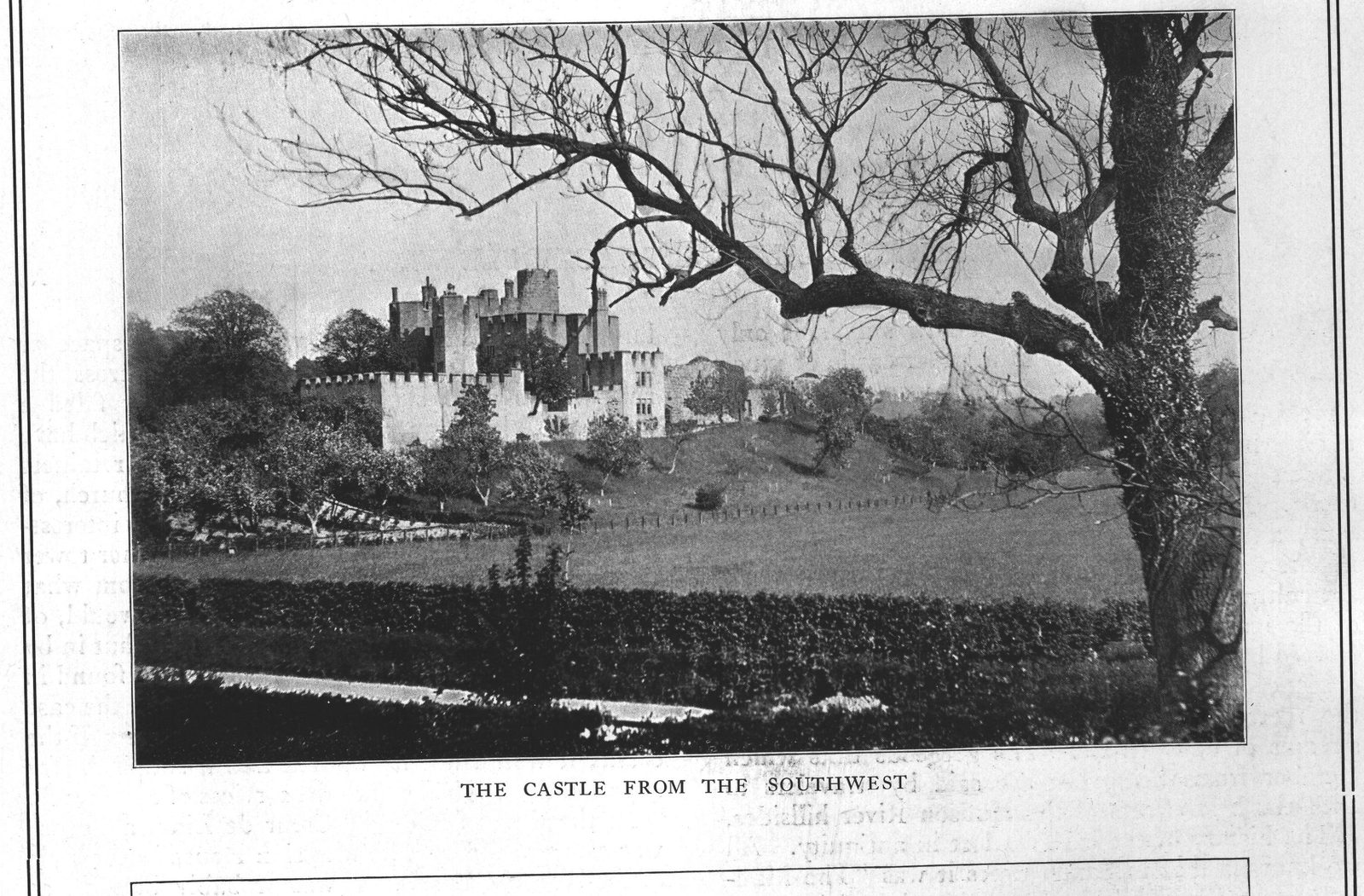
Bothal Castle, as it now stands, is only the great gateway of a larger castle of much greater importance which was destroyed by Cromwell in revenge for a successful resistance against his troops. Its owner, at that time, was the famous Royalist General, The Marquis of Newcastle. It now is the property of the Duke of Portland, and is the residence of his agent, whom he honors with a visit every year on the occasion of his agricultural show. It is charmingly situated in one of the many small and beautiful valleys which are formed by the rivers of Northumberland and, snugly ensconced among high banks, clothed with trees of the most varied foliage, lies hidden far from the streams of daily traffic. The gorgeous tints which October frosts bring out are said by travelers to rival the best effects of the Hudson River hillsides.
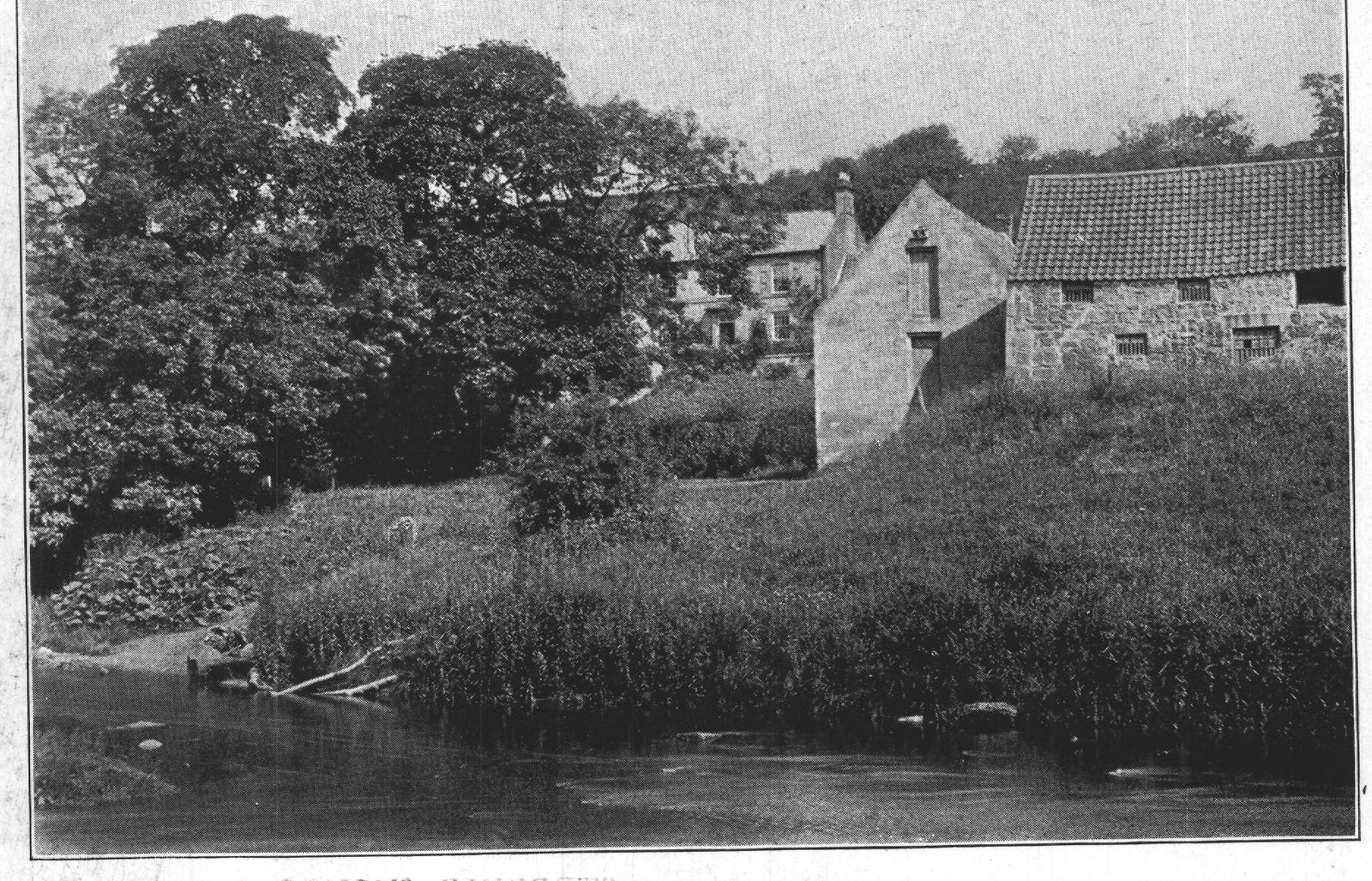
The history of the castle is lost in antiquity. All we know is that in Saxon times it was "The Mansion House," which is the Saxon meaning of the name Bothal, or Bottle—a term occurring very generally throughout Northumberland. As the Mansion House it was no doubt a place of strength. It is built on a rocky eminence, with an open space or small valley. It commanded the ford across the river which washes its base and probably filled a moat which it surrounded, the remains of which have now disappeared. The few cottages of the retainers nestled under its protection, as also the church, of which there are still Saxon remains. One interesting feature of this church is that it has neither tower nor steeple, but only a belfry with the somewhat unusual number of three bells. A steeple would, of course, be out of place in a narrow valley, shut in by woods on all sides; a tower, such as is often found in the border country, was useful as a refuge in the case of the Scottish raids, but here, under the wing of the castle, it would not be wanted and a simple belfry supplied the musical call to the services of the church.
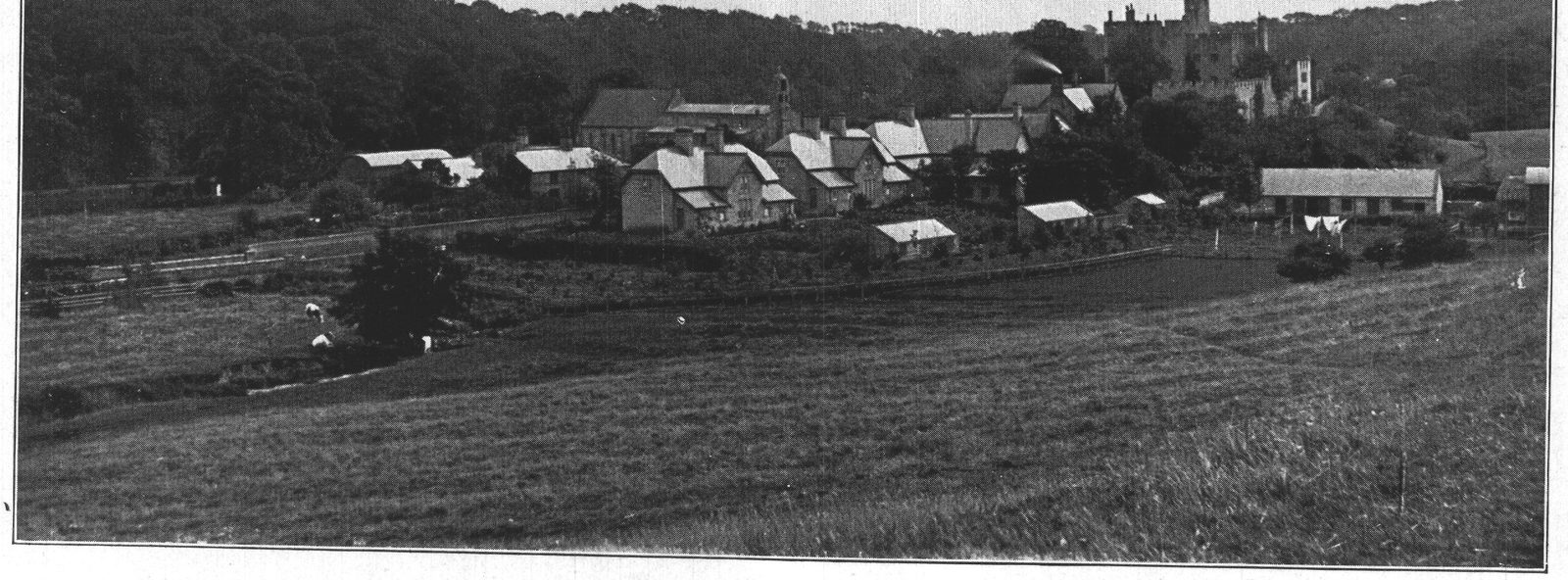
In the time of Richard Cœur de Lion, a license was given to fortify The Mansion House in the style of the Norman Castle. It was probably bought, as it is well known that in order to carry out that crusade on which Sir Walter Scott has thrown his romantic glamor, King Richard sold these licenses to every baron who would pay his price. From that time and probably long before, the barons of Bothal took a leading part in the public life of the Border. In Edward III. reign there was a further strengthening of this important hold; and the great gateway as it now stands is a relic of the great work. Along the course of stones below the parapet are fourteen shields of all the neighboring barons who gave their help. In the place of honor is the shield of King Edward; and it is interesting to note that it perpetuates an act of false heraldry, which was corrected at once after giving rise to a jest by Philip of Valois on the ignorance it displayed of the principles of that fascinating branch of learning.
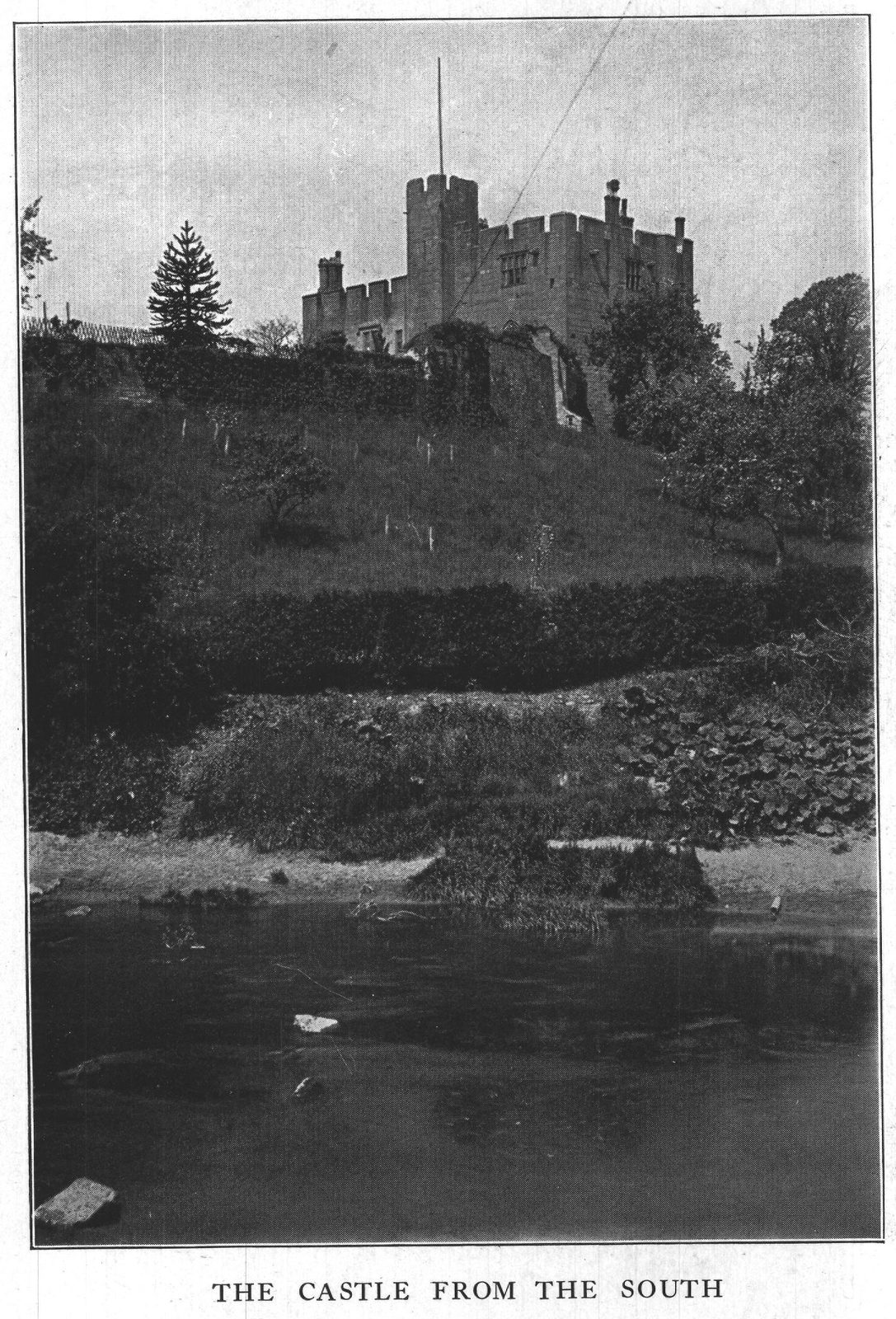
Up to this time the castle and manor were held by the Bertrams, of the Norman family of Baliol, which gave a king to Scotland. The first Bertram had married the heiress of the Saxon Guysulf, according to the system generally pursued by William the Conqueror, of providing beauty and wealth for his followers at the expense of the conquered country, and at the same time linking them together. They now passed by marriage again to the Ogles, who held other castles and manors all over the country, and remained in their possession till another heiress married Sir Charles Cavendish and was the mother of the great Royalist general referred to above.
During his exile after the defeat of Marston Moor, brought about by the characteristically false impetuosity of Prince Rupert, the castle was laid in ruins as a punishment for his loyalty. And when he returned the family settled down at Welbeck and has remained there ever since. The village of Bothal was probably built out of the ruins of the castle; and the gateway remained open to the weather till it was roofed in and made habitable about sixty years ago.
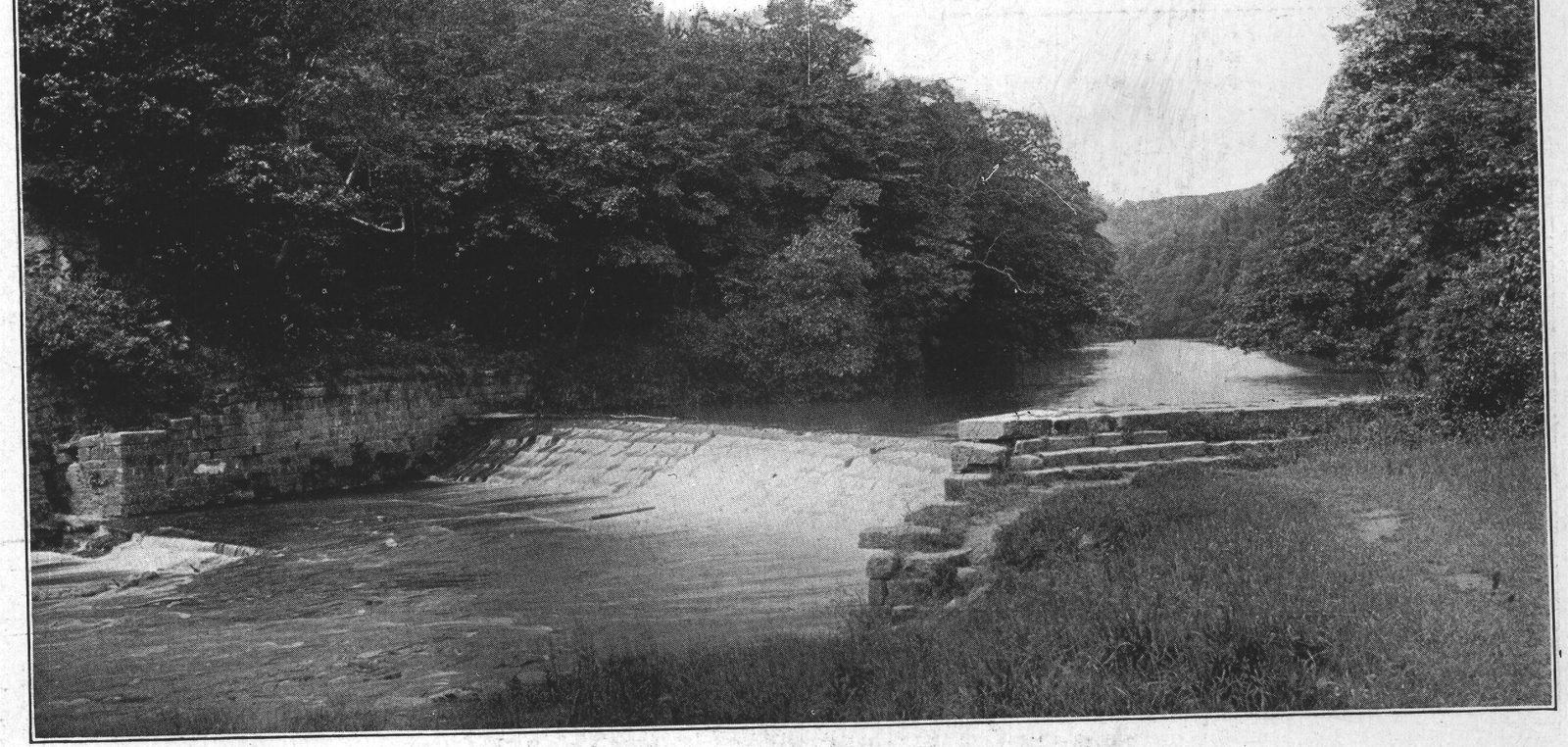
It may be interesting to note that this Sir William Cavendish, Marquis of Newcastle, was the grandson of the famous historical Bess of Hardwick, who was famous as the builder of the most stately homes of Chatsworth, Hardwick, Oldcotes and Welbeck. It was said that a gipsy foretold that she never would die as long as she kept on building. She was ninety when she undertook to restore the great Castle of Bolsover. During the progress of the work a very hard frost set in; she had fires lighted on the walls to keep the work going, but at last the frost conquered them and her and she died. In the adjoining church, which dates from Saxon times, there is a beautiful alabaster tomb of Cuthbert, the last Lord Ogle, and his wife, the second finest in the country. He had filled the windows with rich stained glass which, however, the Puritan spite of Cromwell's followers destroyed, leaving only relics which are the envy of modern artists. From Morpeth to Bothal the river Wausbeck passes through a well-wooded, rocky gorge of about four miles; half way are the remains of the Lady Chapel, an oratory situated on the banks of the neighboring river Coquet, which tradition connects with the well-known romance of "The Hermit of Warkworth," of which two sons of the Bertram family were the heroes.
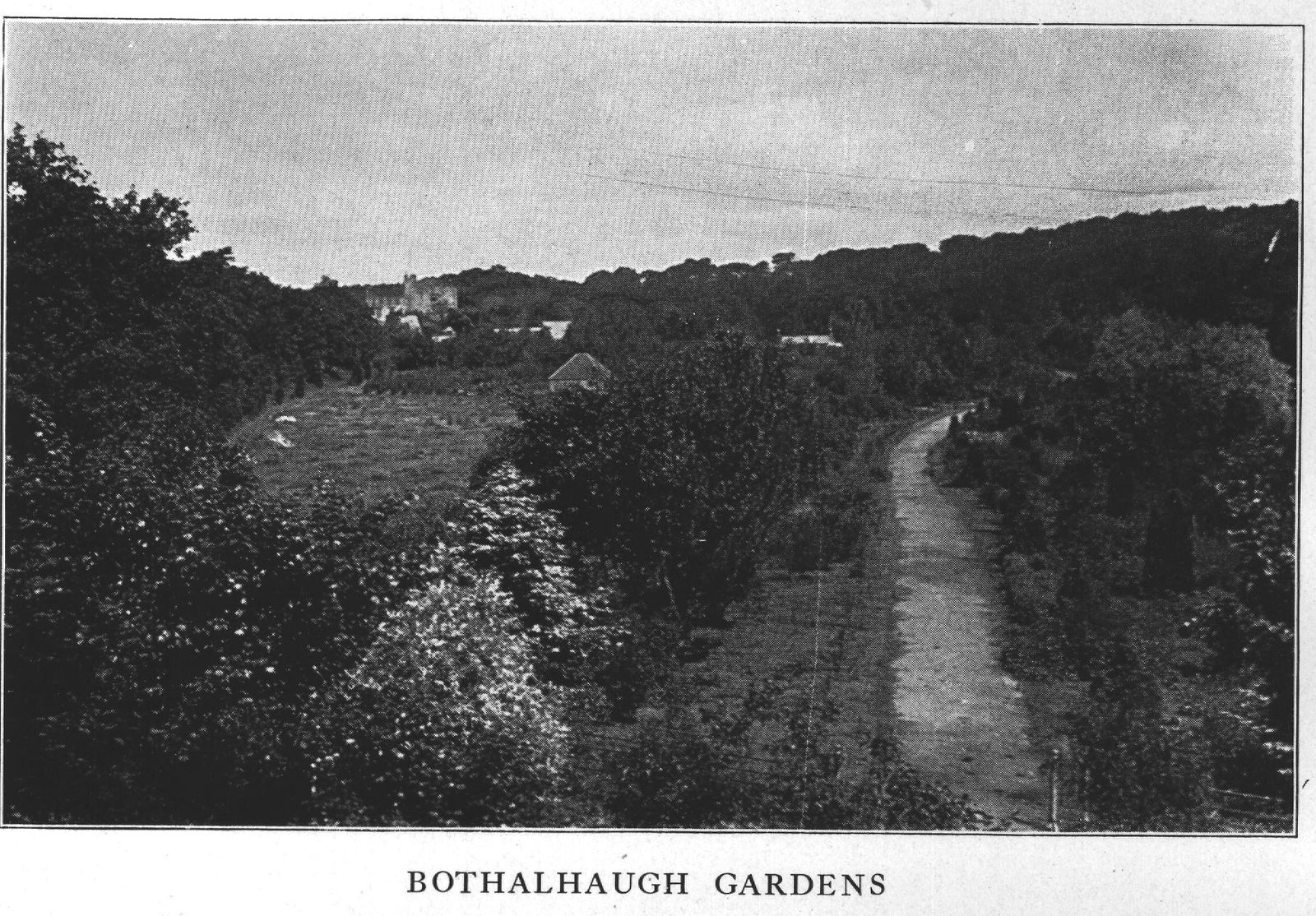
Overlooking the castle are the banks which form the grounds of Bothalhaugh, a house built in the Elizabethan style by the Rector of Bothal, the Honourable and Reverend William Ellis, whose mother should have received the title of Baroness Ogle, if her father, the Duke of Portland, by an historical oversight, had not so settled his property that the more valuable but less interesting London property should go to his daughter.
The grounds at Bothalhaugh are interesting as an attempt to help instead of forcing nature. They have an extent of eighty acres. They are chiefly on a high bank overlooking the river Wausbeck. Apart from a collection of evergreen and deciduous trees seldom seen, advantage has been taken of the ground to produce masses of flowers, chosen for their effect and not their rarity, and such as shall supply a succession of color. On a broad expanse of green turf about four hundred yards long and ten yards wide, in the earliest spring a brilliant mass of snowdrops and crocuses give an artificial sunshine at the time when a cloudy sky dulls the scene. This is followed by another broad border of the lovely blue Siberian squill. Following these, in other parts are daffodils by the acre. Then the view is enriched by masses of the Japanese crab, Paul's double crimson and the double pink and white thorns. Then the columbines of various hues light up a whole bank. When these have faded away, foxgloves take their turn. There is a drive of half a mile bordered on both sides with hybrid sweetbriar and Japanese roses, which fill the air with their fragrance. Later on an acre of the Japanese meadowsweet, Spiræa palmata, entrances the eye with its soft rosy blooms. The stately giant polygonum overhangs a brow, the great cow-parsnip, otherwise called "giant hemlock," some being over ten feet in height, forms a striking avenue, and the huge leaves of the Gunnèra take the visitor by surprise at a bend of the walk. The prettiest of walks by the riverside, which in the sunshine looks like a sheet of blue spread under a canopy of green, engrosses the eye of the angler who watches for the signs of the fine trout which furnish him with his beloved sport, till suddenly he comes upon a dell furnished with bamboos and Japanese cedars carpeted with daffodils and forget-me-not, and one of the great masses of primroses and polyanthuses which stretch for many hundred yards, delight the eye and fill the air with the odor of spring.
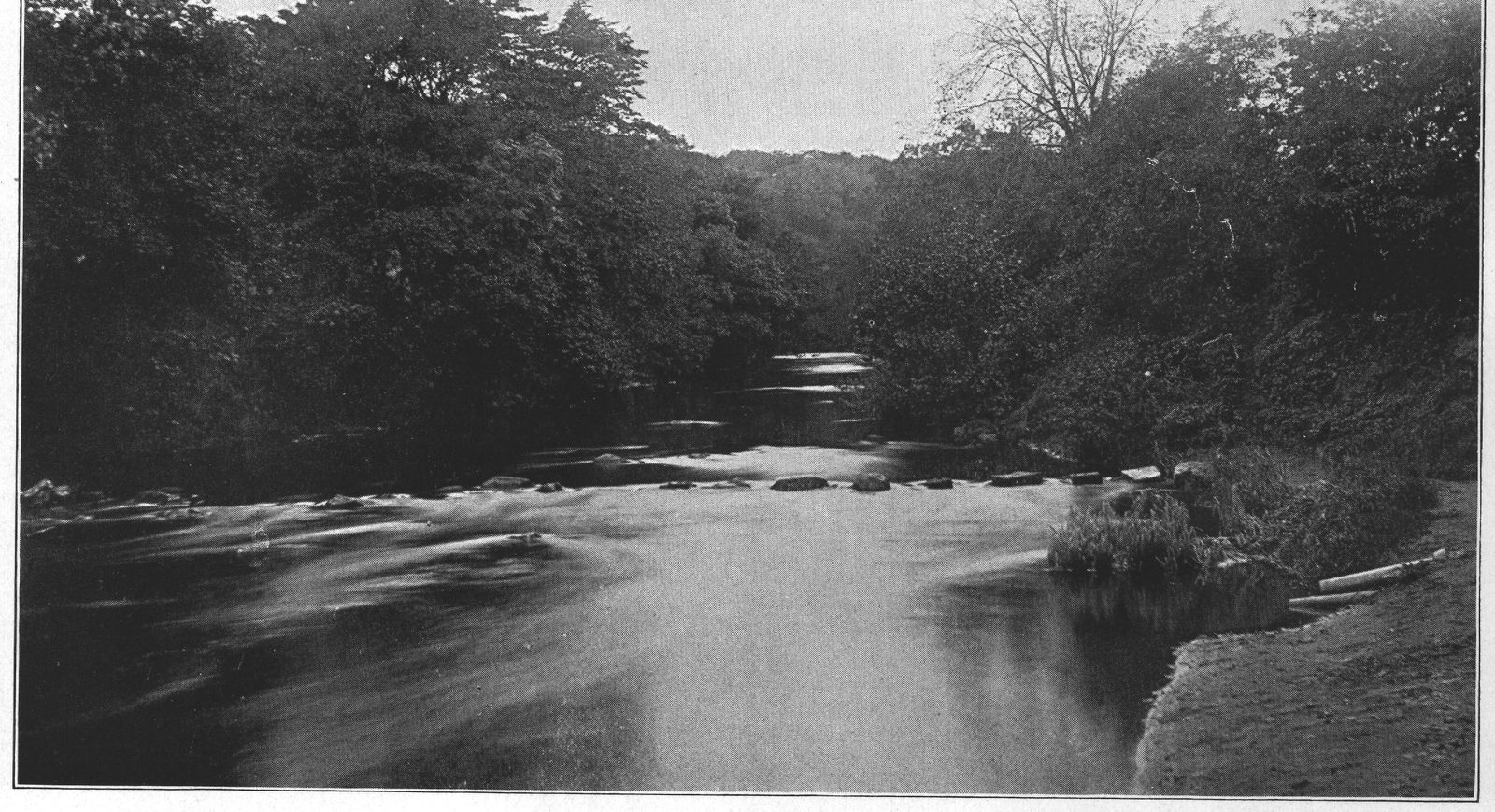
I must not forget to mention that this beautiful spot offers a home to a wonderful variety of birds; from forty to sixty different kinds can be found. Here are a few: The yellowhammer, the chaffinch, the greenfinch, the robin, the fieldfare, the corncrake, the swift, the swallow, the water wagtail, the ousel, the sandpiper, and now and then a flash of brilliant blue flitting across the river reveals the presence of the kingfisher; and of a summer's night when the air is laden with the perfume of flowers mingled with the sweet notes of the birds, Bothalhaugh may well be called a perfect "Paradise."