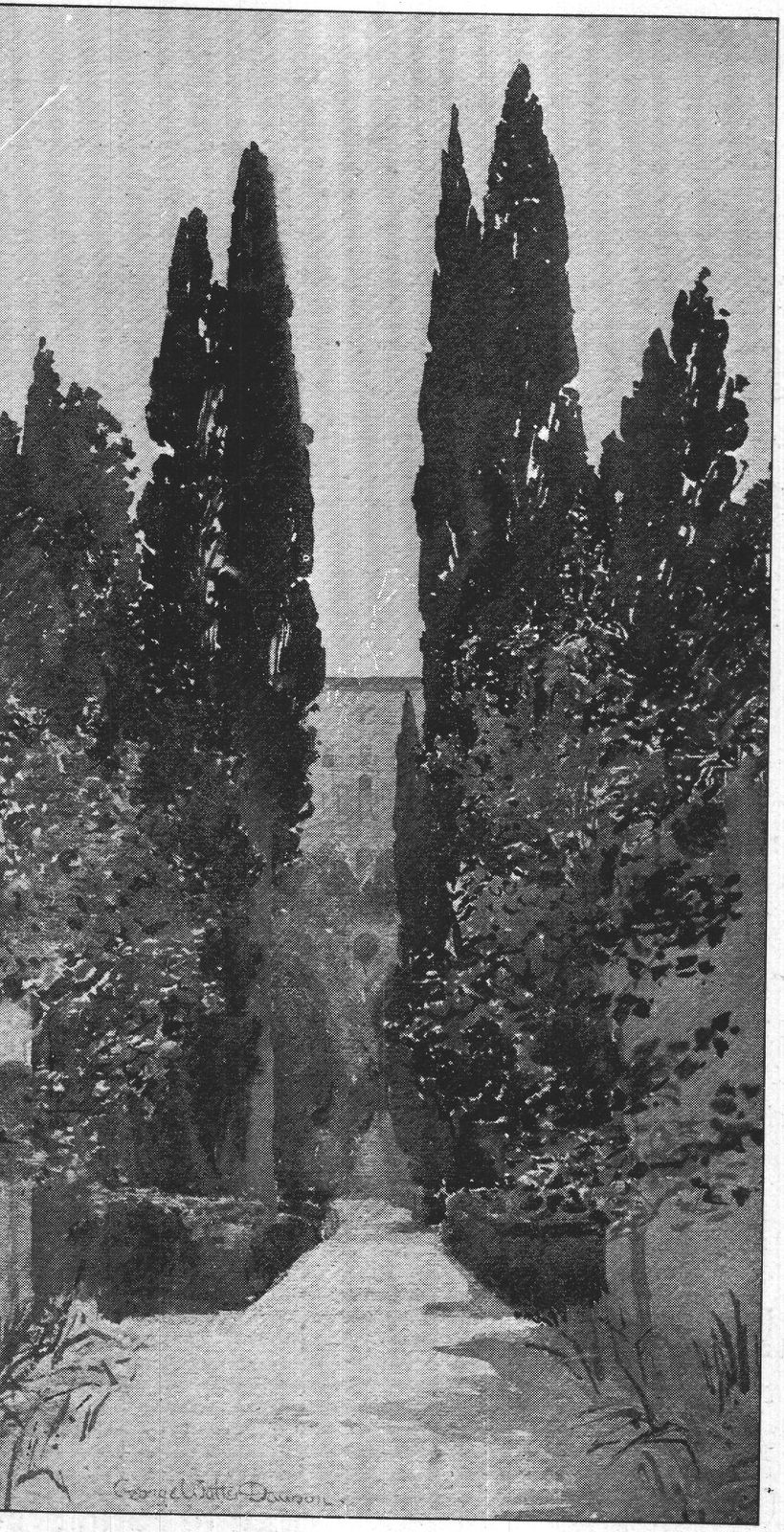
Mossy niches, outdoor apartments enclosing pools of cool water, basins fringed with maiden-hair fern, vine-hidden balustrades, grass plots, overspread now and again with broad and reaching sycamores: these are but a few of the features existing to-day in the old half-ruined Villa d'Este on the steep northwest slope of the hill of Tivoli. Besides these time-softened creations of man, are charms that are purely those of nature. Odors of orange and rose blossoms, mingling with those of bay and box leaves, refresh one with every breeze. Bird-notes and the music of running and falling water soothe at each turn; while to delight the eye, are everywhere visions of light and color. The sun dances in golden spots along mossy paths, or flashes a rainbow from fountains' spray. In statueless niches, thin sheets of water, mystic veils of blue and green, purple and old gold, slip and fall. In placid pools urns, crumbling walls, and wild flowers are reflected. Beautiful tree-forms, placed in a masterly way, are now in small groups for special accent, now planted like the old classic grove. And as if enough to give pleasure were not within the limits of this princely place, there is the far-reaching, broad Italian landscape—like unto none other—to be viewed from palace, grove or loggia.
It is a natural desire of every human being to set aside for his habitation part of earth's great sun face, and to gather about him things to satisfy his natural, intellectual and esthetic longings. He modifies nature to his need and makes the spot livable and lovable. He creates when nature does not provide, but with nature as his perception. The impulse that builds the humble home with its garden is the same as that which creates the princely Villa d'Este. Fundamentally they are alike. It is but a difference of extent and enrichment, for both clearly show man's love of nature and his delight in his own creations. D'Este is a spot where nature, thoroughly understood, has been handled in nature's way but with man's guidance—a work of art so superb that in spite of its lost marbles and bronzes, its statueless pedestals, its flower gardens that no longer exist, its fountains choked by ferns and wild flowers, it is to-day, perhaps, the best villa in Italy for the study of garden craft. By its grand conception it is at the height of that art.
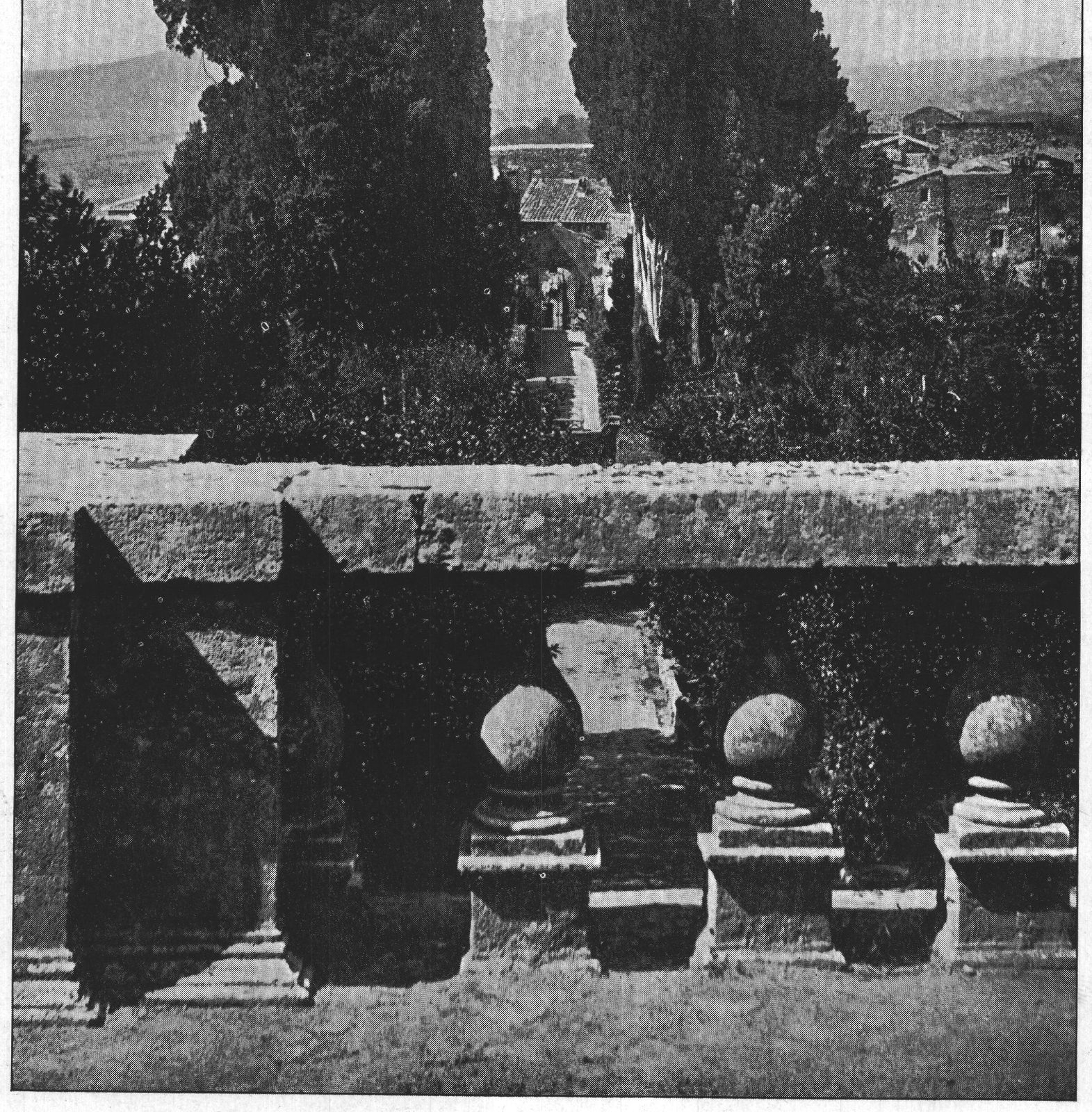
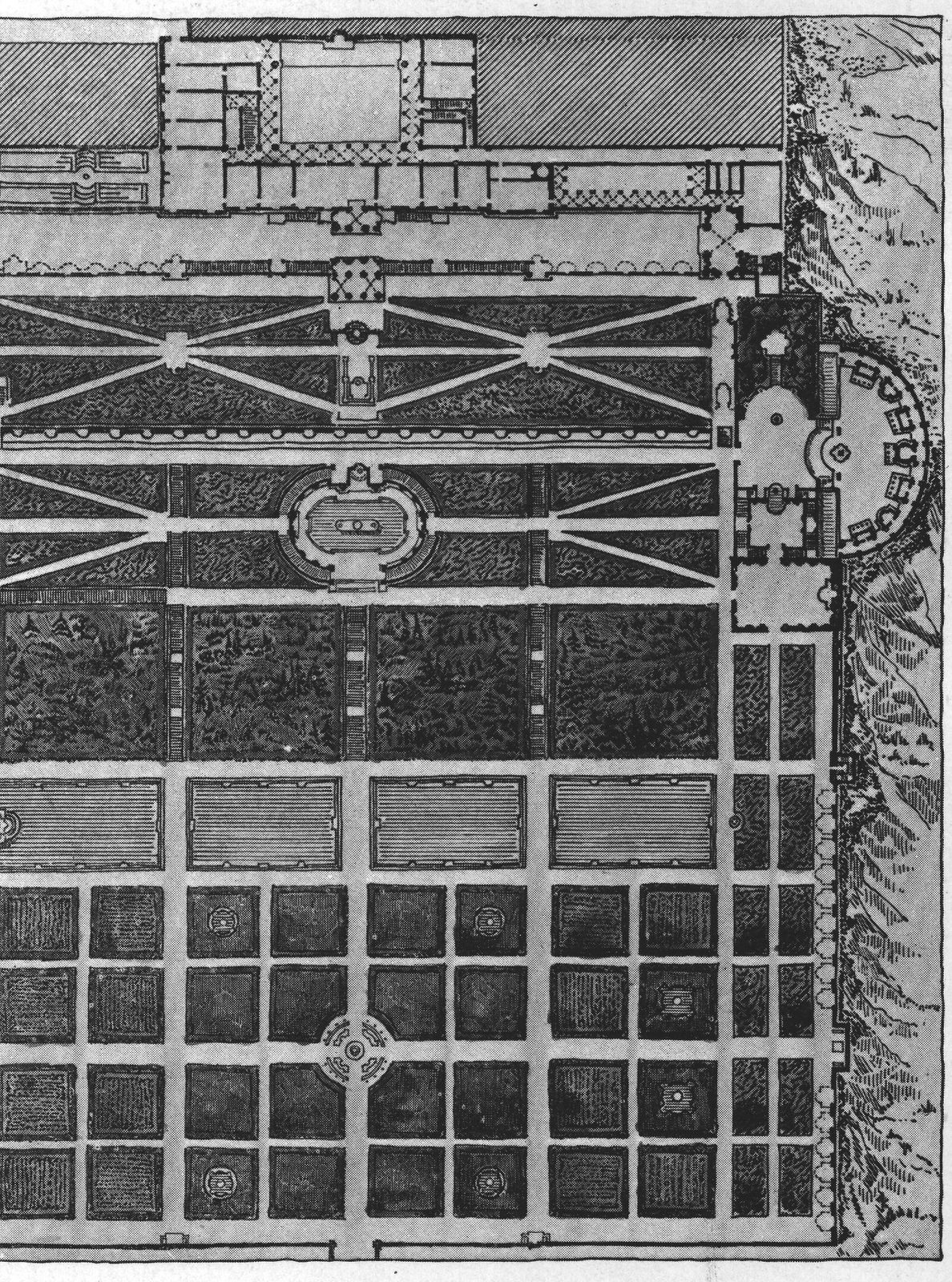
Its location first demands one's attention. Built on the upper slope of a spur of the Sabine Hills, it has as wonderful an outlook as can be found in all the region about Rome. Below are vineyards and olive-clothed slopes, through which, wending its way Tiberward, flows the river Anio. Beyond to the west is the vast Campagna, while northward hill behind hill fades into the distance. A glance at the plan will show that it is composed of a level, occupying nearly one-half the entire depth of the villa; a steep hill echoing the lower plains, wood-covered and a little larger in extent than the lower level; and an upper terrace on which against the crown of the hill of Tivoli the palace is built. These three main divisions are each divided and subdivided. The broad palace terrace is the simplest of the three divisions and extends the full width of the villa grounds, commanding a far-reaching view and a prospect of the slope and gardens below. Its chief ornaments are the stairway leading to the entrance of the building, and a belvedere at its western end. Opposite the palace entrance, double stairways lead from either side of the extended terrace to a path along the top of the hillside.
This hill, the central of the three main divisions, is the most elaborate one. On its wooded slope are found not only all the trees and bushes that grace Italian gardens, but all the outdoor apartments that go to make up an Italian villa. Here is a truly marvelous tying together of different levels by means of stairways and inclines, and here also are centered nearly all the water effects. The hillside from top to bottom has three inclinations—the upper being the greatest, while the lower one slopes the least. Naturally the difference in angle gives occasion for some device, and each is separated by broad paths. Narrowed walks zigzag diagonally between tall ilex and box hedges, down the steep upper slope to the end of the first broad path, the allée of the hundred fountains. On the upper side run two long basins and over it hang beautiful evergreen oaks, making a glorious canopy.
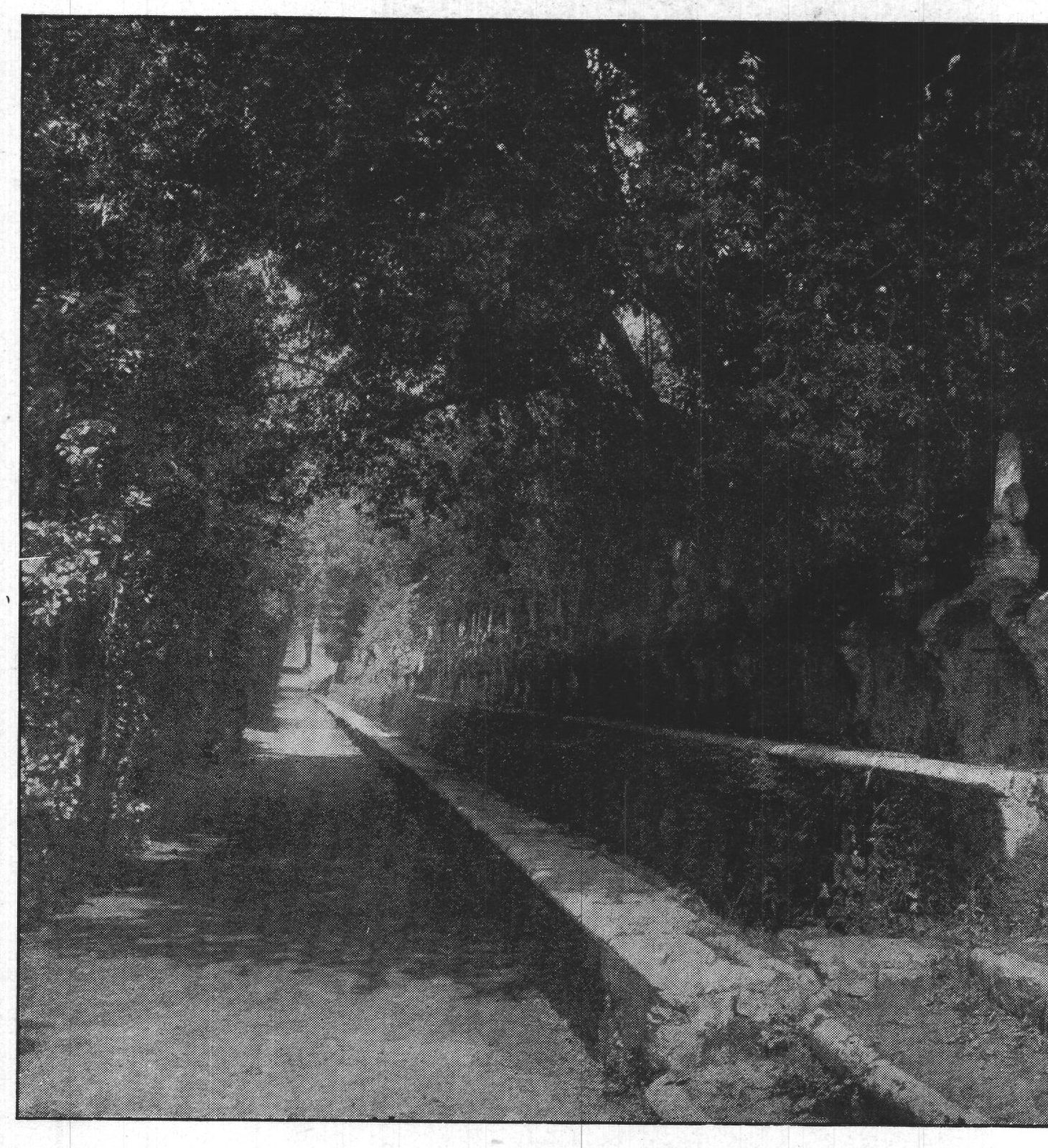
At either end this walk opens on a level. That to the east is formed by the cutting out of the hill; that to the west by the building of a terrace or plateau overlooking the plain. The level cut into the hill has been formed into a sort of open-air apartment, and is most elaborate. The entrance is between high walls not unlike the entrance to minor court. Opposite is a large cascade falling into an elliptical basin. Around the distant half of this runs an arcaded gallery, richly ornamented with many statues in niches. This large basin was the swimming pool; and built under the hill—as seen in plan—are the apartments connected with it. In front are grassy plots and spreading trees. About the walls run low stone seats, and here and there are great substantial marble tables.
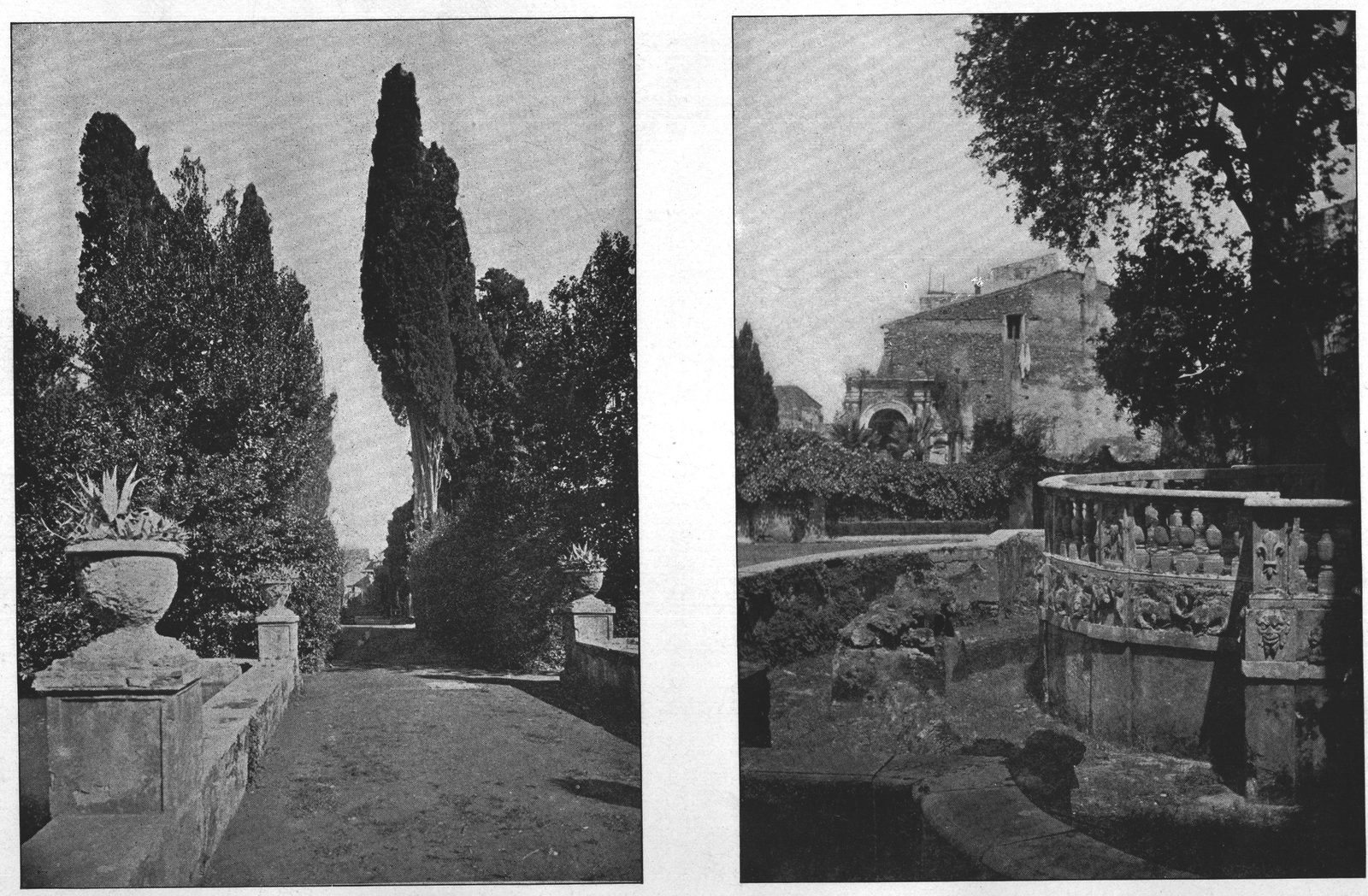
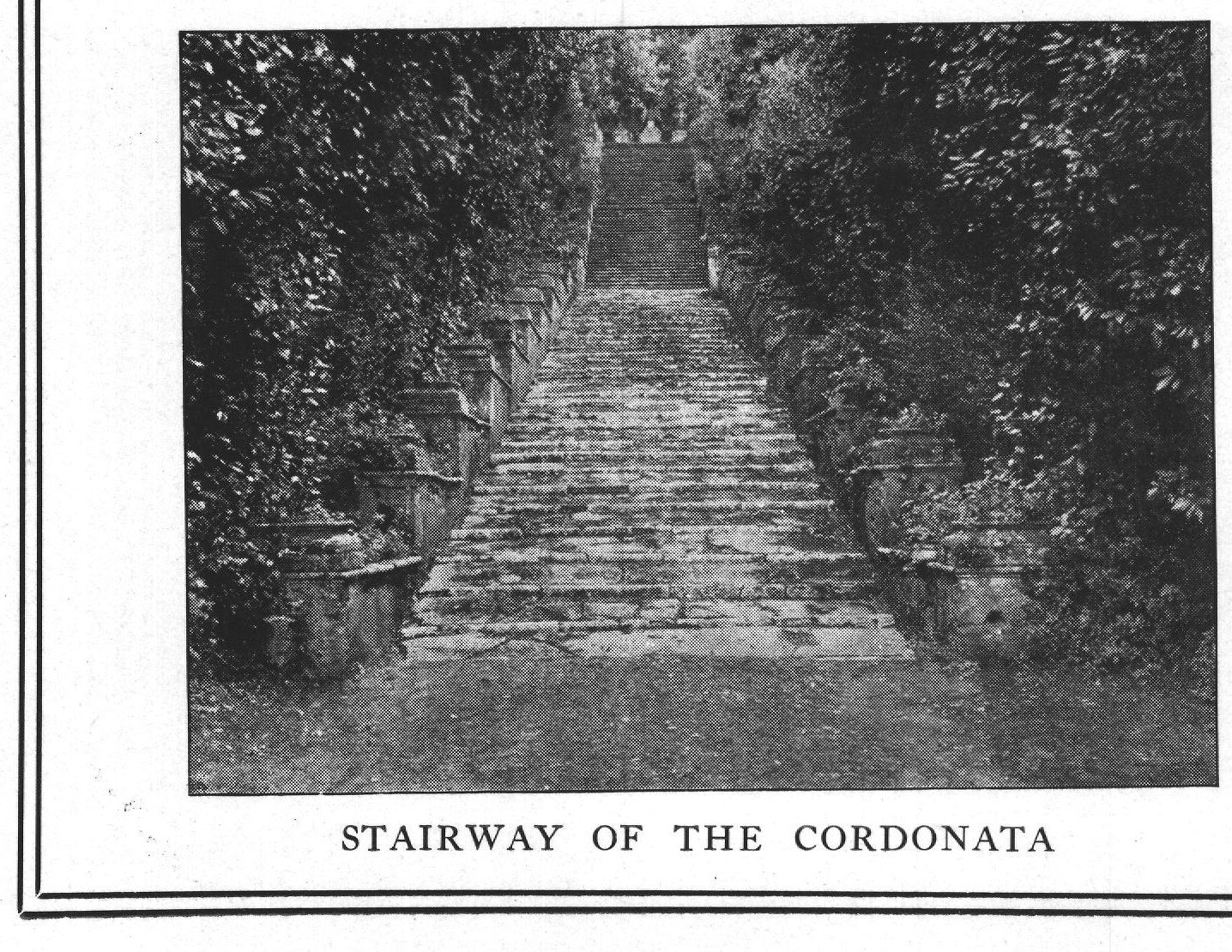
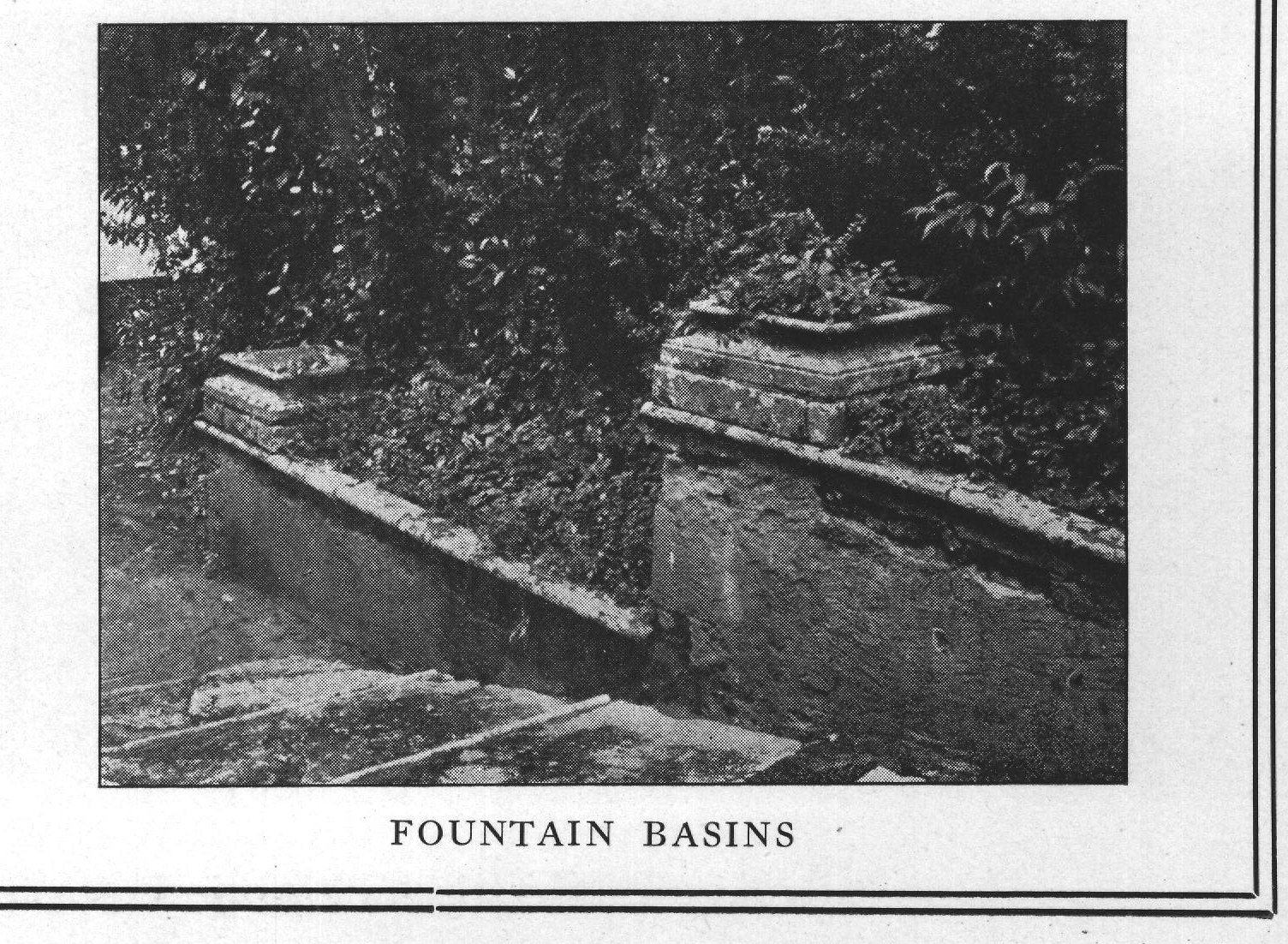
From the "allée of the hundred fountains" an elaborate system of stairways and inclines leads to the court level. There is the stairway of the cordonata, with its square fountain basins — cordon like—extending to the very lowest level. There is the enclosed stairway that leads to the minor court, which accentuates the end of the broad walk separating the last two inclines. And there is the most interesting stairway of all, the one on the central axis of the villa. Circling about both sides of a fountain, it looks down the central slope, till, midway it opens on a laurel path, flanked by seats. Then it circles on to the top of the last incline, where a straight stairway, broad and easily descended, leads to the last great division. This third division is simple in its parts. Against the slope a broad rectangular basin makes the change from the wooded hill to the parterre. Bridges uniting the main paths of the garden to the various stairways are bordered by low walls, topped with urns. A belt of evergreen oaks to one side makes a dense grove which is not only beautiful in itself, but it centers the interest in the garden, while affording a delightful place from which to overlook the surrounding country.
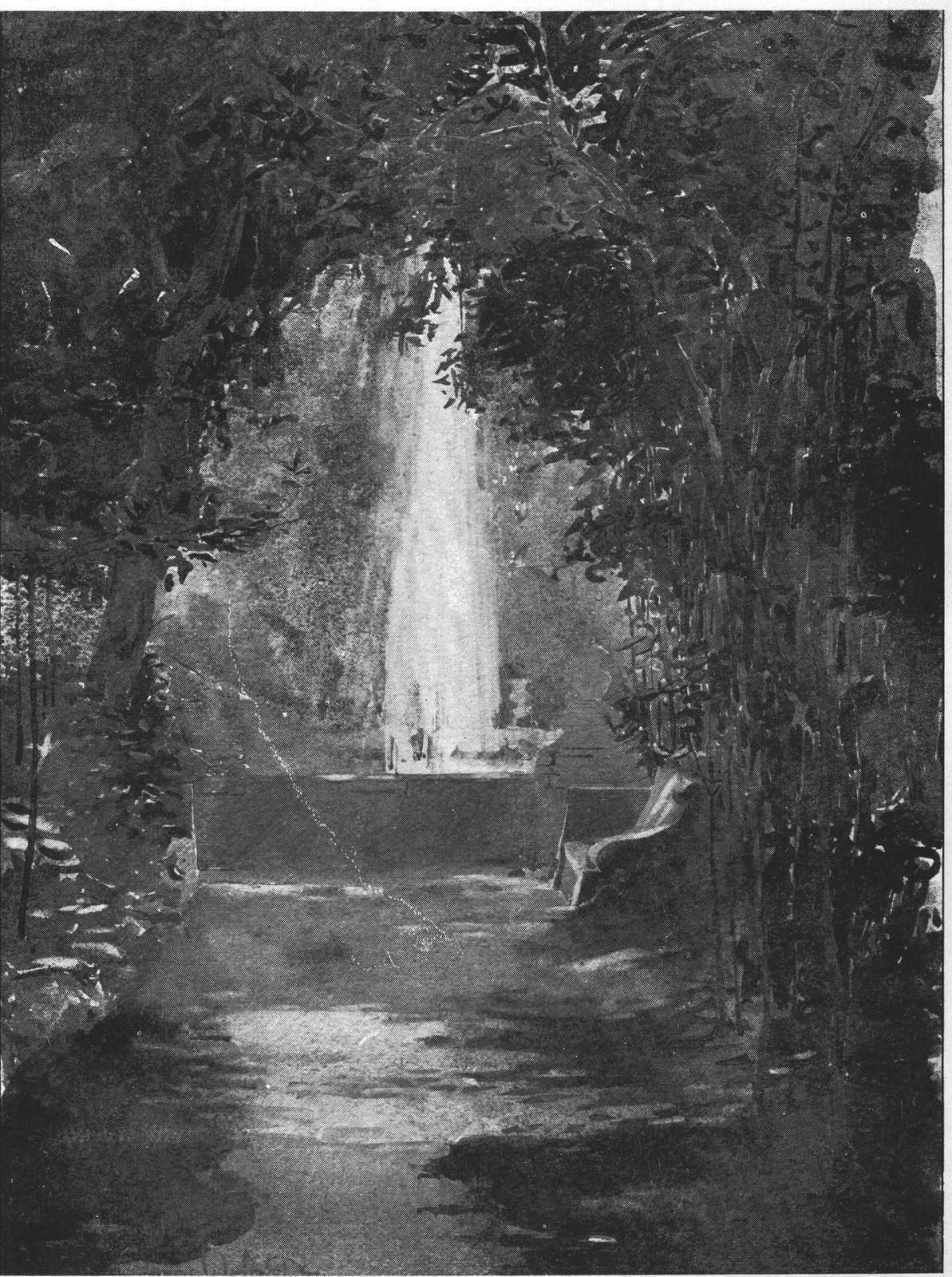
These are the principal parts and features of Villa d'Este, but a word must be said about the water and the trees. Not so much about their individual charms, as about the admirable manner in which they have been made to act their part. The water, brought into the villa at a high level, runs rippling in many a little channel down to the great placid basin on the lowest level. That is the scheme of the water. But every inch of the way it is governed as man desires. Appearing in a grand cascade or gently flowing in little streams along the top of a ramp; falling in myriad sprays to urns and basins or from niche or recess in a small cascade; gently led to the great oblong basin, which gathers and stills it after its wanderings, what a beauty it adds to the general unity of the composition.
So, too, the trees have been planted with foresight. Nothing else could do more for the villa than the groups of cypresses on the lower level surrounding the central fountain. From the entrance they insist, by their stately and sculpturesque grandeur, on making out the way to the palace. From the palace and other levels they make, as nothing else could, the termination of the scheme of the villa, by causing the eye to stop before looking at the distant hills. This carrying out of an idea, this composing that is felt in every feature at d'Este unites these same parts into one grand whole.
Perhaps this is best felt when viewed from the principal entrance. Between walls one looks along the main path to the large cypresses. Between them the eye is led on to the distant stairway above which fountains, niches and terrace walls carry it on until it is finally stopped by the rich entrance and the long horizontal line of the palace. A masterly union of art and nature; a use of existing material coupled with those things conceived by the brain and made by the hand; a unifying of many parts, each beautiful, that places Villa d'Este and the gardens of Italy "on a pinnacle high above the others, peerless and alone."