In the southern edge of the Western Marches, whose condition in the Middle Ages has been so graphically described by Crockett in his "Raiders" and "Men of the Moss Hagg," stands Levens Hall celebrated far and wide for its notable gardens. The river Kent flows past the Hall and through the park and five miles higher up the river is Kendal, a quaint old border town famous as the home of Kendal green in which Robin Hood and his men were clad. In Kendal castle was born Catherine Parr, the last wife of Henry VIII. Eight miles beyond Kendal is Windermere, a famous summer resort of the lake district; twenty miles to the south lies the city of Lancaster, whose history dates from the time of the Roman occupation. Forty miles beyond Lancaster is Liverpool. Though the face of the country has been much changed in the course of centuries, the neighborhood of Levens Hall is so picturesque and romantic that it is still well worth a visit. The Hall itself forms an important link with the past for portions of the building clearly date from Saxon times, though the first recorded mention of it is found in the Domesday Book of William the Conqueror. This portion of the building, which forms the nucleus of the later structure, was at that time probably a small pele or stronghold against the Scottish raiders. Remodeled at various times its present form dates from the time of Elizabeth. The gardens are more recent, having been laid out in the year 1701 by Beaumont, the court gardener, who designed those at Hampton Court as well.
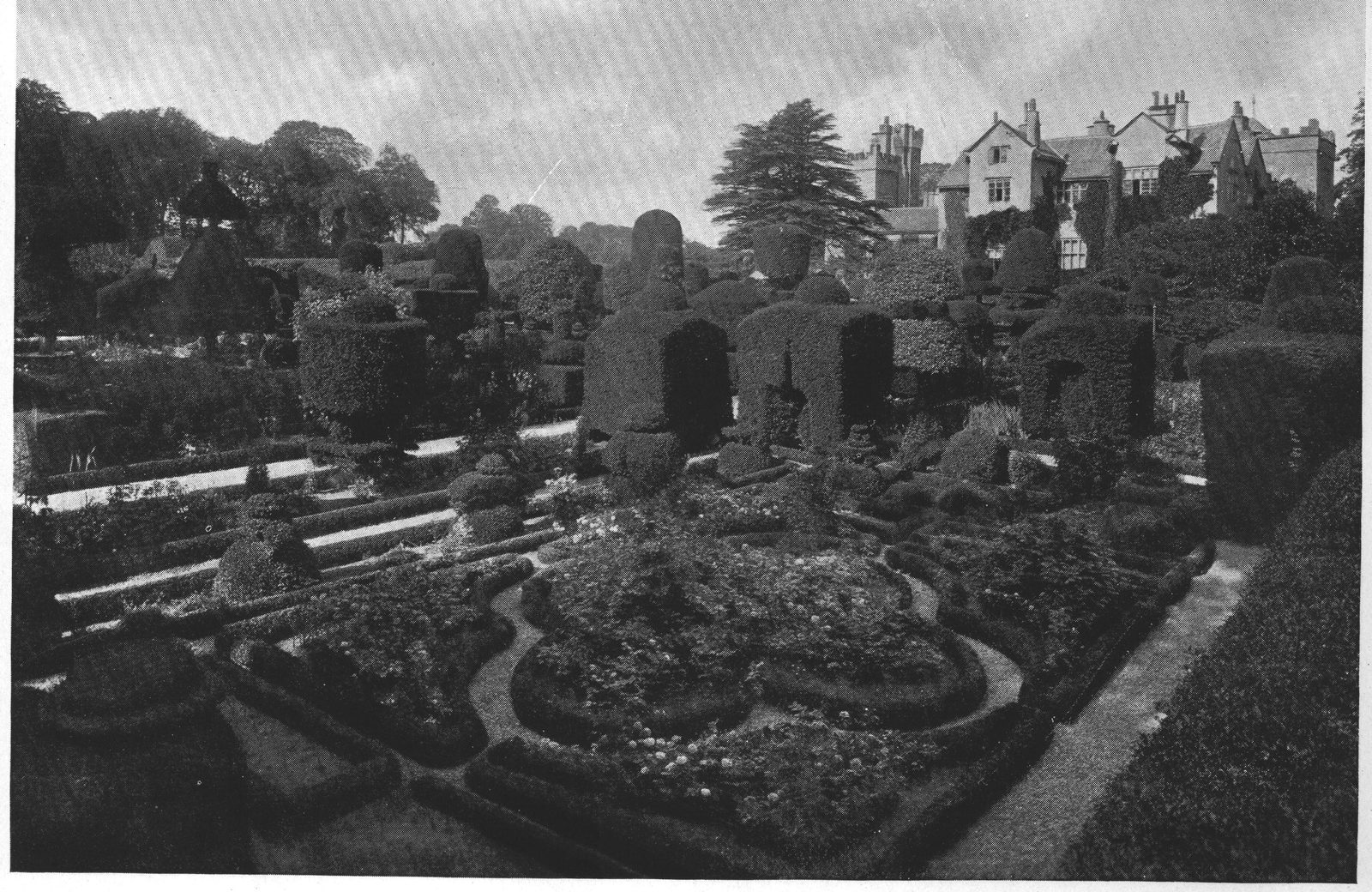
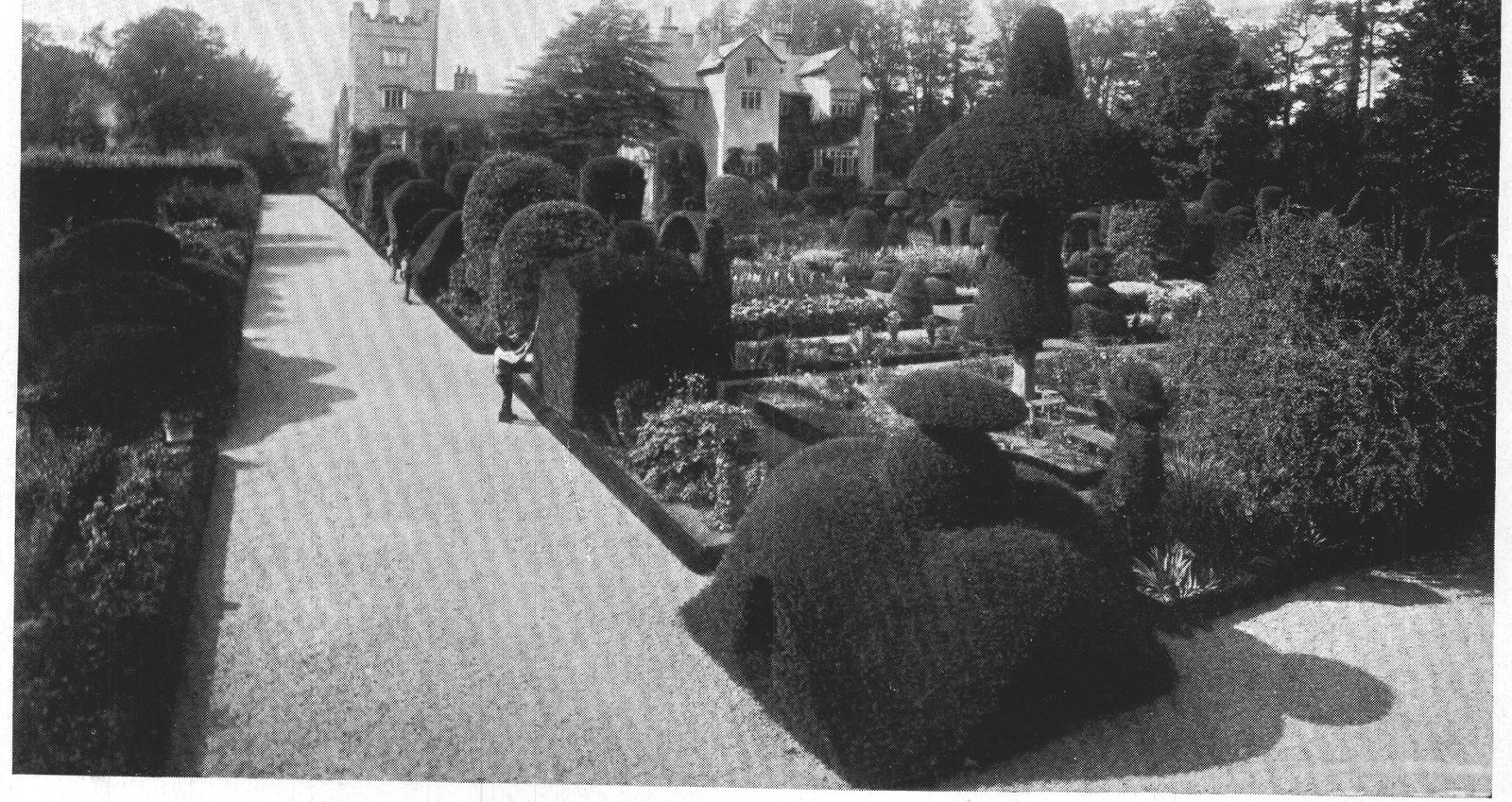
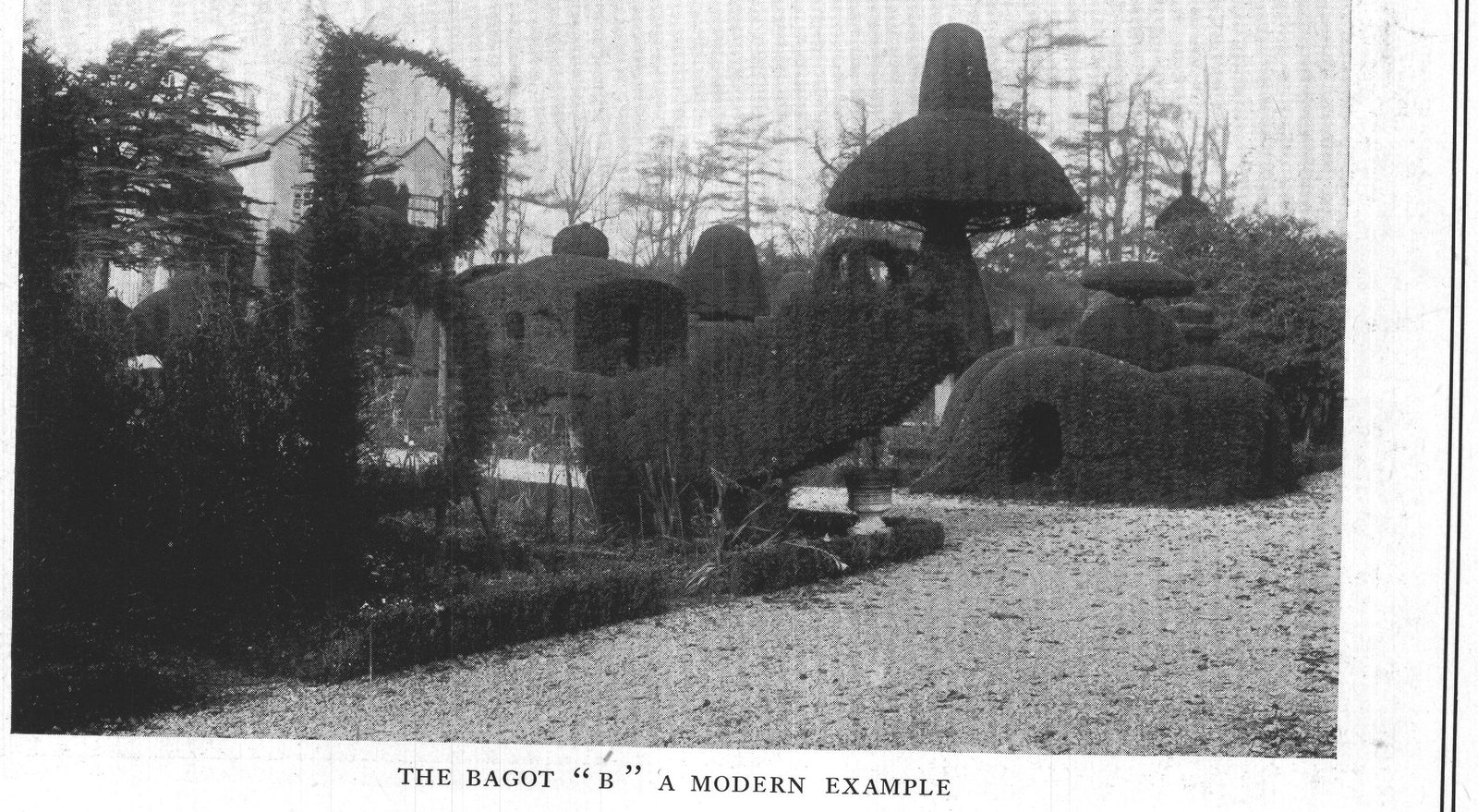
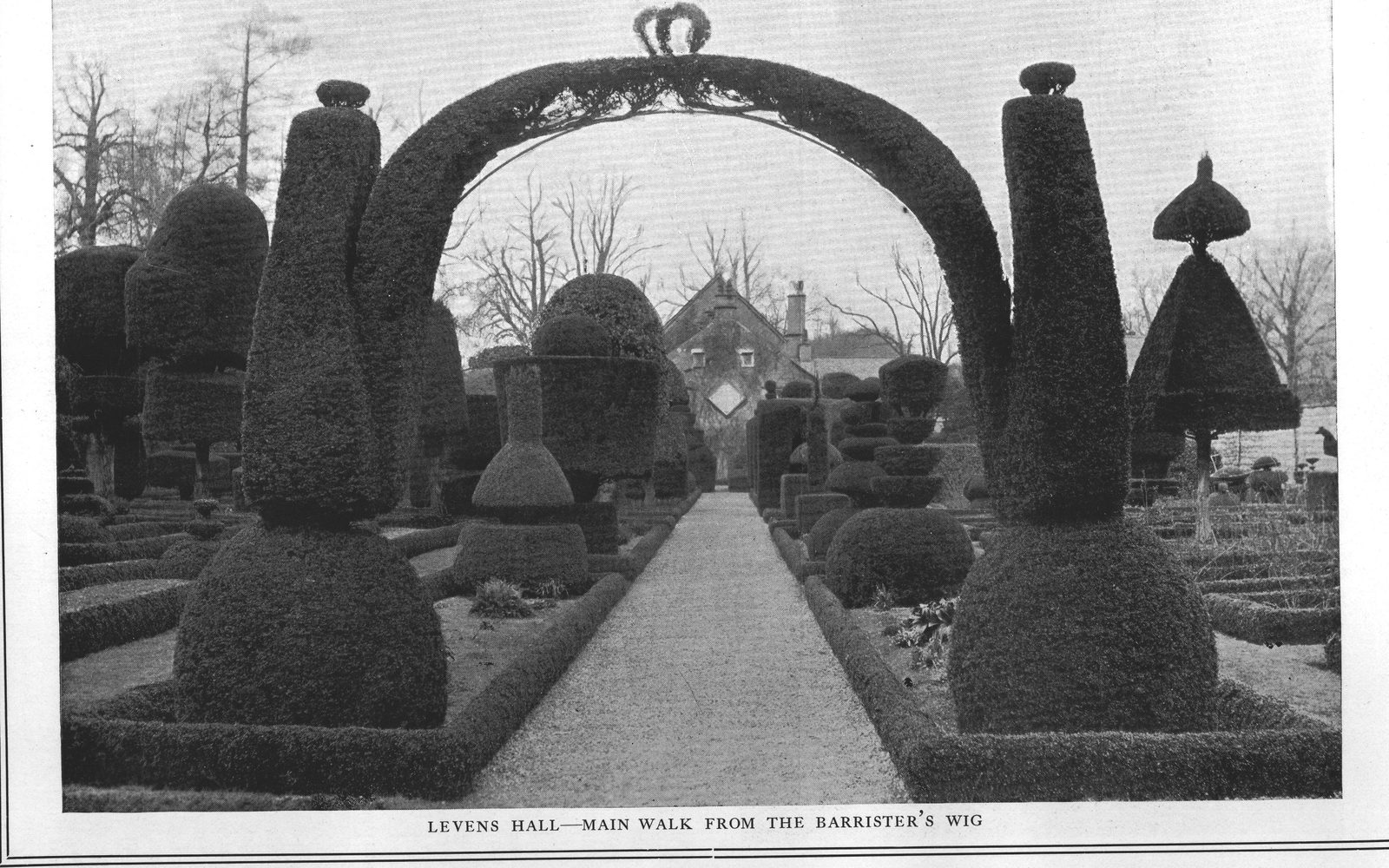
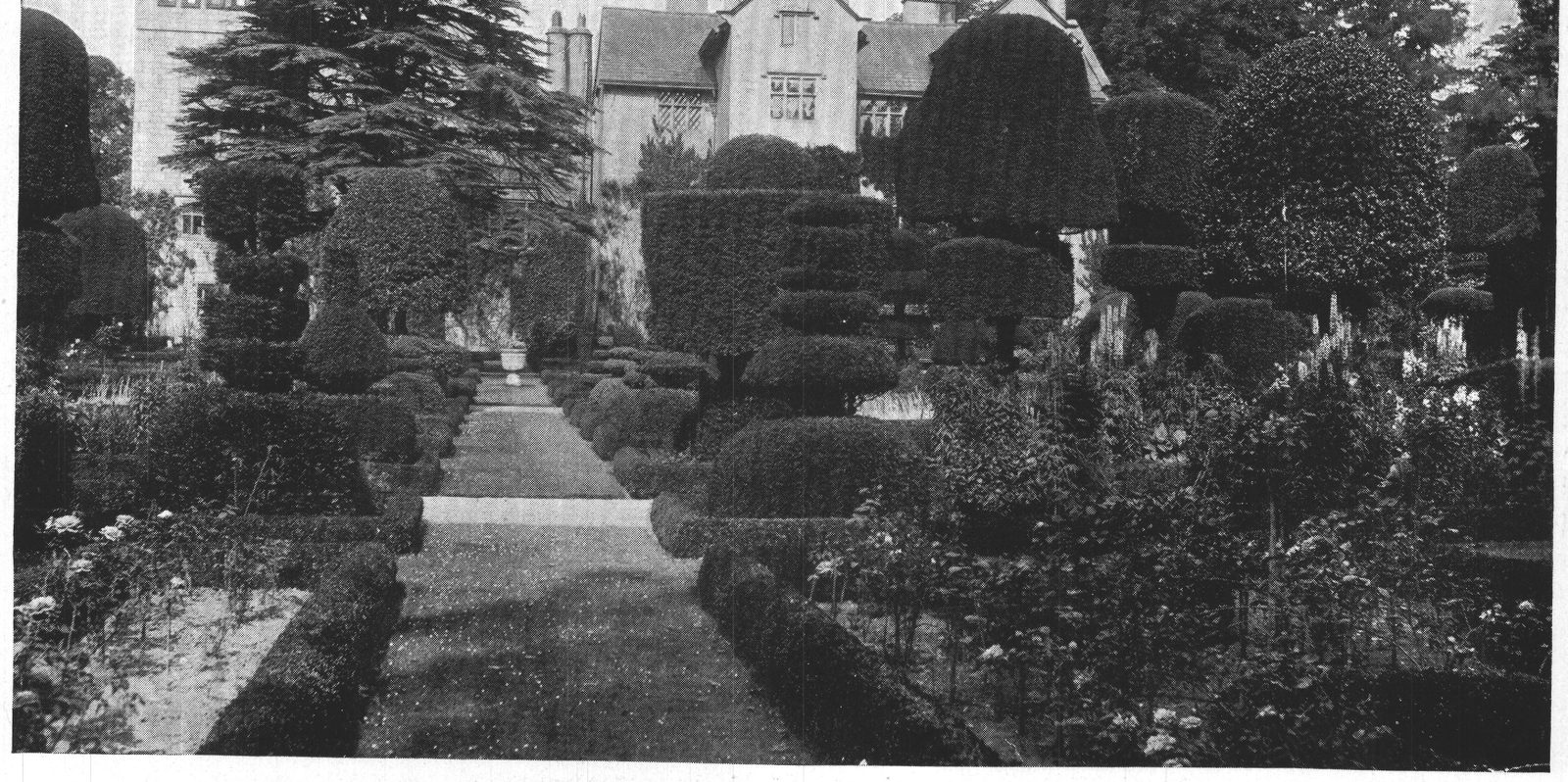
The gardens at Levens are beyond question the finest surviving example of the topiary work which became so fashionable in Europe with the spread of learning, first introduced at Florence by the Medici family in the early years of the sixteenth century. The fashion spread rapidly through Western Europe and soon the best examples equaled, if they did not surpass, the famous garden of Pliny of which we have a minute description by the hand of that celebrated author, and in imitation of which these topiary gardens were designed. The accompanying illustrations will give a far better idea of the effect of this work in general, and of the Levens Gardens in particular, than can any amount of description however detailed. The various trees are usually surrounded by flowers set out in neat beds with an edge of clipped box for the border. Walking along the well-kept gravel paths, the visitor first notices among the more striking forms a peacock of box only slightly larger than life, again a lion with a crown on his head, and further along a figure of the king also crowned. In another corner stands the queen with her arms akimbo, while near by is a colossal helmet and an umbrella. Sometimes the paths pass beneath box archways. Opening vistas are forms interesting for their picturesque fantasy rather than because they are copies of any natural objects. To many visitors the "judge's wig" is most amusing; a graphic though gigantic copy of the official, and to American eyes, half grotesque, wig worn by the English judges while on the bench. This particular wig stands some six feet high beside the walk, and many a cup of afternoon tea has been served under its shelter, even in rainy weather, for the thick interlacing branches of the clipped yew afford ample protection from the wet. Tradition has laid here the scene of many a courtship, but, unfortunately, there are two concealed entrances from the back, which, if the legend may be believed, have more than once caused serious interruption by an eavesdropper. The dark foliage of the yew, unfortunately, makes it difficult to bring out the best characteristics of this popular piece of scenic gardening. Beyond the topiary gardens are the fruit gardens and bowling-green, both enclosed by thick hedges of clipped beech more than twelve feet high and so dense that they afford as much shelter and protection as a stone wall. The bowling-green is especially attractive with its splendid turf and high smooth walls of green. From here a path across the grass leads between high walls of greenery to a circular space, itself sheltered with hedges, from which smaller walks radiate in all directions. To the visiting foreigner, the house is of exceeding interest. One tower has on it a clock with a single hand to tell the time, and within are rich windows, tapestries, embossed leather and other decorations from every period of English art, all combined together to make a very harmonious effect well worthy of careful study. On the stable wall is an ancient sun-dial, and against high stone walls are everywhere trained fruit trees or roses after the English fashion. The gardens contain about seven acres and have nine miles of box hedges along the beds. In the seclusion there is a most delightful feeling of restfulness and shelter from the turmoil without.
Just a few steps up the main road from Levens gate is Levens bridge, a survival of the old days when all traffic was carried on by pack-horses. Those who will take the trouble to walk along the bank below the bridge can easily see where the width has been more than doubled to accommodate the wagons of to-day, though to an American eye it still seems far too narrow. Above and below the bridge on both sides of the road stretches Levens park, one of the oldest deer parks in England, enclosed in a yew fence, dating certainly since 1360 and still preserving its original limits. In it there are beautiful stretches of woodland, and green pastures, a combination so unusual.
The gardens harmonize well with the Hall, the interior of which is extremely interesting. The carved woodwork is very elaborate, the south drawing-room in particular being exceedingly rich. Three of Lely's best portraits hang in the house, the entrance hall has a fine collection of armor and one of the rooms is hung with some splendid pieces of tapestry after the Italian manner. Taken altogether, Levens represents the best attainments of domestic life among the well-to-do English. The letter "B" noticed in one of the photographs of the garden is the initial of Captain Bagot, the owner of Levens park whose courteous attention in throwing open his grounds to the people of the neighborhood is most heartily appreciated, not only by them, but by all travelers as well.
We are indebted to Mr. Hogg, photographer, for the photographs which are here reproduced.