Important: Safety Warning
This page recommends pest-control substances such as arsenic compounds, strychnine, or cyanide — in some cases applied to food crops. These substances are lethal to humans and animals, and their use is now banned or strictly controlled.
This information has been left in for historical purposes but should not be acted upon.
Home › Introduction › Calendar of Operations
Calendar of Operations
July 4.-Gather all the flowers you can; it is not best for the plants to have them die on the bushes. You should now be reaping a full harvest from the Teas, Hybrid Teas, etc. July 10. From now till autumn keep a sharp lookout for signs of fungoid troubles-such as (1) mildew, (2) black spot, or (3) yellow leaf, and apply bordeaux mixture or sulphur arsenate dust mixture. If any aphides appear, use black-leaf 40.
July 15.-Thin out the old canes and trim back all multifloras and other climbers noted under chapter on pruning.
July 20. Now or earlier mulch your roses with grass-cuttings, old manure, leaves, sawdust, or peat-moss.
August 30.-Teas and Hybrid Teas bring forth their "Fall Flower Show." As soon as the buds form, remember that Bon Arbor or manurewater applied to the roots will help them to produce the blossoms you'll be proud of.
September 10.-Some Hybrid Perpetuals bloom a second time. October 15.-Make ready your new beds for next year.
November 15. After the first frost, begin covering the stems of your roses, pages 26-27, and, soon after this, complete the protecting of the more tender kinds.
Thanksgiving Day. As soon as the ground has frozen, all should be safely nestled in their winter beds.
WHEN YOUR ROSES ARE UNDER THE SNOW December. Read Dean Hole's "A Book About Roses." (Also, see Bibliography, page 105.) January. Send for the catalogs of a few reliable rose-growers. February. Order your new "Made in America" roses.
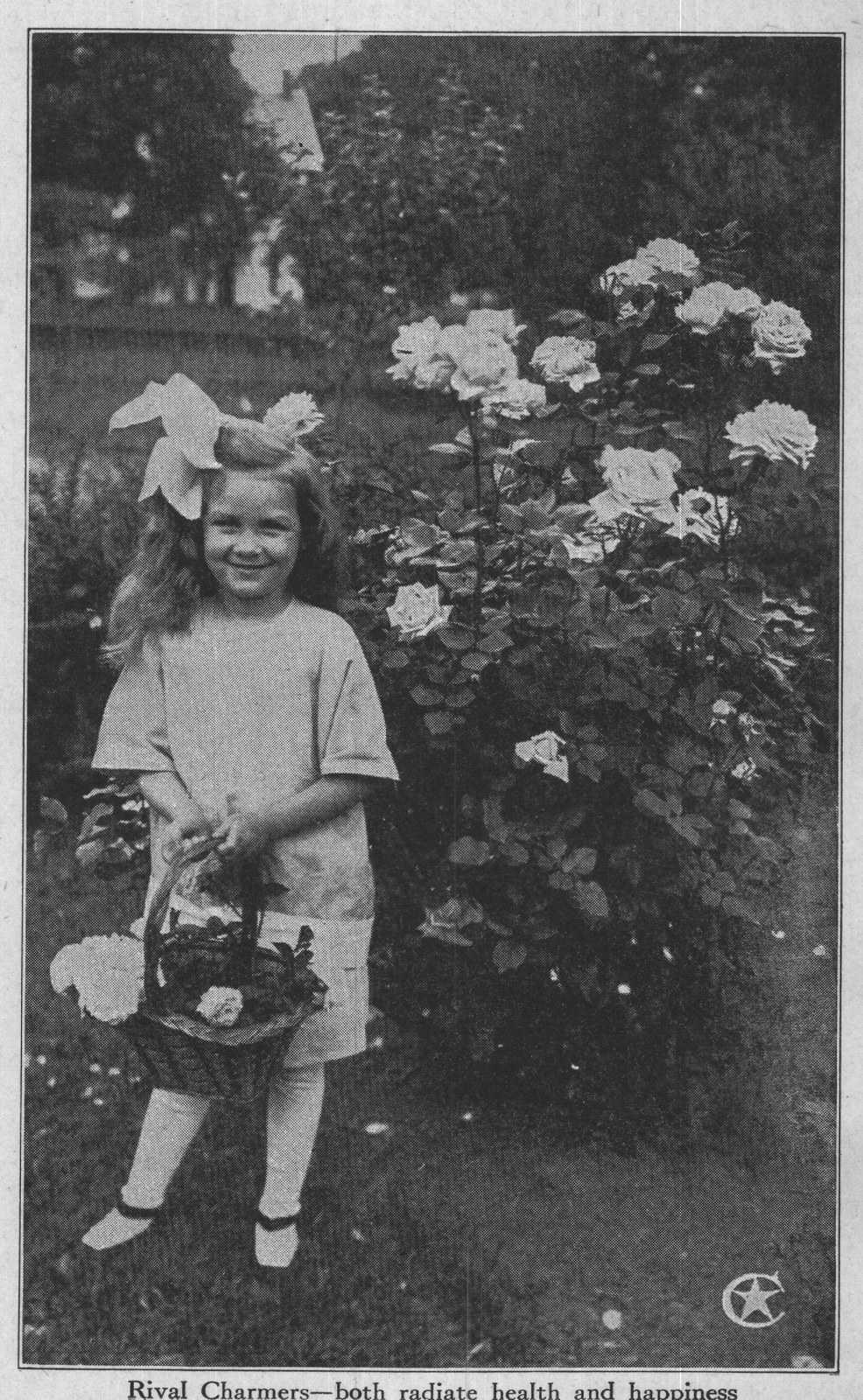
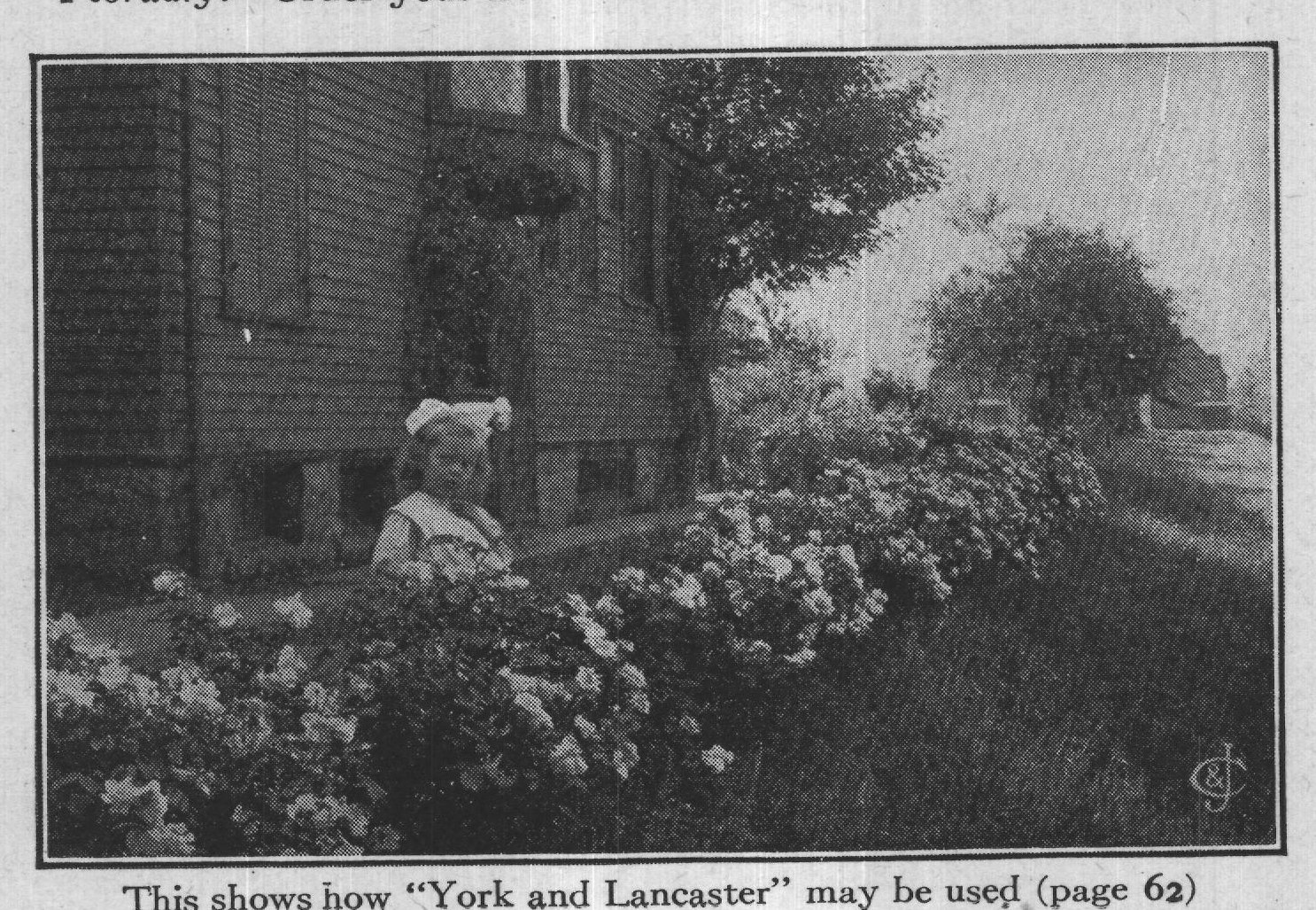
This shows how "York and Lancaster" may be used (page 62) ஓ Rival Charmers-both radiate health and happiness