Important: Safety Warning
This page describes trade processes that use dangerously toxic materials such as cyanide solutions, mercury amalgams, or strong acids. These processes require training, equipment, and precautions far beyond what the text describes.
This information has been left in for historical purposes but should not be acted upon.
Home › Introduction › Preparing the Beds: The Mann Plant Label
Preparing the Beds: The Mann Plant Label
Club Label The best of wooden labels must be sometimes renewed. A more permanent type we call the Garden Club Label. It is a triangular piece Mann Label of flat zinc with rounded corners, hung on the gooseneck top of No. 9 galvanized iron wire, 15 inches long, as above. There is room on the reverse side for date of planting and other data. For indelible ink, dissolve a copper cent in a I-ounce solution of one part sulphuric acid and five parts water; or, if preferred, paint the label and stake green and the letters in white. This label keeps clean because it is above the mud-splash of the raindrops.
The Mann Plant Label hereby illustrated is of zinc. It is practically indestructible and stays put. The size is 9½ inches long by 3/4 inches across at the top.

Simplex Label The Simplex Labels illustrated on page 23 are a single piece of metal frame and stake 16 inches long and securely hold in place a slightly roughened celluloid card which is protected from the weather by a clear, smooth cover of mica. Celluloid labels, with the rose name printed in and clearly showing from beneath a transparent glazed surface, are perhaps the most recent development and promise great satisfaction.
The most elite rose labels we have ever seen were those used by M. Gravereaux, at L'Hay, near Paris, where, on top of small, sturdy, iron stakes, were bolted beautifully finished, flat top, oval name-plates of porcelain.
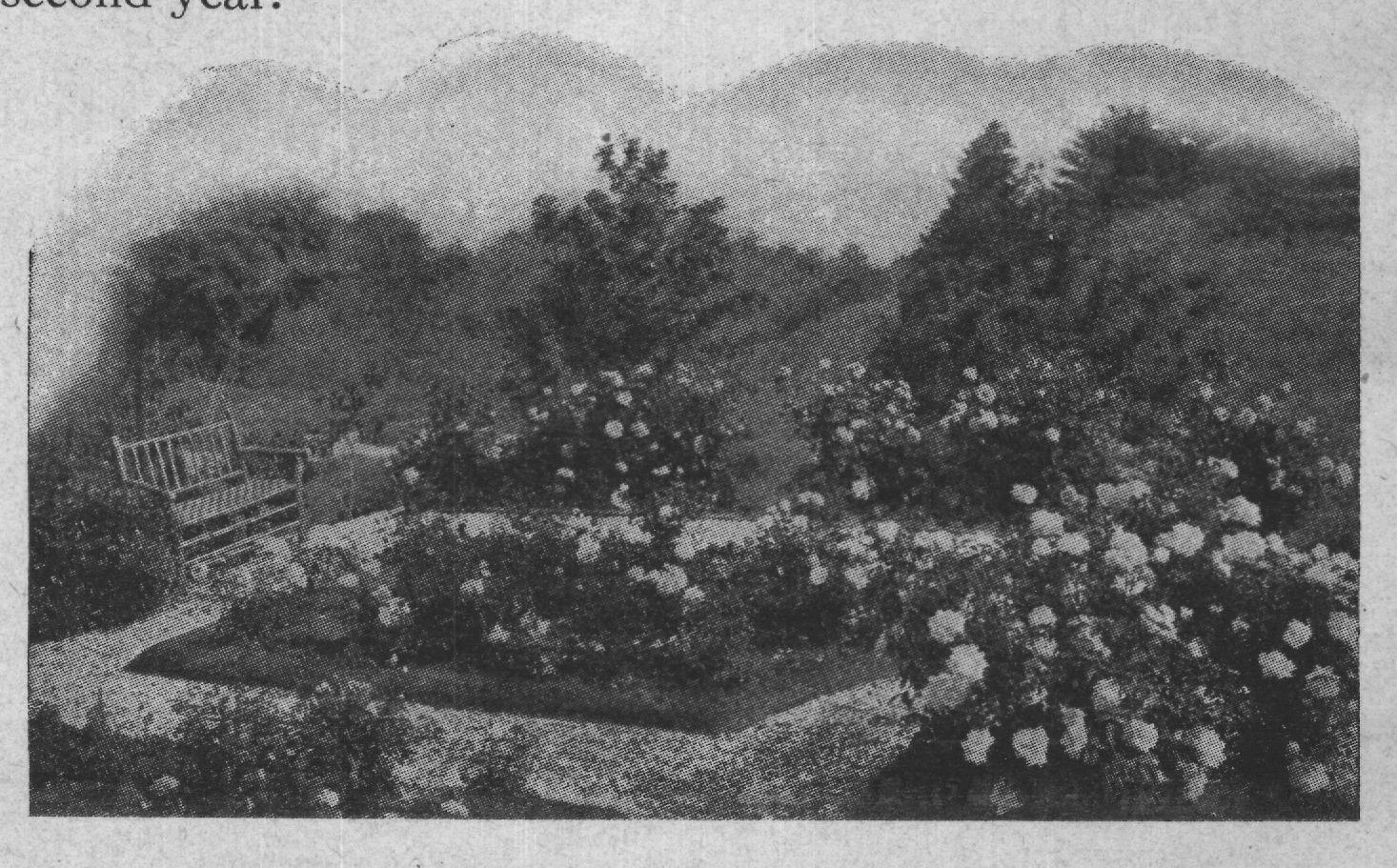
Plotting But the "best laid" labels sometimes go wrong, and in some unexplainable fashion do get lost; therefore, to be entirely protected, you can take out label insurance. Some people think this is more important than labeling. Draw a diagram of your bed, and then with letters or numbers indicate on it the location of each rose. With this make out and keep a key-list of roses lettered or numbered to correspond with those on the diagram. We venture to predict that such a list will prove its value before the end of the second year.
CONSERVING THE MOISTURE Mulching There is a treble object in this: First, to retain the moisture; second, better to preserve a suitable temperature in the soil; third, to stop weed-growth. What is called a "dustmulch," maintained by frequent hoeing, is, perhaps, the best method, although, where the summers are warm, a covering in early July of long "strawy" cow-, pig-, or horse-stable manure that will not heat, will accomplish the same object. The lighter and more chaff-like portion should be removed in the spring and the richer part dug in. Peat-moss we look upon as even better than a manure-mulch, because the latter may encourage root-growth nearer the surface than is desirable. We have also tried sawdust for covering the beds in summer. It certainly prevented need for weeding and otherwise seemed beneficial. Another plan is to plant some low-growing and shallow-rooting ground-cover plant, like violas (pansies) or portulacas. These grow quickly from seed and should be established by mid-July.
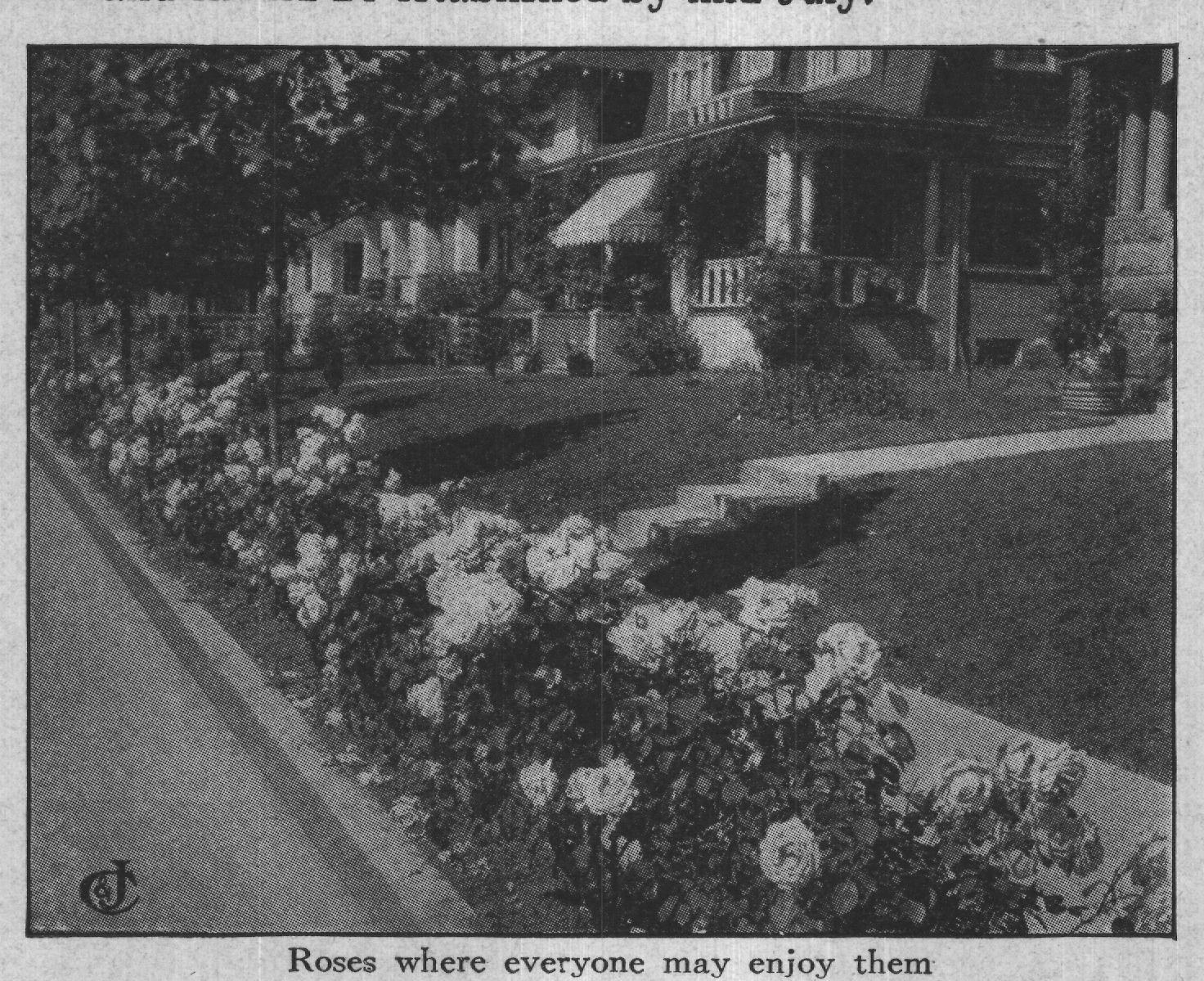
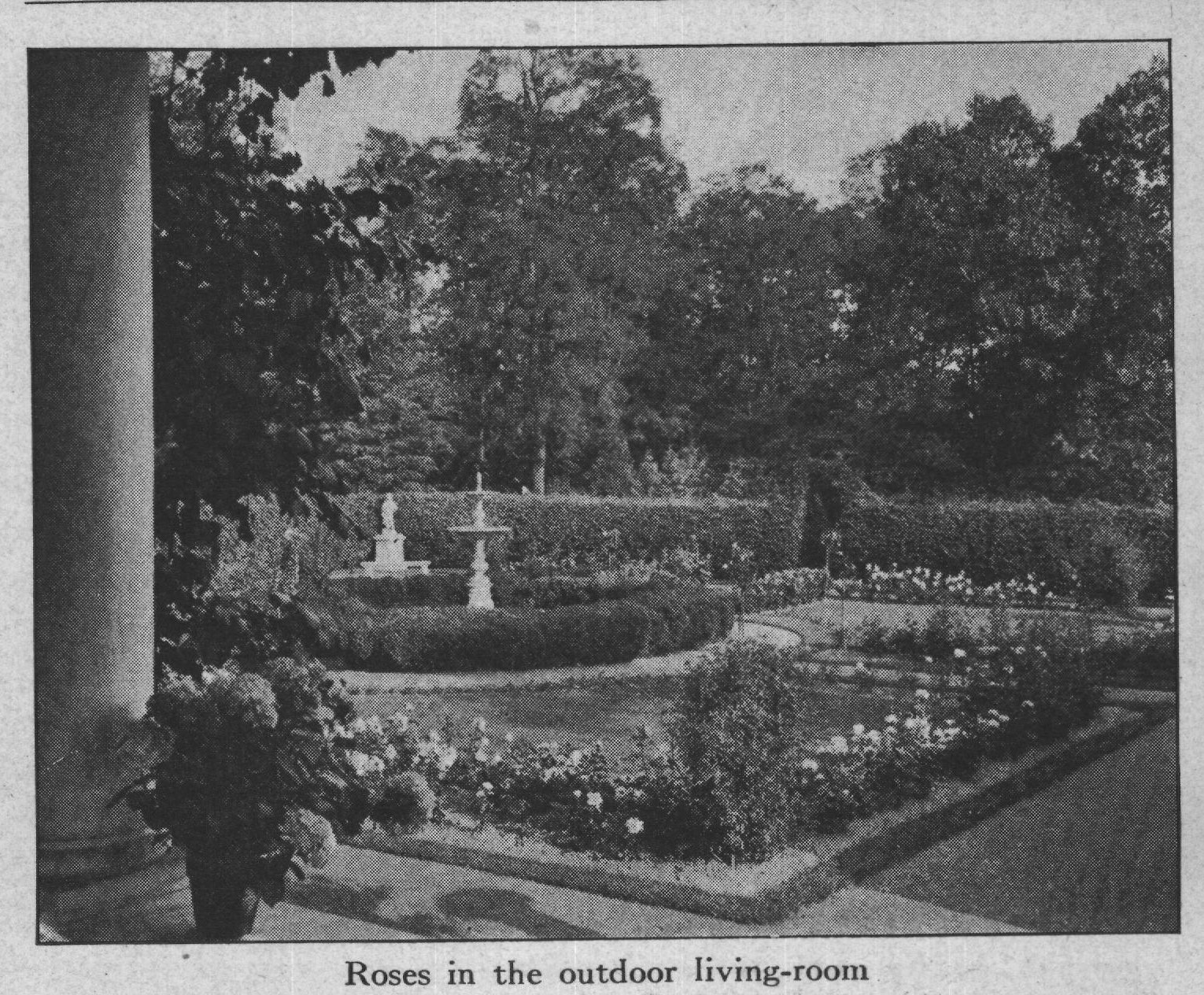
Roses where everyone may enjoy them Roses in the outdoor living-room Protecting the Roses From Frost W. C. Egan, the eminent horticulturist of northern Illinois, succeeds admirably in keeping his roses over winter, as does also the Superintendent of the McCormick estate; and yet, north of Chicago, where they live, the severe winters and the cold winds blowing over Lake Michigan, often kill the Wichuraianas and Rambler roses to within a foot of the ground, when not protected. An eminent judge, living north of Detroit, by the work of his own hands, protects his Hybrid Teas so that they triumphantly weather zero winters. On the famous shore-front at Newport, Rhode Island, we found the tender Gloire de Dijon rose, which we had supposed could not be grown north of Washington, D. C., green and thrifty to the second story, after a most severe winter season. But the protection had been very thorough.
WINTER-PROTECTION Obviously, there is no danger where there is no frost. Where the thermometer falls below freezing, the less hardy varieties should be partly covered, and all roses will be the better for some protection, at least about the roots. If you are visited with zero weather, let "preparedness" be your rule. To begin with, bank up the soil cone-shaped, with the apex 6 to 10 inches high around the stem of each bush. Ashes are sometimes used, but nothing we know of is better than soil. In very cold countries, the roses may be lifted entirely and buried in trenches for the winter, and they will come out in fine shape for replanting in spring. After you have drawn the soil nicely around them (see calendar), leave them alone till the ground is frozen with a crust hard enough to bear the weight of a stone-laden wheel-barrow. By this time the moles or mice, or other creatures, will have secured their winter abode elsewhere, and not be tempted to make nests in the protecting material you will next apply. Now do not smother your roses, or they may die. Cover them thoroughly, as high up as you attempt to protect them, but always allow for the circulation of air. A 3- or 4-inch blanket of good, heavy stable-manure will keep out much cold. Over this fill up from the bottom of the bed to a depth of 10 or 12 inches with nice, dry leaves, and with some light material on top to keep them in place. A 12-inch fence of poultry-wire staked round the bed will help keep the leaves in place. The boughs of fir or pine trees, hay, straw, or cornfodder, or other material that will break the force of cold, biting winds, will serve in place of leaves, and where most careful protection is required, boards may be arranged roof-fashioned to turn off the rains. This will also protect your roses from exposure to direct sunshine when nights are freezing-cold, and avoid alternate thawing and freezing, which is dangerous, and in early spring prevent the premature excitation of plant-growth and tender buds. For this reason, too, remove protection in spring gradually, and not all at one time (see calendar, page 6).
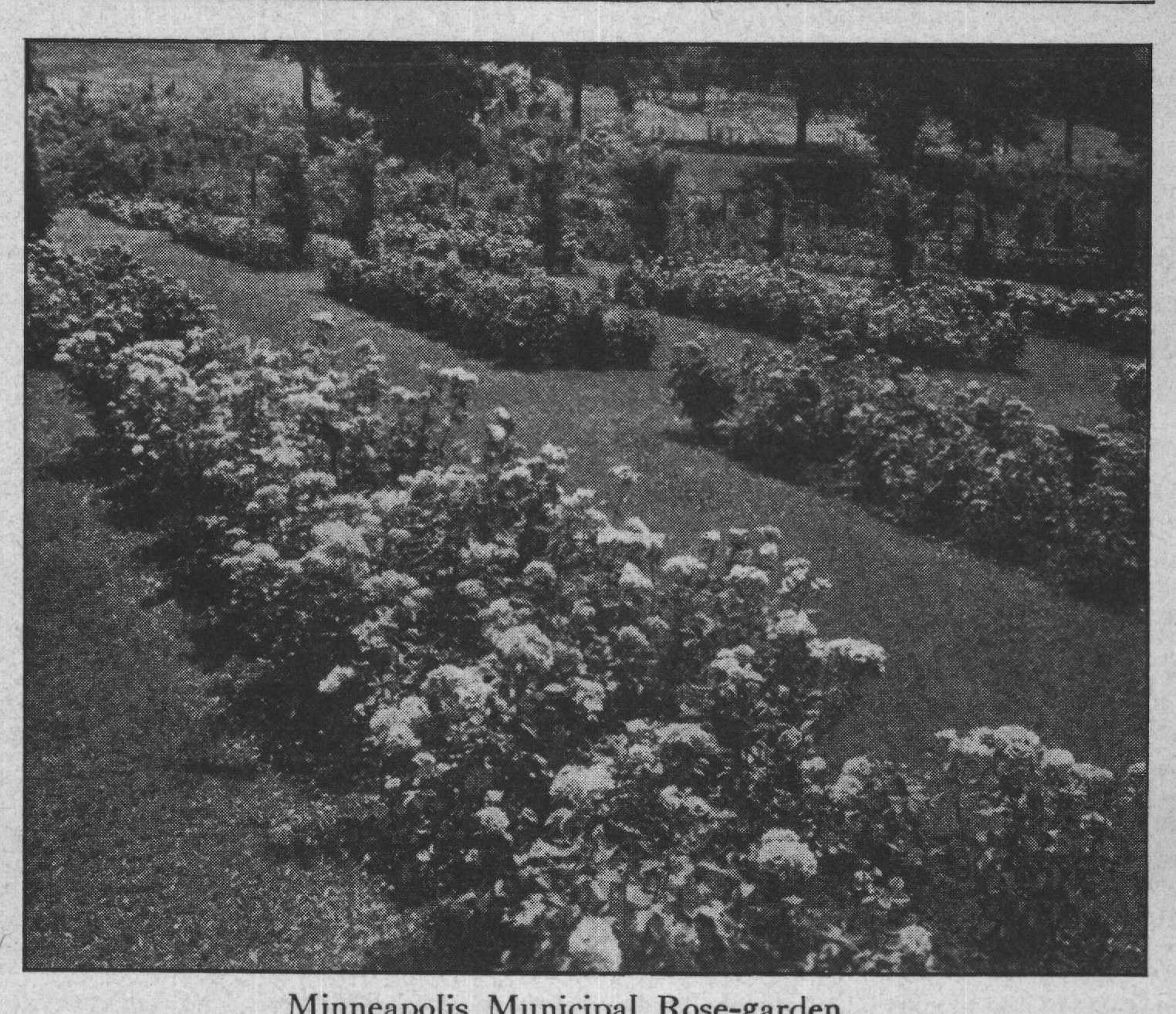
A method that has proved successful in one of the coldest sections of the United States is thus vividly described: Minneapolis Municipal Rose-garden "... Our principal problem would be to provide proper winter-protection. We took special pains to ripen the wood. We stopped watering and cultivation in September, and discouraged late growth. The last week in October we gave the beds a very thorough soaking, and a few days after we tied the shoots close together, and piled the soil around the plants as high as we could with material taken from between the plants, so covering from four to six of the lower eyes. The garden was then left in this condition until there were 3 or 4 inches of frost in the ground. We then filled in with dry leaves, gathered from the nearby woods. The leaves were thrown in loose and not packed down, and covered the beds to the height of the soil heaped around the plant. We then boarded in the long sides of the beds 2 feet high, and boarded over the top of the bed, but left the two ends open. Over this board cover we spread a layer of bedding, straw and hay.