Home › Introduction › Protecting the Roses: Teas and Hybrid Teas
Protecting the Roses: Teas and Hybrid Teas
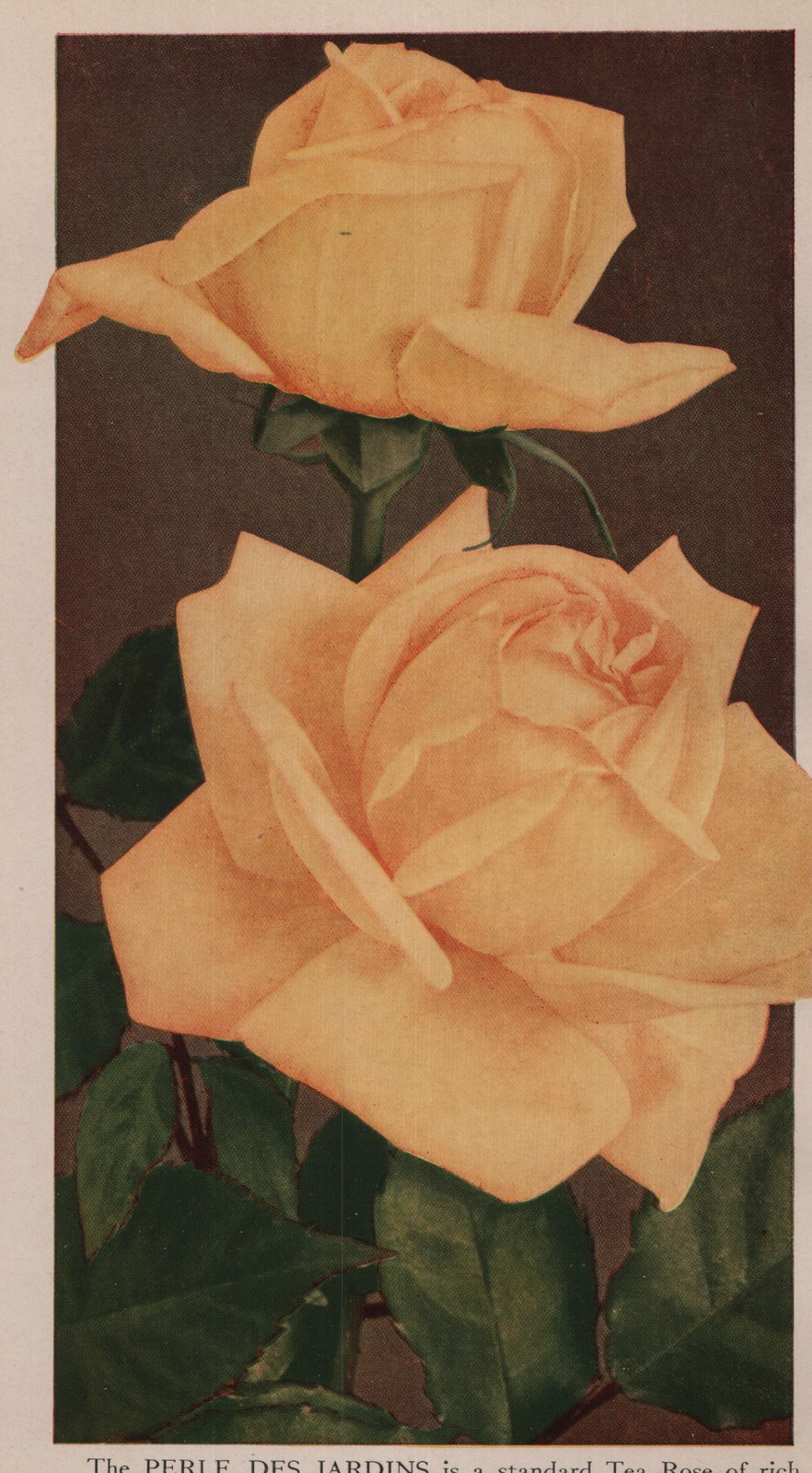
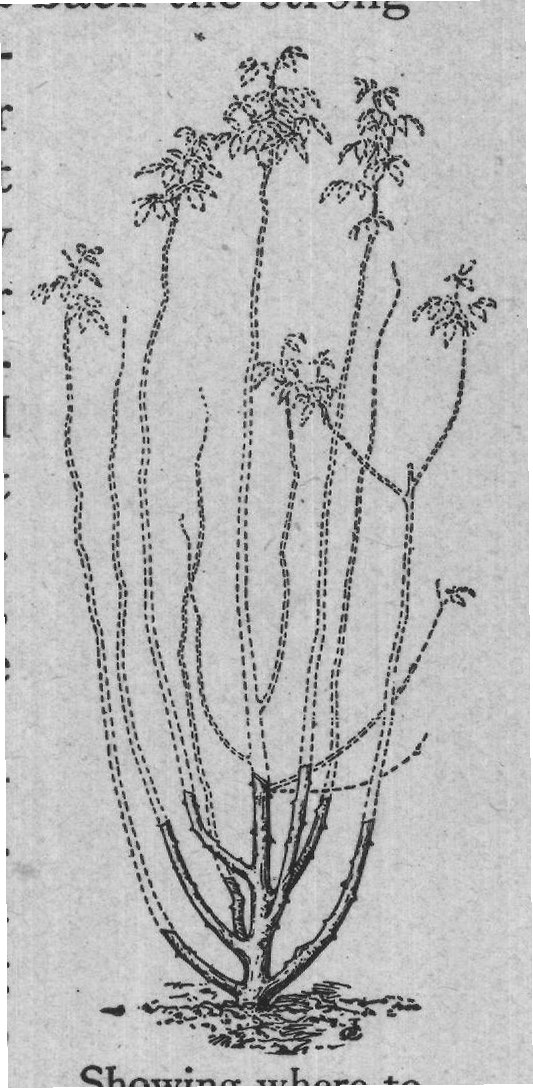
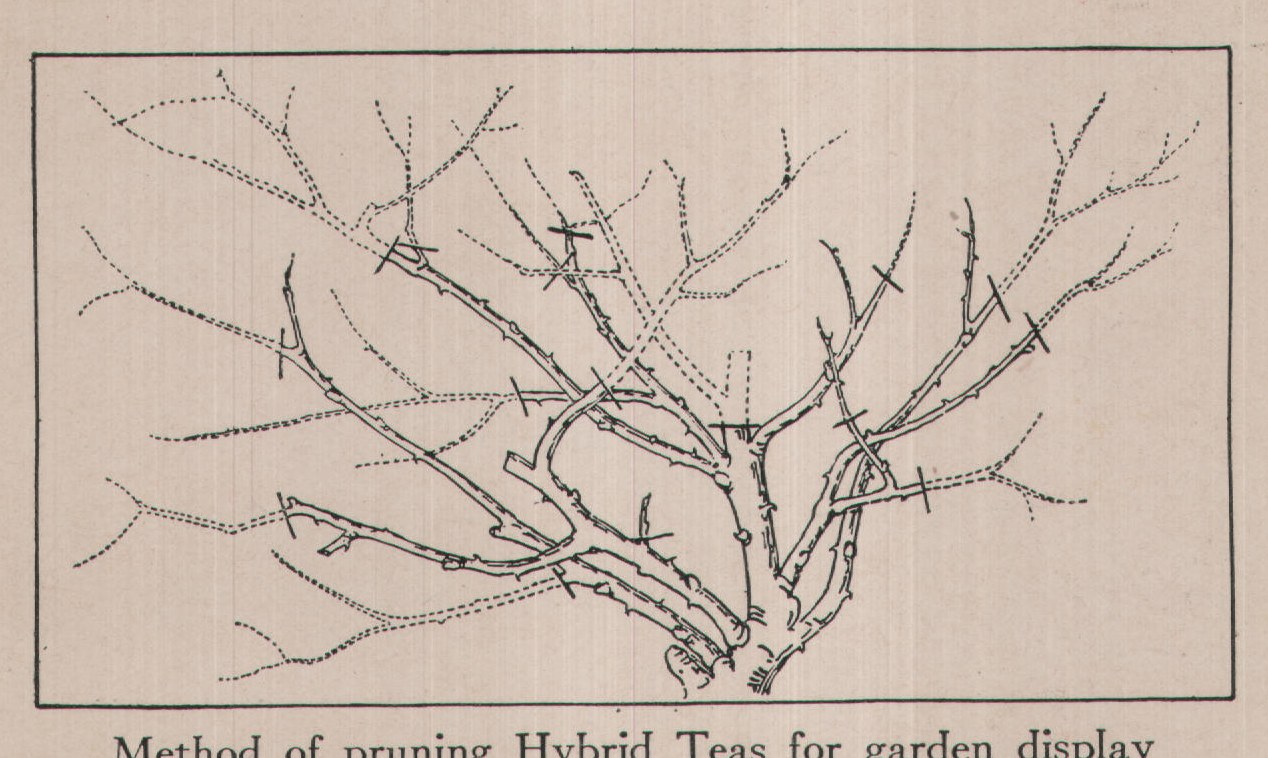
Pruning If you have bought two- or three-year-old plants, cut them back rather severely at the time of planting-to three or four buds on the Hybrid Perpetuals and about six on the Teas and Hybrid Teas. Always cut the stem just above a bud that points out, never above one that points toward the center of the plant. The term bud or eye is used to define the places on the stem where leaves will be produced. They are easily distinguished, as they look like small, pointed warts on the stems. If the plants are in leaf when planted, the above does not apply. The crop of flowers on the rose plants is largely governed by the kind of pruning the plants receive. In fact, other conditions being ideal, the pruning determines the quantity and the size of the flowers. The Hybrid Perpetuals and most other hardy roses should be pruned in March; if weather permits, by the Method of pruning Hybrid Teas for garden display (As recommended by the N. R. S. of England) middle of the month. The tender roses, the Teas and Hybrids Teas, need not be pruned until along in April, when the sap begins to flow and the buds begin to swell; for, at this time, dead and weak wood may be much more easily distinguished and cut out than earlier in the season. Besides, it is an advantage to leave the mulch undisturbed until settled weather has arrived. At the time of pruning, one must The PERLE DES JARDINS is a standard Tea Rose of rich golden yellow color and fine form; it blooms freely on strong stems. Other newer Roses of related color and great merit are Lady Hillingdon and Alexander Hill Gray. decide upon the kind of crop wanted. If the very biggest and best flowers are wanted, severe pruning is necessary (see 1, page 34); if a large crop of average flowers, only moderate pruning (see 2, page 34); but, where a quantity of bloom is preferred, only a little pruning is necessary (see 3, page 34). When pruning Hybrid Perpetuals, first cut out the weak wood and any branches that cross; then cut back the strong canes to about six eyes, the top one pointing out, and the cut being made one-quarter of an inch above the bud. If you want only a few big flowers, cut back to only three or four buds. For the big outdoor display, leave four to seven canes twothirds their growth. The Teas and Hybrid Teas will need the same attention, but there should be as much or more wood left.
In case the winter may have killed the canes, cut back to live wood, even if down to the surface of the soil.
These rules are modified somewhat by the character of the plant. The weakergrowing varieties can be cut back farther than strong-growing sorts. The strong-growing kinds, if cut back too heavily, will run to wood, and, in the case of some, too heavy pruning may kill the plant.
Showing where to prune Austrian Briar roses (also the Bourbons) need very little pruning. The Wichuraianas and many of the Multifloras bloom on the branches produced the previous summer; hence these should be pruned very little during autumn or spring; but when they have finished blooming entirely remove the old flowering shoots to give the new growth plenty of light and air.