Persea
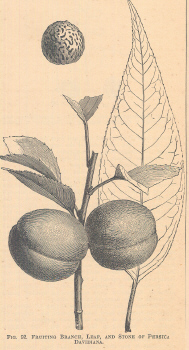
(a name applied by Theophrastus to an Egyptian tree). Alligator or Avocado Pear. ORD. Laurineae. An extensive genus (about 100 species have been enumerated) of mostly stove trees or shrubs, all of which (except one species from the Canary Islands) are natives of tropical and sub-tropical Asia and America. Flowers disposed in panicles; perianth tube short; limb segments six, almost equal, or the three outer ones smaller; perfect stamens nine. Fruit often large and fleshy. Leaves alternate or scattered, coriaceous, penniveined, or more or less distinctly tripli-nerved. The undermentioned species is the only one introduced, and it is rarely seen in cultivation. It thrives best in a compost of loam and fibry peat. Propagated, in autumn, by layers of the ripened shoots, or, in May, by cuttings of firm shoots, inserted in sand, under a bell glass, in heat.
P. gratissima (most-grateful). Alligator or Avocado Pear. fl. green, about 1/2in. across. fr. pear-shaped, yellow and brown, often tinged with deep purple, and about 4in. long. l. elliptical, narrow towards the base, about 6in. long. h. 25ft. to 30ft. West Indies, 1739. The flavour of the fruit somewhat resembles that of butter, or marrow, hence it is called "Vegetable Marrow" in the West Indies. It is so rich and mild that most people make use of some spice, or pungent substance, to give it poignancy; and wine, sugar, lime-juice, but mostly pepper and salt, are used. Marks made with the stone of the seed on a white wall will turn as red as blood, and cannot be effected until the wall is white-washed, and even then only with difficulty. (B. M. 4580; B. R. 1258.)