Pleomorphy
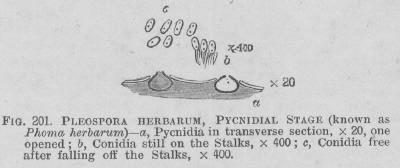
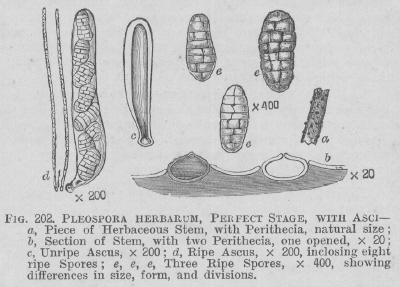
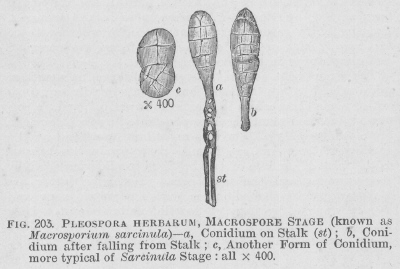
or PLEOMORPHISM (from pleion, several, and morphe, form; in allusion to the variability in the spores). A term used to express the condition observed in several groups of Fungi (see Oidium, Peronospora, Pleospora, Puccinia, and Pyrenomycetes), in which bodies of two or more forms are produced to effect reproduction of these plants under varying conditions; one form is, in some groups, known to be the result of sexual reproduction, e.g., zygospores of Peronospora, ascospores of Peziza and Pyrenomycetes, &c., and to such the term "spore" is, by some botanists, restricted in theory, though this is scarcely adhered to in practice. All the other forms of bodies specialised for reproduction fall under the two types of conidia and sclerotia. In many plants, conidia of two or more kinds occur, either simultaneously or in succession, and in many Fungi (e.g., Hymenomycetes, Pucciniei, &c.) no sexual form has yet been detected.