Home › C › Cor (Larger than calyx Stem)
Cor (Larger than calyx Stem)
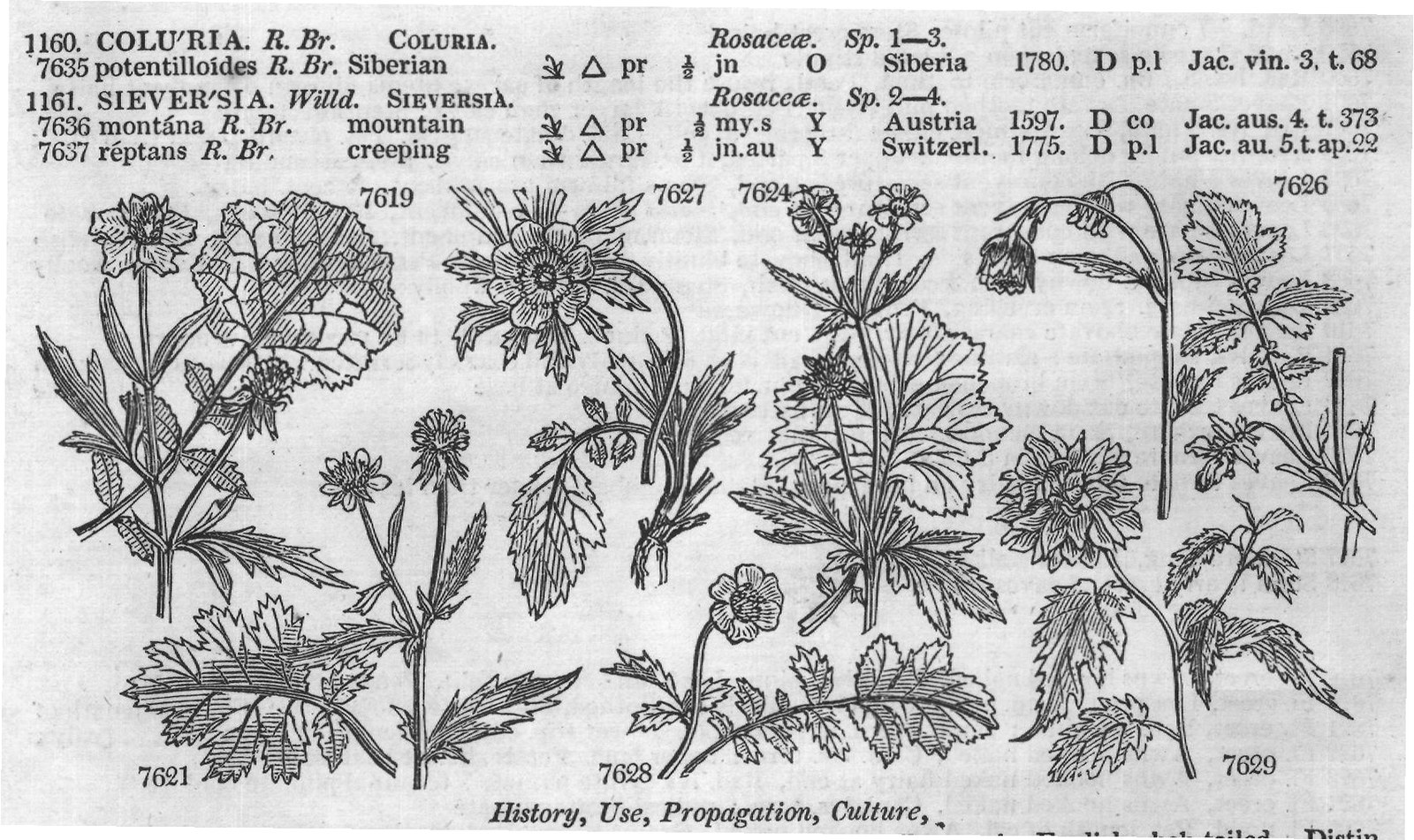
larger than calyx, Stem ascending 7604 Leaves 5-nate with connivent serratures at end, Stems filiform procumbent, Recept. hairy 7606 Leaves 5-nate with connivent serratures at end, Stems many-fl. decumbent, Recept. hairy, Pet. obovate many-fl. decumbent, Recept. hairy, Pet. roundish 7607 Leaves 5-nate silky on each side, Leafl. obovate bluntly toothed at end, Pet. length of cal. Recept. woolly 7608 Leaves subtern. downy with 3 connivent teeth, Stems 1-fl. Recept. woolly 7609 Leaves 5-nate, Stem creeping, Pedunc. 1-flowered 7610 Leaves 5-nate obovate coarsely serr. Stip. cut bifid, Pedunc. 1-fl. axill. Stem producing runners 7611 Rad. Ivs. subpinnate: cauline ternate, Leafl. lanc. unequally and coarsely serrated with spreading hairs on 7612 Leaves ternate, Stem branched erect, Peduncles with a knee at base [each side 7613 Leaves ternate cut downy beneath, Stem ascending 7614 Leaves ternate, Stem dichotomous, Pedunc. axillary 7615 Leaves ternate cuneiform 3-fid at end 7616 Leaves ternate toothed hairy on both sides, Stem decumbent longer than leaves 7617 Stem creeping, Leaves stalked 7618 Stem nearly erect, Leaves sessile 7619 Fl. erect, Awns hooked naked, Caul. lvs. pinn. Leafl. and stipules split, Petals longer than calyx 7620 Fl. erect, Lvs. pinn. Leafl. nearly equal irregularly cut toothed, Stip. ovate nearly entire, Pet. oval length of 7621 Fl. erect, Rad. Ivs. pinn.: cauline tern. upper simple, Lower stip. cut, Pet. length of calyx 7622 Fl. erect, Awns hooked naked, Caul. lvs. tern.: upper lanc. Petals shorter than calyx 7623 Fl. erect, Awns hooked naked hairy at end, Rad. Ivs. lyrate pinnate: terminal pinnate cordate 7624 Fl. erect, Awns hooked naked, Caul . lvs. tern.: radical lyrate pinnate 7627 Fl. nodd. Cal. leafy longer than the polypetalous corolla 7625 Fl. nodd. Pet. length of cal. Awns hooked naked, Grains hairy, Rad. lvs. lyrate pinn.: cauline ternate 7626 Fl. nodd. Pet. length of cal. Awns feathery twisted in the middle 7628 Fl. nodd. Pet. longer cal. Awns hairy twiste hairy twisted at base, Rad. lvs. lyrate pinnate: cauline simple trifid 7629 The only species 7630 Leaves oblong downy beneath 7631 Leaves lanceolate smooth on each side glaucous beneath 7632 Sepals lanc. Lvs. obl. acute by degrees somewhat rugose smooth and green on each side, Branches very 7633 The only species. Fl. small very fragrant pale yellow appearing in the winter [straight and erect 7634 Leaves toothed 7608 7615 7616 7609 7618 7613 7617 7614 and Miscellaneous Particulars. stomachic; but in water, Haller affirms it to have been attended with bad effects, when given in malignant fevers, producing delirium. Chewed in the mouth, the roots take off from a disagreeable breath. 1156. Kerria. So named after Mr. William Ker, a botanical collector, who was sent some years since to China, whence he sent many curious plants. The plant named after him is the common Corchorus japonica of the gardens. 1157. Calycanthus. From κaλuξ, and avθoς, a flower; the calyx being colored and similar to petals, which are not present in the genus. Small North American shrubs, with chocolate-colored blossoms. The flowers not present in the genus. Small North American shrubs, with chocolate-colored blossoms. The flowers of C. floridus have an agreeable scent like those of allspice, and is so called in Carolina. 1158. Chimonanthus. From χεiμωv, winter, and avθoς, a flower, in allusion to the period of the year when its blossoms are produced. C. fragrans is highly odoriferous, and though hardy, deserves a place in the front border of a conservatory, on account of the odor it disperses early in spring. 1159. Dryas. A name poetically applied to this little plant, from the resemblance of its leaves to those of the oak, which was sacred to the Dryads. This is a delicate evergreen plant, and with its snow-white blossoms is a great ornament to alpine heights. The stalk and branches are woody and perennial, lying flat upon the ground, and spreading wide about the root in tufts.
It requires some care to preserve it in gardens, and grows better in a shaded bed of peat than in pots. Gg4 1160. COLU'RIA. R. Br.
COLURIA. 7635 potentilloídes R. Br. Siberian 1161. SIEVER'SIA. Willd. SIEVERSIÀ. 7636 montána R. Br. 7637 réptans R. Br. mountain creeping pr my.s Y 7619 ICOSANDRIA POLYGYNIA.
Rosaceæ. Sp. 1-3. prjn 0 Siberia Rosacea. Sp. 2-4. prjn.au Y 7627 7624 CLASS XII. 1780. D p.1 Jac. vin. 3. t. 68 Austria 1597. D co Jac. aus. 4. t. 373 Switzerl. 1775. D p.1 Jac. au. 5.t.ap.22 7626 7621 7628 History, Use, Propagation, Culture, 7629 1160. Coluria. From κoλέρoς, deprived of the tail; or, as we usually say in English, bob-tailed. Distinguished by Mr. Brown from Geum, principally on account of the deciduous nature of the style or tail of the grains.