Home › D › Desf (Atl t Bot mag Bot reg Jac ic t)
Desf (Atl t Bot mag Bot reg Jac ic t)
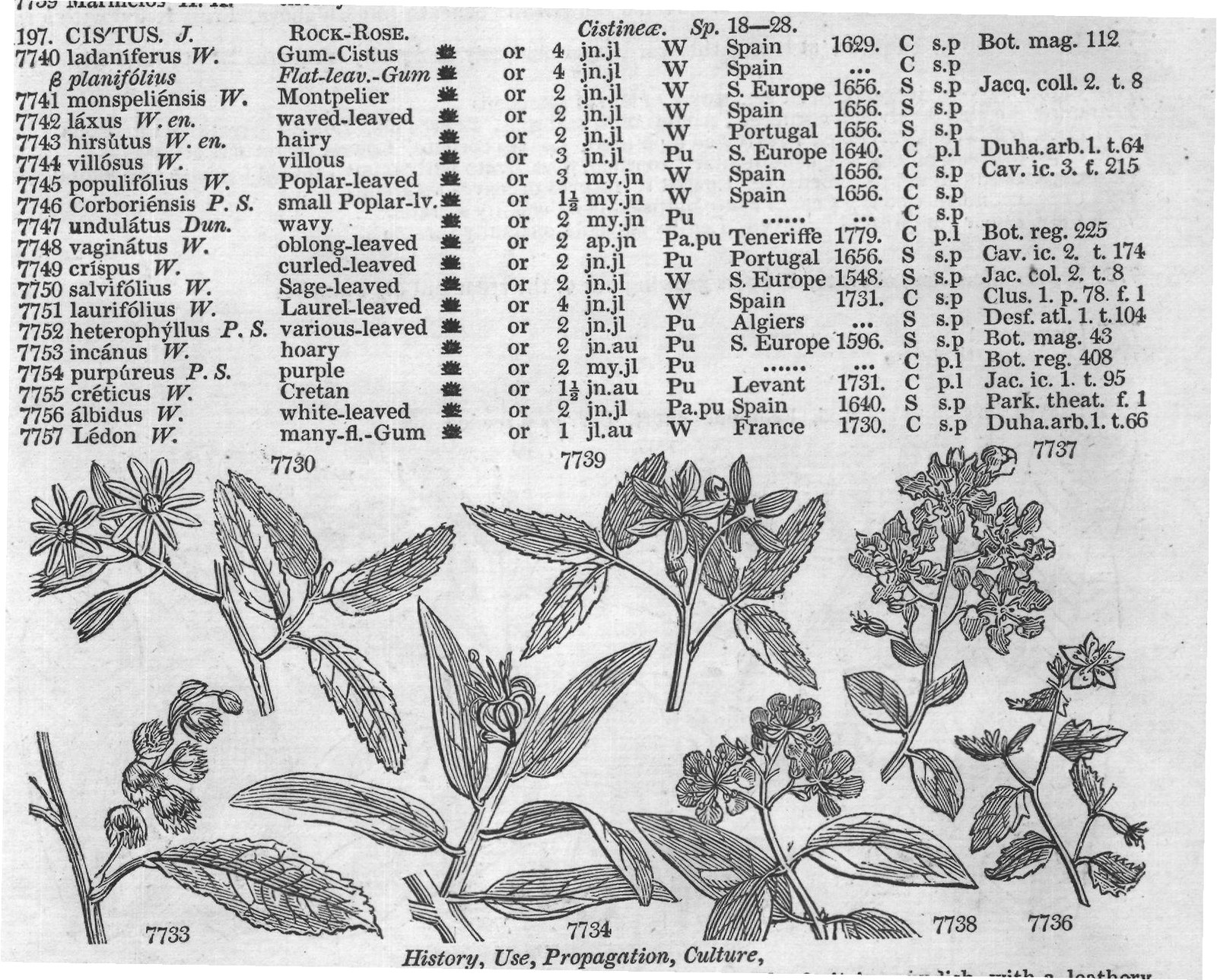
atl. 1. t. 104 Bot. mag. 43 Bot. reg. 408 Jac. ic. 1. t. 95 Park. theat. f. 1 Duha.arb.1. t.66 7737 7733 7734 History, Use, Propagation, Culture, 7738 7736 of Magnolia grandiflora, and odoriferous white flowers on peduncles. The fruit is roundish, with a leathery rind, inclosing one thinner, containing a firm bright yellow pulp, having a pleasant singular taste, and a sweet aromatic smell but the skin and seeds are very bitter and resinous. It is eaten raw alone, or cut in slices with wine or sugar, or preserved in sugar. In Martinico they distil the flowers with spirit, and make a liquor which they call Eau créole.
Some horticulturists are now attempting its culture in our stoves as a fruit tree. It grows freely in sandy loam, and ripened cuttings, with the leaves not shortened, root in sand under a hand-glass in heat. (Sweet.) 1191. Ochna. The Greek name of the wild pear tree, to which the genus so distinguished by Linnæus has no kind of resemblance. The species are pretty free-flowering plants, with shining serrated leaves, and long racemes of beautiful yellow flowers. They grow freely in loam and peat, and cuttings root readily in sand under a hand-glass. 1192. Elæocarpus. From ελaia, the olive, and κaρπoς, fruit, in allusion to the shape of its fruit. The stones cleaned from the pulp, and set in gold, are formed into necklaces. The species thrive in loam and peat, and cuttings root in sand under a hand-glass . 1193. Alangium. So denominated by Lamarck, from a slight alteration of one of its Malabar names, Alangi. It grows in light sandy soil, and cuttings root in sand under a hand-glass in moist heat. (Sweet.) 1194. Mentzelia. Named after Christian Mentzel, a Prussian, physician to the Elector of Brandenburg; he died in 1701. Curious plants related to Loasa. 1195. Lagerstræmia. So named by Linnæus from Magnus Lagerstroem, of Gottenburgh, director of the Swedish East India Company, who procured many curiosities from China, and gave them to the public. L. reginæ is a very handsome shrub the flowers are in panicles, a span long, pale rose-colored in the morning, , growing deeper through the day, and becoming purple in the evening. According to Sweet, this species is rather difficult to preserve through the winter; it requires a good heat, and but little water in winter if it happens to have too much wet, it is a great chance if it survives in summer it grows very fast, and requires plenty of room and water. Cuttings of both kinds root readily in sand, under a hand-glass. (Bot. Cult. 73.) 1196. Ægle. Aiγλη was one of the Hesperides. Correa de Serra named the genus Ægle from the fruit having some resemblance to the orange. Sweet observes, that this plant likes a rich loamy soil. The wood ORDER I.
POLYANDRIA MONOGYNIA. 7730 Stigma capitate, Petals 8-10, Leaves obovate very blunt serrated 7731 Flowers solitary, Leaves ovate acutely toothed, Sepals ovate 7732 Leaves lanceolate ellipt. serrated, Racemes axillary 7733 Leaves obl. lanc. serrated netted, Racemes axillary clustered, Drupes blue 7734 Petals 10, Branches spiny 7735 Stem branched, Peduncles axillary, Petals crenate obtuse 7736 Stem branched, Peduncles axillary solitary, Petals acuminate, Fruit reflexed 7737 Petals crisp, Panicle terminal, Leaves roundish ovate acute smooth 7738 Petals wavy, Panicle terminal, Leaves oblong smooth 7739 Middle leaflet stalked, Fruit with 12 cells 7740 Leaves subsessile connate at base lin. lanc. smooth above downy beneath, Caps. 10-ce 7741 Leaves lin. lanc. sessile 3-nerved villous on each side, Pedunc. cymose 1-sided 7742 Leaves on short stalks ovate lanceolate acum, wavy at edge: the upper hairy, Cymes hirsute 7743 Lvs. sessile obl . obt. hirsute, Pedunc. short 1-fl. or cymose, Caps. small in a large hairy pyramidal calyx 7744 Leaves roundish ovate rugose tomentose hairy stalked, Pedunc. 1-fl. 1-3 together, Calyx villous 7745 Leaves stalked cordate acuminate smooth, Fl. cymose, Pedunc. with long bractes 7746 Leaves stalked cordate ovate acuminate fringed at edge rugose and a little glutinous on each side 7747 Leaves sessile linear oblong acute wavy at edge 3-nerved at base, Sepals villous with long points 7748 Lvs. lanc. acute 3nerv. hairy reticul. beneath stalked, Stalks sheathing the stem with their connate bases 7749 Leaves sessile linear lanceolate waved crisp 3-nerved rugose pubescent, Fl. sessile umbelled 7750 Leaves stalked ovate blunt rugose downy beneath, Pedunc. long hoary 1-flowered 7751 Leaves stalked ovate lanc. 3-nerved smooth above downy beneath, Petioles dilated and united at base 7752 Lvs. ovate lanc. on short stalks sheathing at base revolute at edge, Pedunc. hirsute leafy 1-flowered 7753 Leaves spatulate toment. rugose 3-nerved sessile subconnate: the upper narrower, Pedunc. 1-flowered 7754 Leaves obl. lanc. acuminate at each end rugose, Stalks short hairy sheathing, Pedunc. short 1-2:3 7755 Leaves spatulate ovate downy hairy narrowed into a short stalk wavy at edge, Pedunc. short 1-flowered 7756 Leaves sessile obl. ellipt. hoary downy about 3-nerved, Fl. 3-8 in terminal umbels, Outer sepals largest 7757 Lvs. conn. obl. lanc. nerv . above smooth and shin. beneath silky, Fl. in corymb. cymes, Ped. and cal.vill. 7740 7749 7741 7752 7744 7745 7757 and Miscellaneous Particulars. requires to be ripened before the cuttings are taken off; then to be planted in a pot of sand without shortening the leaves, and to be plunged under a hand-glass in heat. 1197. Cistus. Kiστoς, in Greek; derived from κiση, a box, or capsule. The capsules of the genus are remarkable. All these words have been formed from the Anglo Saxon, cyst, which signifies a hollow vessel. The species are for the most part shewy and free-flowering plants; the colors brilliant, and the petals very fugacious. In gardens they are rather difficult to keep in a neat shape, getting naked below, and often.dying wholly or in part during severe winters. They succeed best in glass cases, which can be entirely removed in summer, or in a dry soil under a warm wall.
C. villosus has a strong woody stem, the flowers are produced at the ends of the branches, four or five together, almost in form of an umbel, but it rarely happens that more than one is open at the same time. The petals are large, purple, and spread open like a rose; they are but of short duration, generally falling off the same day they expand; but there is a succession of fresh flowers every day for a considerable time in May and June; generally again in September and October, if the autumn be favorable, and even in the winter if the plants be protected from frosts.
C. ledon and ladaniferus produce the gum ladanum, but not in such quantities as C. creticus. The resin, which is secreted from the leaves and other parts of the shrub, is scraped off by means of a kind or is secreted from the leaves and other parts of the shrub, is scraped off by means of a kind or rake, to which numerous leathern thongs are appended instead of teeth. This instrument being drawn backwards and forwards over the plant from time to time, collects the resin. The chief use of this gum in modern practice is in fumigations , its fragrant smell having made it a constant ingredient in such preparations. C. ladaniferus is the most popular species for warm situations in ornamental scenery. "Most of the species," Sweet observes, "will survive through the winter in the open air, if the weather be not too severe; but it is safest to keep some of all the kinds in pots, that they may be sheltered from severe not too severe; but it is safest to keep some of all the kinds in pots, that they may be sheltered from severe frosts; and they can be turned out in the borders in spring, when they will thrive and flower well. They will succeed in any common soil, or a mixture of loam and peat will suit them very well. They may be increased by layers; or young cuttings, as soon as ripened, taken off at a joint, and planted under a handglass, will root readily: they may be also raised from seeds, which are produced in abundance." (Bot. Cult. 168.) Hh3 POLYANDRIA MONOGYNIA. 1198. HELIANTHEMUM. J. SUN-ROSE.
CLASS XIII.
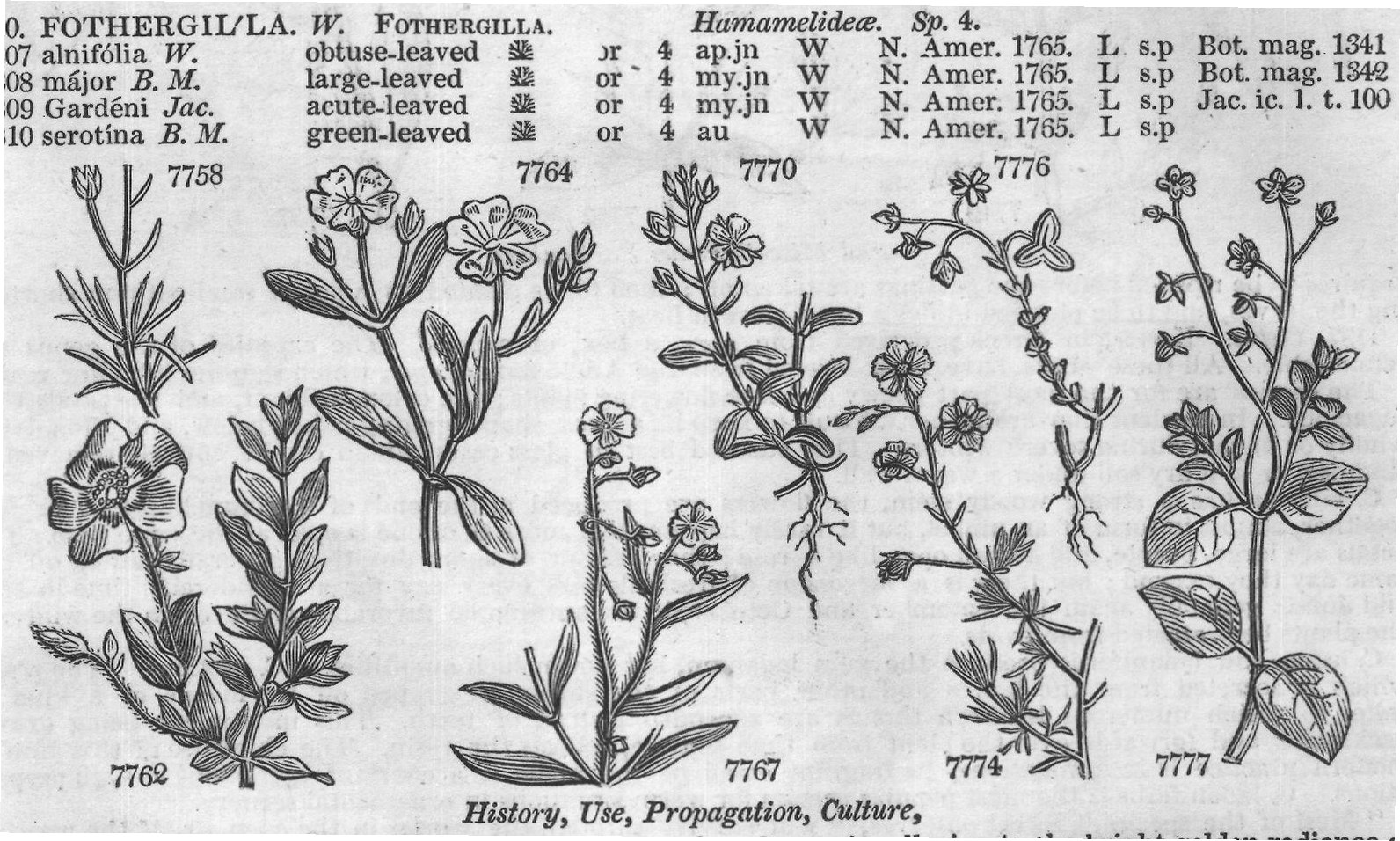
Cistineæ. Sp. 48-124. 7758 Libanótis W.
Rosemary-lvd. or 1 jn Y Spain 1752. C p.1 Barr. ic. 294 7759 umbellátum P. S umbel-flower'd or 2 jn.au W S. Europe 1731. C p.l 7760 scabrósum P. S. rough or 3 jn.jl Y Italy 1775. C p.l 7761 algarvense Dun.
Algarvine 业 or 3 jl.au Y 7762 formósum Dun. beautiful or 3 my.jl Y 7763 atriplicifólium P. S. Orache-leaved or 6 jn.jl Y Spain 7764 halimifólium P. S. Sea-Pursl.-lvd. or 4 jn.jl Y Spain 7765 canadénse P. S.
Canadian or 1 jn.jl Y 7766 Tuberária P. S.
Plantain-leav'd or jn.jl W 7767 guttátum P. S. spotted-flower. or jn.jl Y 7768 ledifólium P. S.
Ledum-leaved or jn.jl Y 7769 ægyptíacum P.S.
Egyptian 3 or jn.jl W 7770 salicifólium P. S.
Willow-leaved or 4 jn.au Y 7771 punctátum P. S. punctated or jn.jl Y 7772 canariénse P. S.
Canary or 1 jn.jl Y 7773 Fumána P. S.
Heath-leaved or 1 jn.jl Y 7774 læ vipes P. S. cluster-leaved or 1 jn.au Y 7775 Barreliéri Tenore Barrelier's 业 or 1 jn.au Y 7776 glutinósum P. S. clammy or 2 my.s Y 7777 origanifólium P. S. Marjoram-lvd. or 2 jn.jl Y 7778 ælandicum P. S. smooth-leaved or jn.jl Y 7779 itálicum P. S.
Italian 7780 cánum W.en. hoary LL or 2 jl.s Y or jn.jl Y 7781 marifólium P. S.
Marum-leaved or my.jn Y 7782 squamátum P. S. scaly or 2 jn.jl Y Spain 7783 glaúcum P. S. glaucous-leav'd or 2 jn.au Y 7784 tomentósum Smith. tomentose or jl.au Y 7785 serpyllifólium P. S. WildThyme-lv. my.s or Y 7786 vulgáre P. S. common-dwarf or my.s Y 1815. C s.I 1815. C s.l Spain Scotland sc.alp. C s.l Austria 1731. C p.l Britain gra.ban. Cs.1 Portugal 1800. C p.1 Portugal Portugal 1780. C p.1 1656. C p.l 1656. C p.l N. Amer. 1799. S s.1 S. Europe 1752. S s.p England san.pa. D s.1 England san.pa. S s.l 1764. S s.1 Egypt S. Europe 1759. S s.p S. France 1816. S s.l Canaries 1790. C p.1 France 1752. S. s.p 1690. S s.p 1820. S s.p France Italy Cav. ic. 1. t. 67