Home › E › Eng (Bot can scens L hoary lbus W)
Eng (Bot can scens L hoary lbus W)
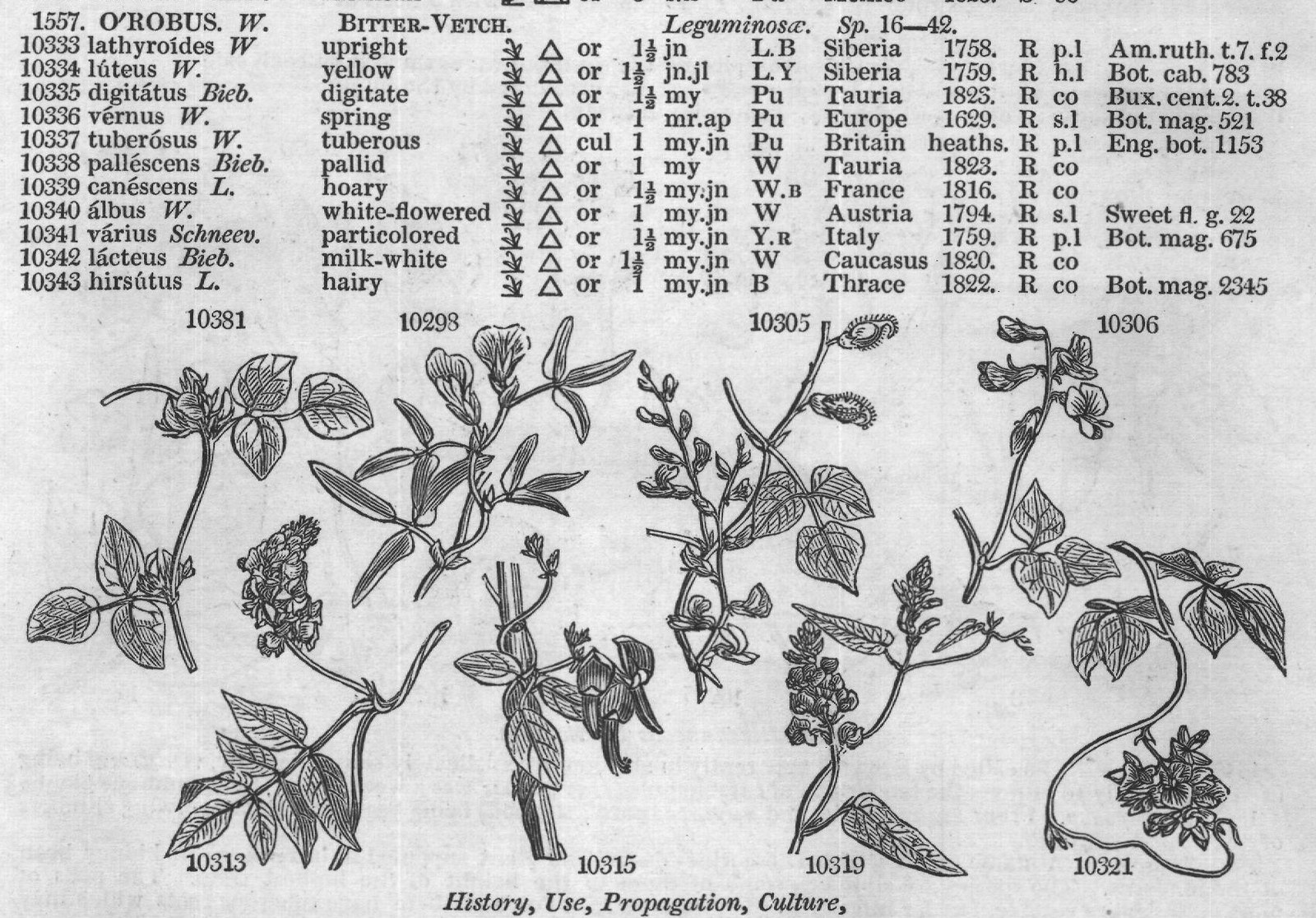
bot. 1153 10339 canéscens L. hoary 10340 álbus W. white-flowered 10341 várius Schneev. 10342 lácteus Bieb. 10343 hirsútus L. particolored milk-white or 1 my.jn W.B or 1 my.jn W or 1 my.jn Y.R France 1816. R co Austria 1794. R s.l Italy 1759. R p.1 Sweet fl. g. 22 Bot. mag. 675 hairy Aor 1 my.jn W Aor 1 my.jn B Caucasus 1820. R co Thrace 1822.. R co 10381 10298 10305 Bot. mag. 2345 10306 10313 10315 10319 History, Use, Propagation, Culture, 10321 1552. Glycine. From γλuκuς, sweet. G. monoica perfects its seeds under ground like Arachis hypogæa, Trifolium subterraneum, and Lathyrus subterraneus. They are all of easy culture, like their preceding and following allies. G. frutescens, and especially G. sinensis, are most beautiful hardy climbing shrubs, with long pendulous branches of blue flowers, like the Laburnum. 1553. Kennedia. Named after Mr. Kennedy, a nurseryman of celebrity in the vicinity of London. Handsome conservatory climbers of the easiest culture. 1554. Cylista. From κuλiξ, a calyx, that of the species so called being very large. 1555. Galactia. From γaλa, milk; the plant is milky in all its parts. A pretty flowering climber of easy culture in the soil indicated, and increased by cuttings in sand under a bell-glass. 1556. Clitoria. A name derived from an anatomical term, a resemblance to the subject of which has been fancied to exist in the flower. C. Ternatea was first brought to Europe from Ternate, one of the Molucca islands, which induced Tournefort to adopt Ternatea as a generic appellation, and it was continued by Linnæus as a specific one.
ORDER IV.
DIADELPHIA DECANDRIA. 10296 Leaves ternate ovate smooth, Racemes filiform about 3-fl. Flowers apetalous, Pods oblong 2-seeded 10297 Leaves ternate ovate smooth, Stem hairy, Racemes pendulous, Fls. of stem with cor. of root apetalous stem with cor. of root apetalous axillary solitary, Pods 2-seeded 10298 Leaves ternate, Leaflets linear lanceolate silky, Fl. axillary soli 10299 Leaves ternate, Leafl. oval hairy beneath, Pods subsolitary linear many-seeded, Style persistent straight 10300 Leaves ternate hairy, Racemes lateral 10301 Leaves ternate tomentose, Racemes axillary very short, Pods 2-seeded 10302 Downy, Leaves simple reniform rounded rugose netted, Racemes few-flowered 10303 Leaves ternate ovate acute hairy viscid, Peduncles jointed 1-2-fl. Pods oblong 10304 Leaves tern. ovate rhomboid pubesc. beneath netted tomentose, Racemes axillary, Pods subpubescent 10305 Leaves ternate ovate rhomboid beneath dotted with resin, Racemes longer than leaf 10306 Leaves ternate, Flowers racemose, Pods tumid villous 10307 Leaves ternate ovate somewhat hairy, Racemes axillary, Pods linear hooked at end 10308 Leaves simple sagittate, Petioles winged, Stem twining shrubby 10309 Leaves tern. roundish rhomboid smooth beneath dotted with resin, Racemes 1-sided longer than leaf 10310 Leaves pinnate, Leaflets 5 oblong apiculate, Flowers 3 axillary 10311 Leaves ternate villous beneath, Racemes terminal 10312 Leaves pinnated, Leaflets 11 ovate lanceolate silky, Raceme terminal nodding lax many-flowered 10313 Root tuberous, Lvs. pinn. Leafl. 5-7 ov. lanc. narrowed towards the end, Spikes dense shorter than leaves 10314 Leaves pinnated, Leaflets 9 ovate downy, Racemes dense terminal with bractea, Pods coriaceous with bracteæ, Pods coriaceous 10315 Leaves ternate, Leaflets ovate, Pedunc. about 3-fl. Pods very hairy 10316 Leaves ternate, Leaflets obovate, Flowers capitate, Pods smoothish 10317 Leaves ternate, Leaflets obovate villous, Pedunc. 1-2-fi. Keel longer than obl. wings, Stem prostrate 10318 Leaves ternate, Leaflets ovate retuse netted, Racemes erect many-flowered 10319 Leaves simple smooth netted subcordate at base, Flowers racemose 10320 Leaves simple ovate, Racemes axillary few-flowered 10321 Cal. membranous, Upper segment bifid 10322 Down rusty, Cal. half 5-fid, Bractes ovate acuminate, Cor. larger than cal. 10323 Cal. scarious, Upper segment emarginate 10324 Leaves ternate, Raceme erect, Flowers pendulous 10325 Leaves quinate pinnate, Peduncles axilliary 1-flowered 10326 Leaves pinnate, Leaflets 5 round lanceolate or linear 10327 Leaves ternate, Calyxes solitary campanulate 10328 Leaves ternate, Calyxes twin campanulate 10329 Leaves ternate, Calyxes cylindrical 10330 Leaves ternate, Peduncles many-flowered, Ovary downy, Style villous 10331 Leaves ternate, Leaflets ovate-oblong acuminate, Cal. campanulate shorter than ovate bractes 10332 Leaves ternate, Leaflets mucronate glaucous beneath hairy, Cal. cylind. much larger than bractes Cal. cylind. much larger than bractes 10333 Leaves conjugate subsessile, Stipules toothed 10334 Leaves pinnate in 4 or 5 pairs obl. glaucous beneath, Stipules half sagittate toothed at base 10335 Leaves of 2 pairs linear subulate approximating, Stip. half-sagittate subulate 1-toothed at base , Sti oximating, Stip. half-sagittate subulate 1-toothed at base 10336 Leaves pinnate in 3 pairs ovate acuminate, Stipules half-sagittate entire, Stem simple 10337 Leaves pinnate in 3 or 4 pairs lanceolate, Stipules half-sagittate entire, Stem winged 10338 Leaves of 2 pairs linear-subulate downy, Stip. half-sagittate subulate nearly entire, Stem simple downy 10339 Stem branched, Leaves in 2 pairs linear, Stipules half sagittate subulate 10340 Leaves in 2 pairs ensiform stalked, Stipules simple, Stem simple 10341 Leaves in 4 pairs lin. lanc. Stipules half-sagittate entire, Stem winged branched upwards 10342 Leaves of 2 pairs lin-lanc. mucronate stalked nerved, Stipules half-sagittate toothed at base 10343 Leaves conjugate stalked, Stipules entire, Plant covered with long hairs 10334 10324 10325 10336 10343 10323 10331 10328 and Miscellaneous Particulars. 1557. Orobus. From ow, to excite, and ẞss, an ox; that is to say, a food nourishing to cattle. Handsome plants, and free flowerers. O. luteus Haller considers as one of the handsomest of the papilionaceous tribe. O. tuberosus, according to Lightfoot, is in great esteem among the Highlanders of Scotland for the tubercles of the root they dry and chew them in general to give a better relish to their liquor; they also affirm them to be good against most disorders of the thorax, and that by the use of them they are enabled to repel hunger and thirst for a long time. In Breadalbane and Ross-shire, they sometimes bruise and steep them in water, and make an agreeable fermented liquor with them. They have a sweet taste, something like the roots of liquorice, and when boiled are well flavored and nutritive, and in times of scarcity have served as a substitute for bread. (Lightfoot.) Boiled well, a fork will pass through them, and dried slightly and roasted, they are served up in Holland and Flanders in the manner of chesnuts, which they resemble in flavor. Dickson (Hort. Trans. ii. 359.) to in flavor. Dickson (Hort. Trans. ii. 359.) recommends cultivating them in a bed or border of light rich soil, paved at the depth of twenty the inches, surface of light rich soil, paved at the depth of twenty inches, to prevent their roots from running down. Plant the tubers six inches apart, and three inches below the surface; DIADELPHIA DECANDRIA.
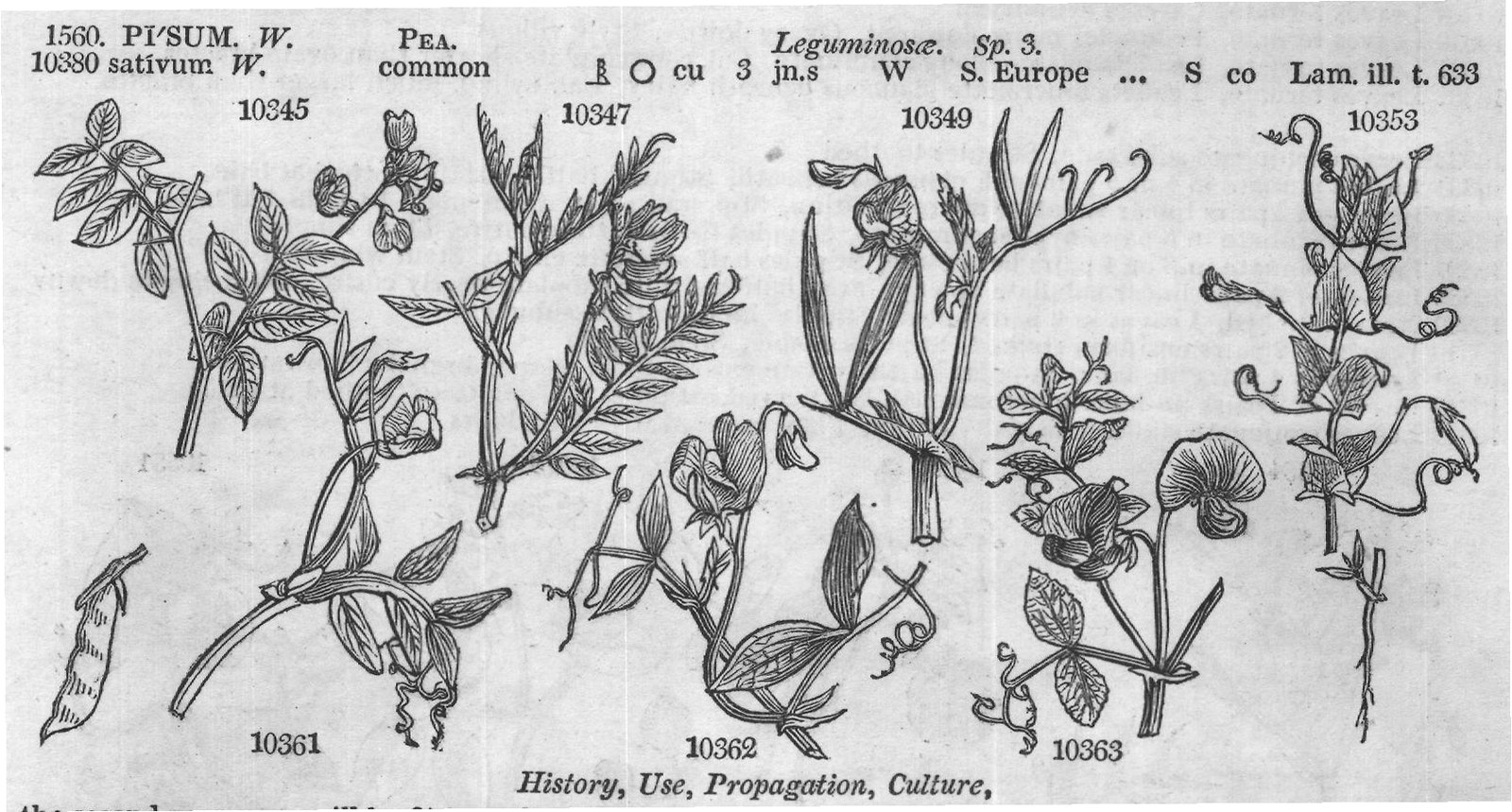
CLASS XVII. 10344 angustifólius W. narrow-leaved প or 1 my.jn W Siberia 1766. Rs.1 Gmel. sib. 4. t. 5 10345 niger W. black or 3 jn.jl Pu 10346 pyrenáicus W.
Pyrenean or 2 my.jn Pu Europe Spain 1596. R p.l 1699. R p.1 Bot. mag. 2261 Pl. alm. t.210. f.2 10347 sylváticus W. wood or 2 my.jl Cr Britain m.wo. R p.1