Home › E › Eng (Bot Pl rar hu t History Use)
Eng (Bot Pl rar hu t History Use)
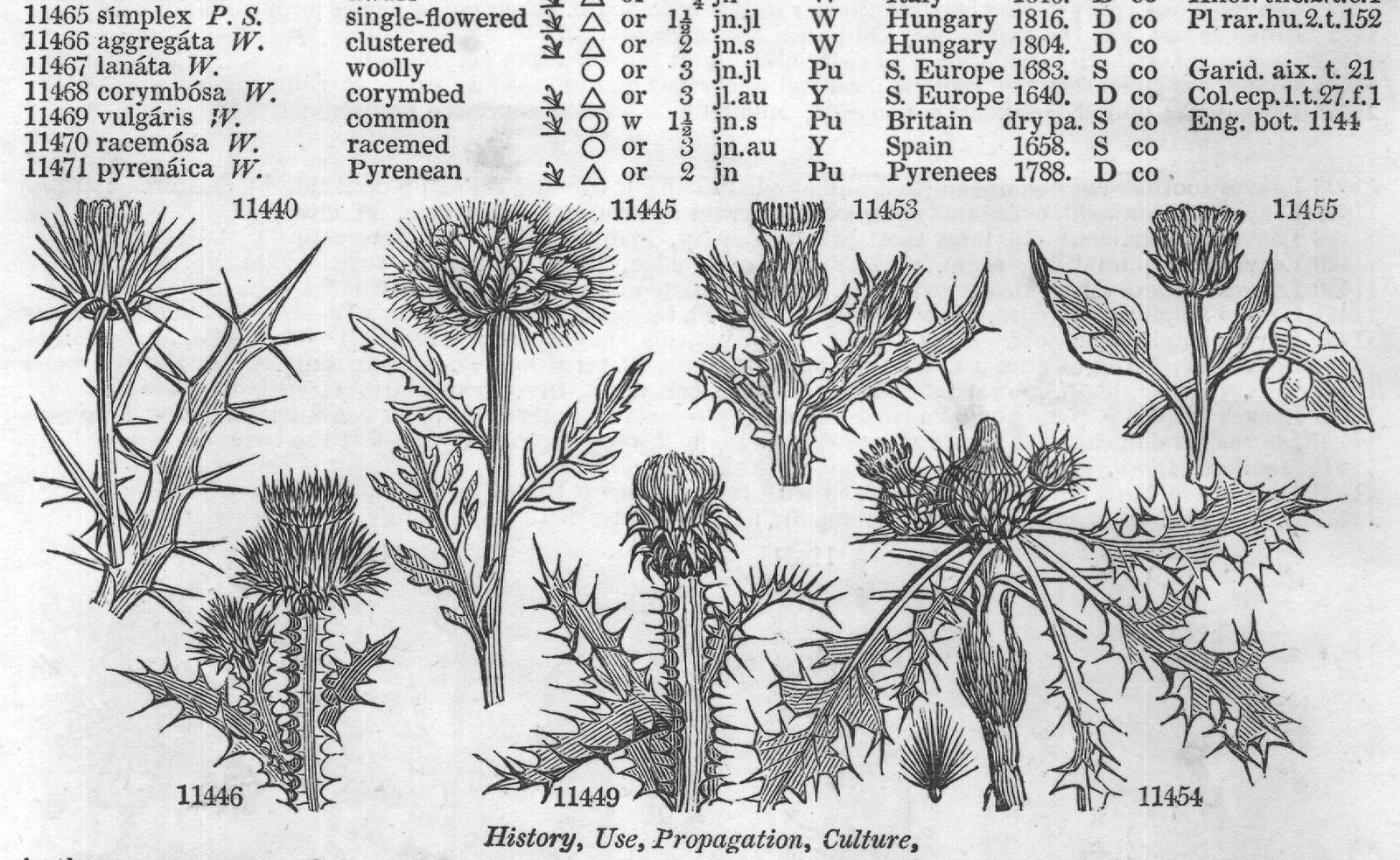
bot. 1144 Pl rar.hu.2.t.152 11455 11446 11449 History, Use, Propagation, Culture, 11454 in the same manner. C. lanceolatus is one of the most common and noxious weeds of the genus, chiefly on account of its great bulk, its numerous downy seeds, and the facility with which they are distributed by the wind: its dried flowers curdle milk. C. helenioides, used to be called the melancholy thistle, and was used by quacks as a cure for madness. C. Casaubonæ is so named after Casaubona, herbarist to the Grand Duke of Tuscany, who sent the seed to John Bauhin. C. syriacus is spotted with white, as are a number of Egyptian plants. C. oleraceus, according to Schreber, is not eaten by cattle; but the Russians are said to boil the leaves in the spring, and eat them as coleworts. The tender stalks of C. cernuus are so used in Siberia. 1666. Onopordum. A name employed by Pliny for a plant which he describes too imperfectly to be recognized now. The virtues which he ascribes to it, and whence the name has been derived (ovoς and περδω), certainly have no existence in the modern genus, which consists of noble thistle-like plants, that, if allowed plenty of room, form very magnificent specimens of annual vegetation. O. acanthium (from its leaves being like those of the Acanthus) was formerly used like the artichoke and Cardoon. The seeds of this plant, unlike those of other thistles, are strongly defended by the calyx, and are not subject to be blown about by winds. The whole plant is white, tomentose, and one of the most magnificent of the family. 1667. Berardia. So named by Villars, after M. Berard, a botanist of Grenoble. 1668. Cynara. Said to be derived from κuωv, a dog, on account of the stiff hard spines of the involucrum, which resemble the teeth of a dog. The English word Artichoke is said to be derived from the Celtic art, a spine, and chaulx, a cabbage; but it must be confessed that the word is very like the Arabic name of the plant,